A Side Canyon, Grand Canyon of Arizona — History & Analysis
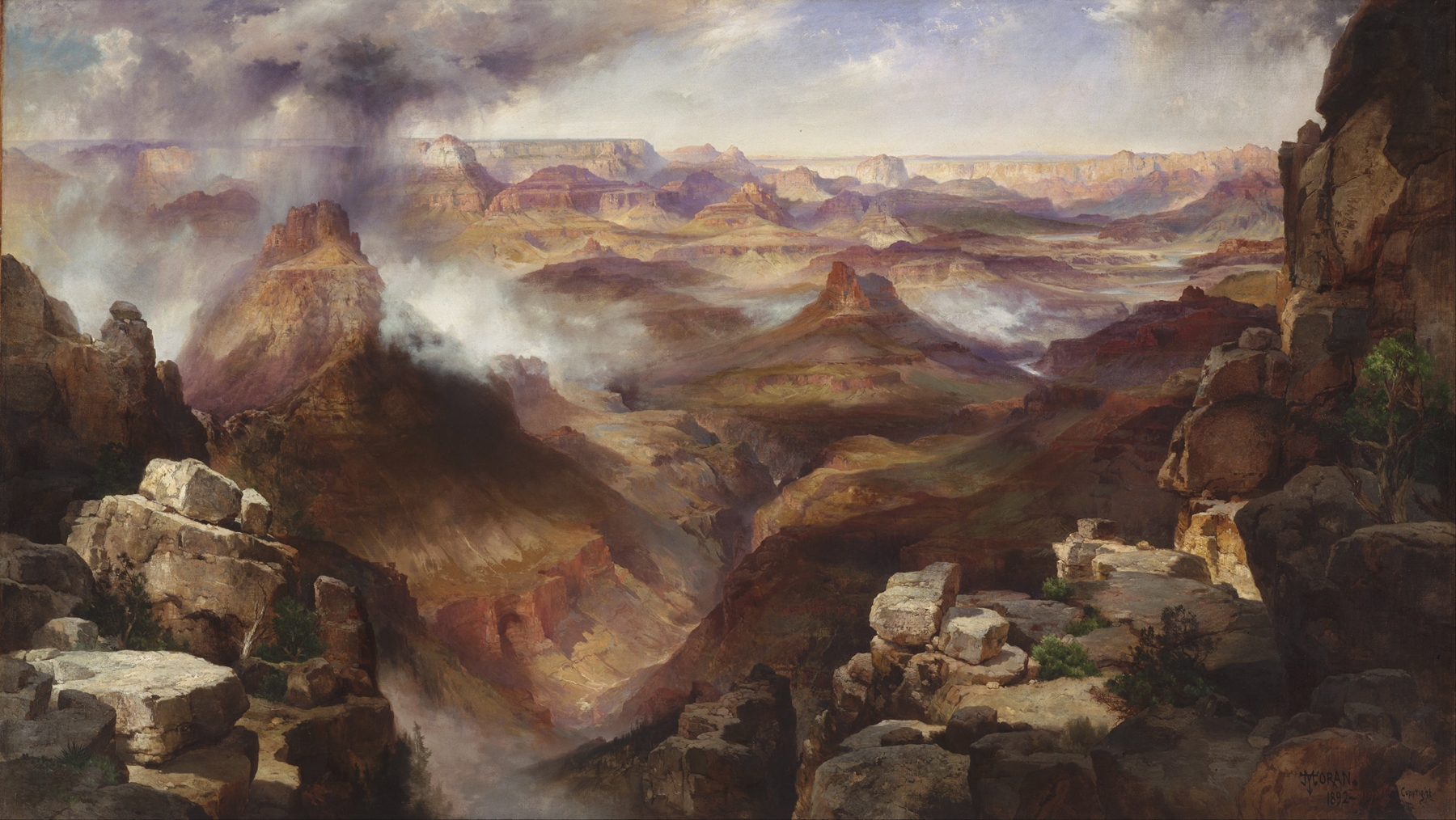
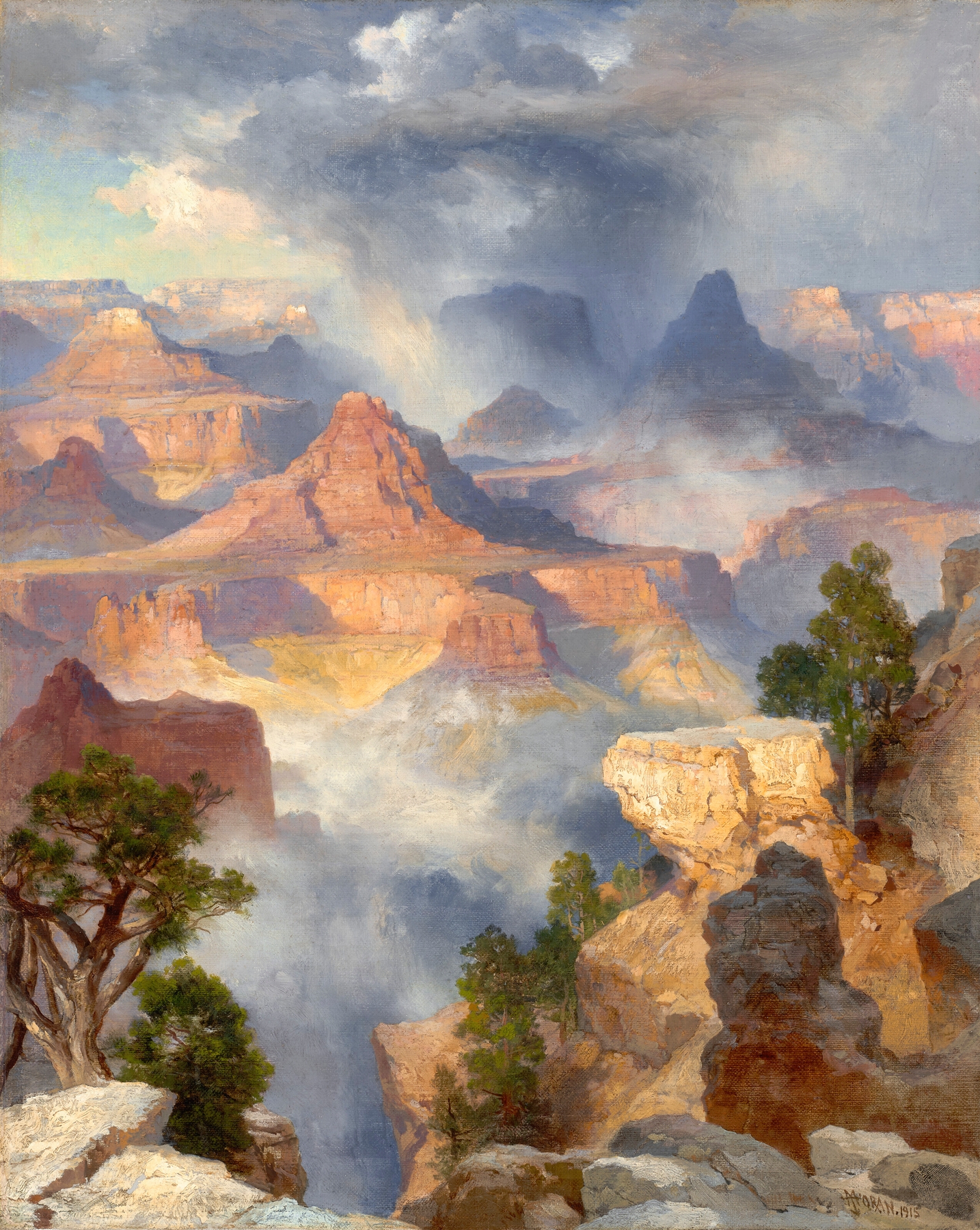
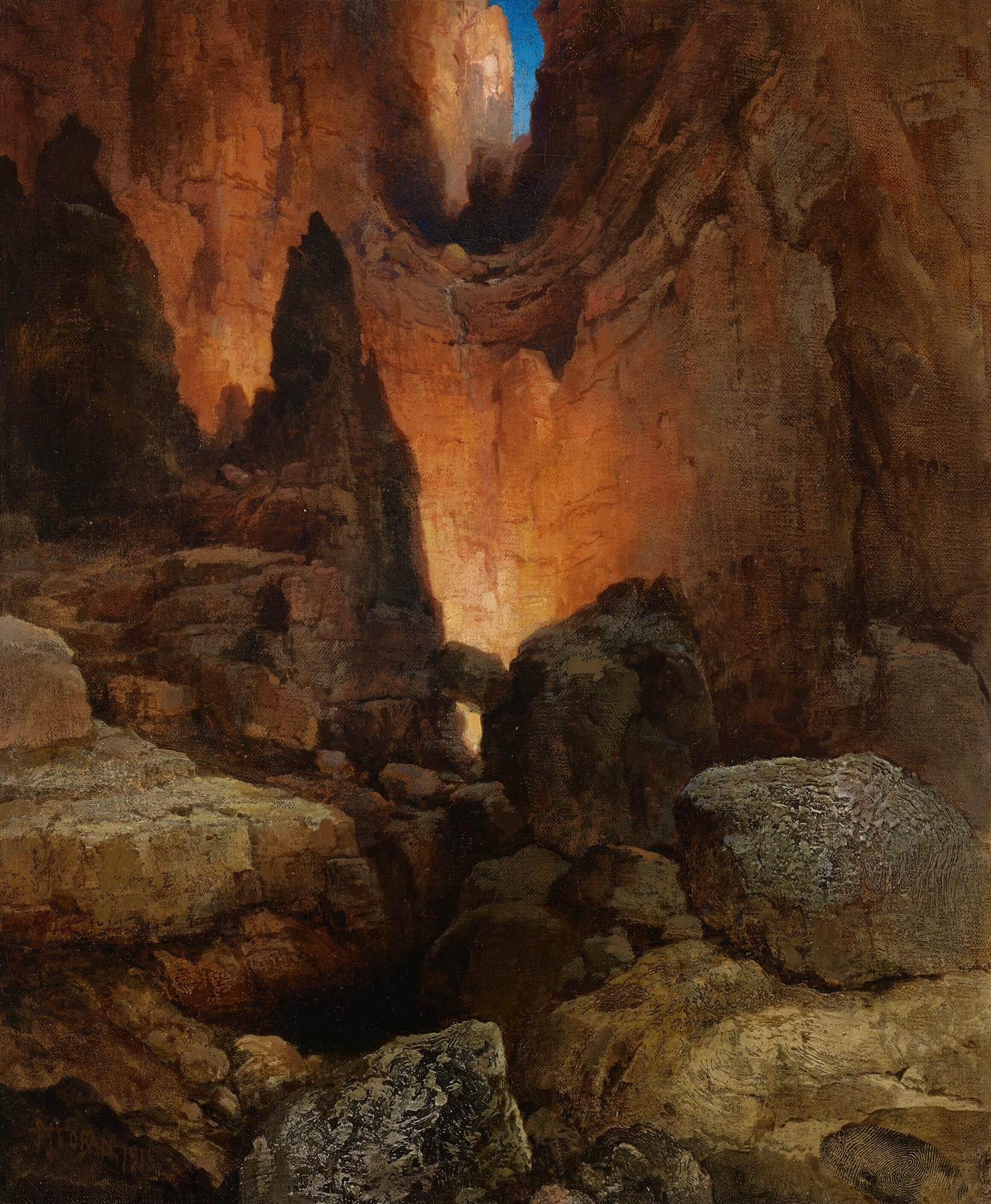
Who listens when art speaks of silence? In A Side Canyon, Grand Canyon of Arizona, memory finds its voice, echoing through the vast expanse of nature, inviting us to remember moments we never lived. Look to the left at the delicate interplay of light and shadow, which carves the canyon walls into a dramatic relief. The warm ochres and deep ochre tones bleed into one another, creating a sense of depth that draws the eye into the heart of the landscape.
Note the wisps of clouds that float lazily above, their soft whites contrasting with the earthbound hues. The meticulous brushstrokes capture not only the physical beauty of the canyon but also the fleeting essence of a specific time and place, harmonizing the sky with the rugged terrain below. Beneath the surface lies a profound tension between grandeur and intimacy. The expansive view of the canyon evokes an overwhelming sense of awe, while the subtle details—a patch of wildflowers at the base or a lone tree clinging to the cliffside—remind us of life's quiet resilience.
This juxtaposition invites contemplation of nature's immensity against our ephemeral presence, reinforcing the notion that beauty often resides in the smallest moments amidst vast landscapes. In 1915, the artist painted this piece during a period of reflection and exploration. Moran, a prominent figure in American landscape painting, was deeply influenced by the Naturalist movements and the burgeoning appreciation for America’s national parks. His works captured not only the physicality of the land but also its spiritual resonance during a time when the country was beginning to appreciate the necessity of preserving its natural wonders.