A View in Devonshire — History & Analysis
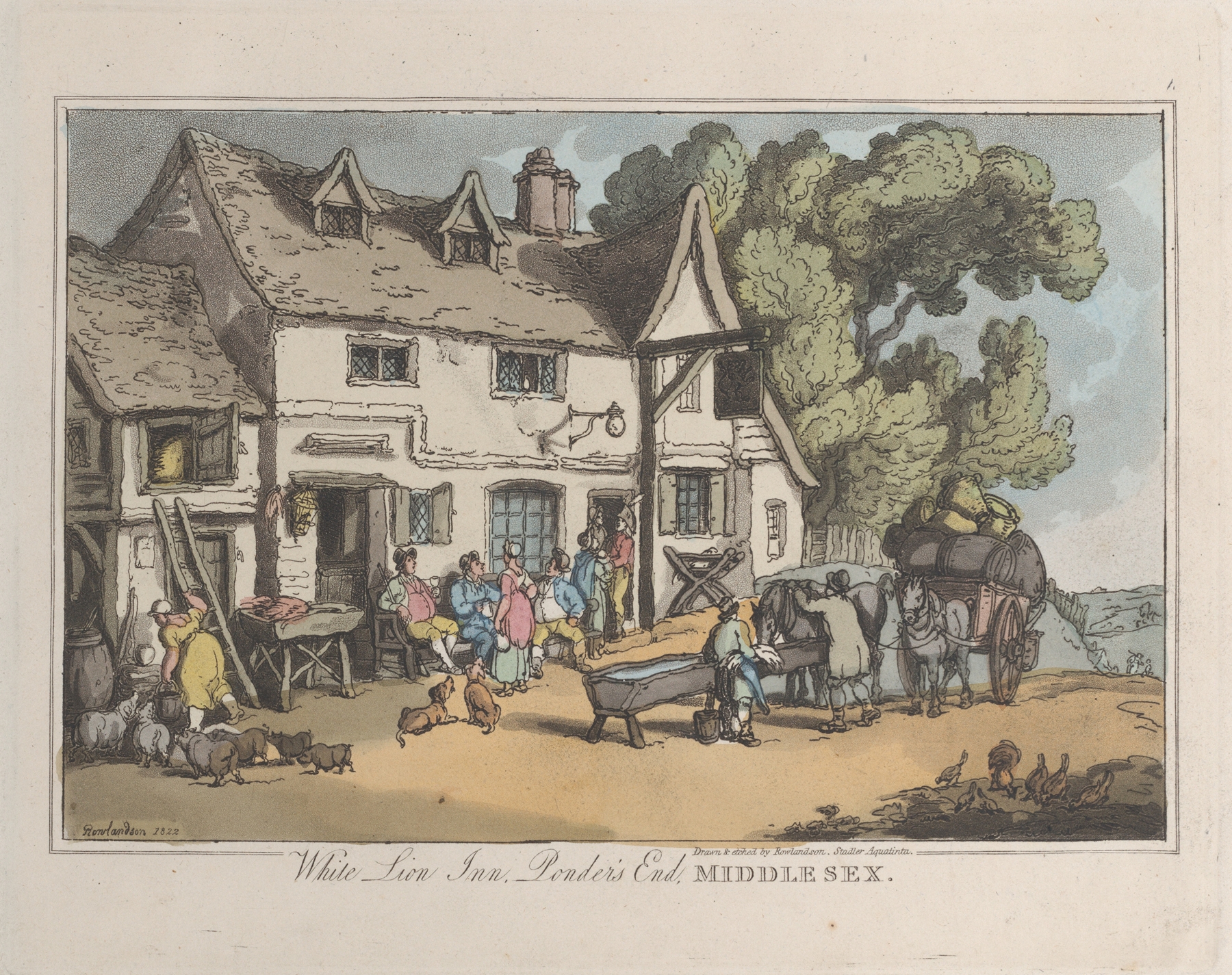
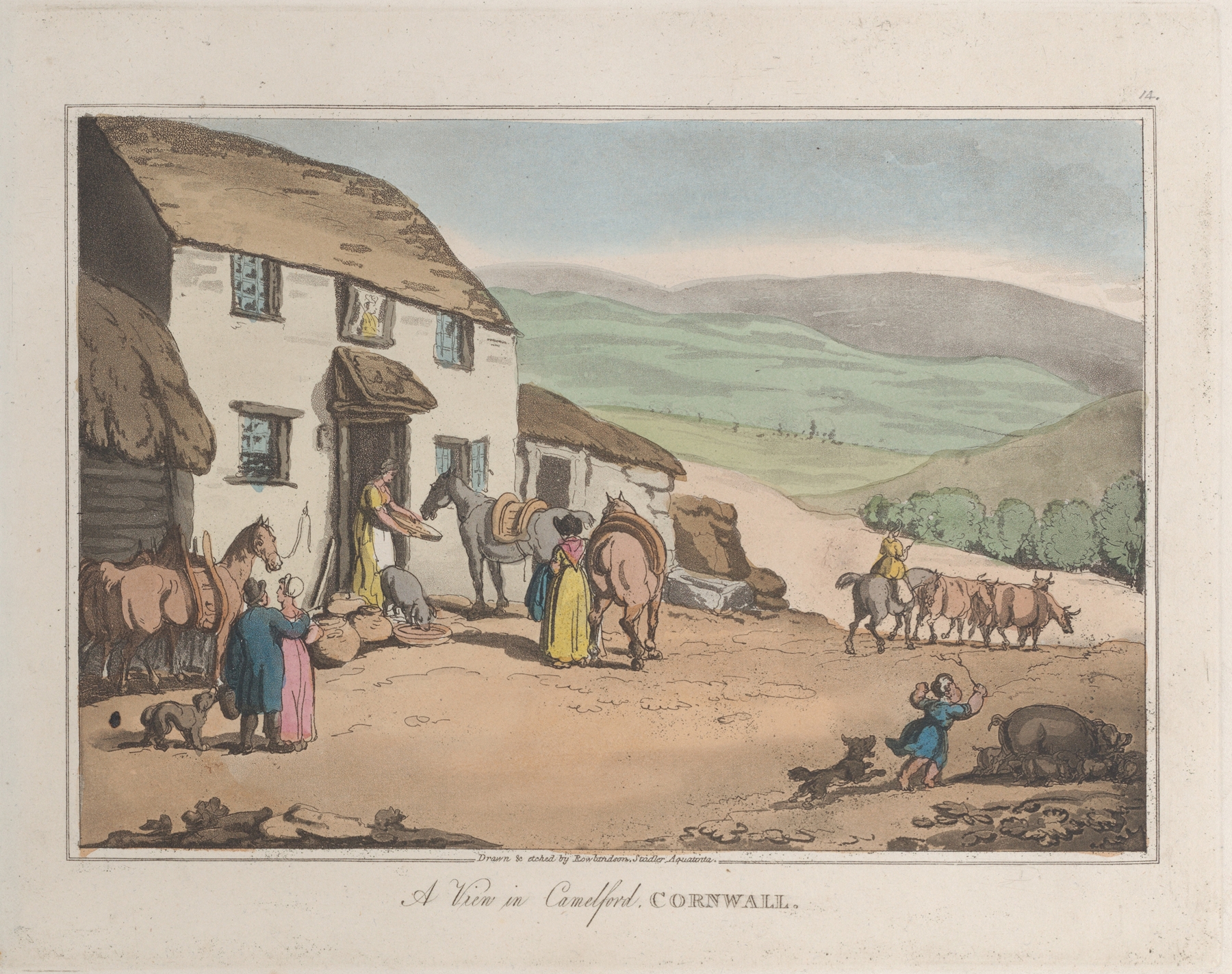
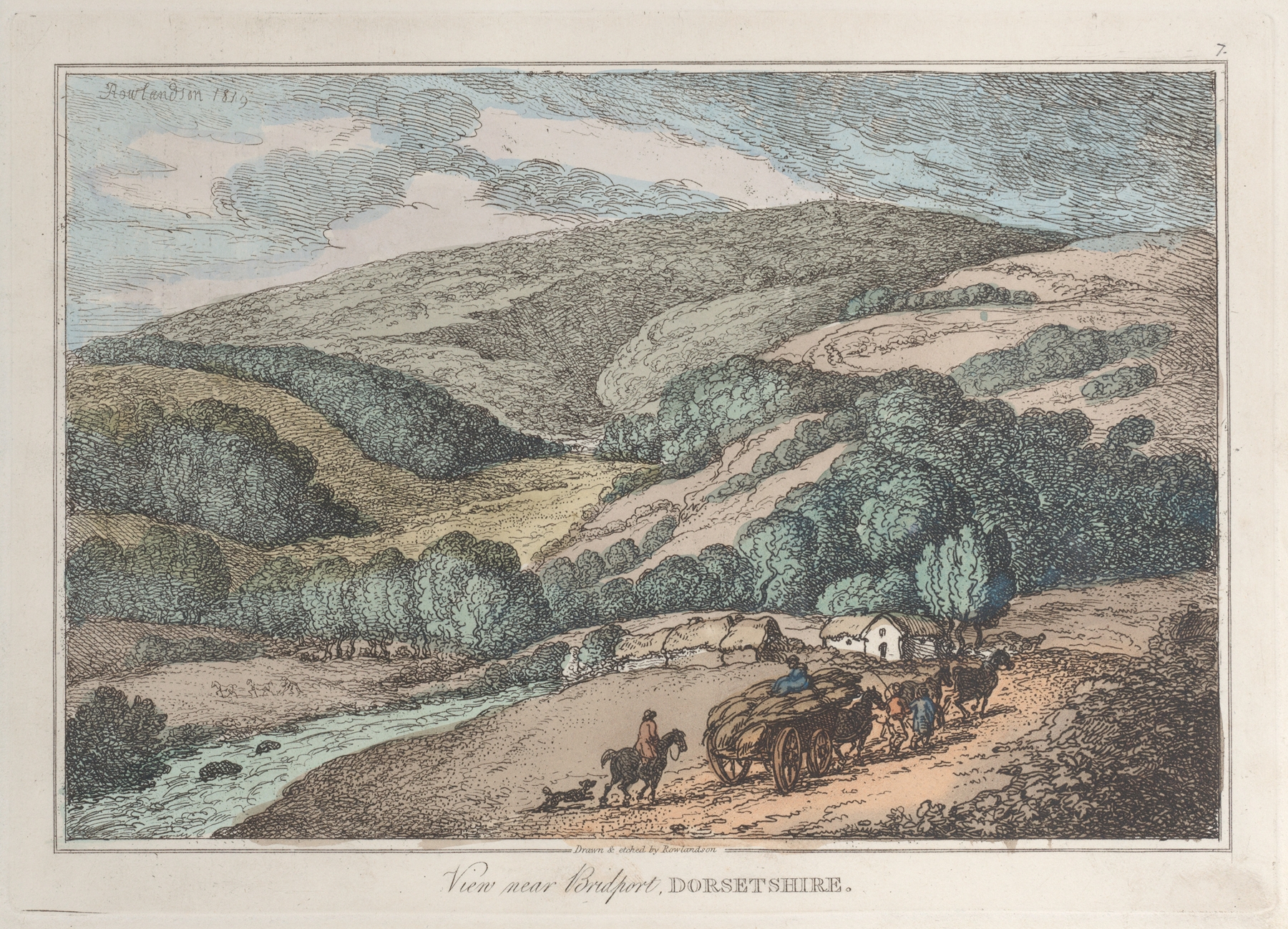
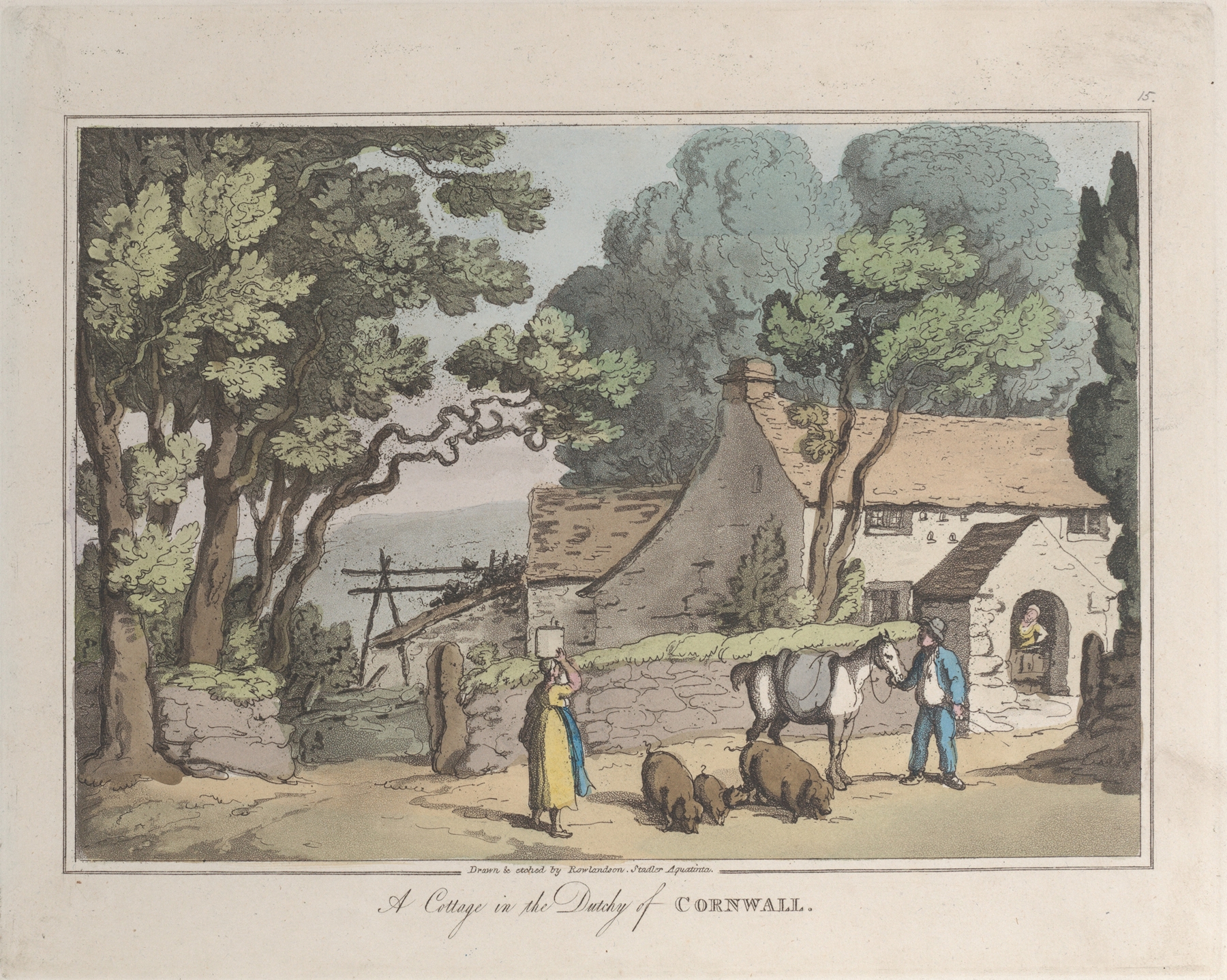
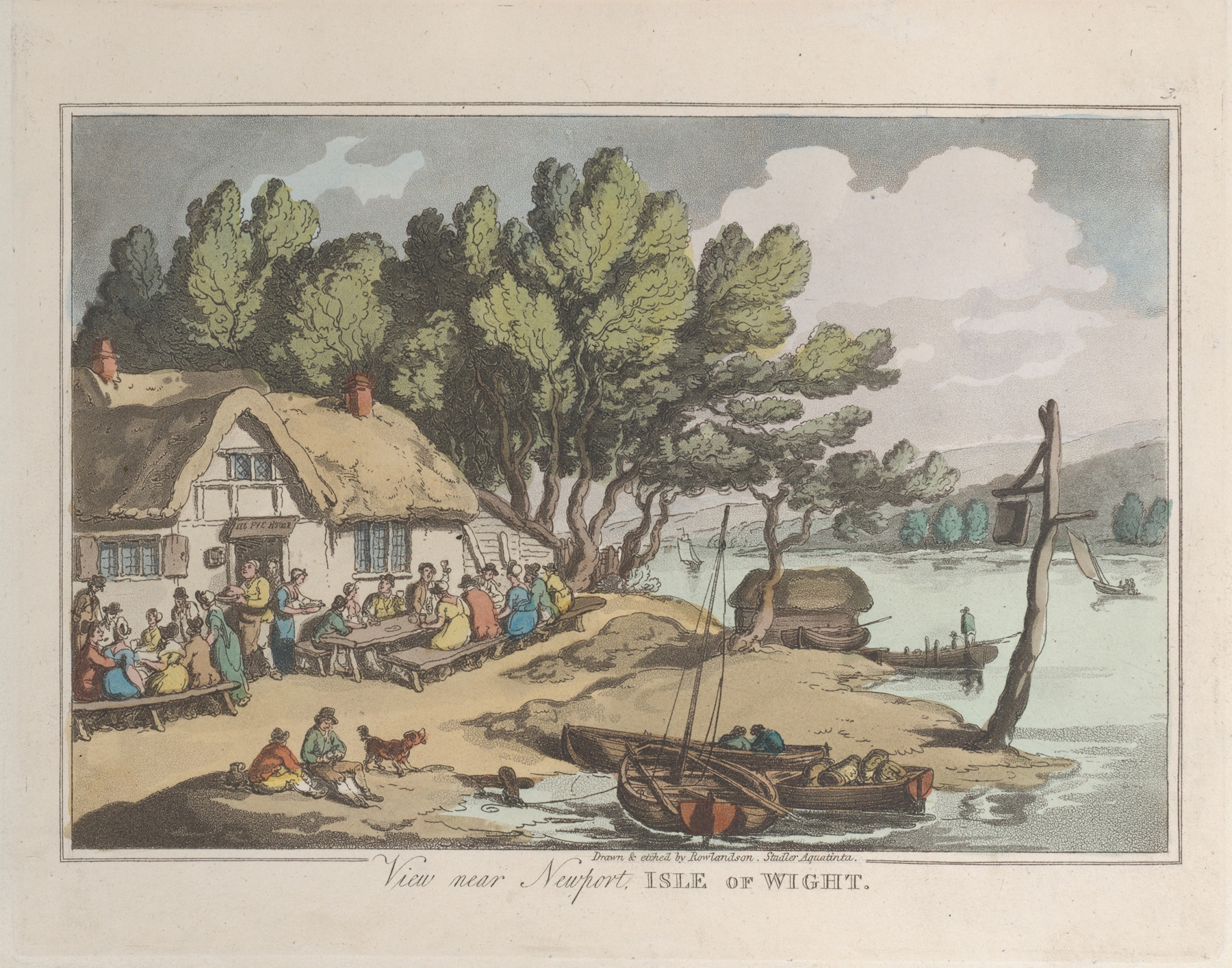
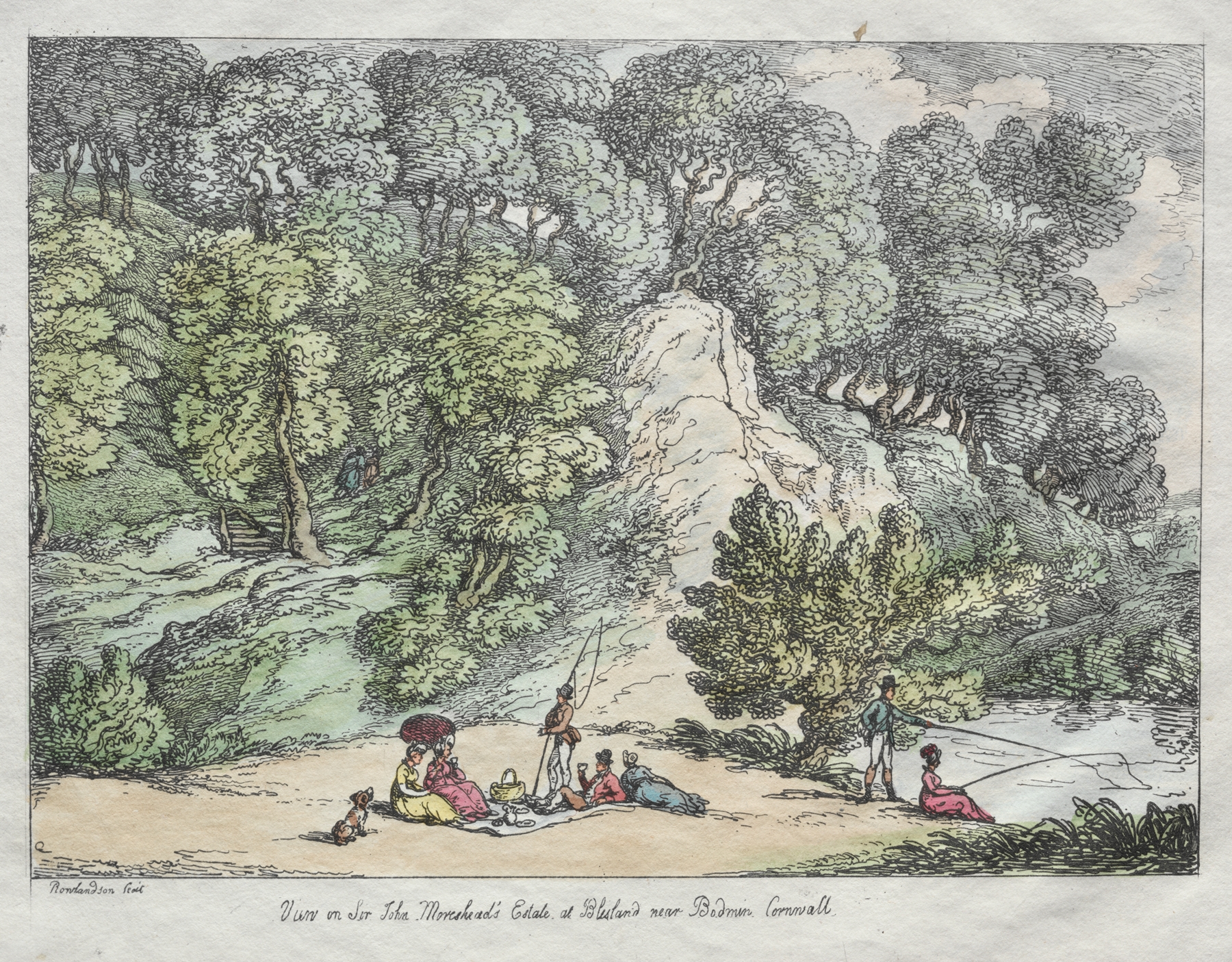
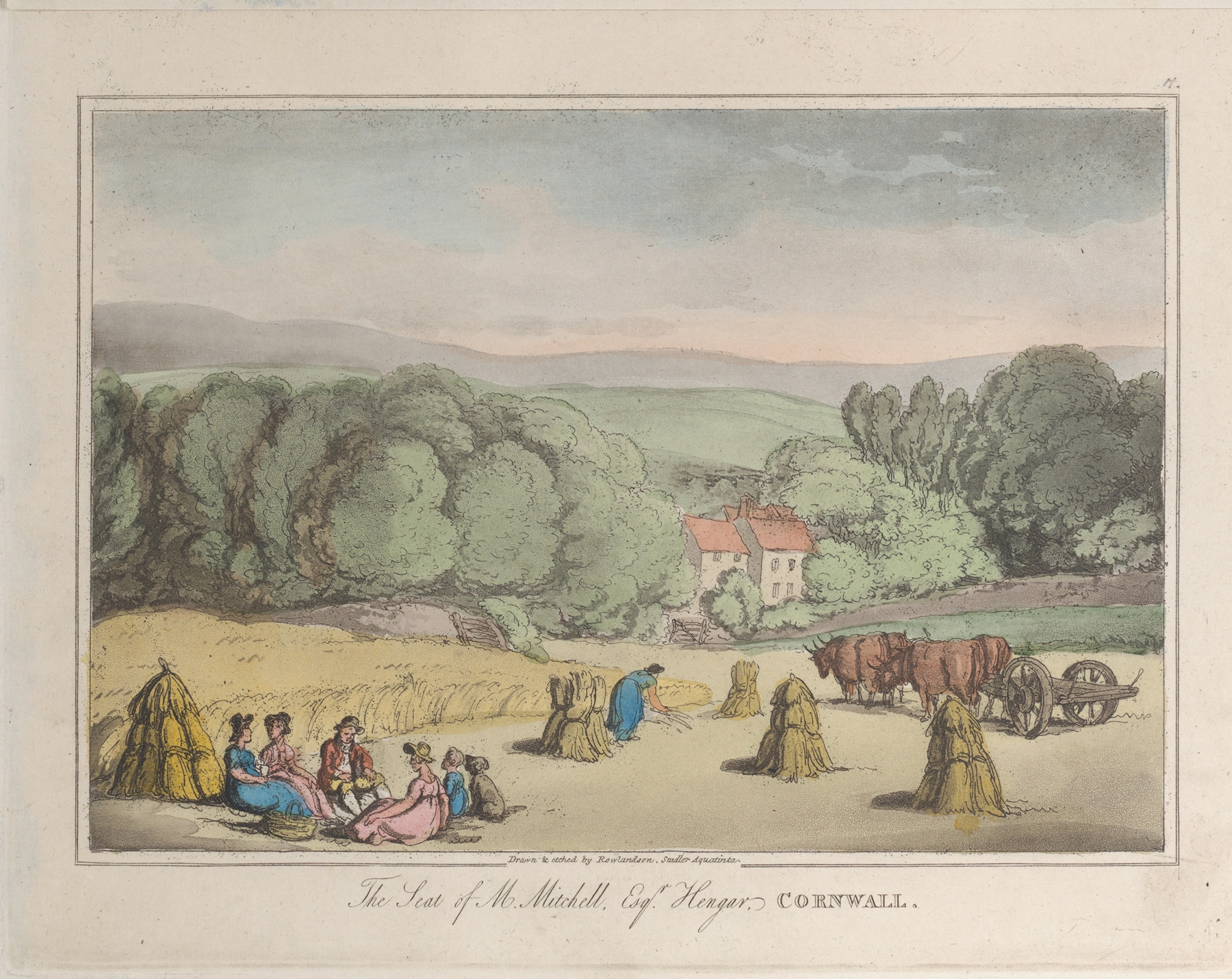
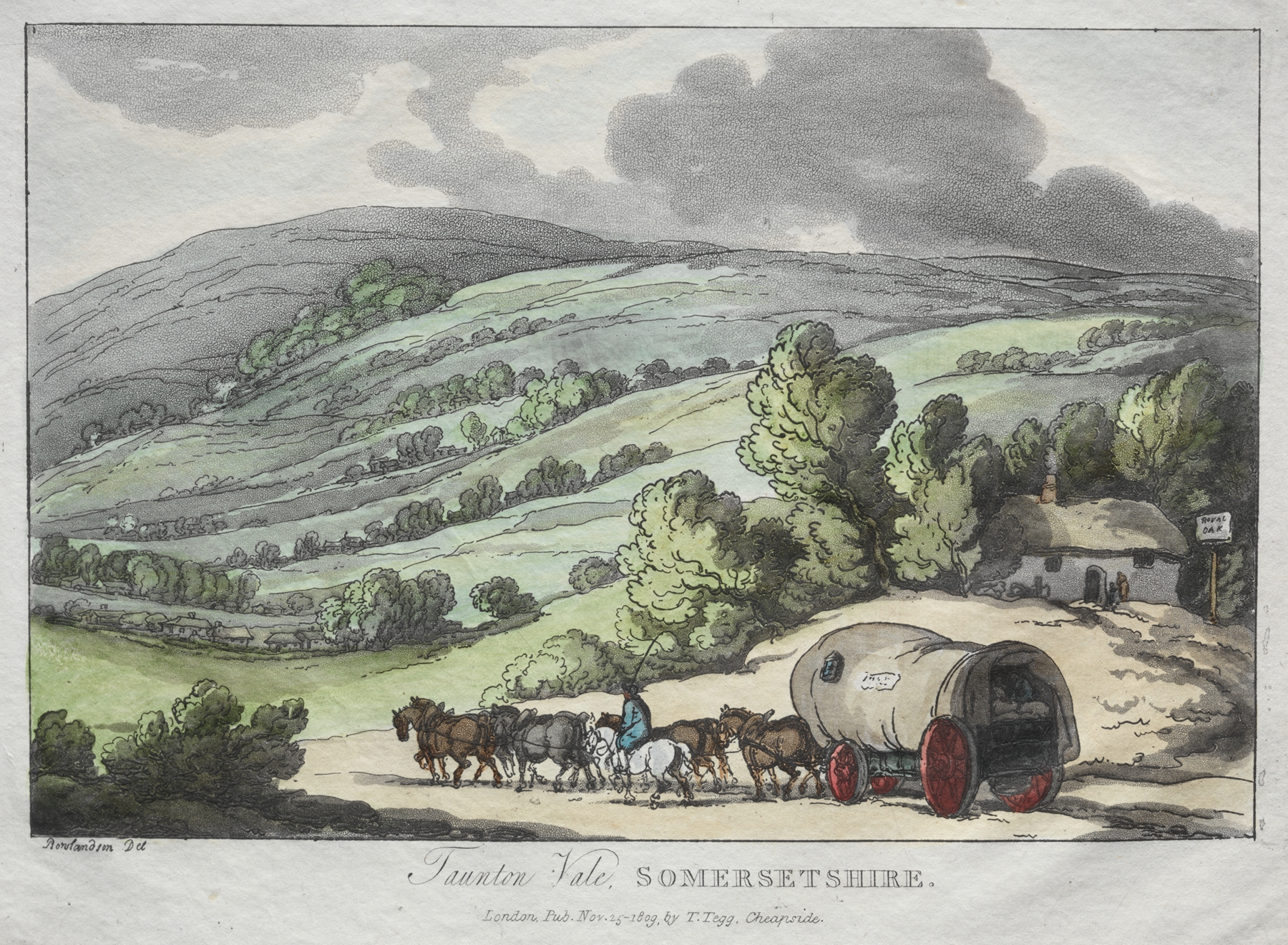
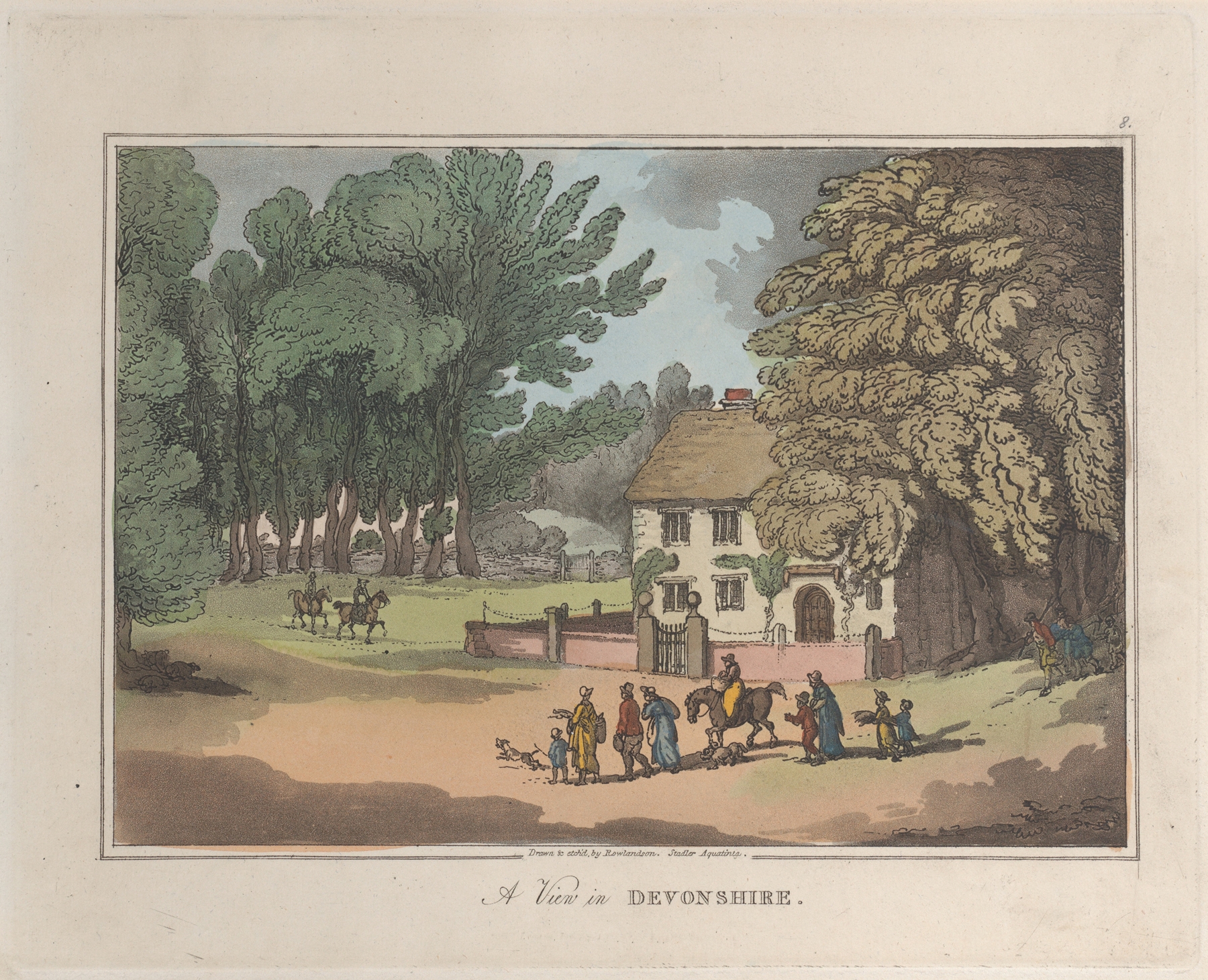
Who listens when art speaks of silence? In A View in Devonshire, the quietude of the English countryside resonates deeply, inviting reflection on the tranquility found in nature’s embrace. Look to the left at the gentle slope of the hills, where muted greens and browns blend seamlessly into a soft blue sky. The delicate brushwork captures the dappled light filtering through wispy clouds, illuminating the landscape with a serene glow.
Notice how the winding path leads the eye through the composition, inviting viewers to walk along as if they might step into the scene. Each stroke is meticulously placed, revealing Rowlandson's deft hand and keen observation of natural beauty. Within the stillness lies a subtle tension; the juxtaposition between the lively flora and the silent, empty path suggests a narrative just beyond our reach. The figures, mere hints in the distance, evoke a sense of solitude that contrasts with the vibrant life of the countryside.
This delicate interplay between presence and absence encourages contemplation on the passage of time and the ephemeral nature of experience. In 1822, Rowlandson was navigating a shift in his artistic focus, moving from satirical works to landscapes that captured the beauty of England. He painted this piece during a period of personal and professional transformation, as the art world began to embrace Romanticism, celebrating emotion and nature. The quiet serenity of this work reflects Rowlandson's search for solace, mirroring the broader yearning for peace in a rapidly changing society.