White Lion Inn. Ponder’s End, Middlesex — History & Analysis
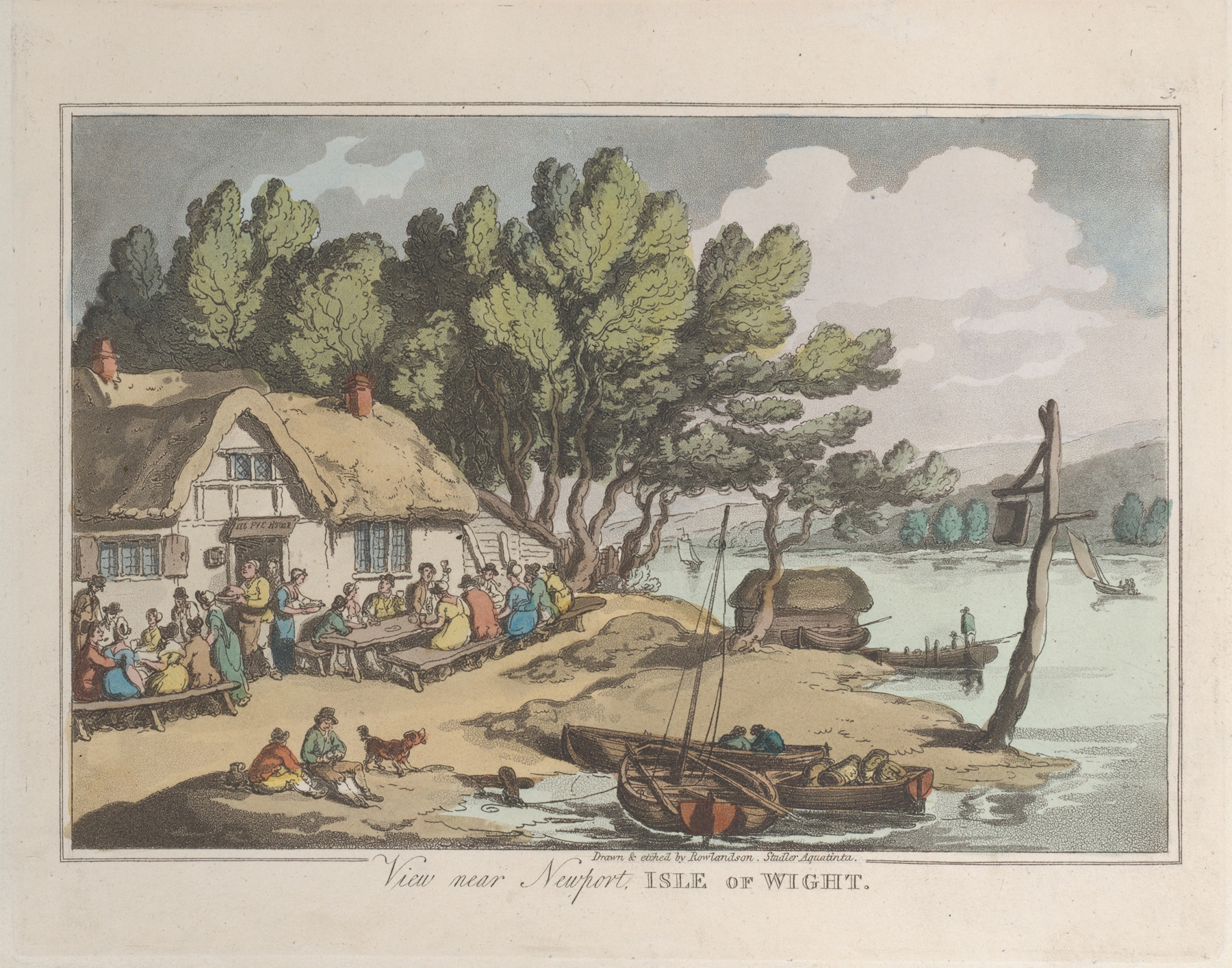
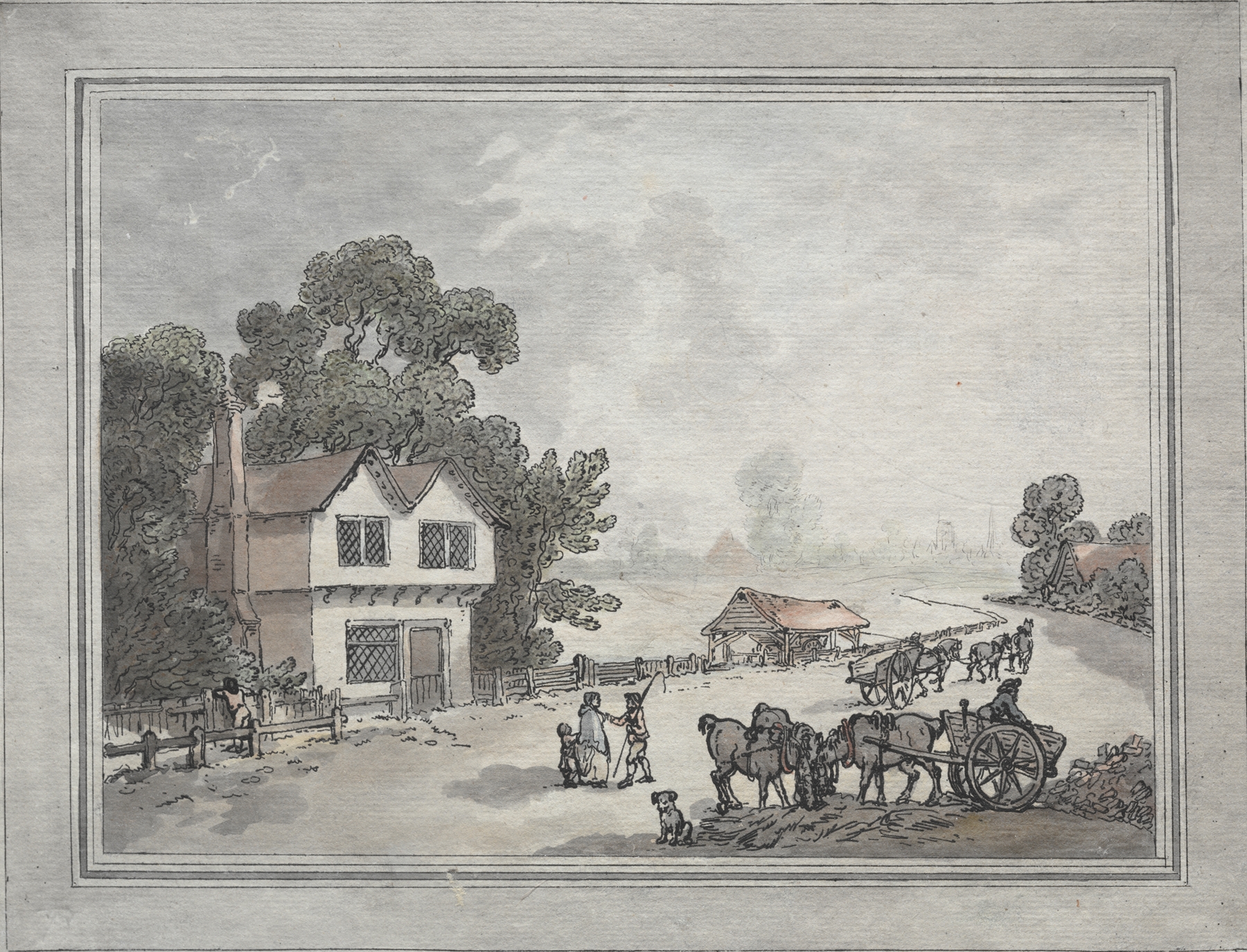
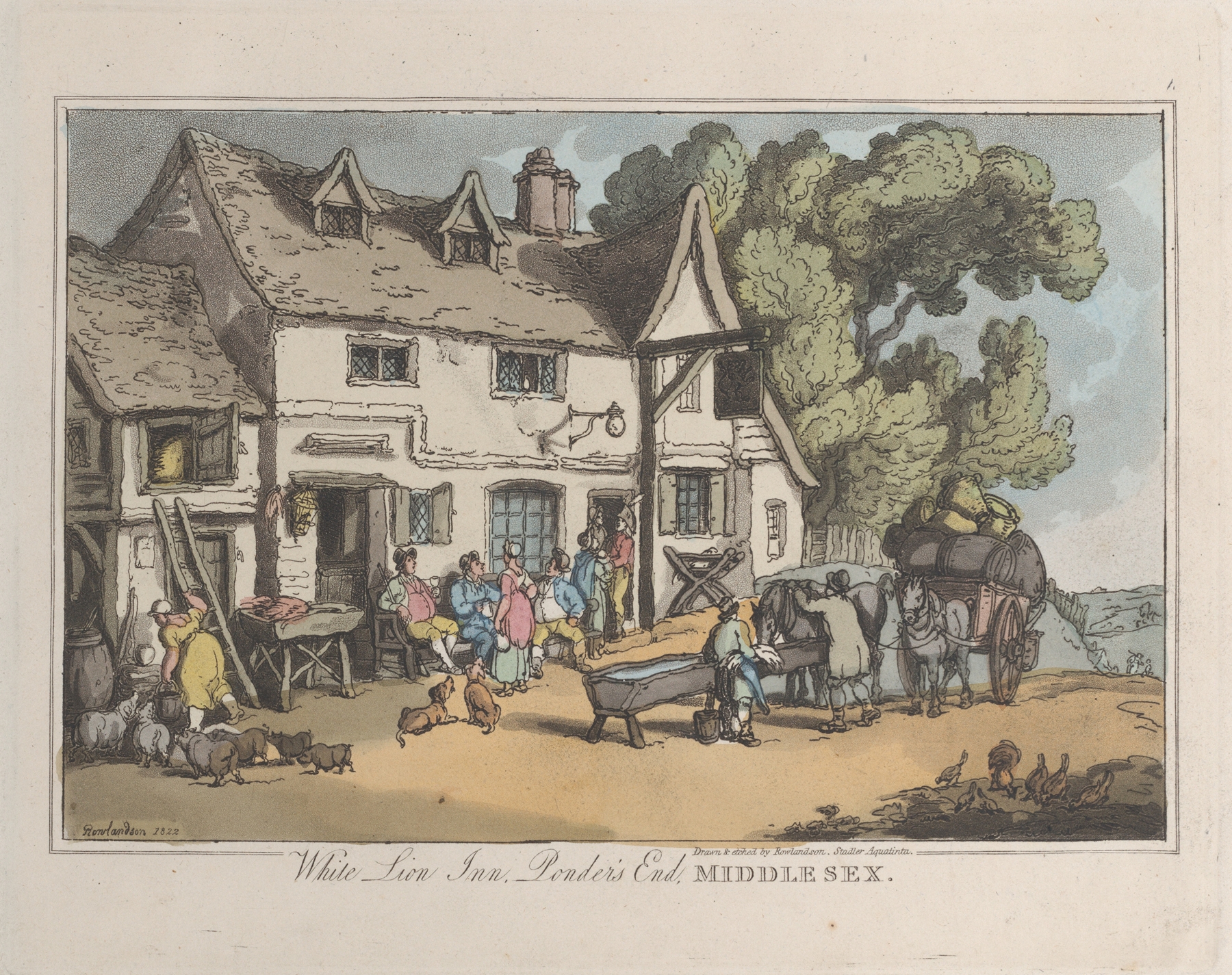
Did the painter know this moment would outlive them? In White Lion Inn, a scene of everyday life unfolds, yet one can almost sense an underlying tension, an unspoken betrayal lurking beneath the surface of congeniality. Look to the center of the canvas where a group of patrons gather, their faces vibrant yet enigmatic. Notice the way the warm, earthy tones of the inn contrast against the cooler shadows lurking in the corners, creating a sense of intimacy coupled with unease. The flickering candlelight dances across the textured surfaces, illuminating the bustling activity yet concealing the deeper narratives of the figures within.
Rowlandson's masterful brushwork invites the viewer to peer closely, revealing subtle expressions and gestures that whisper secrets of their relationships. Delve into the details: the subtle arch of an eyebrow, a hand poised delicately over a drink, and the shared glances that suggest more than mere conversation. There lies a contrast between the overt cheer of the inn and the potential for hidden conflicts. The figures are interlocked in a dance of social protocols, yet their body language hints at unacknowledged strains and betrayals that threaten to disrupt the veneer of camaraderie.
In 1822, while capturing life at the inn, Rowlandson was immersed in a world undergoing rapid change. The impact of the Industrial Revolution was reshaping society and altering social interactions. Known for his satirical works, he used this setting to comment on the complexities of human relationships, reflecting both the vibrancy and the contradictions of his time. The painting not only depicts a moment but also invites contemplation on the nature of trust and the fragility of social connections.