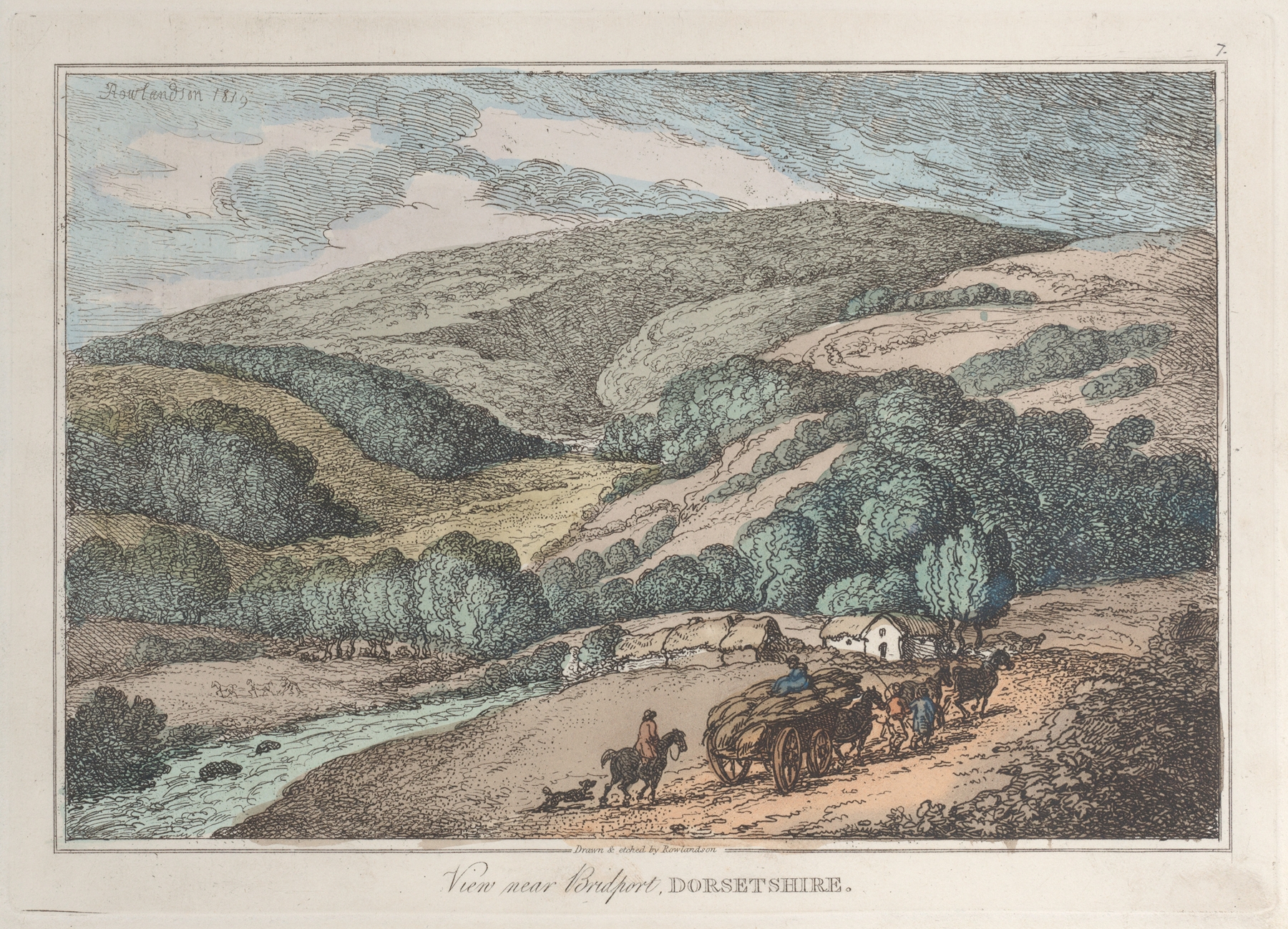
View near Bridport, Dorsetshire — History & Analysis
Is this a mirror — or a memory? The soft haze of sunlight spilling over the lush, undulating hills invites contemplation on the fleeting nature of innocence. In this tranquil landscape, time seems to hold its breath, leaving the viewer suspended in a moment that feels both distant and deeply personal. Look to the center of the canvas, where verdant fields meet the gentle curve of the horizon, painted in a palette of soothing greens and warm ochres. The delicate brushwork captures the light as it dances across the landscape, illuminating a small figure in the foreground.
This lone presence, almost insignificant against the vastness of nature, draws the eye and evokes a sense of solitude, inviting introspection. Notice how Rowlandson's composition balances the interplay of light and shadow, heightening the emotional resonance of the scene. Beneath the surface, the painting explores themes of innocence and nostalgia, reminiscent of childhood moments spent in quiet communion with nature. The juxtaposition of the solitary figure against the sprawling landscape heightens the tension between individuality and the vastness of the world.
This simple yet poignant scene whispers of memories shaped by the innocence of youth, evoking a longing for simplicity in an increasingly complex life. In 1822, Rowlandson painted this piece during a time of personal hardship, grappling with financial instability and the pressures of a changing art world. His work reflects the Romantic fascination with the natural world, a response to the industrialization sweeping through England. As he captured the serene beauty of Dorsetshire, Rowlandson simultaneously laid bare his own yearning for solace and the untainted joys of life.