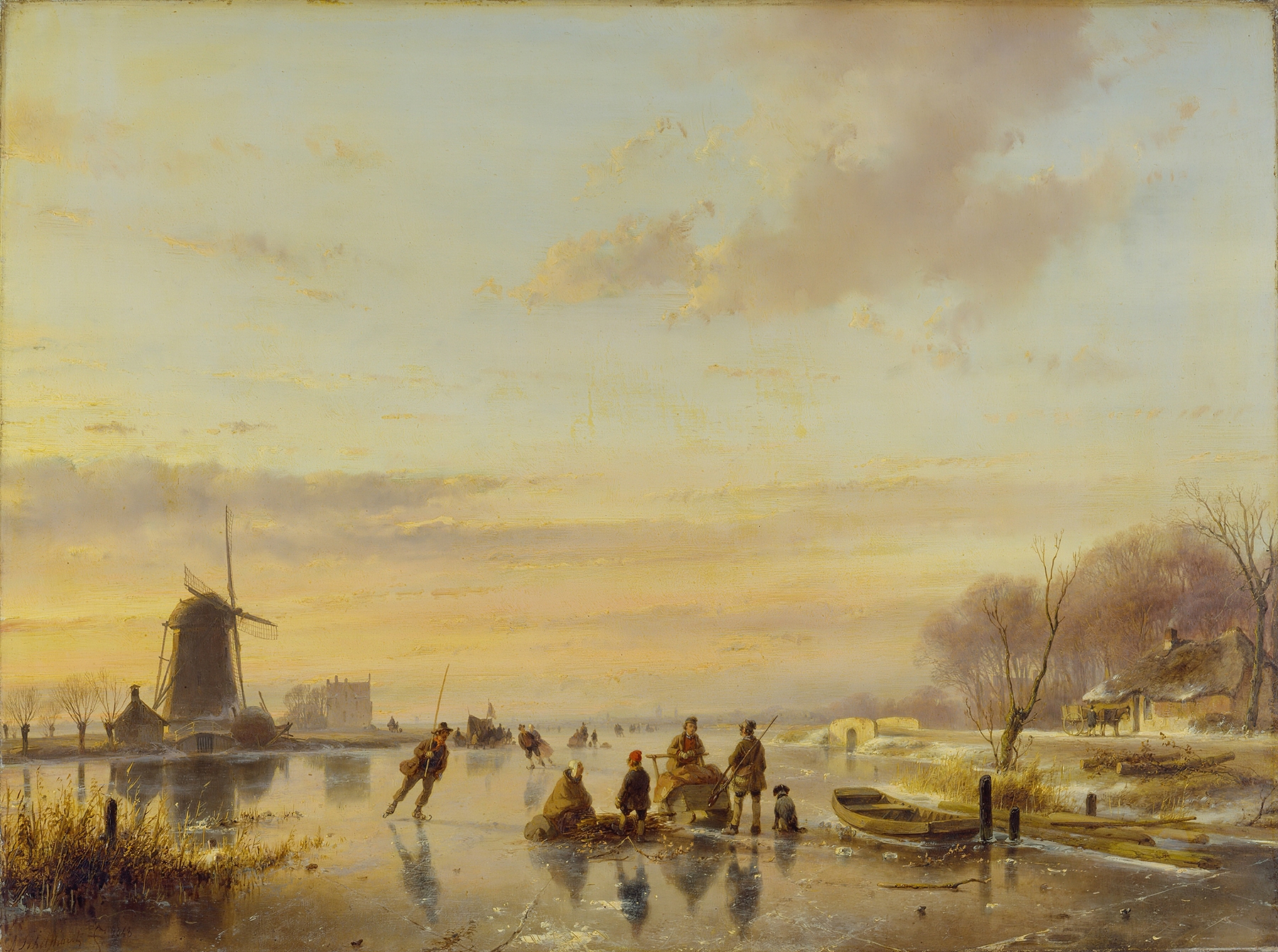
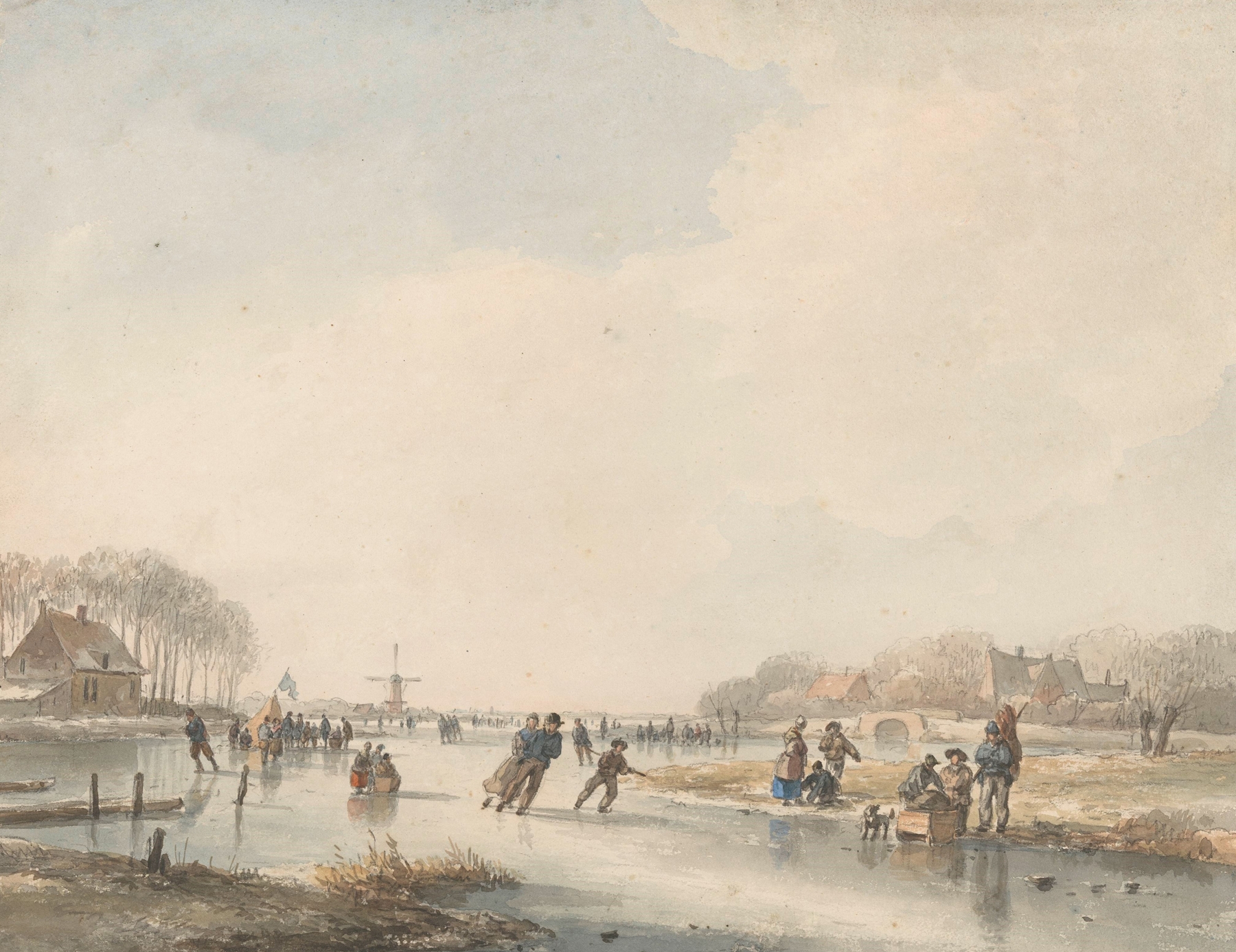
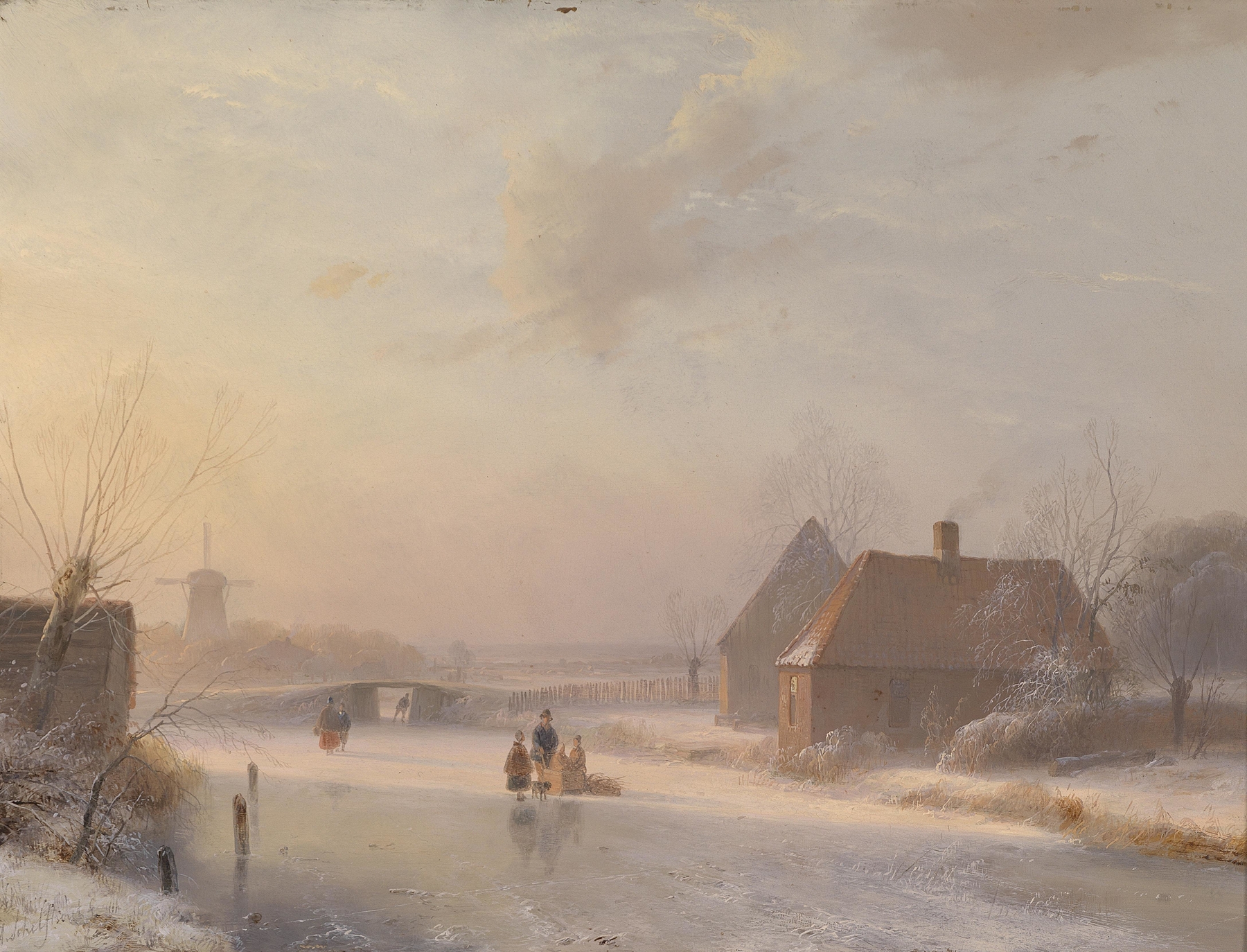
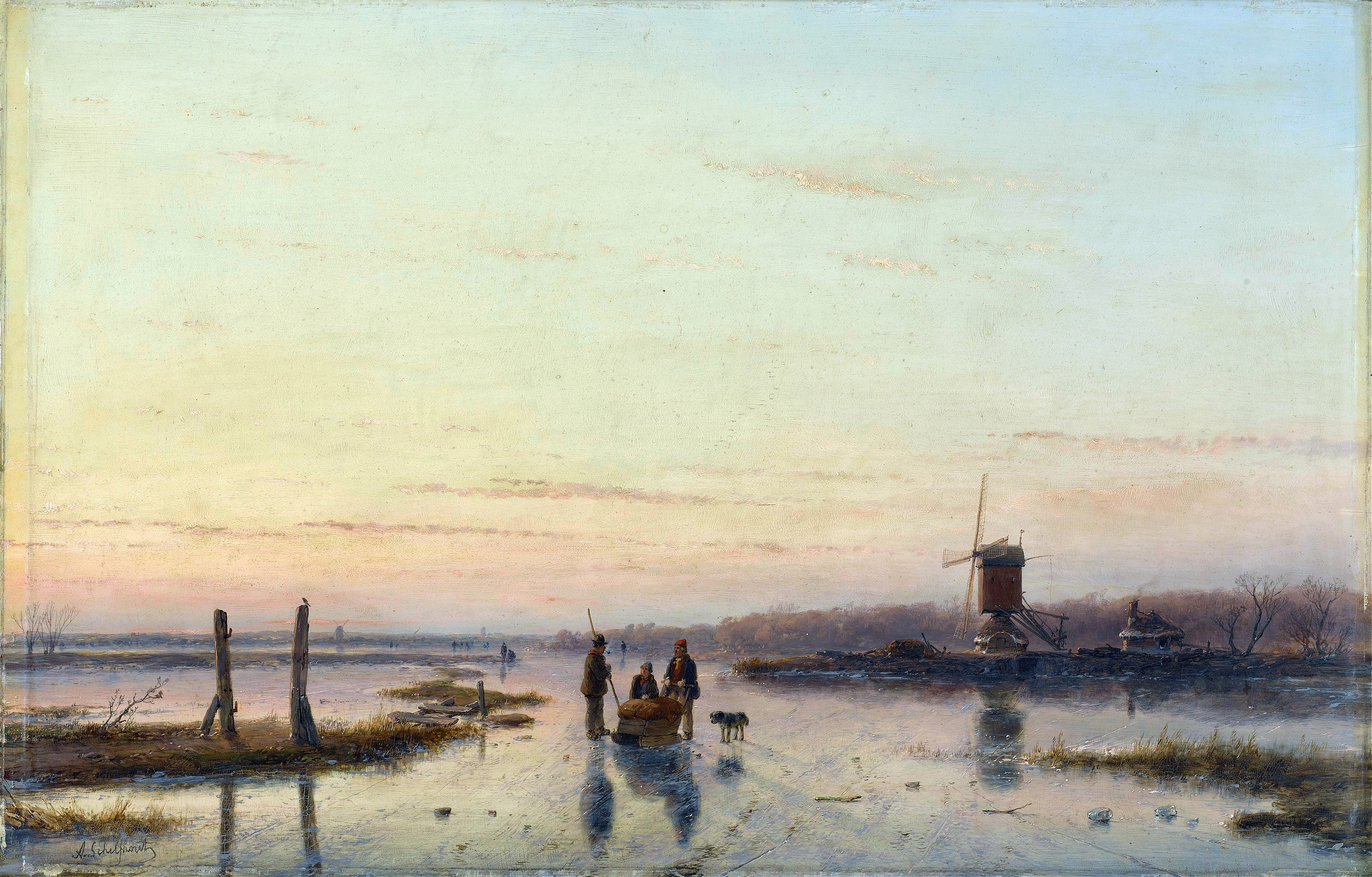
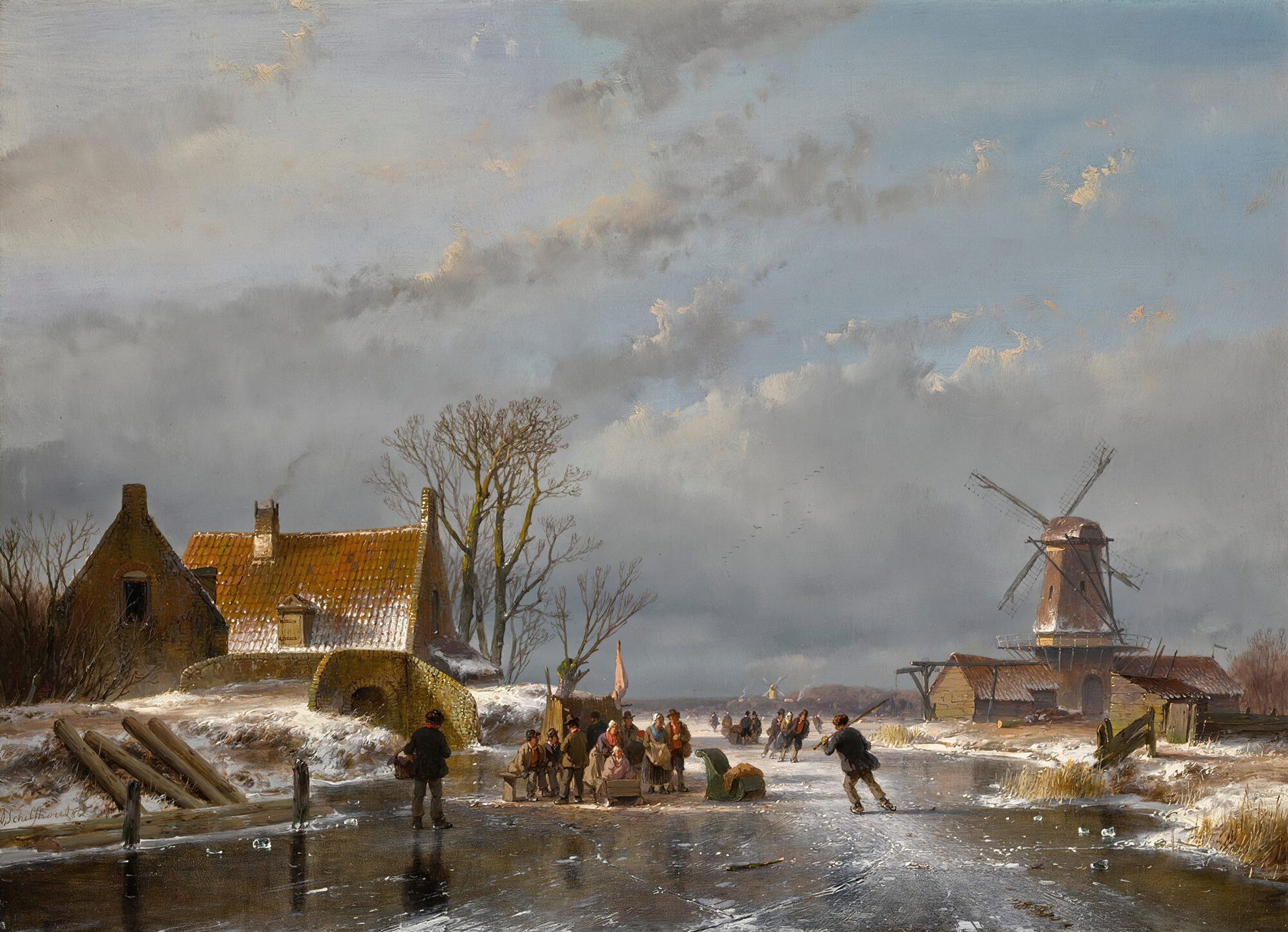
A winter landscape, on the right a windmill and houses by a frozen canal — History & Analysis
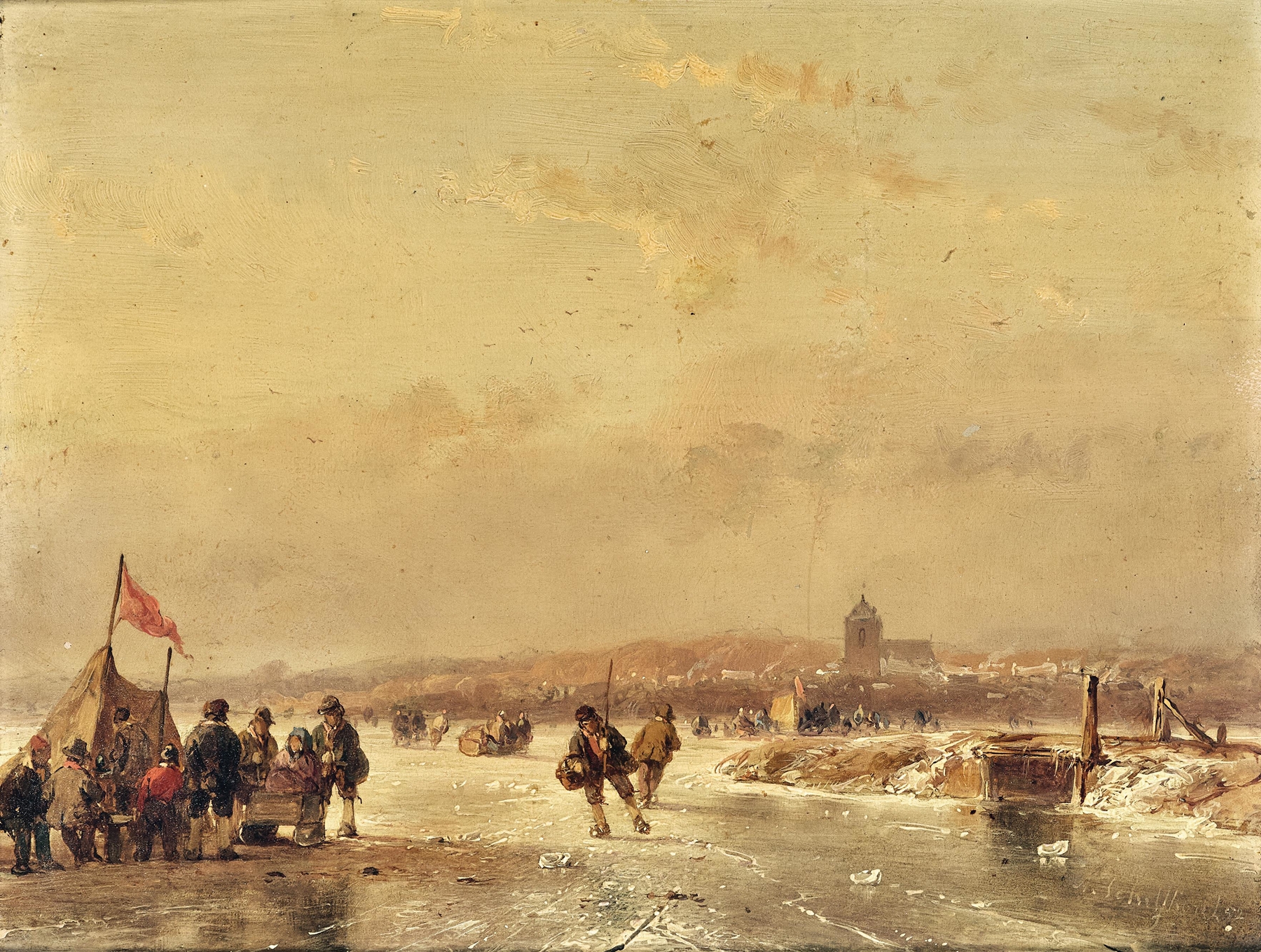
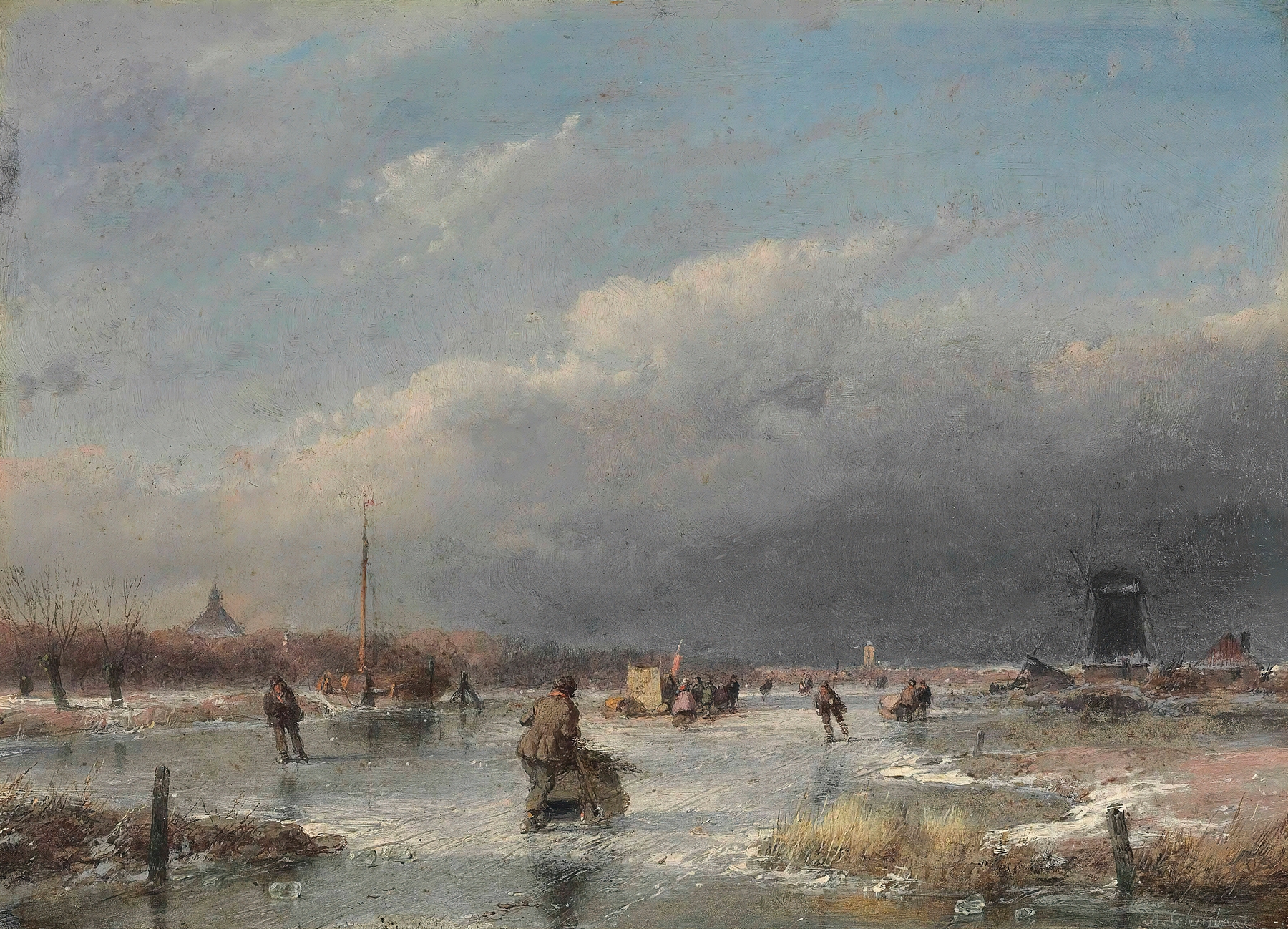
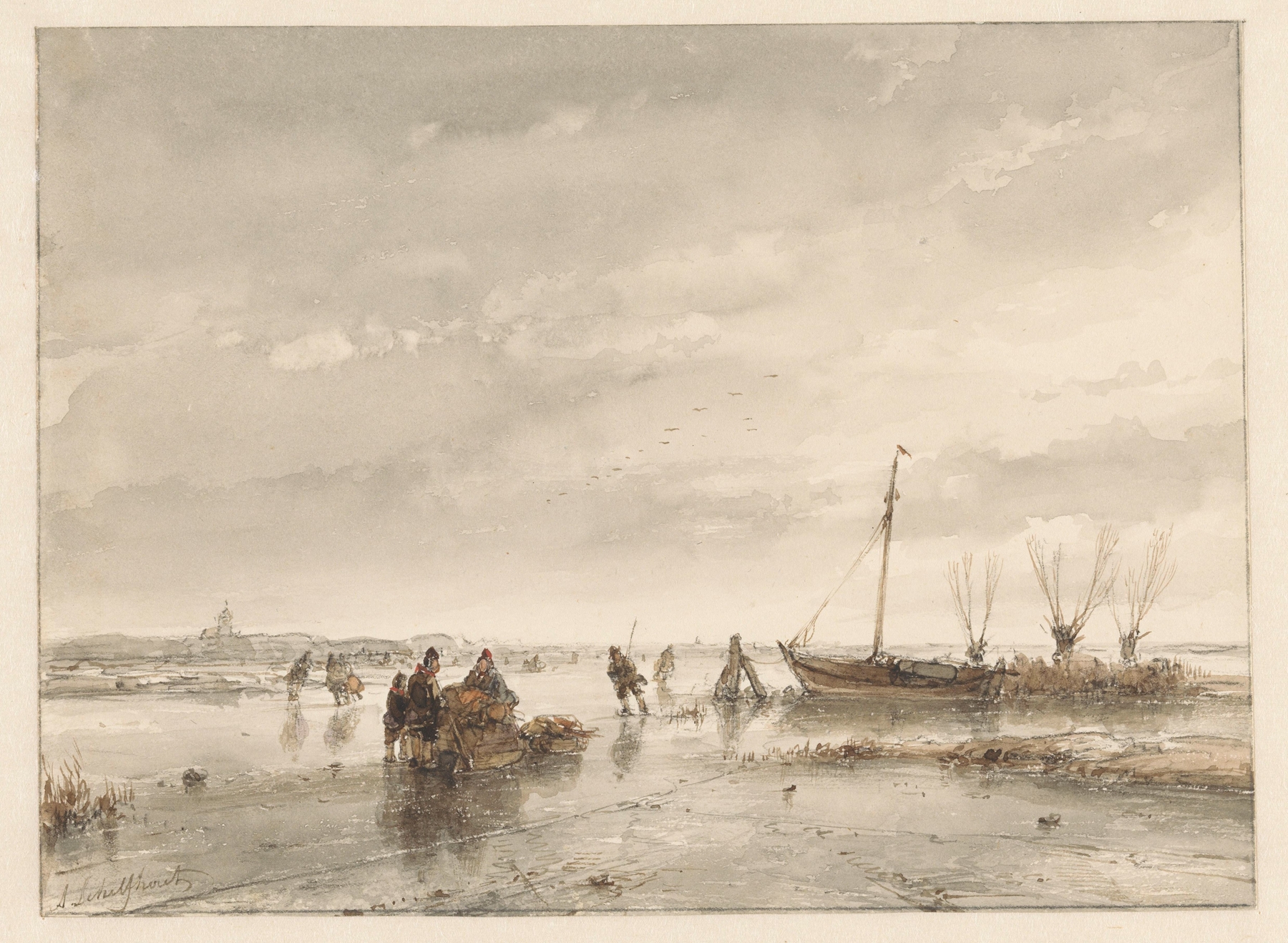
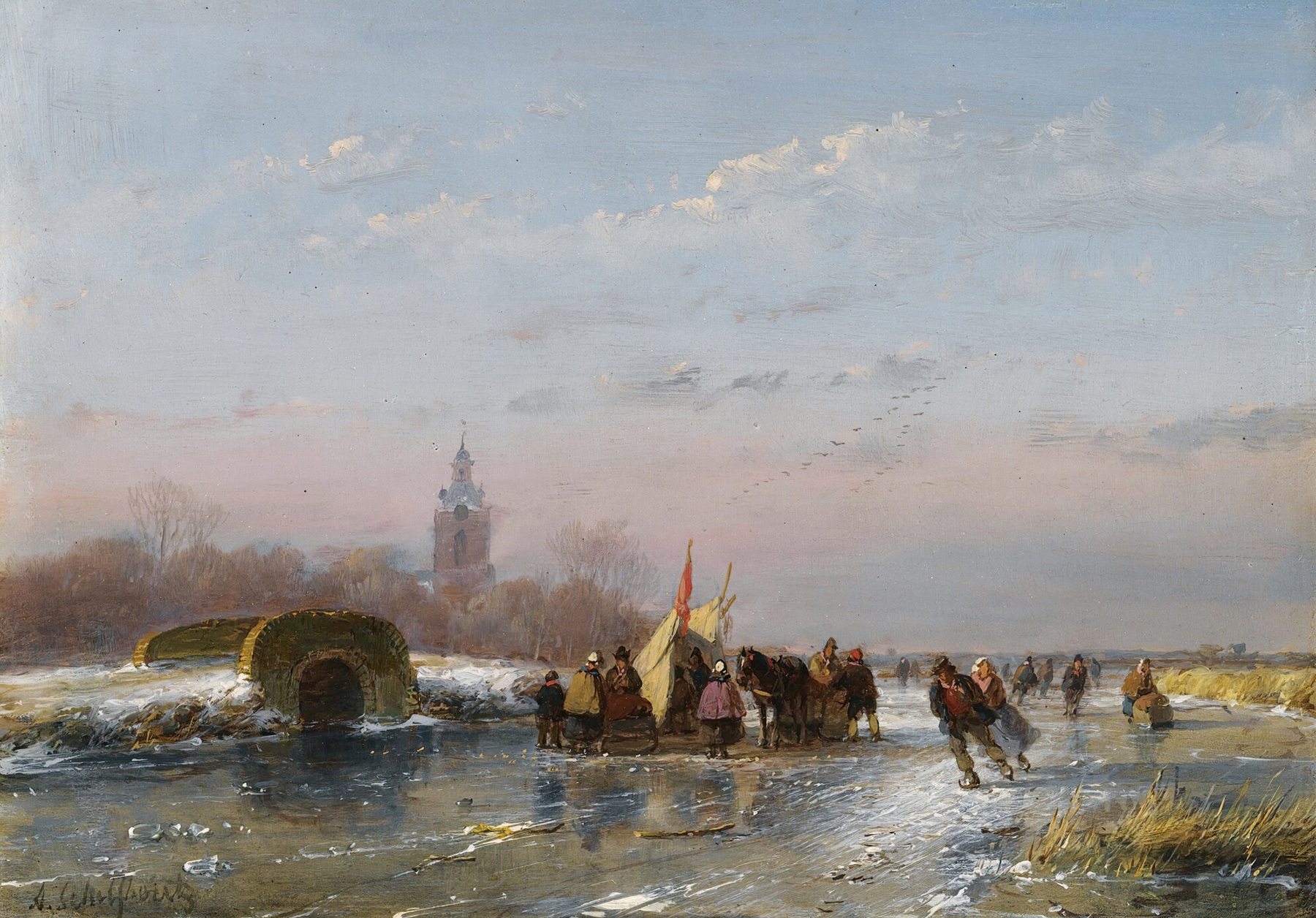
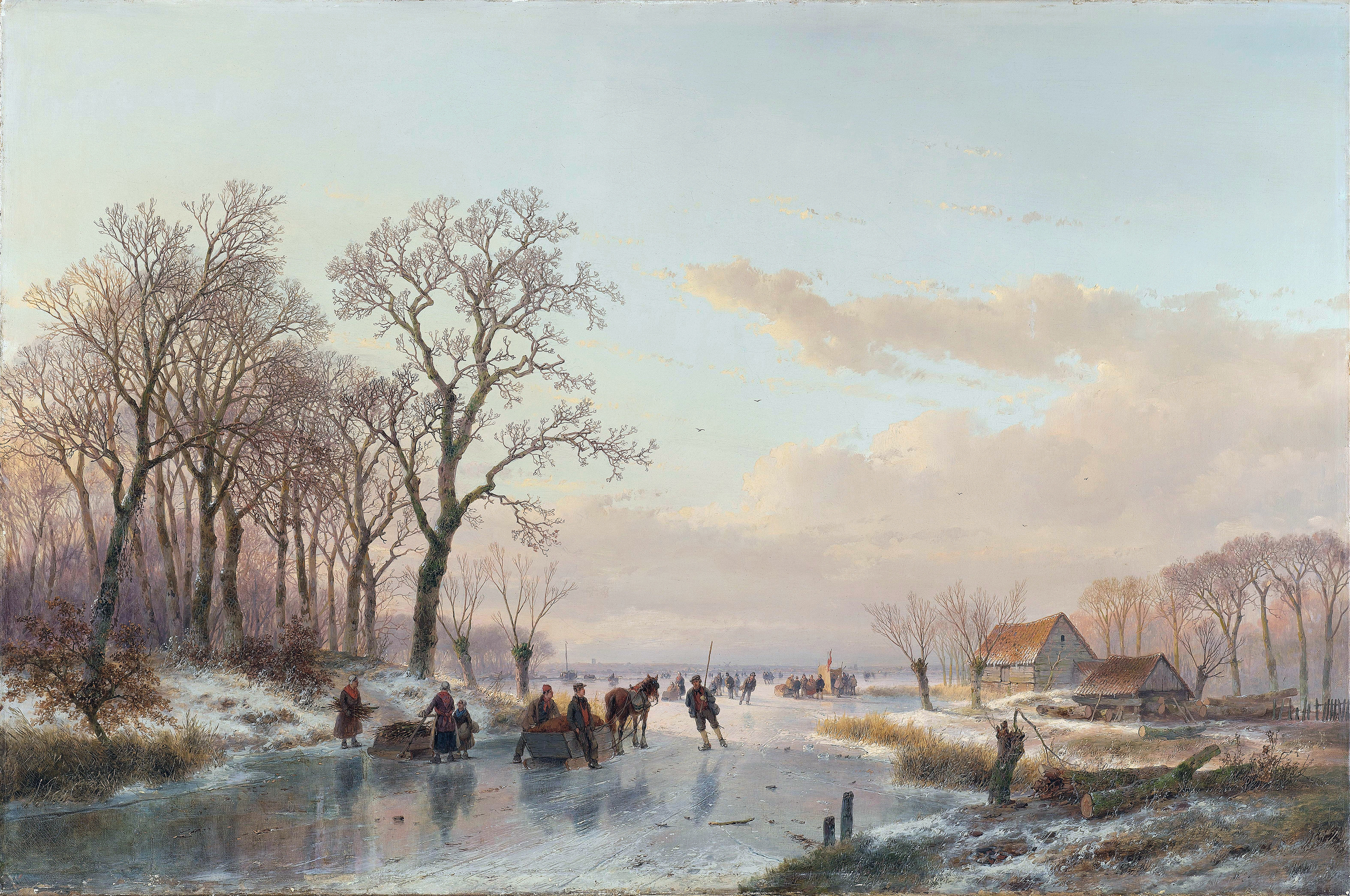
“Sometimes beauty is just pain, disguised in gold.” In the frostbitten embrace of winter, life and stillness exist in delicate balance, crafted masterfully in the serene landscapes of Andreas Schelfhout. Focus first on the stark contrast of color; the icy blues of the frozen canal draw your eye, framing the muted browns and whites of the windmill and the quaint houses lined along its edge. Notice how the crispness of the air seems to vibrate, captured in the fine brushwork that creates texture in the snow, enticing you to feel the chill. The light dances softly across the scene, illuminating the windmill's sails and inviting you to ponder the harmony between nature and human structures in this tranquil winter tableau.
Hidden within the serene aesthetics lies a tension between quietude and abandonment. The frozen canal, while beautiful, signifies a moment of stasis, a time when life is paused and dreams are covered by snow. The windmill, a once-bustling hub, now stands silent, embodying the duality of industrious life and the stillness that winter brings, evoking thoughts of resilience amidst the harshness of the season.
In 1841, Schelfhout painted this scene during a time when Europe was experiencing a shift in artistic values, moving towards Romanticism and away from Neoclassicism. He was active in the Netherlands, where the landscape served not only as a subject but as a reflection of the turbulent human emotions tied to nature. This painting encapsulates the artist's exploration of balance between the beauty of the frozen world and the underlying melancholy that accompanies it.