A Wooded Landscape; the Path on the Dyke — History & Analysis
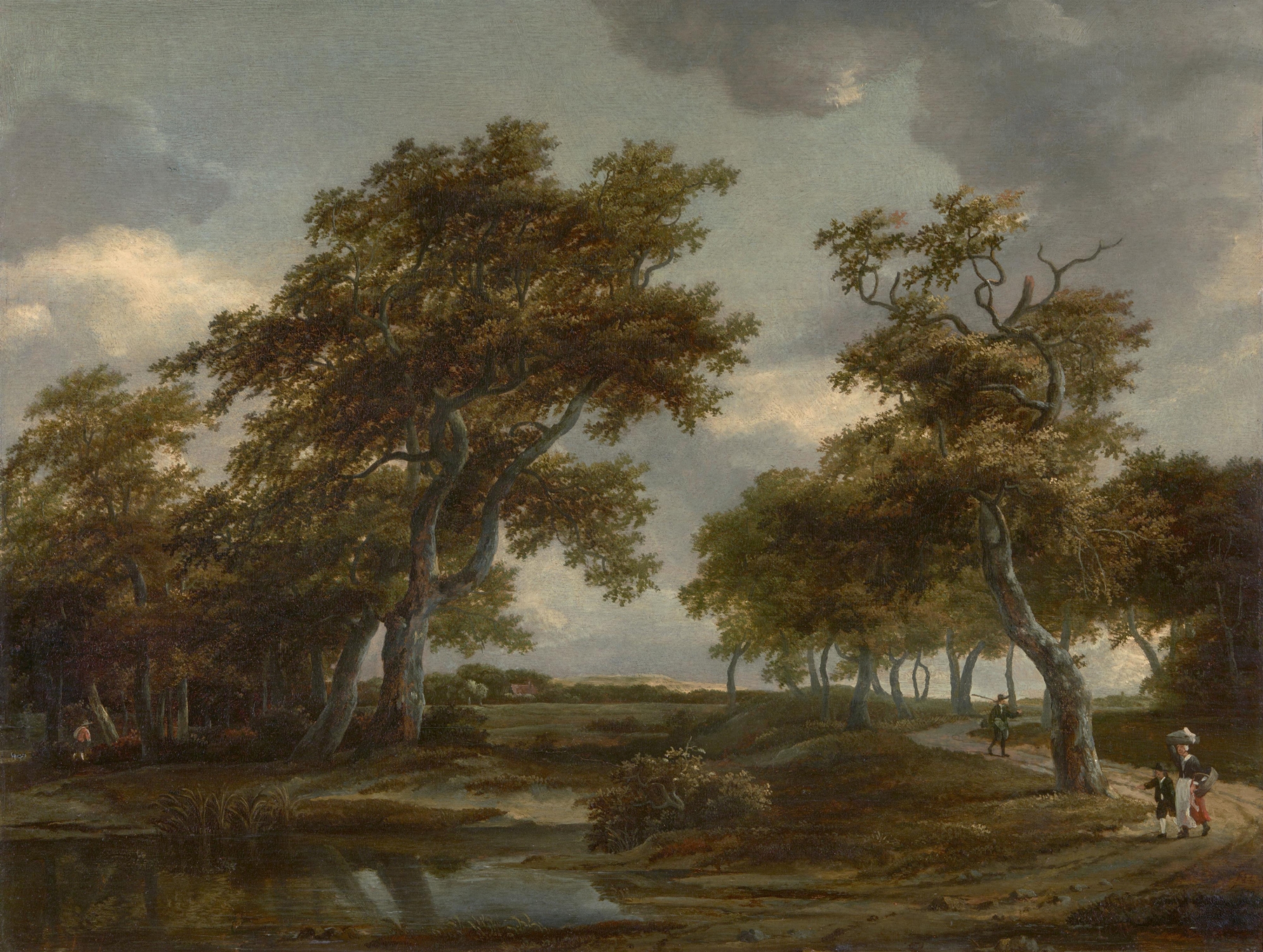
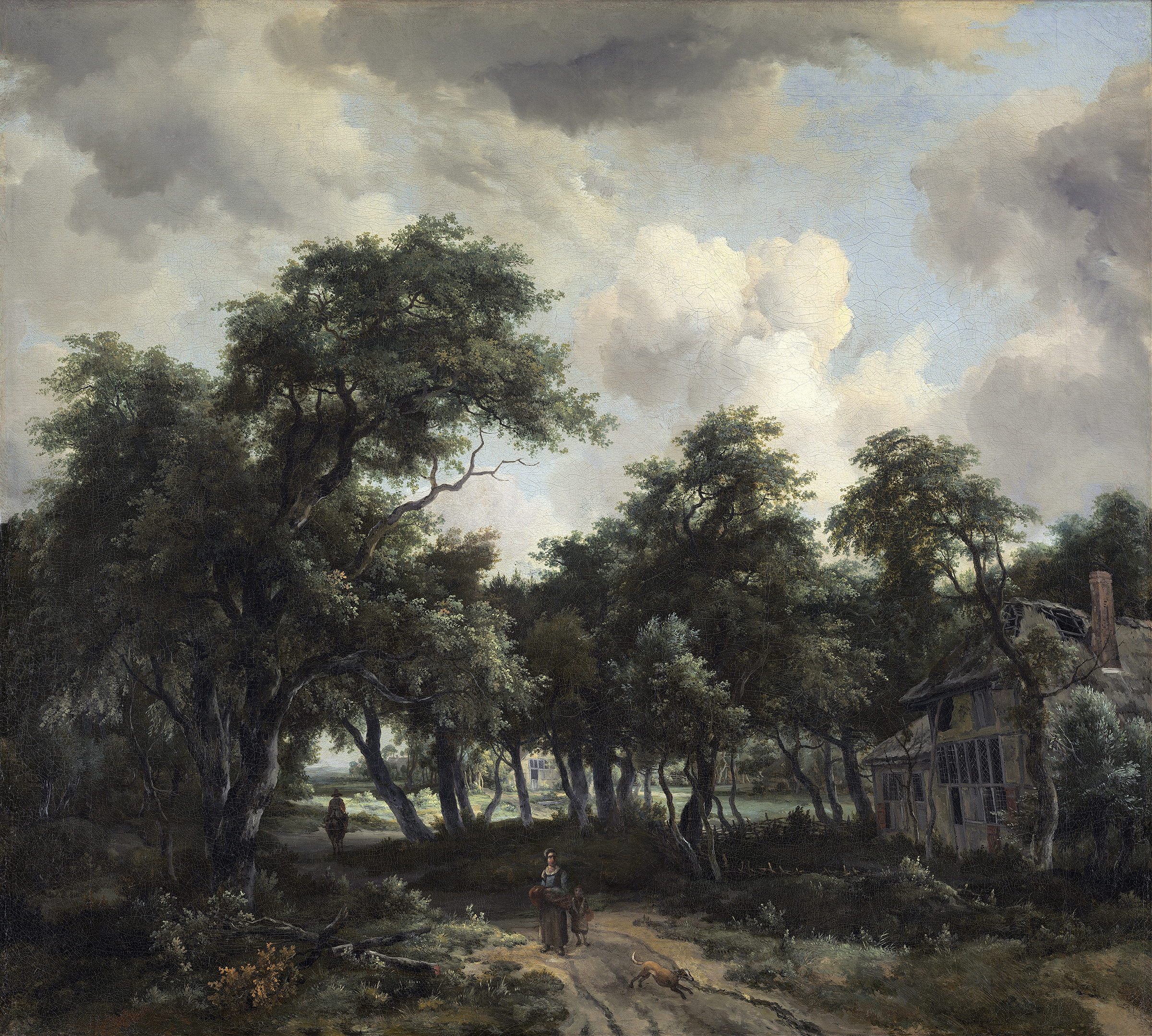
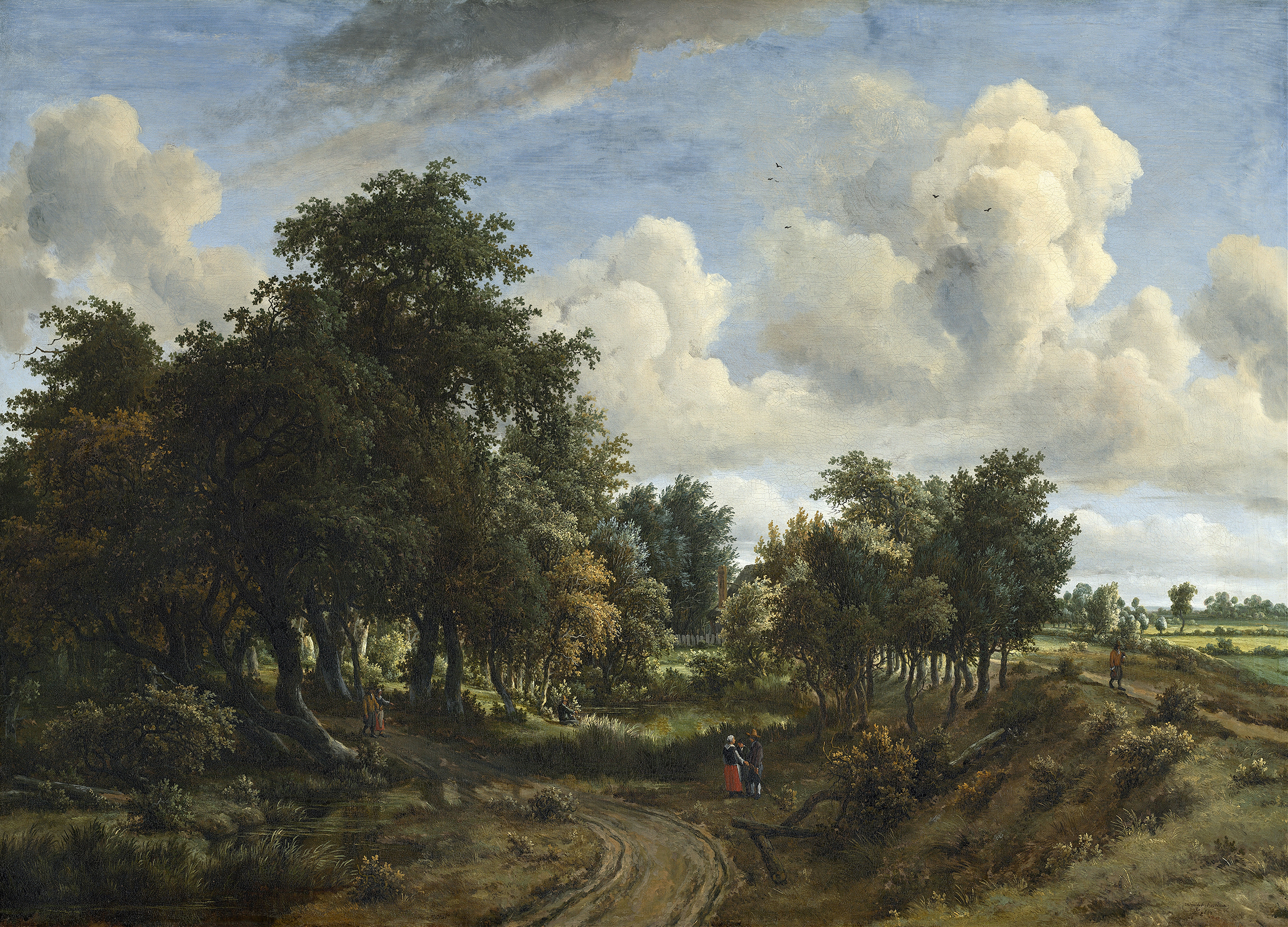
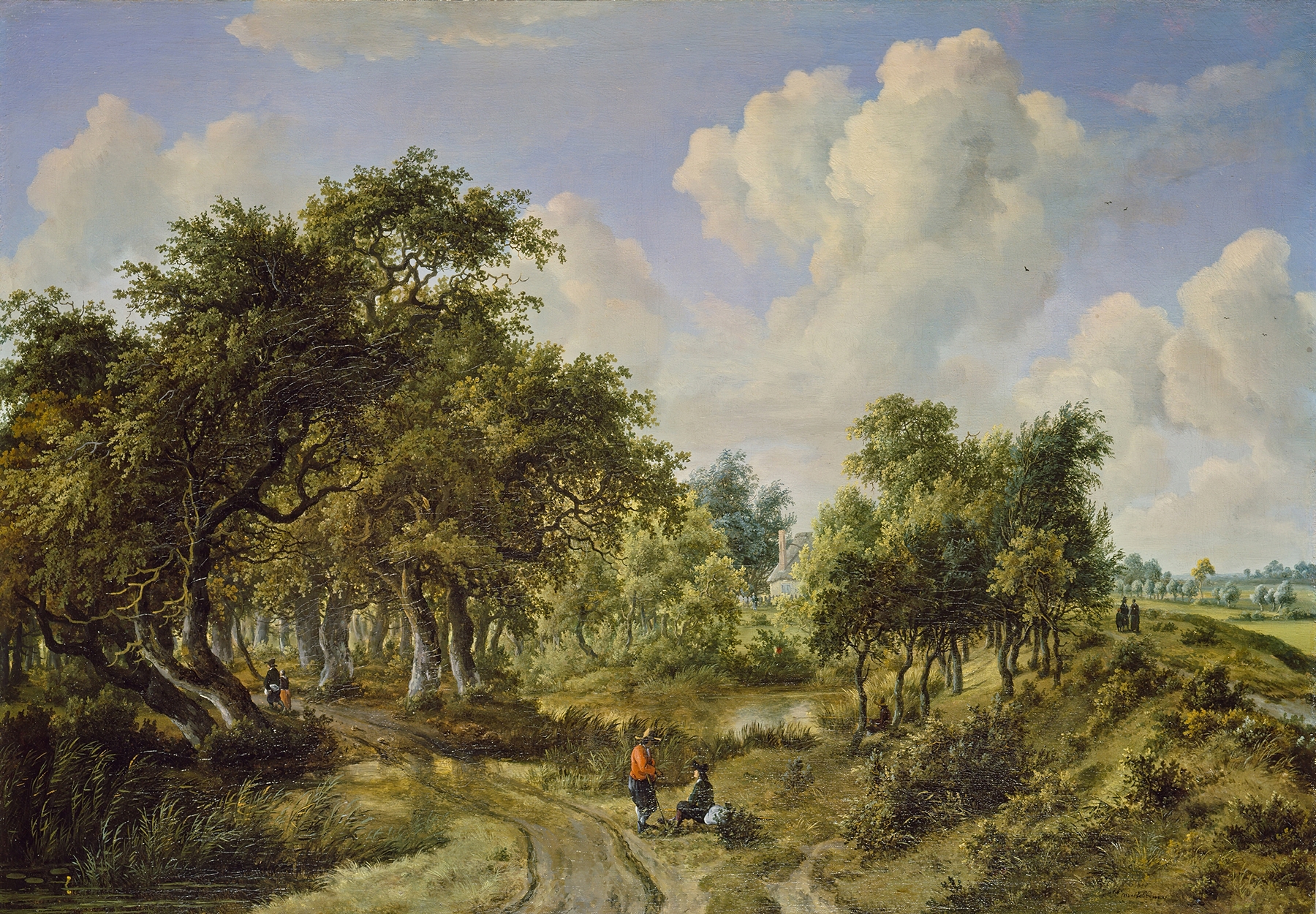
Who listens when art speaks of silence? In A Wooded Landscape; the Path on the Dyke, nature whispers secrets, draped in verdant hues and shadowy depths, suggesting a delicate dance between calmness and the madness that brews beneath the surface. Focus on the path that meanders through the lush landscape, leading your gaze into the distance. Notice how the light filters through the canopy, casting dappled patterns on the ground, inviting the viewer to step into this serene realm.
Hobbema’s use of greens and earthy browns establishes a comforting palette, yet the intricate details of the trees—each leaf and knot—exude an undercurrent of unease, as if nature harbors thoughts better left unvoiced. The interplay between light and shadow creates a contrast that speaks volumes. While the foreground invites tranquility, the looming trees in the background seem to conspire, their twisted branches hinting at hidden chaos. The winding path, representative of life's journey, raises questions about the choices we make: are we simply wanderers in a beautiful but unpredictable world, or are we guided by an unseen force toward inevitable madness?
In 1663, Hobbema created this work during the Dutch Golden Age, a time rich with artistic flourishing and exploration of landscape painting. He was living in Amsterdam, where his career was gaining momentum, reflecting the collective consciousness of a society deeply connected to nature yet grappling with the complexities of existence. This painting is a testament not only to his technical skill but also to the rich tapestry of emotions and ideas that defined his time.