Aan het altaar — History & Analysis
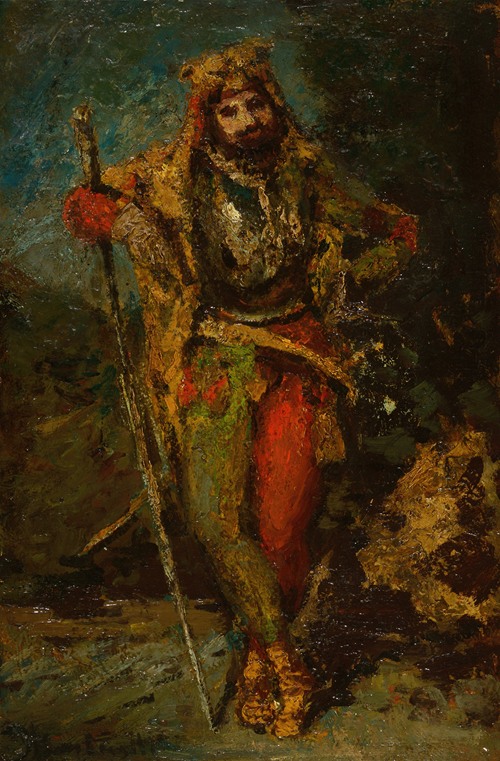
Can beauty exist without sorrow? In the delicate interplay of light and shadow, Aan het altaar invites contemplation of transformation — a reminder that joy often emerges from the depths of melancholy. Look to the center of the canvas, where an altar shrouded in soft luminescence draws your gaze. The figures surrounding it, cloaked in rich, earthy tones, seem suspended between devotion and despair.
Notice how the artist employs vibrant, swirling brushstrokes to create a dynamic atmosphere, evoking the fervor of spiritual awakening while hints of darkness linger at the edges, suggesting the tension that accompanies such moments of transcendence. Within this sacred space, contrasts resonate deeply. The juxtaposition of light and shadow envelops the figures, as if the very act of worship embodies an internal struggle between hope and despair. Each brushstroke seems to capture a fleeting emotion, inviting the viewer to witness a silent dialogue of faith and doubt.
The rich textures and colors symbolize both the vibrancy of spiritual life and the sorrow that inevitably intertwines with devotion. Created between 1870 and 1886, Aan het altaar reflects Monticelli's immersion in the burgeoning Impressionist movement while remaining rooted in his unique style. During this period, he navigated personal challenges and a shifting artistic landscape, ultimately pushing the boundaries of color and form in search of emotional truth. His work transcends mere representation, intertwining beauty and complexity in a manner that resonates across time.