Portrait of Monsieur Rouland — History & Analysis
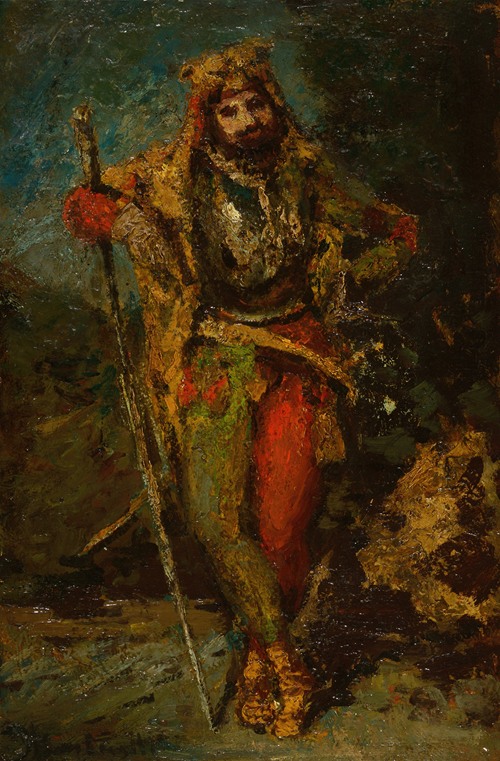
What secret hides in the quiet of the canvas? Behind the vivid strokes and a seemingly simple composition, an obsessive pursuit of individuality and presence lingers, waiting to be unveiled. Look to the man’s gaze in Portrait of Monsieur Rouland; it draws you in, anchored by a deep, contemplative quality. His face, framed by a vibrant burst of colors—rich reds and earthy browns—seems to pulse with life, the brushwork both spontaneous and deliberate.
Notice how the light falls upon his features, accentuating the contours of his cheek and the thoughtful shadows beneath his brow, creating a striking contrast that accentuates his emotional depth. The background swirls with softer hues, allowing the subject to command your attention, yet simultaneously evoking an unsettling sense of mystery. Delve deeper into the details: observe the slight tilt of his head and the tension in his posture, suggesting a man engaged in introspection or perhaps wrestling with unspoken thoughts. The choice of colors and brush techniques conveys not just the physical presence of Monsieur Rouland but also hints at his psyche—an obsession with self-perception and identity.
This duality resonates in the way the rich, textural layers act as barriers and bridges between the viewer and the subject, reflecting the internal struggle of revealing one’s true self. Adolphe Joseph Thomas Monticelli painted this work around 1875 during a period of profound change in the art world, embracing a more expressive style. Living in France, Monticelli was part of the burgeoning Impressionist movement, yet he sought to push beyond its boundaries. At this time, he faced personal and artistic challenges, striving to carve out a unique identity while navigating the vibrant and often tumultuous landscape of 19th-century art.