Mephisto from the Opera Faust — History & Analysis
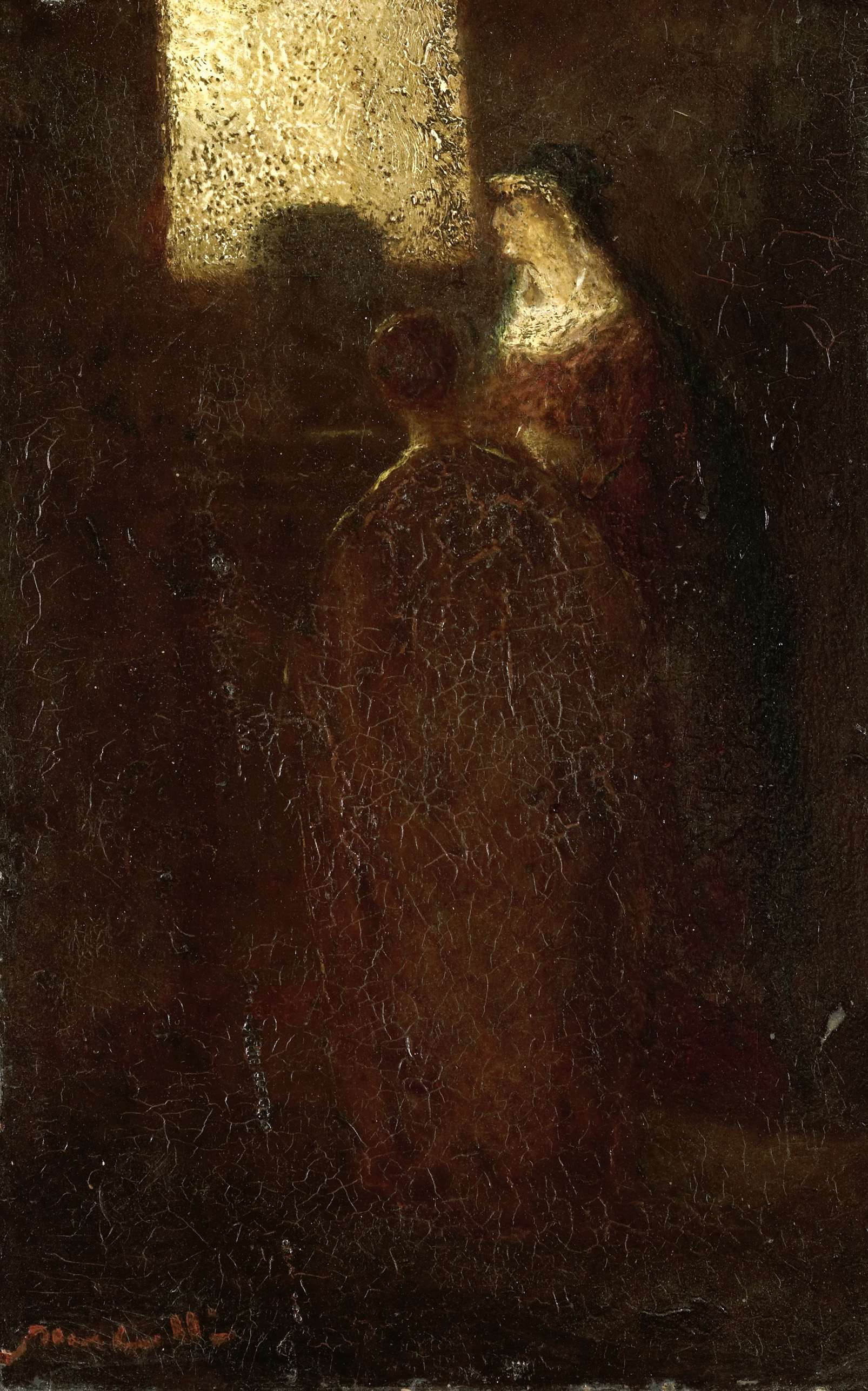
Is this a mirror — or a memory? In Monticelli's Mephisto from the Opera Faust, the boundaries between the divine and the grotesque seem to blur, inviting the viewer to ponder the fleeting nature of existence and the fragility of the human soul. Look to the center, where a spectral figure looms, cloaked in a cascade of deep reds and shadowy blacks. The brushwork is thick and expressive, swirling with an emotional intensity that transforms the figure into something almost otherworldly.
Notice how the light dances upon the edges of the form, illuminating the striking contrast between the sinister allure of Mephisto and the delicate features of the surrounding characters in their despair, highlighting both beauty and tragedy. Delve deeper into the painting’s layers, and you’ll find a profound exploration of duality. The bold brushstrokes convey both chaos and control, reflecting the tension between temptation and morality. The vibrant hues clash and blend, symbolizing the conflict within oneself—the eternal struggle against darkness.
Each character’s gaze betrays a sense of longing or terror, encapsulating the seduction of power and the fragility of the spirit caught in its web. Created between 1870 and 1886, Monticelli was navigating a pivotal moment in his artistic journey, marked by his increasing interest in emotional expression and symbolism. Living in France during a time of great social upheaval, he distanced himself from traditional forms, embracing a more avant-garde approach. This painting is an embodiment of his quest to capture the complexities of human emotion, resonating with the tumultuous societal changes around him.