Meditation (Seated Woman) — History & Analysis
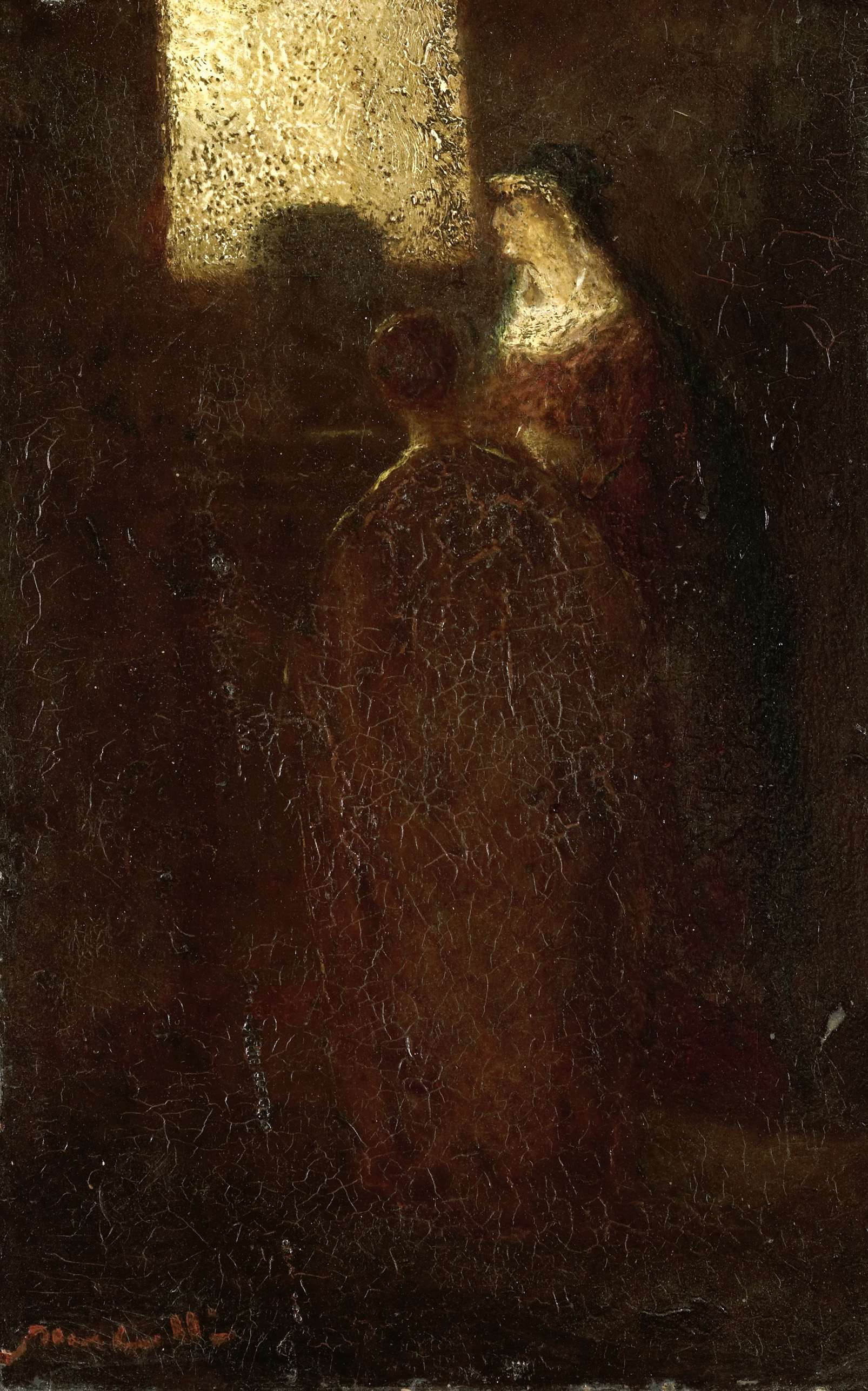
Where does light end, and longing begin? In the depths of solitude, we find a profound connection to our innermost selves, and in this piece, that sentiment resonates deeply. Focus first on the woman seated gracefully at the center, poised yet enveloped in an aura of introspection. The soft, warm palette of muted oranges and delicate blues bathes her figure, creating a sense of serenity amid the swirling brushstrokes that dance around her. Notice how the light falls upon her face, casting gentle shadows that hint at the thoughts hidden behind her serene expression.
The rich textures invite you to trace the contours of her form, while the background's ethereal quality pulls the viewer into a world that feels both intimate and expansive. The juxtaposition of vibrant color against subtle tones heightens the emotional tension within this composition. Here, the profound loneliness of the woman contrasts with the warmth of her surroundings, suggesting an existence that is both present and detached. The luminescence around her serves not just as illumination but as a metaphor for the inner light yearning to break free from the shadows of isolation.
Each brushstroke becomes a whisper of longing, an echo of introspection that allows viewers to ponder their own moments of solitude. Created around 1878–79, this work emerged during a time when the artist was exploring the emotive potential of color and light in his compositions. Monticelli, based in Marseille, was increasingly recognized for his expressive style that blended impressionistic elements with the influences of romanticism. As he navigated the evolving landscape of art, Meditation (Seated Woman) encapsulates his search for deeper emotional resonance, marking a significant moment in his artistic journey.