Afdaling in het voorgeborchte, Kruisafneming, Bewening, Graflegging — History & Analysis
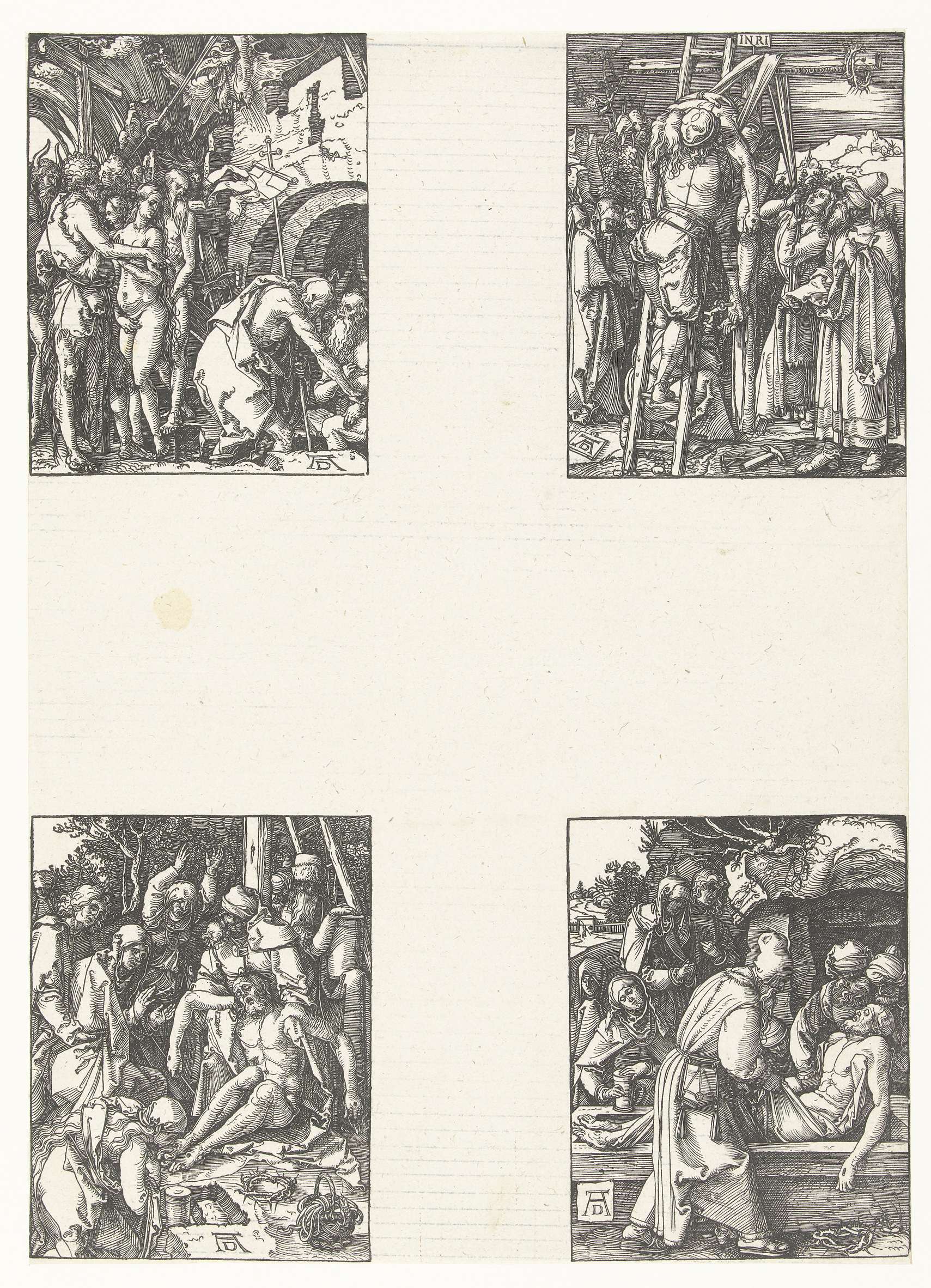
What if silence could speak through light? In Albrecht Dürer’s work, the interplay of shadow and illumination reveals the weight of destiny, capturing a profound moment of reverence and loss. To appreciate this masterpiece, look first at the figures encircled in an ethereal luminosity. The delicate chiaroscuro highlights the contours of their solemn expressions, drawing the viewer's gaze toward the central body, tenderly held aloft.
Notice how Dürer employs a rich palette of earthy tones, imbuing the scene with a sense of grounded reality while contrasting it with the celestial light that seems to flow from above, suggesting divine presence amidst human grief. As you explore deeper, consider the emotional tensions woven into the fabric of the moment. The upright figures convey a poignant mix of despair and devotion, their gestures frozen in time yet brimming with the energy of impending farewell. The juxtaposition of the physical act of mourning against the ethereal qualities of light hints at the intersection of mortality and transcendence, inviting the viewer to reflect on their own relationship with destiny and the divine.
Created between 1509 and 1510, this piece emerged during a transformative era in the art world, marked by Dürer’s exploration of human emotion and spiritual depth. While residing in Nuremberg, he was influenced by the burgeoning Renaissance, which championed a return to classical ideals and the human experience. This context shaped his approach, infusing the work with a blend of realism and symbolism that resonates powerfully with audiences even today.