Allegorie met vrouw met beker staand op wolk — History & Analysis
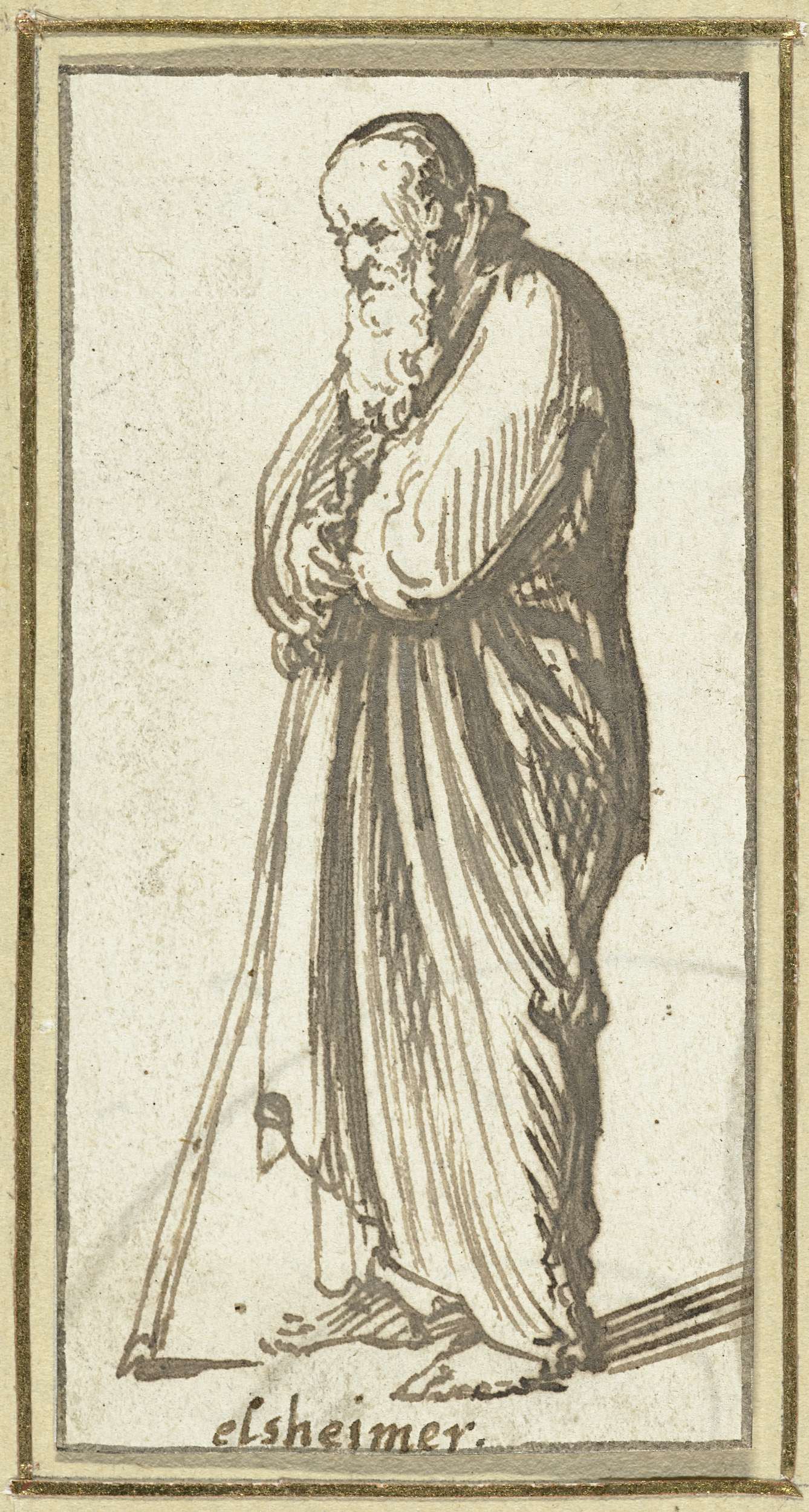
“Sometimes beauty is just pain, disguised in gold.” This thought hangs in the air like a whisper, inviting the viewer to delve deeper into the layers of meaning within the work. What might appear as a serene allegory carries an undercurrent of complexity, revealing the intertwining of human aspiration and the fragility of existence. Look to the center of the canvas, where a woman stands confidently on a cloud, her graceful posture framed by the ethereal glow of soft light. Notice the way the beam illuminates her cup, a vessel that glimmers with the promise of untold secrets.
Elsheimer employs a delicate palette of gentle blues and warm golds, creating a dreamlike quality that draws you into her world — a realm both celestial and suffused with earthly desires. Yet, beneath the surface, the painting evokes a tension between aspiration and the weight of reality. The cloud, a symbol of elevated thoughts, juxtaposes the heaviness of the woman's gaze, hinting at the burdens we carry in our pursuit of beauty and meaning. The cup she holds, both inviting and elusive, speaks to the choices we must make, the thirst for knowledge, and the costs associated with enlightenment.
In this delicate balance lies a poignant reminder of our own vulnerabilities. Created between 1595 and 1599, this piece emerges from a period when Elsheimer was deeply engaged with the themes of light and shadow, both literally and metaphorically. Living and working in Rome, away from his native Germany, he was influenced by the dramatic effects of Caravaggio's work, exploring new techniques that would later inspire generations. At this time, he was honing his ability to convey profound themes through small-scale, highly detailed paintings, bridging the gap between the spiritual and the earthly.