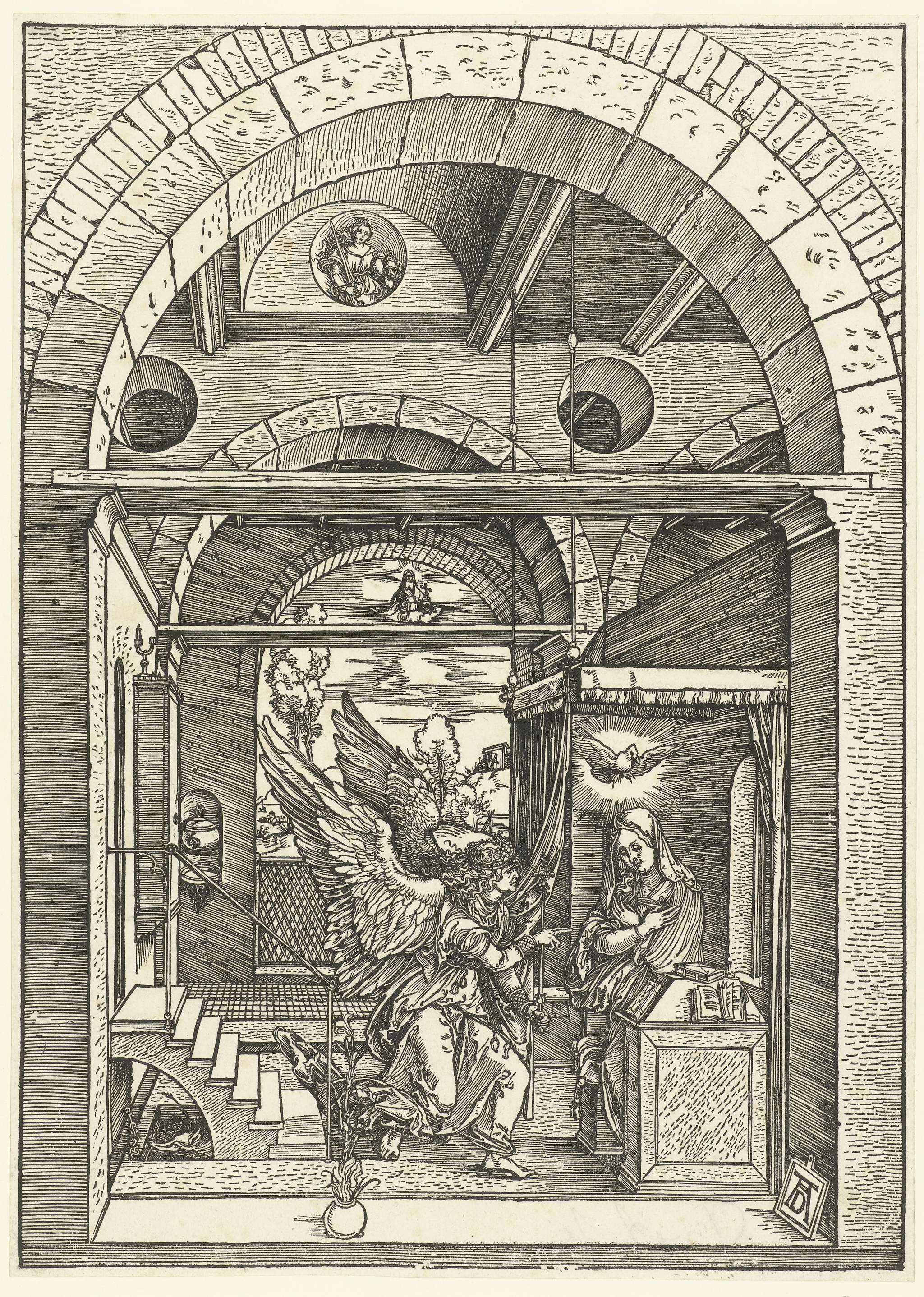
“Under the brush, chaos becomes grace.” In *Annunciatie*, the tension between sorrow and divine revelation unfolds, inviting us to ponder the fragility of human emotion in the face of celestial duty. Look to the left at the ethereal figure of the angel, cloaked in soft, reverent robes that seem to glow against the muted backdrop. Notice the meticulously painted wings, each feather a testament to the artist’s precision and care. The warm light bathes the scene, illuminating the archangel’s face, which is filled with compassion yet tinged with an almost palpable weight of grief—a foreshadowing of what is to come. Dürer’s masterful use of chiaroscuro draws the eye toward the Virgin Mary, whose expression captures both wonder and sorrow, creating a poignant harmony between the two figures. The tension between divine announcement and human reaction is palpable. The angel's gesture, both inviting and solemn, suggests a moment suspended in time where hope and despair intertwine. The delicate detail in Mary’s hands, slightly trembling as they rise to receive the message, invokes a sense of vulnerability. Dürer layers spiritual significance within the exquisite rendering of fabrics and textures, hinting at the greater sacrifices that lie ahead for Mary and humanity. Created between 1501 and 1505, this piece emerged during a pivotal time in Dürer's life while he was establishing himself in Nuremberg, influenced by the evolving Renaissance ideals. The world was grappling with the onset of the Reformation, bringing questions of faith and spirituality to the forefront. In this context, *Annunciatie* stands as a poignant meditation on the interplay of divine grace and human grief, reflecting the complexities of belief in a tumultuous age.