Ausbruch des Vesuv — History & Analysis
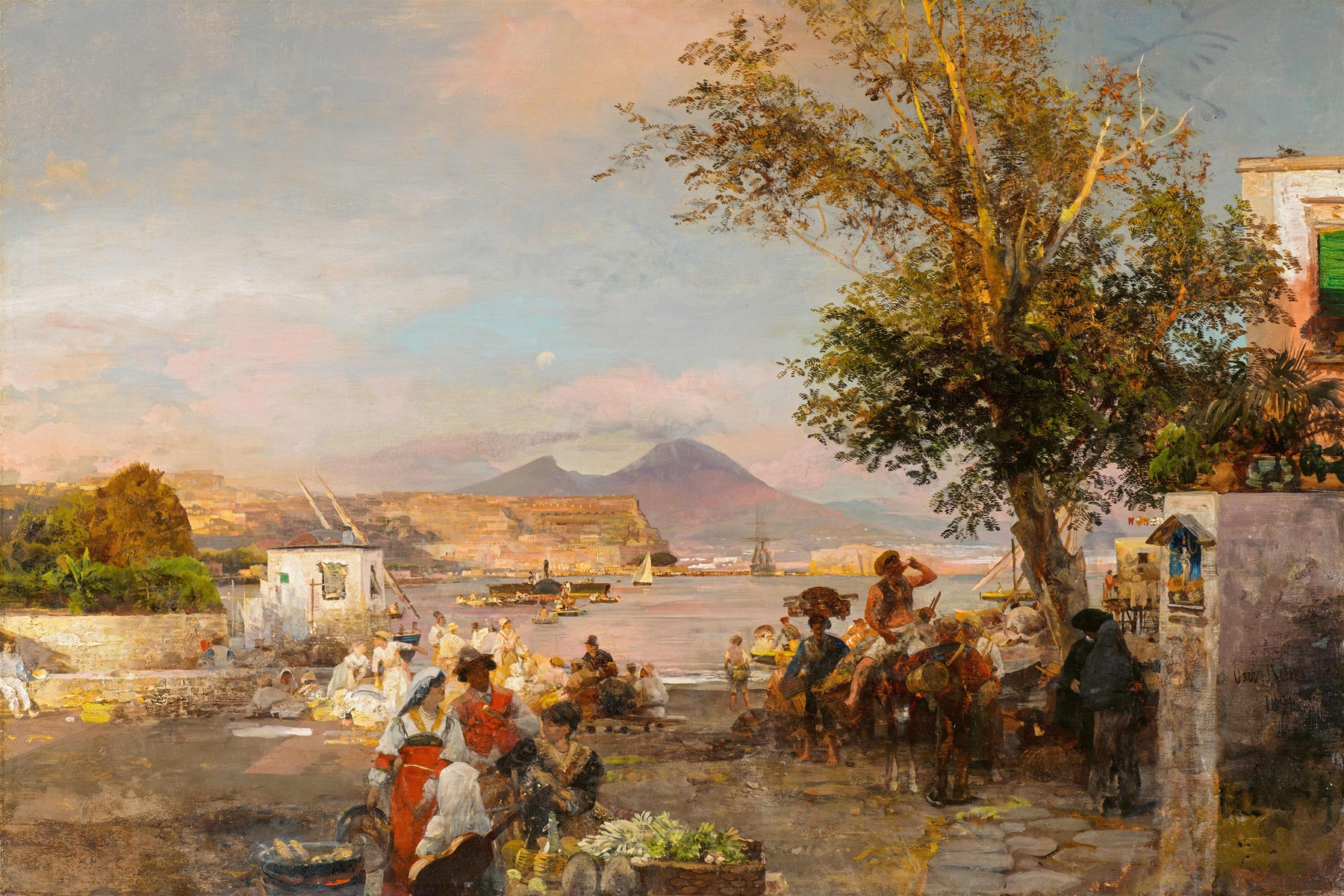
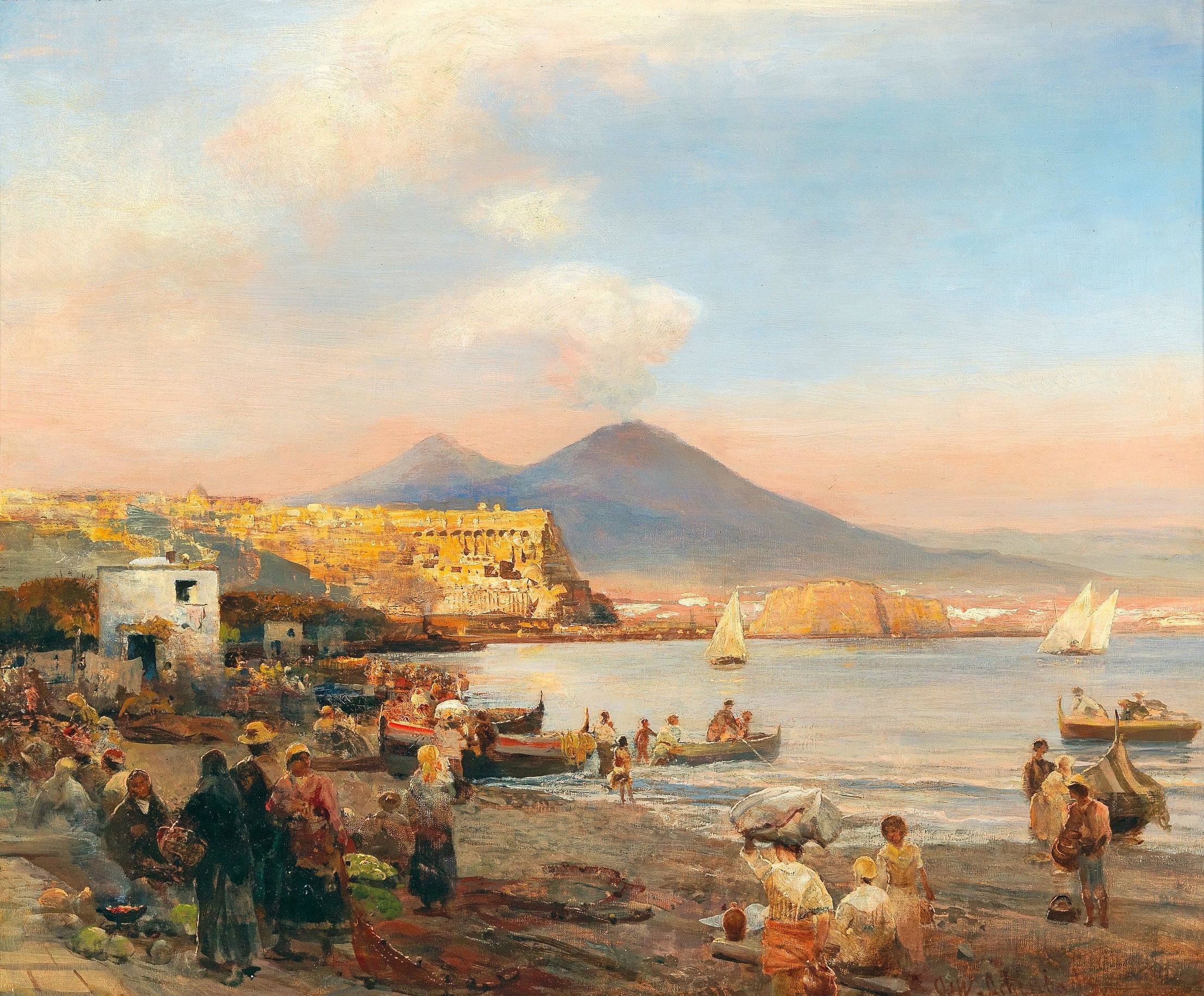
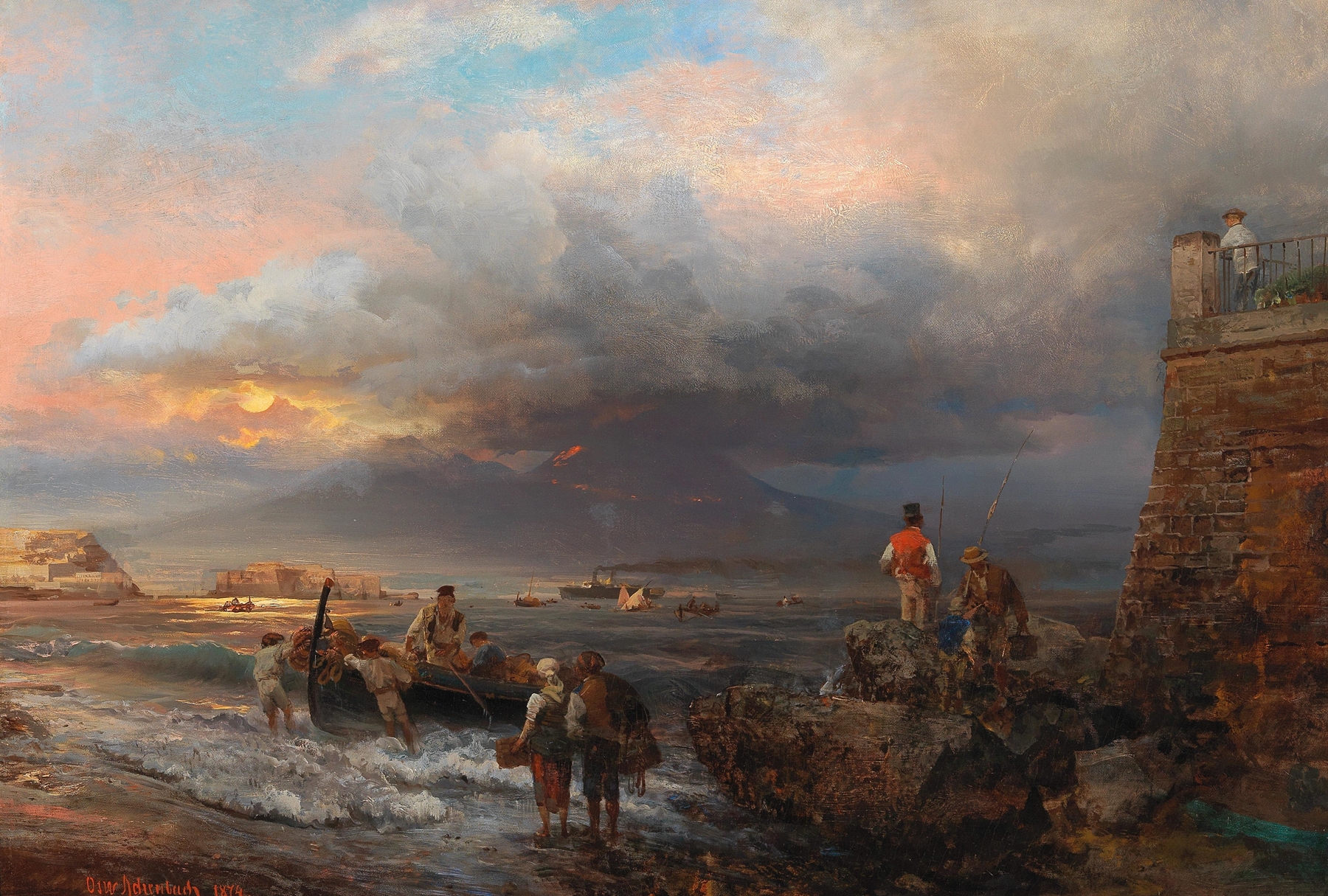
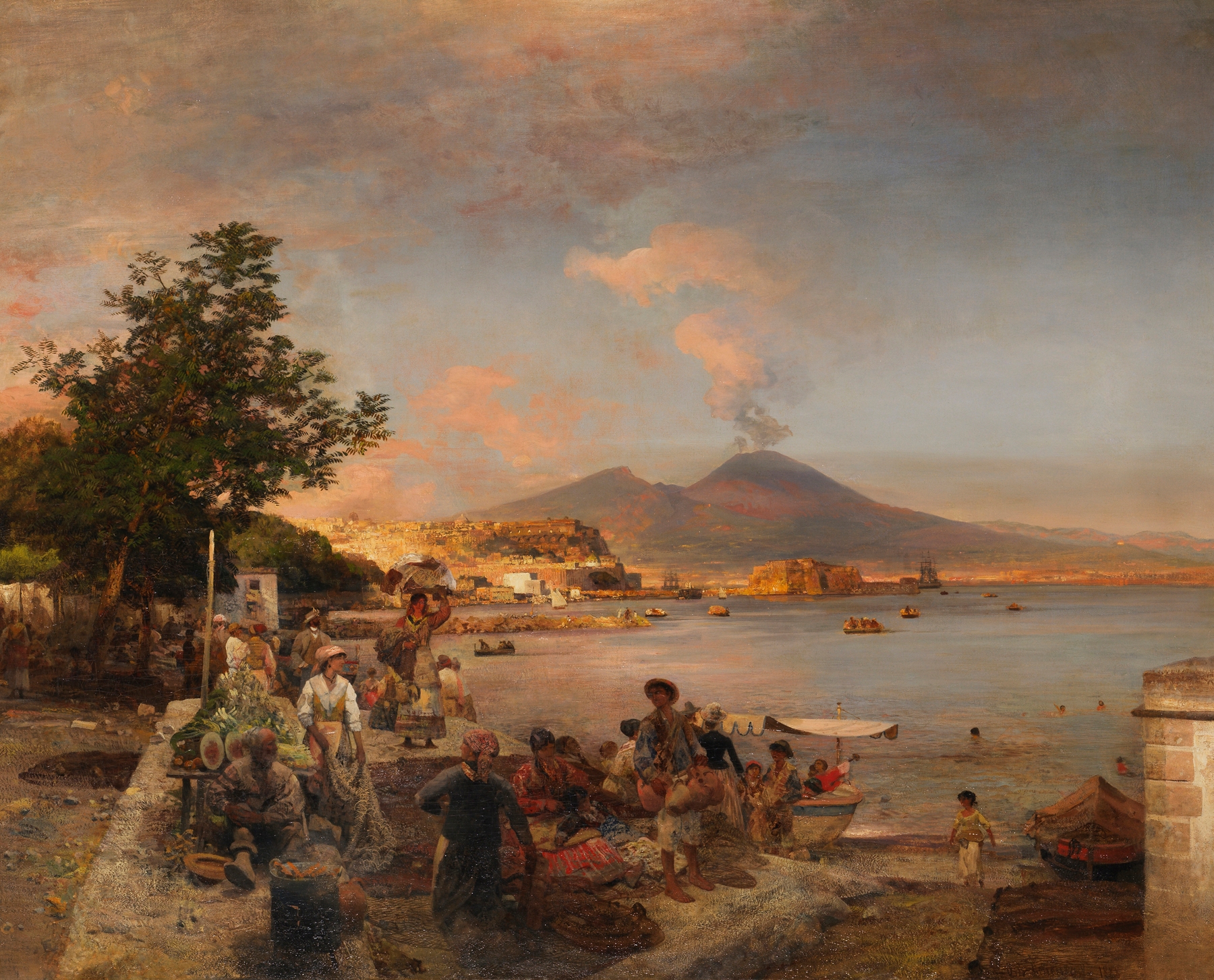
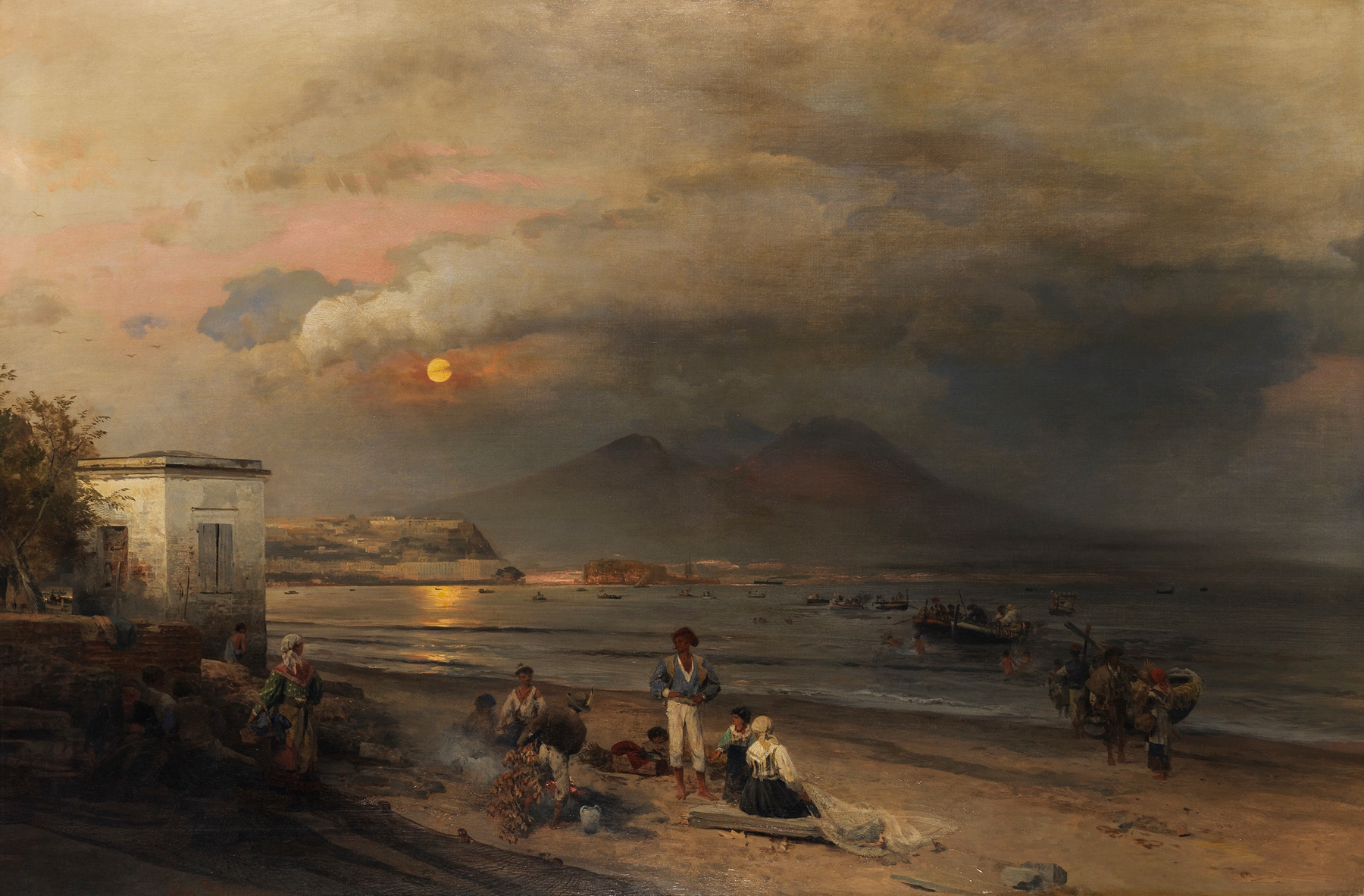
Did the painter know this moment would outlive them? A fleeting glance at nature’s fury and beauty, captured in time, yet tinged with nostalgia for what was once serene. Look to the horizon where the imposing silhouette of Vesuvius looms, a dark giant against the backdrop of a fading sunset. The warm hues of orange and red blend seamlessly into deep blues, creating a striking contrast that pulls you into the scene. Notice how the clouds swirl around the peak, infused with a sense of impending eruption, while the light catches the rippling waters below, reflecting the chaotic beauty above.
The composition draws your eye across the canvas—the juxtaposition of calm waters and turbulent skies highlights the duality of nature’s persona. As you delve deeper into the details, consider the interplay of stillness and movement. The tranquil sea, almost inviting, stands in stark opposition to the ominous mountain, symbolizing a world on the brink of transformation. Each brushstroke serves to evoke a sense of longing, perhaps for the simple pleasures of life before disaster strikes. The emotional tension is palpable, capturing a moment that is simultaneously breathtaking and foreboding, hinting at the inevitable destruction to come.
Oswald Achenbach created this work during a period of immense change in the art world, though the exact date remains elusive. Active in the mid-19th century, he was part of the Düsseldorf School, which emphasized realism and landscape painting. At the time, Europe was witnessing both industrial progress and the looming threat of natural disasters, a duality that would have undoubtedly influenced his vision of Vesuvius. This painting encapsulates a moment of reflection on nature's power, a meditation on beauty poised at the edge of chaos.