Küstenlandschaft bei Neapel — History & Analysis
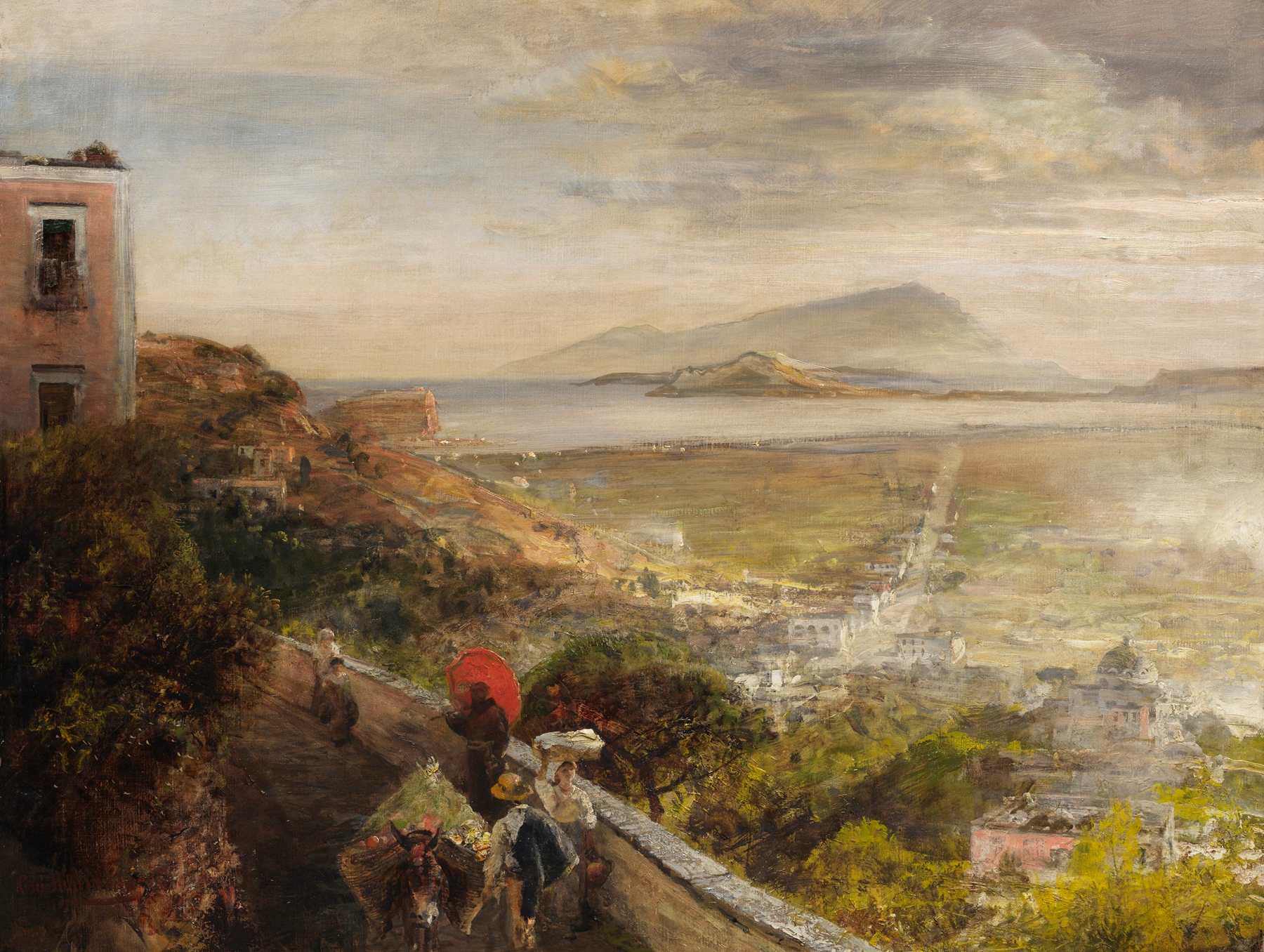
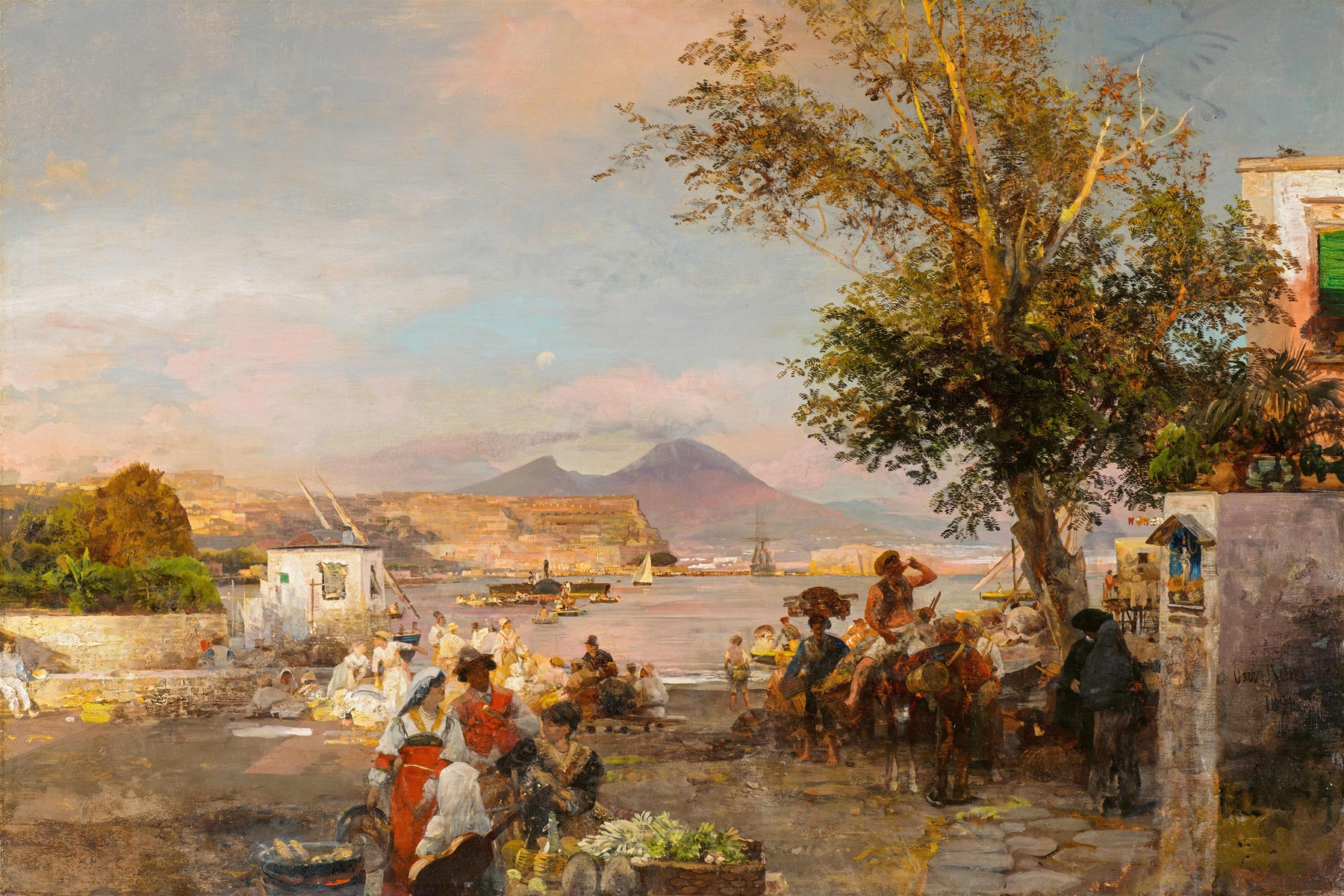
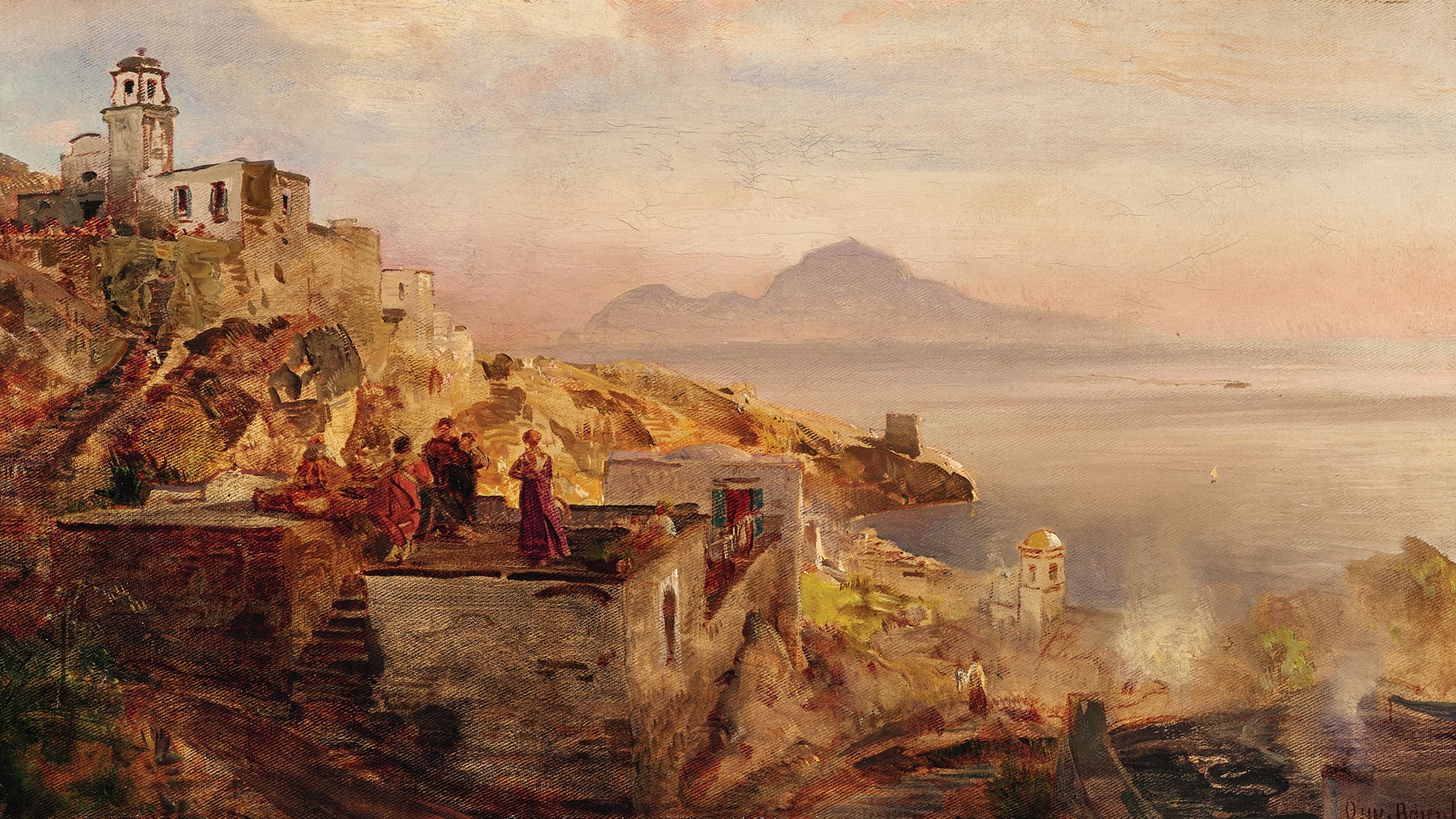
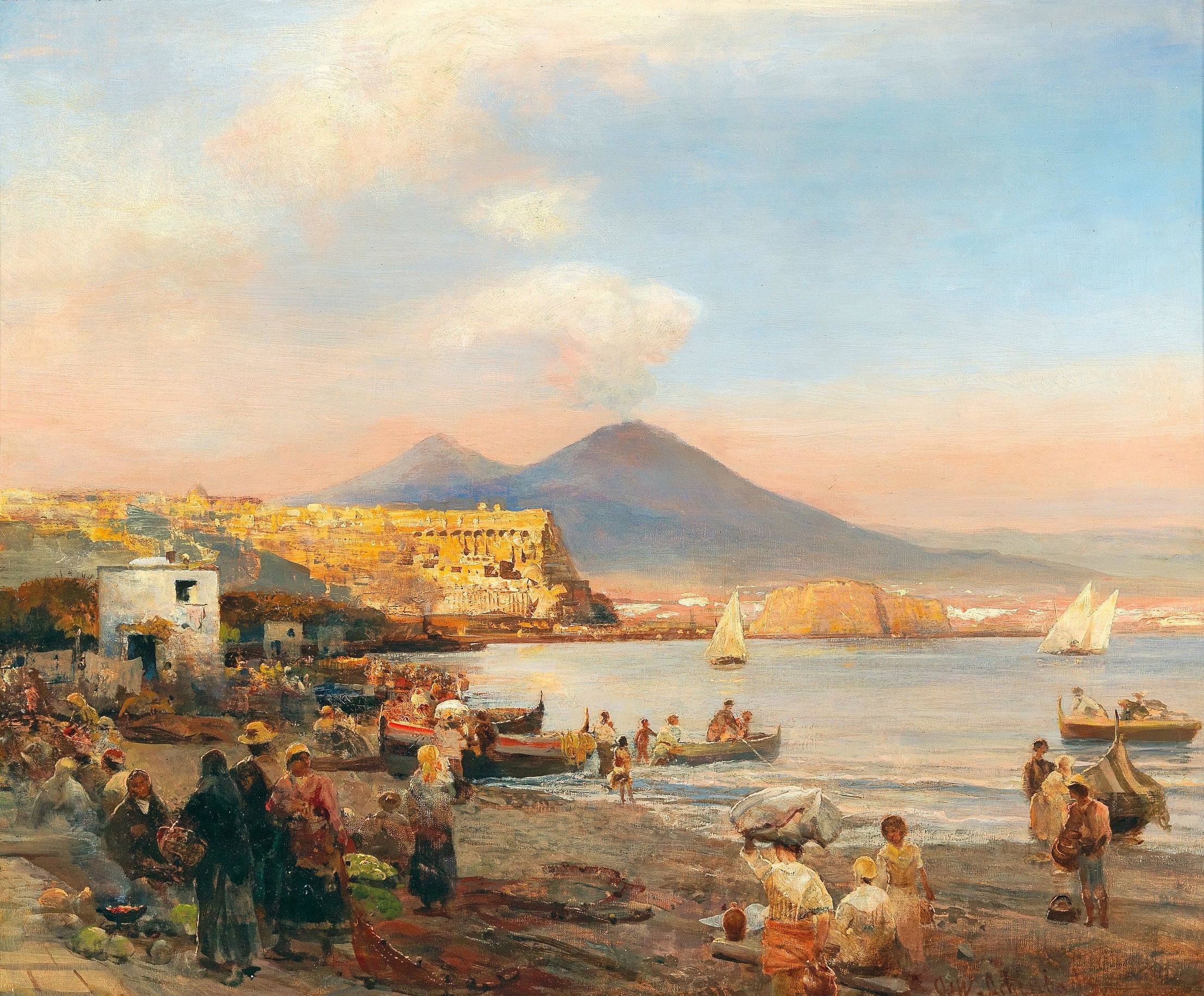
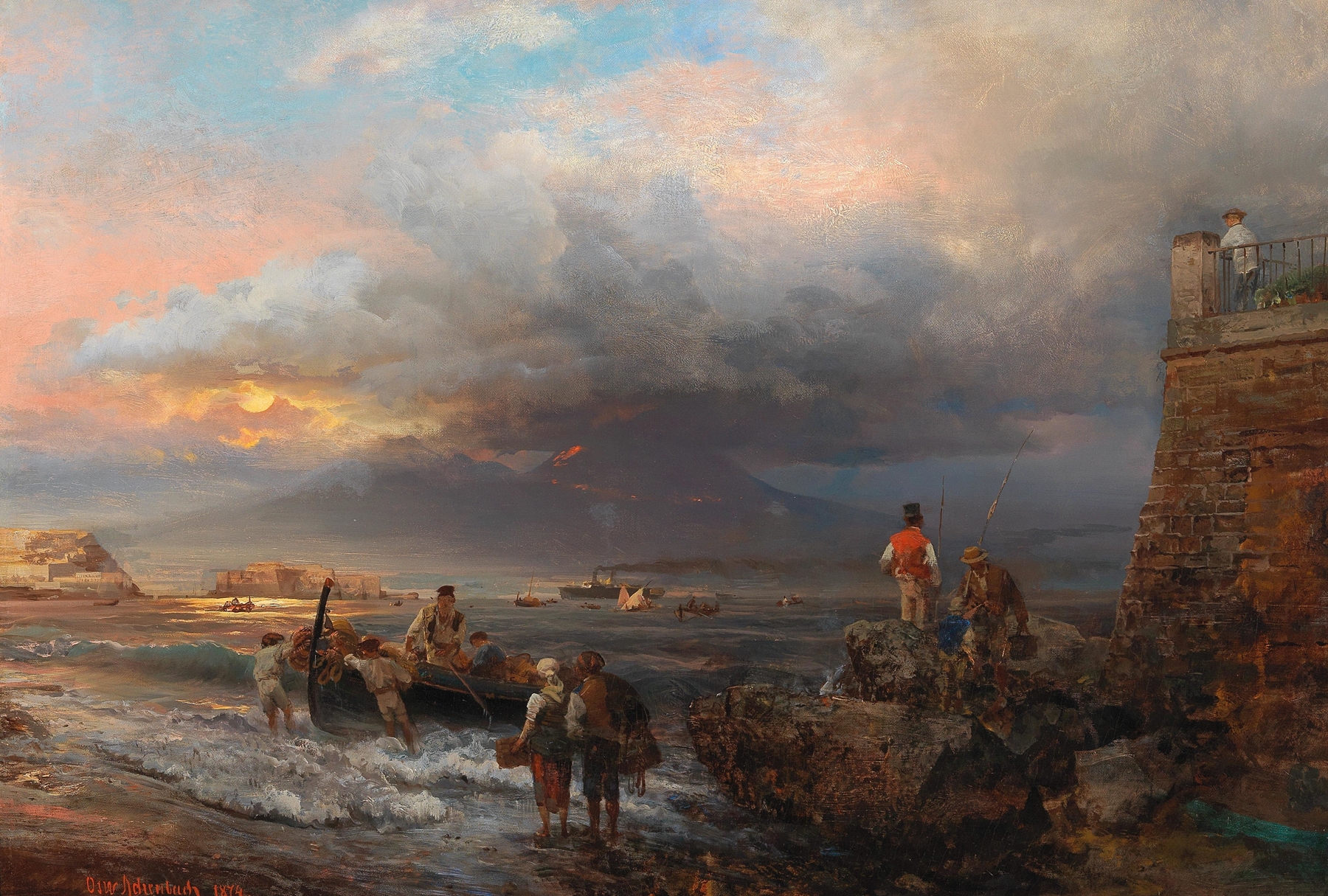
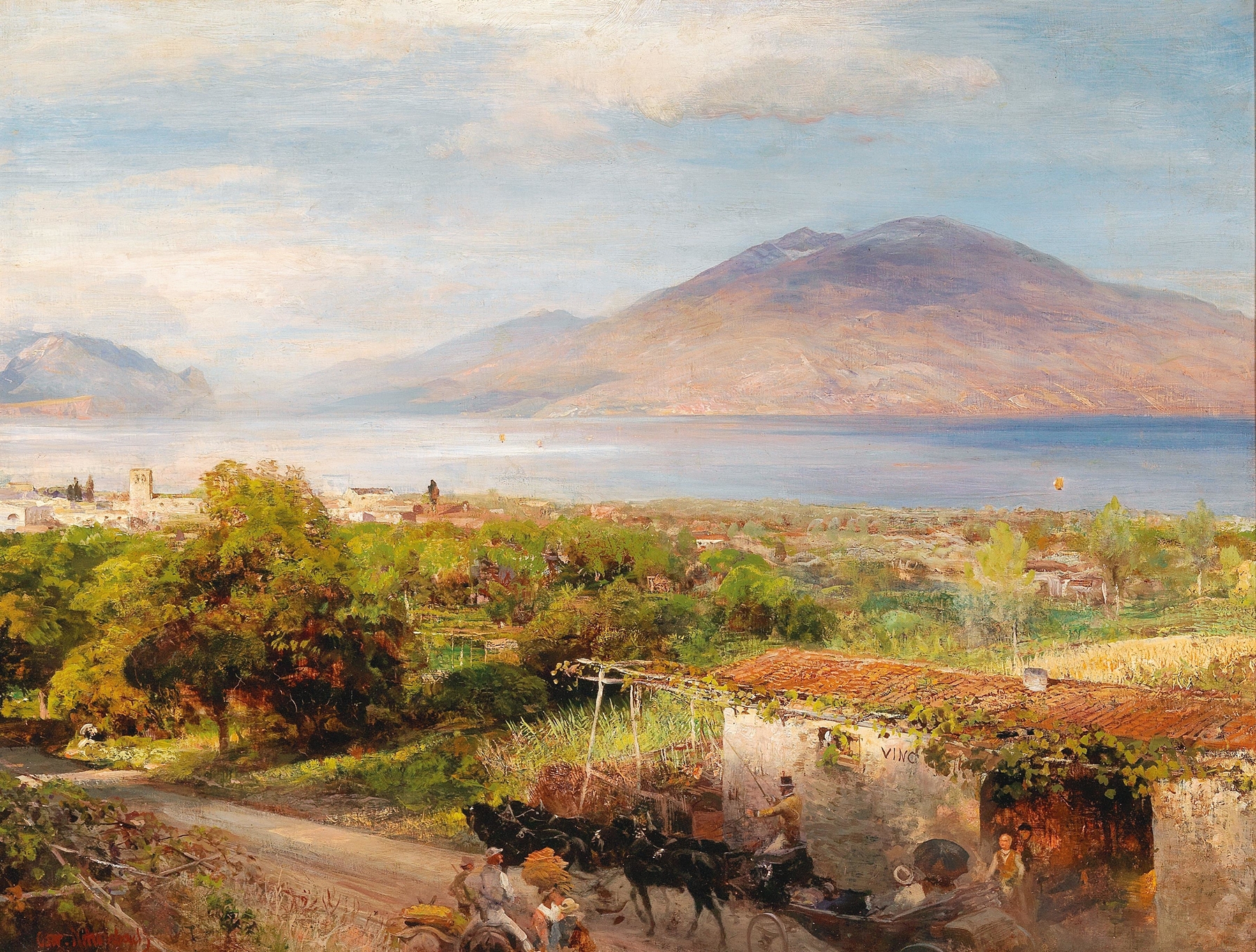
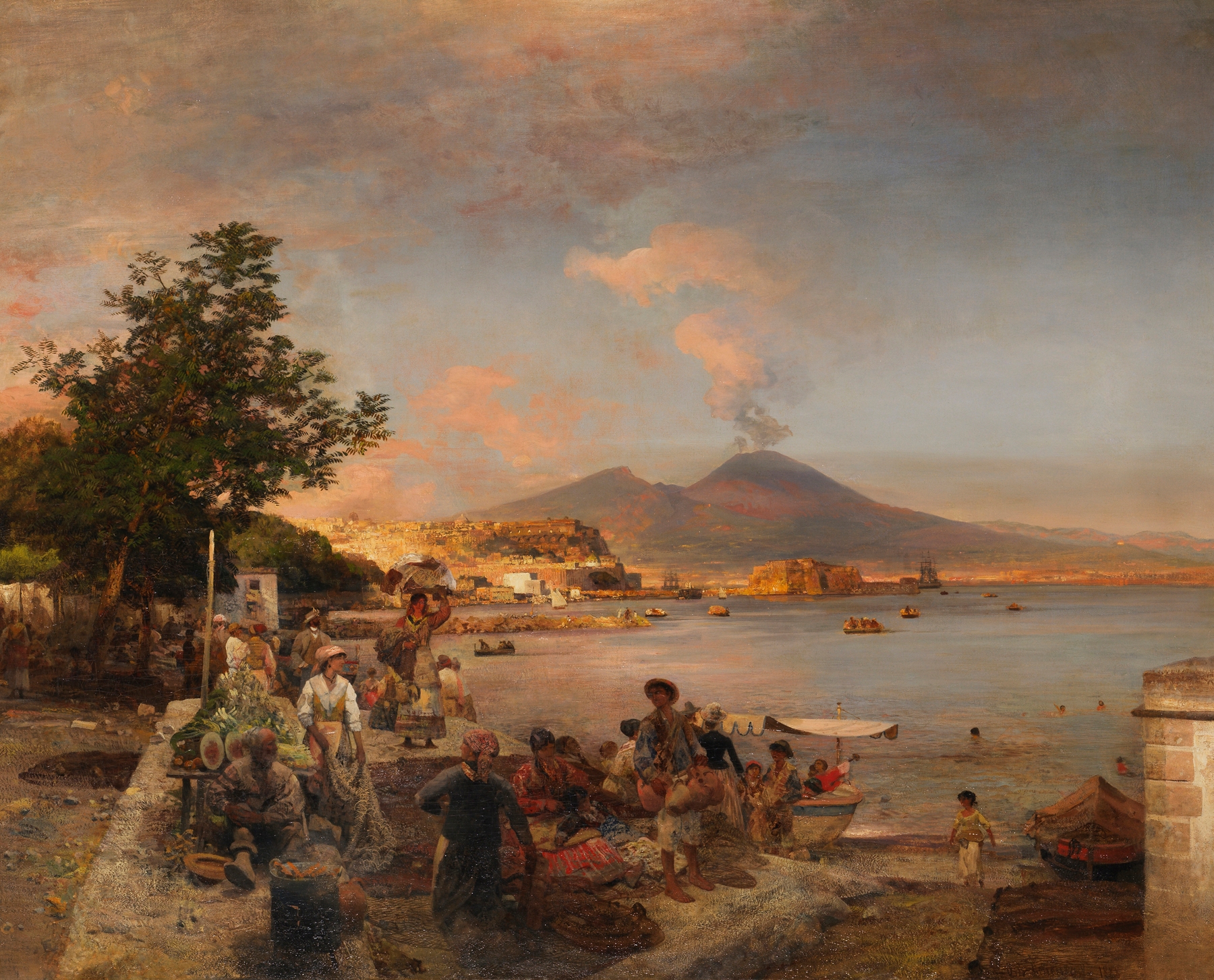
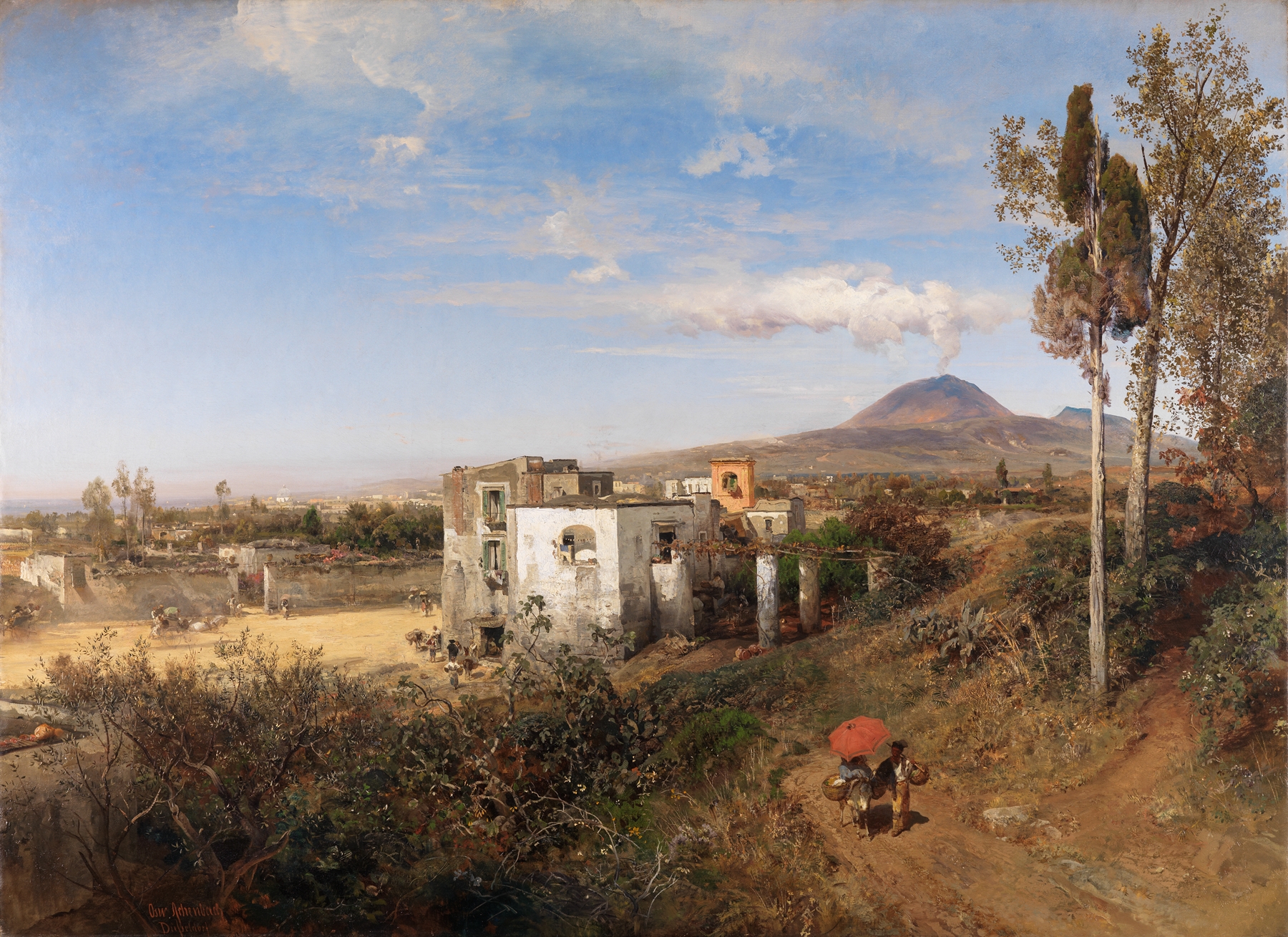
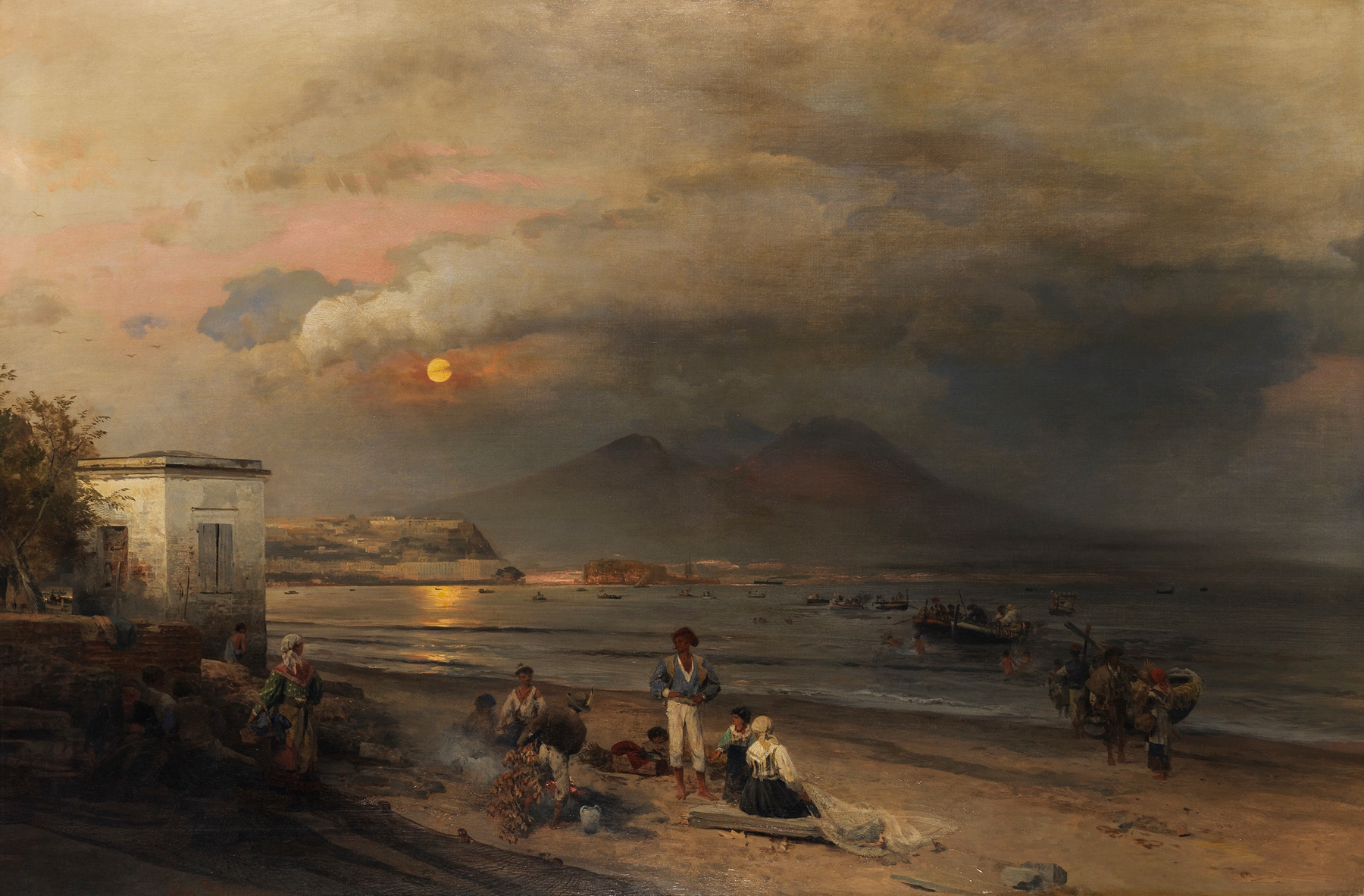
Did the painter know this moment would outlive them? In Küstenlandschaft bei Neapel, Oswald Achenbach captures an ephemeral beauty that invites contemplation, revealing a world where nature and humanity coexist in delicate harmony. Look to the right at the sun-drenched coastline, where waves gently lap against the shore, their frothy edges mirrored in the tranquil waters. The vibrant palette of blues and greens conveys a sense of vitality, while the soft morning light caresses the rocky outcrops.
Achenbach’s meticulous brushwork captures the texture of the landscape, drawing the viewer's gaze through the interplay of shadow and light, leading us deeper into the idyllic scene. The painting evokes a tension between stillness and movement. The distant fishermen, rendered small against the grandeur of the cliffs, symbolize humanity’s humble place within nature’s vastness. This contrast amplifies the sense of revelation—one that suggests a deeper connection between the viewer and the natural world.
The brilliant sky hints at a day filled with promise, yet the quietude also speaks to the fleeting nature of such moments, emphasizing life’s transitory beauty. In 1879, when Achenbach painted this work in Naples, he was already well-regarded in the realms of landscape painting. This period marked a time of exploration and appreciation for the natural world among artists, coinciding with the rise of plein air painting. His experiences during travels through Italy infused his work with a vibrant realism that reflected both personal and artistic growth amid the changing tides of 19th-century art.