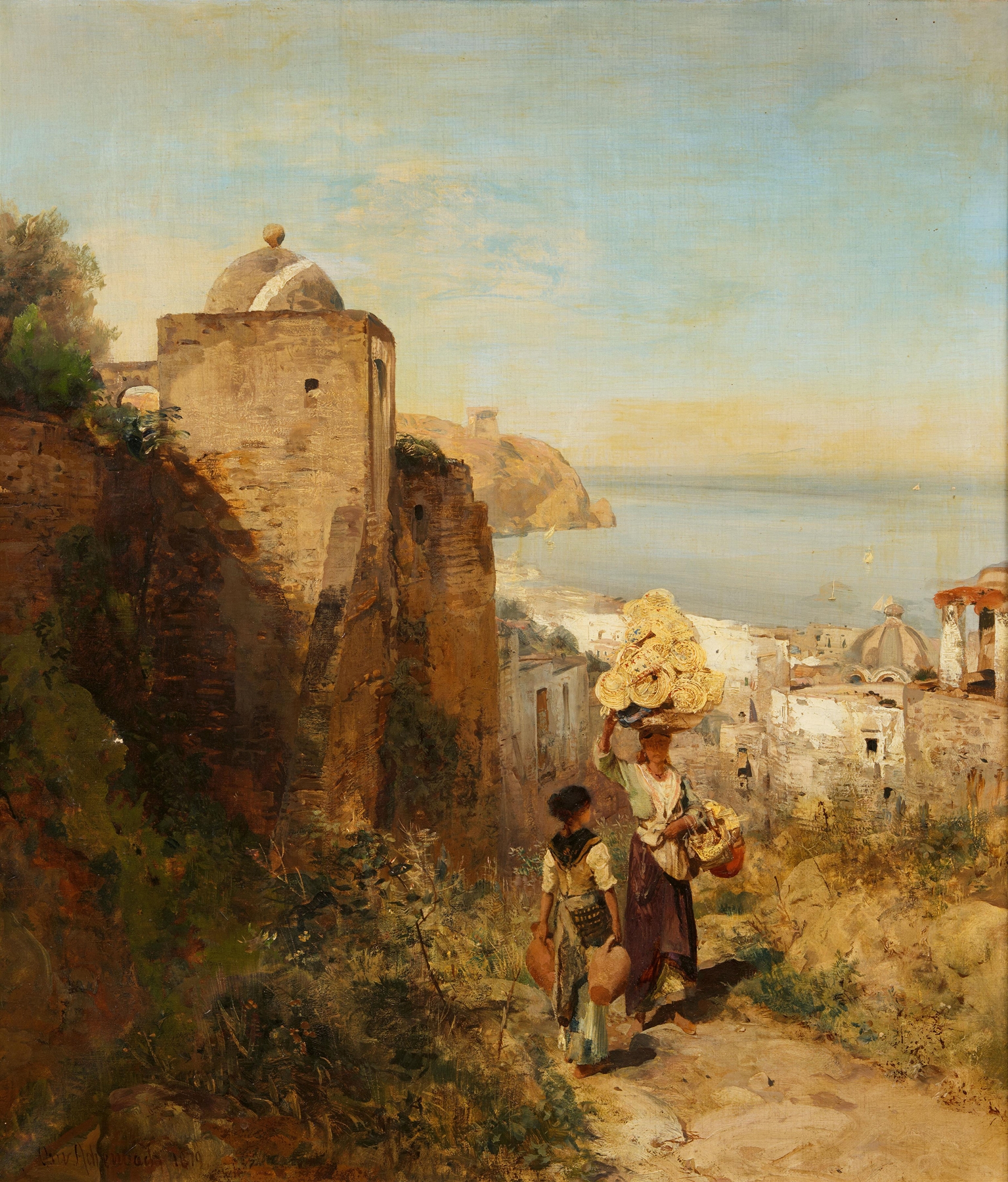
Blick auf die Bucht von Neapel — History & Analysis
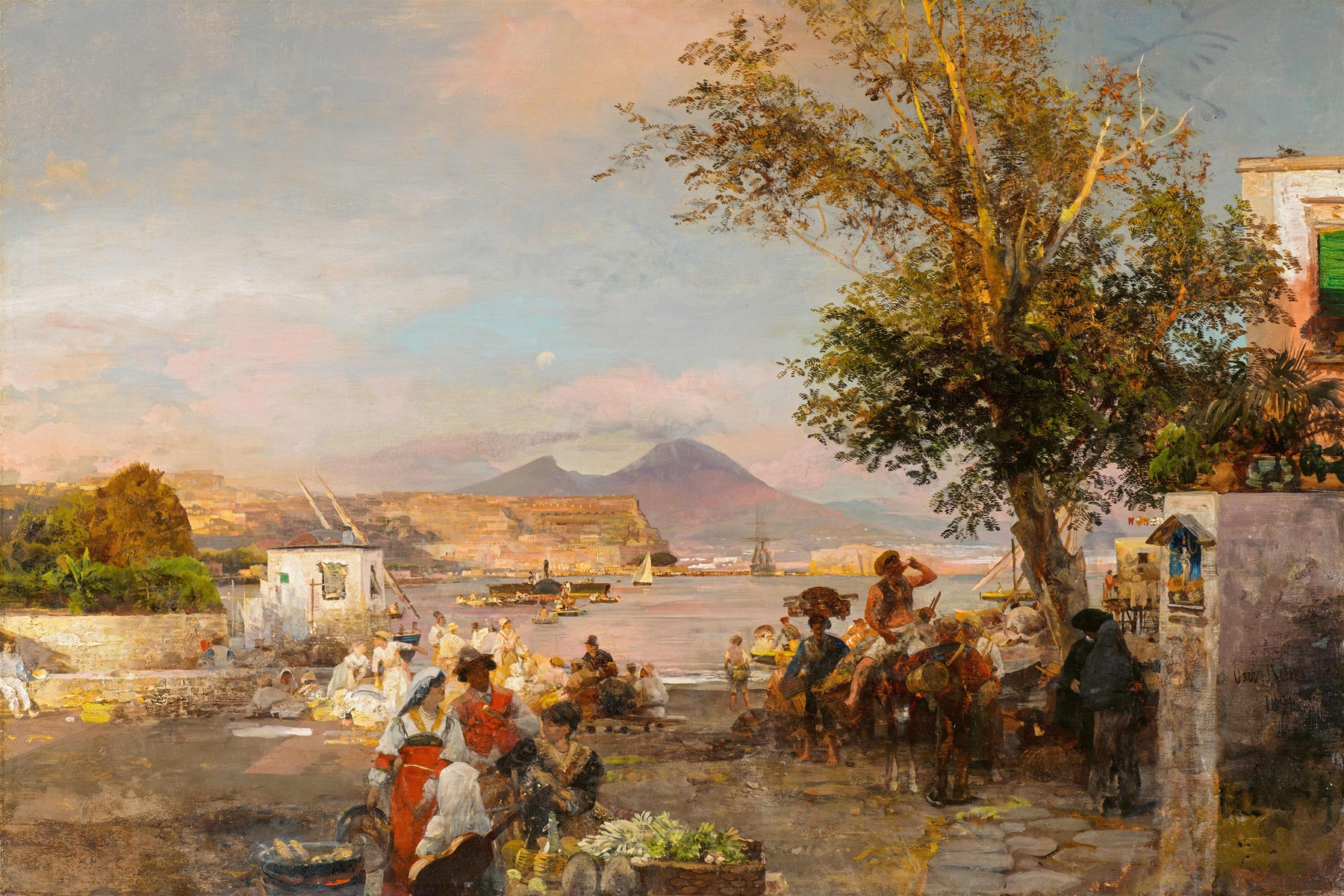
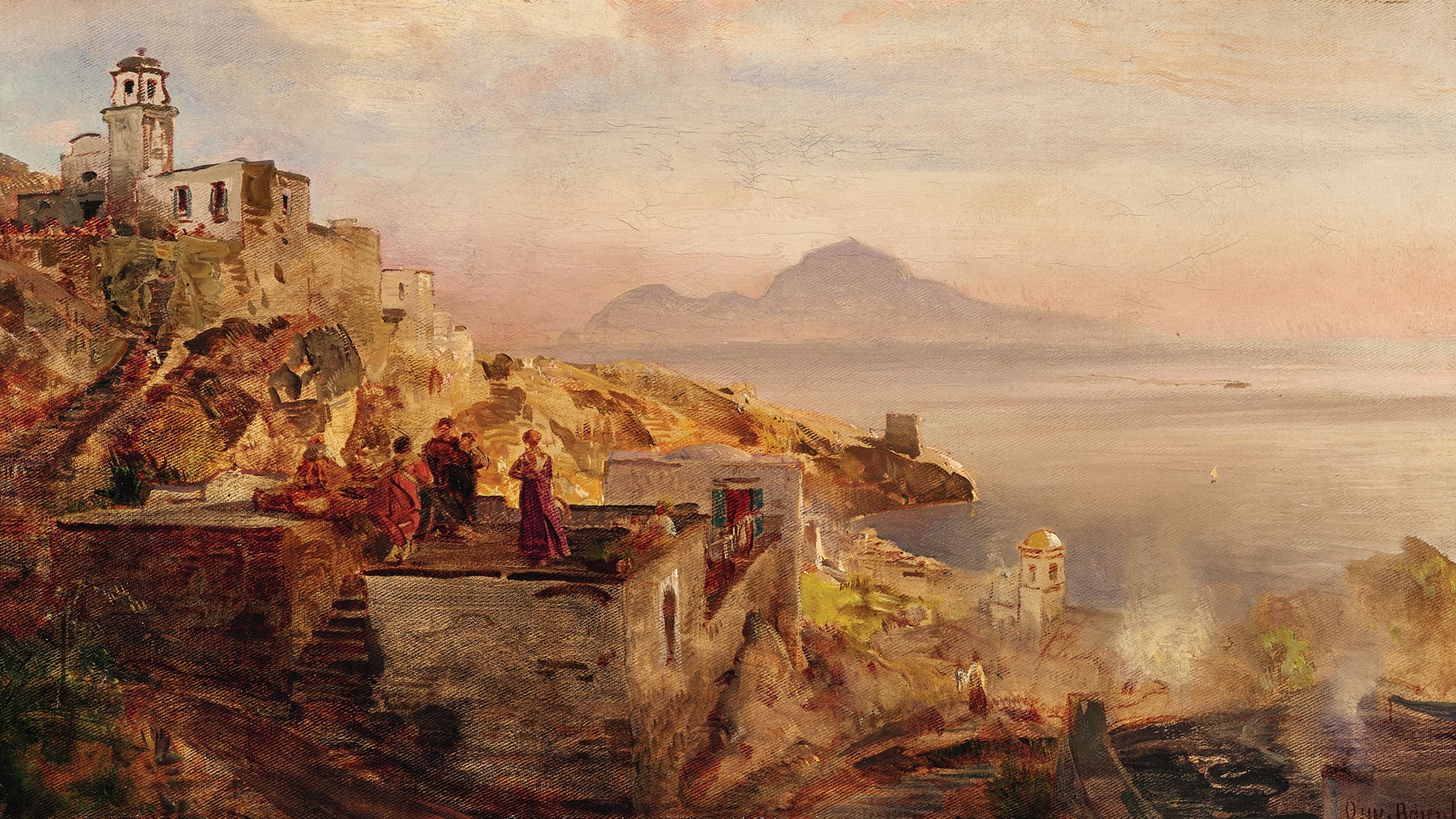
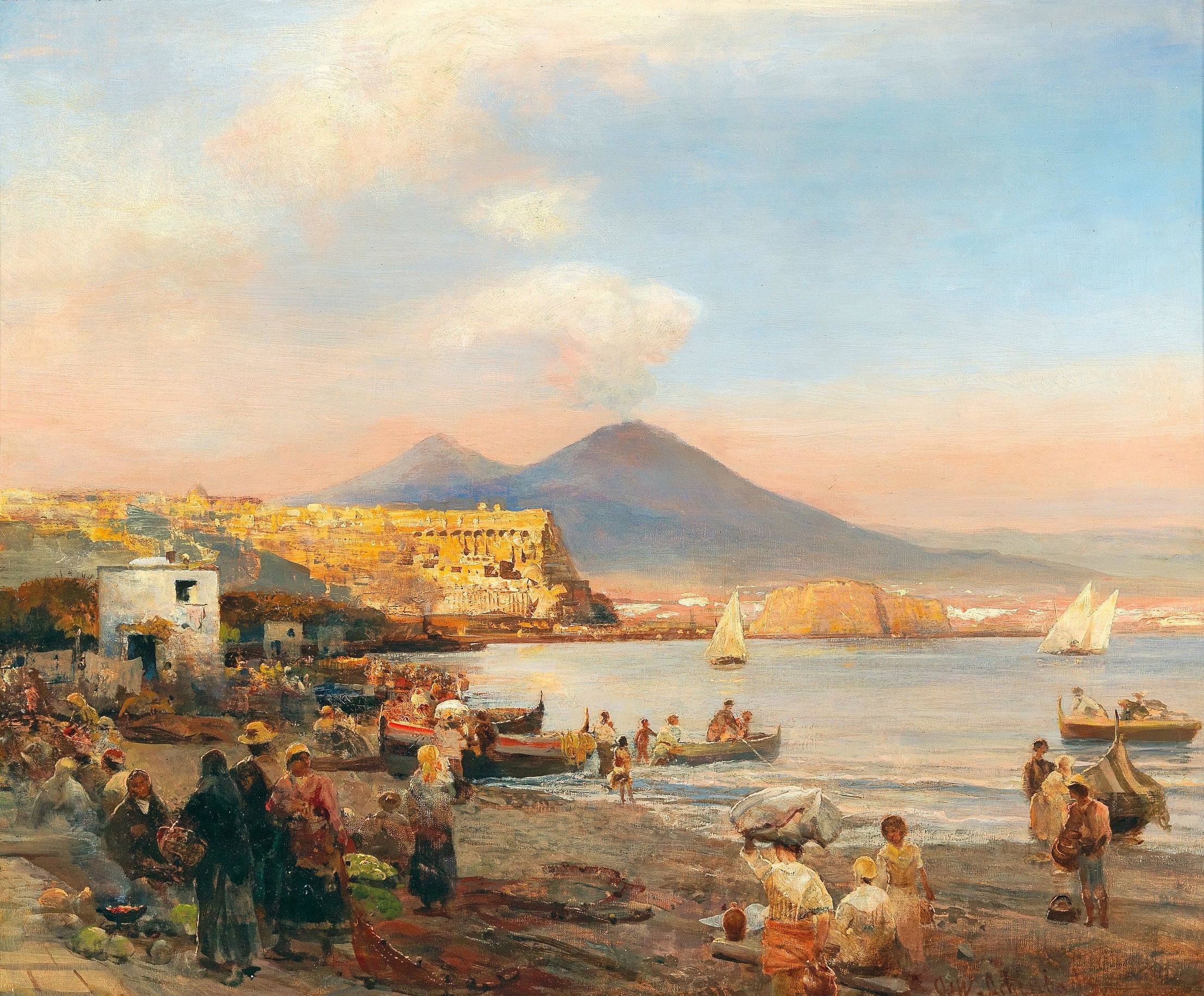
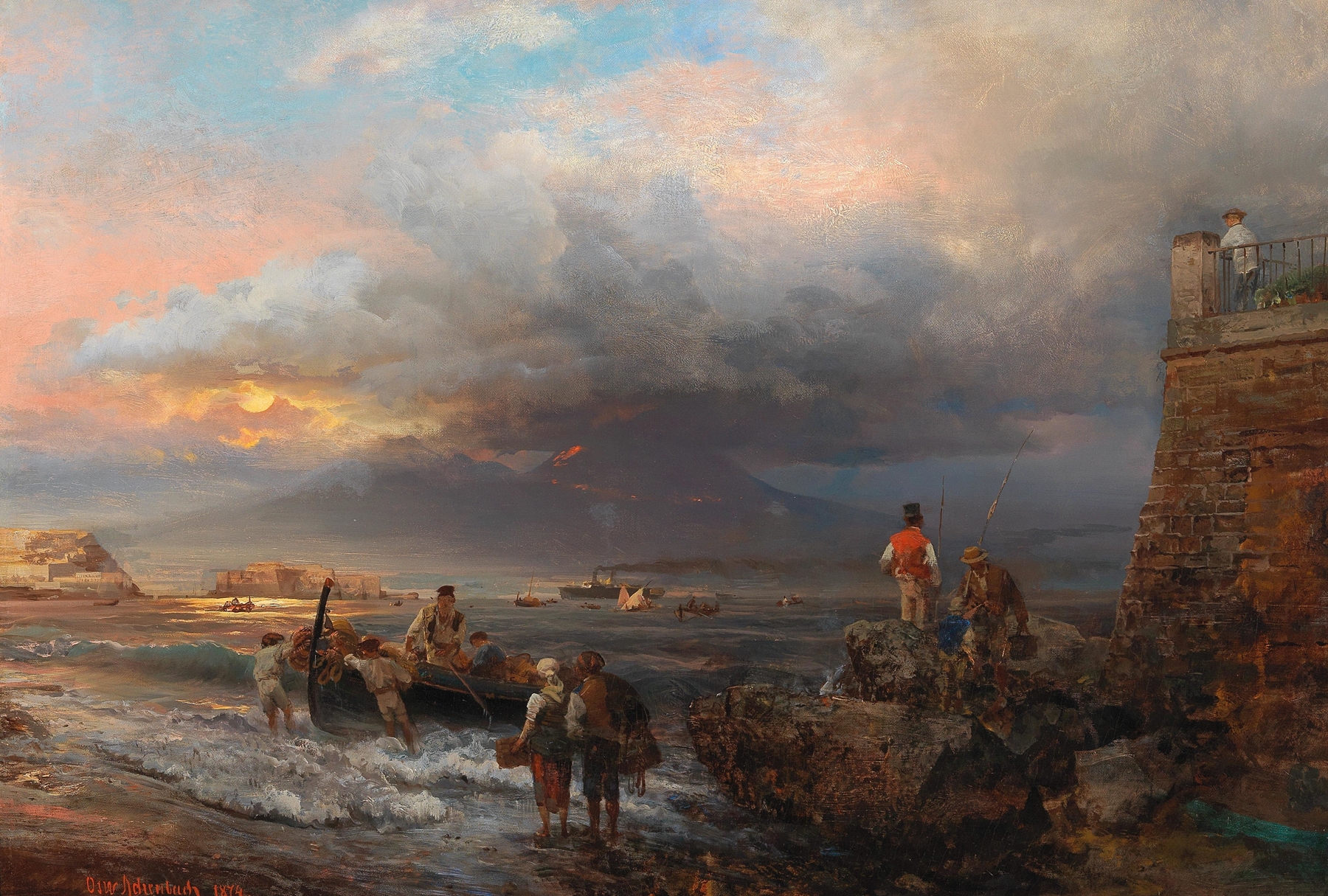
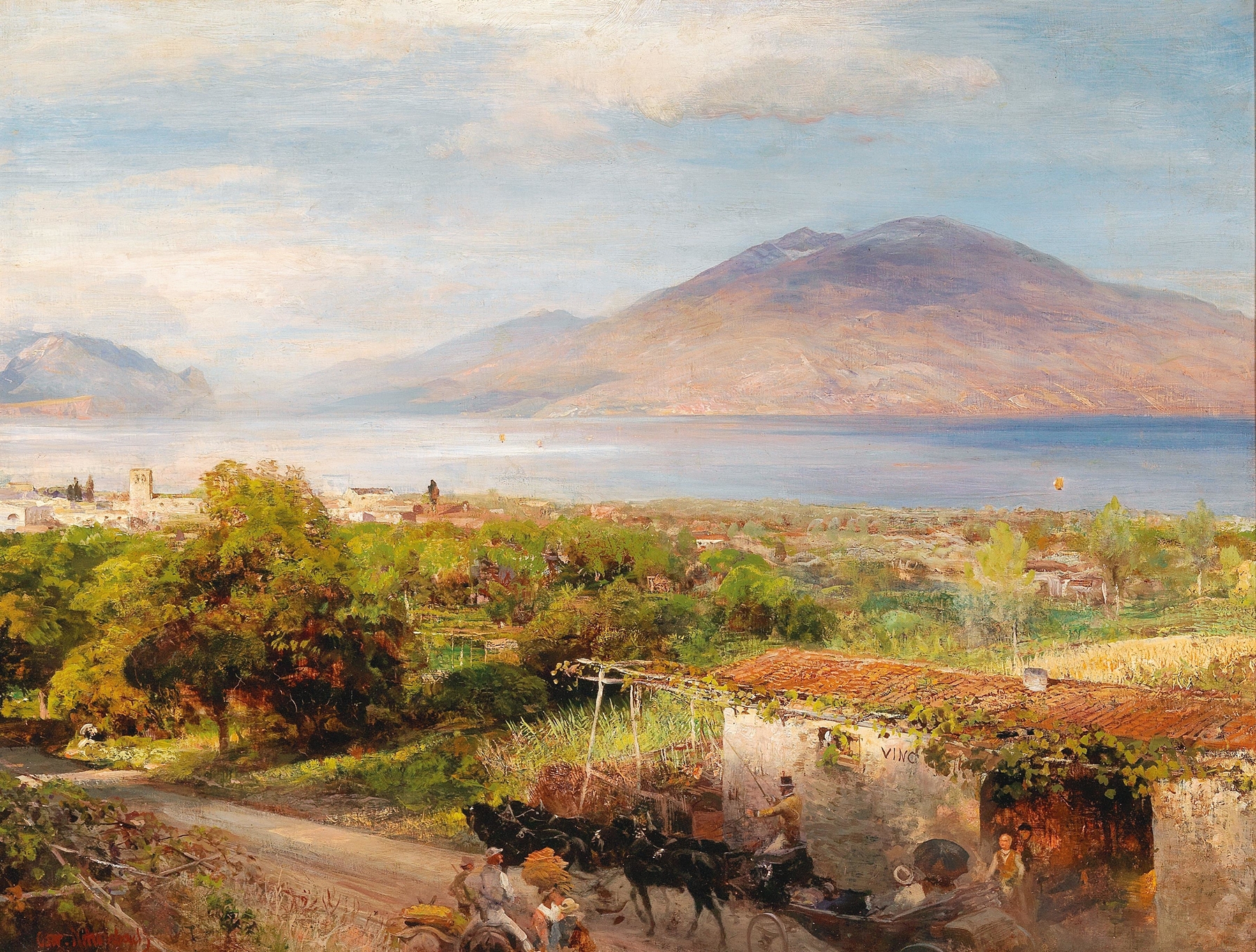
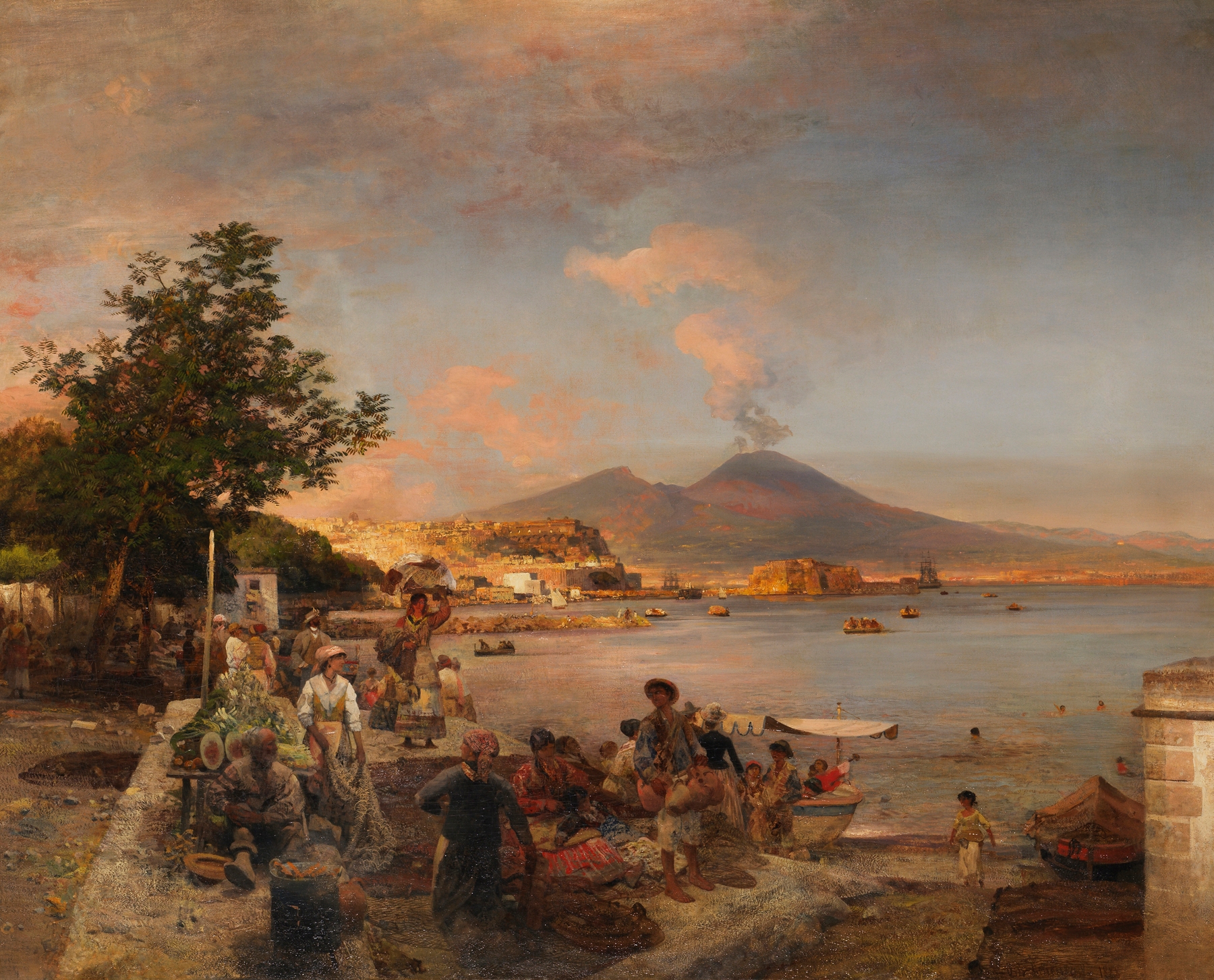
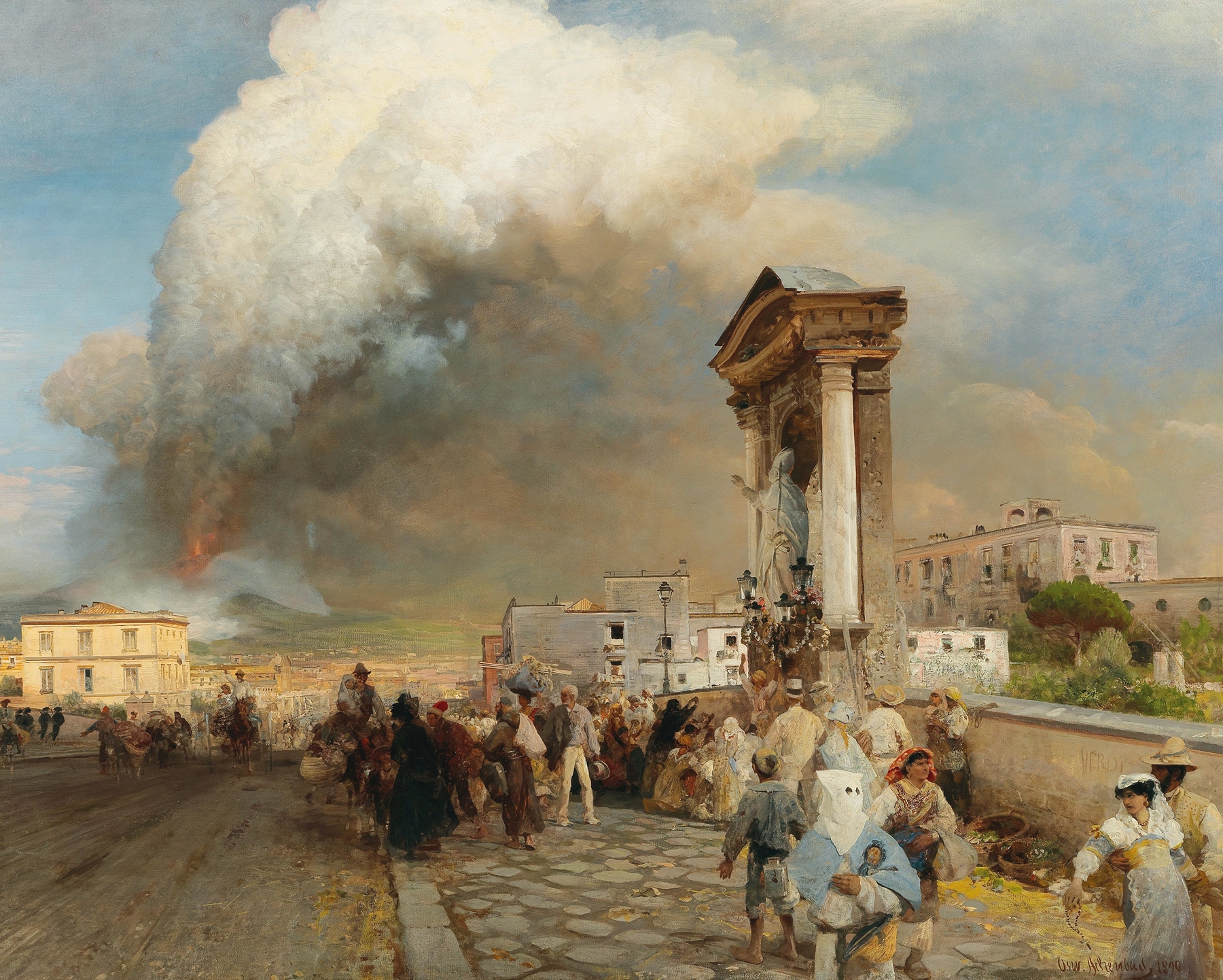
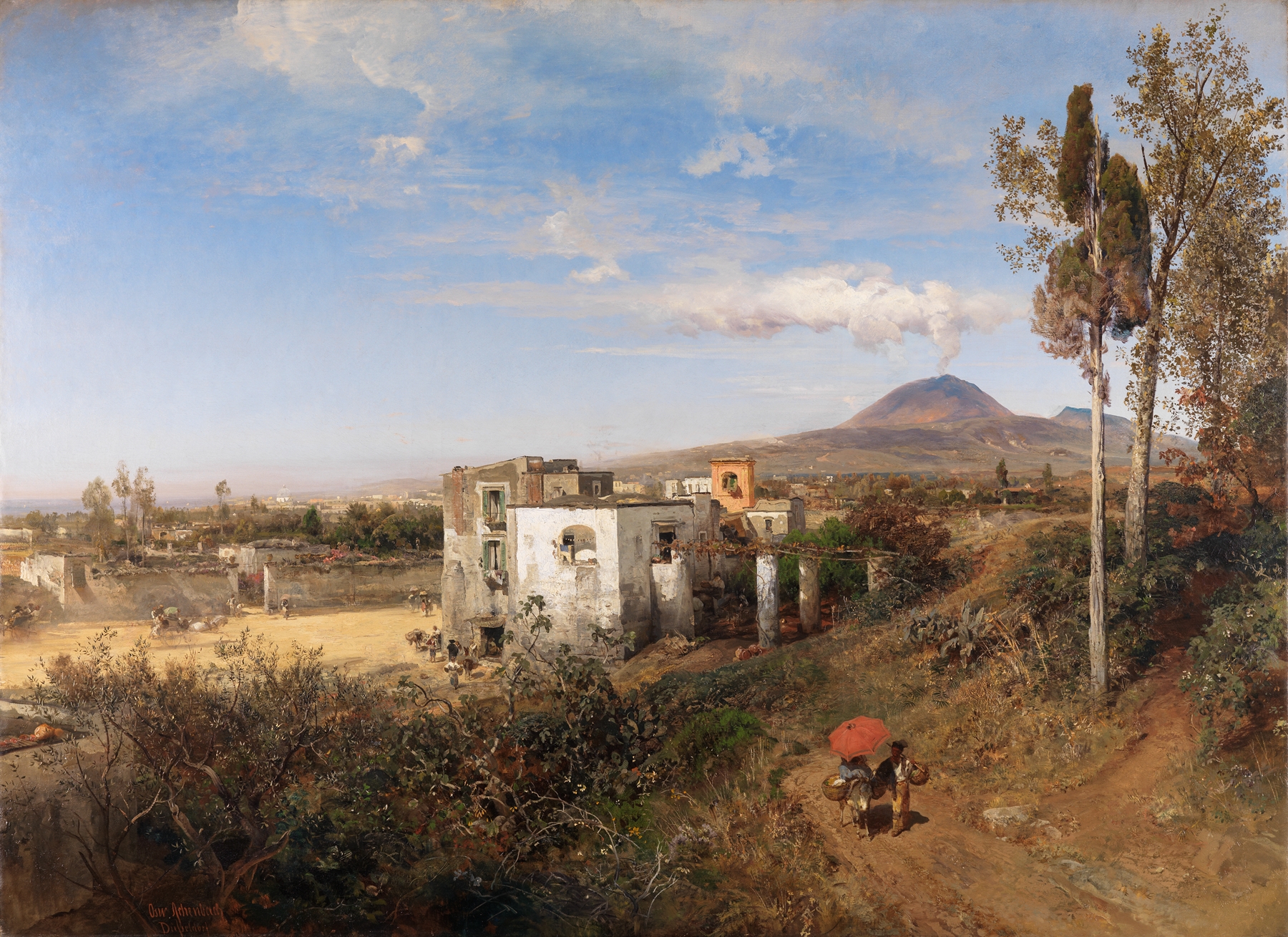
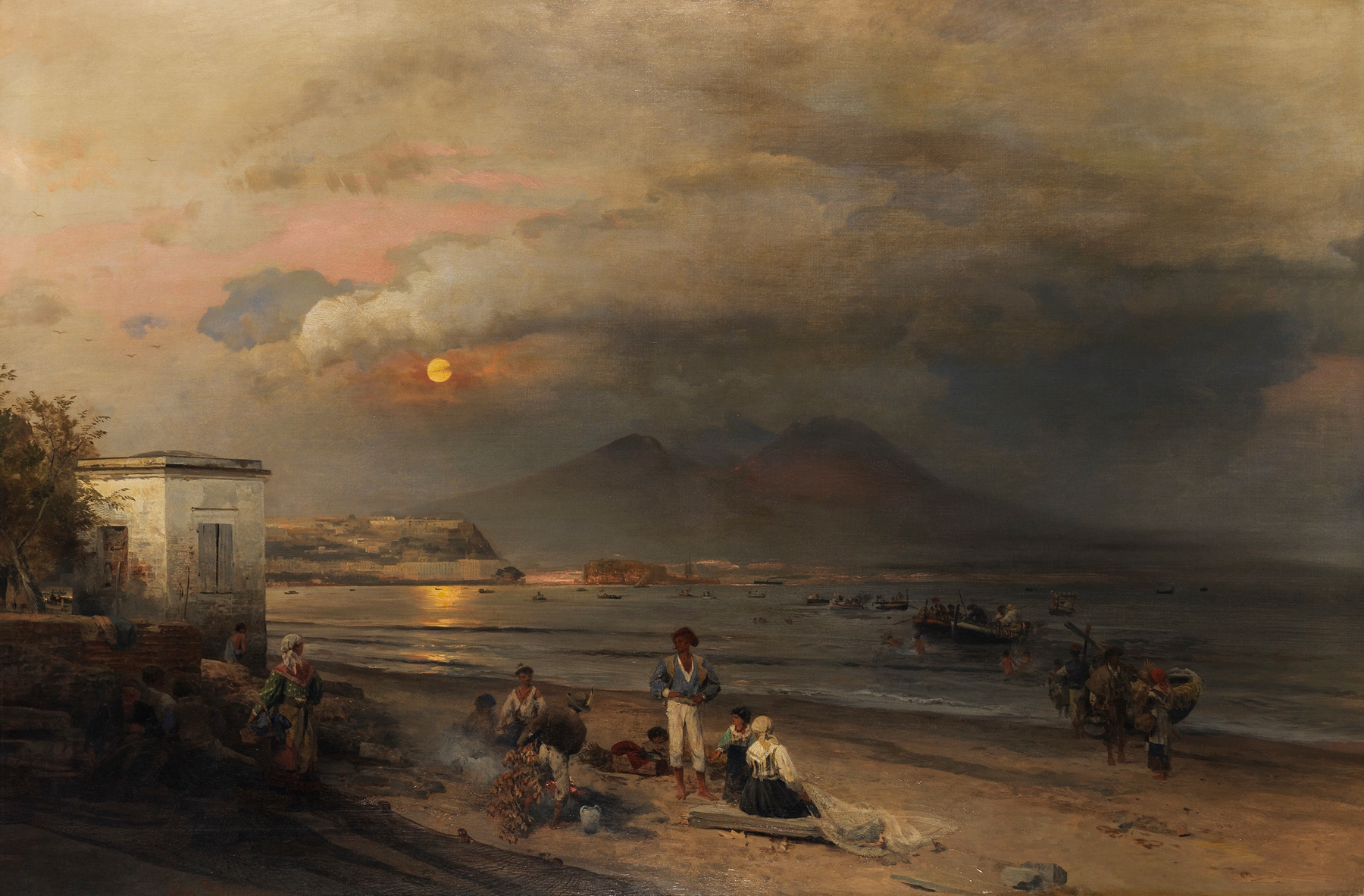
Where does light end, and longing begin? In Oswald Achenbach’s Blick auf die Bucht von Neapel, the interplay of sun-drenched skies and shimmering waters evokes a sense of dreamy illusion that entices the viewer to wander beyond the canvas. Look to the horizon, where pale blue melds into soft gold as the sun begins its descent over the Bay of Naples. Achenbach masterfully employs a palette of warm hues that vibrate with life, drawing your gaze to the gentle ripples reflecting the twilight. Notice how the clusters of clouds, brushed with shades of pink and lavender, dance across the sky, framing the ethereal beauty of Mount Vesuvius in the distance.
The composition balances the tranquil sea with the looming mountains, creating a harmony that speaks to both serenity and nostalgia. Yet, beneath the surface, there is a palpable tension between reality and illusion. The glowing light suggests warmth and comfort, yet hints at fleeting moments, whispering of impermanence. The distant figures on the shore, rendered in subtle detail, appear like specters of a life lived in the embrace of nature’s beauty, evoking feelings of longing and contemplation.
Each stroke tells a story of connection to place, yet also distance, inviting viewers to reflect on their own desires and unfulfilled dreams. In 1888, Achenbach was deeply immersed in the Romantic tradition while residing in Düsseldorf, a period marked by a renewed appreciation for nature and classical themes. The painting represents a culmination of his lifelong pursuit of capturing light and atmosphere in landscapes. It was a time when artists were increasingly exploring the emotive potential of color and light, which was reshaping the avenues of artistic expression across Europe.