Sunset In The Bay Of Naples — History & Analysis
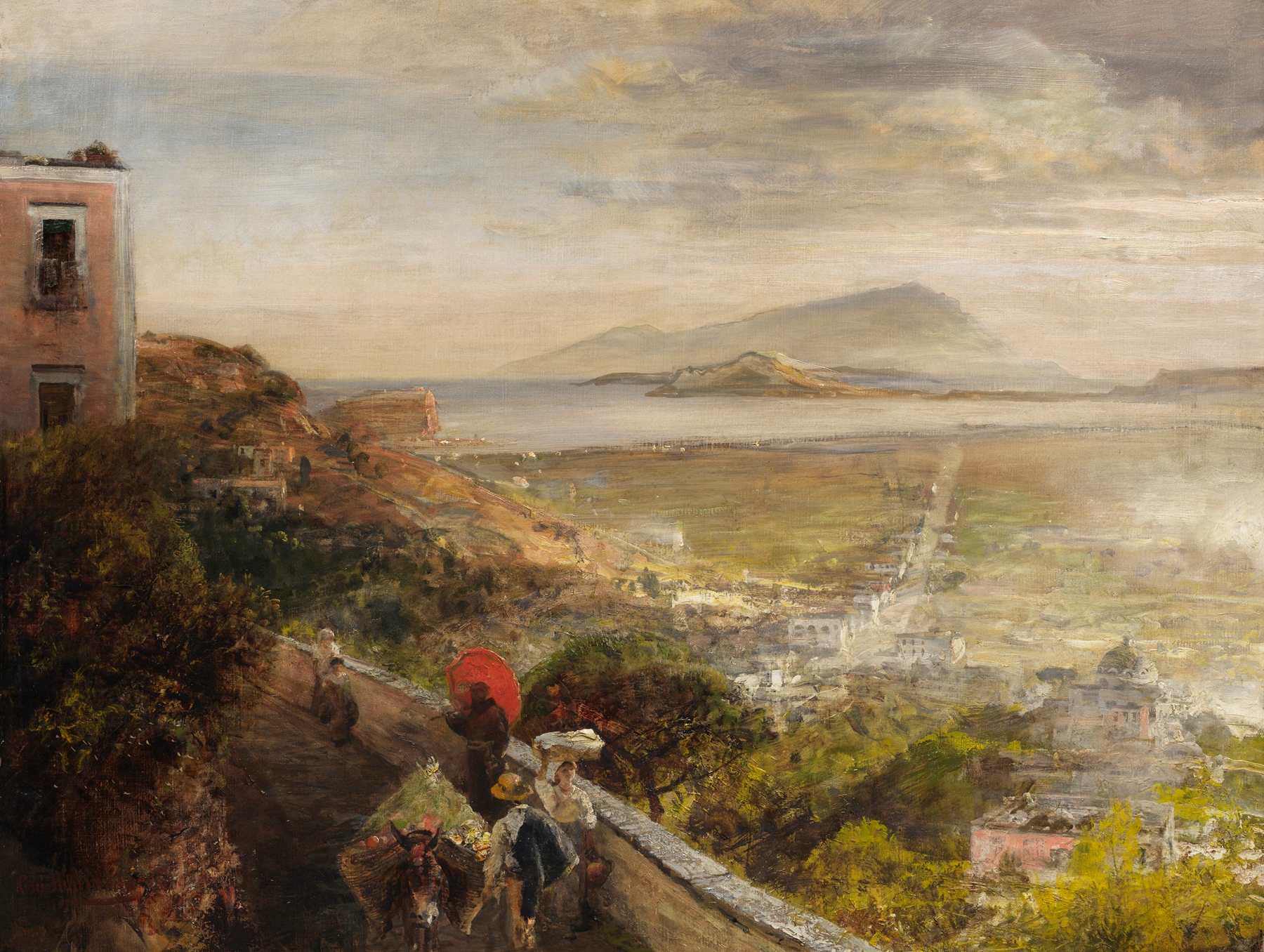
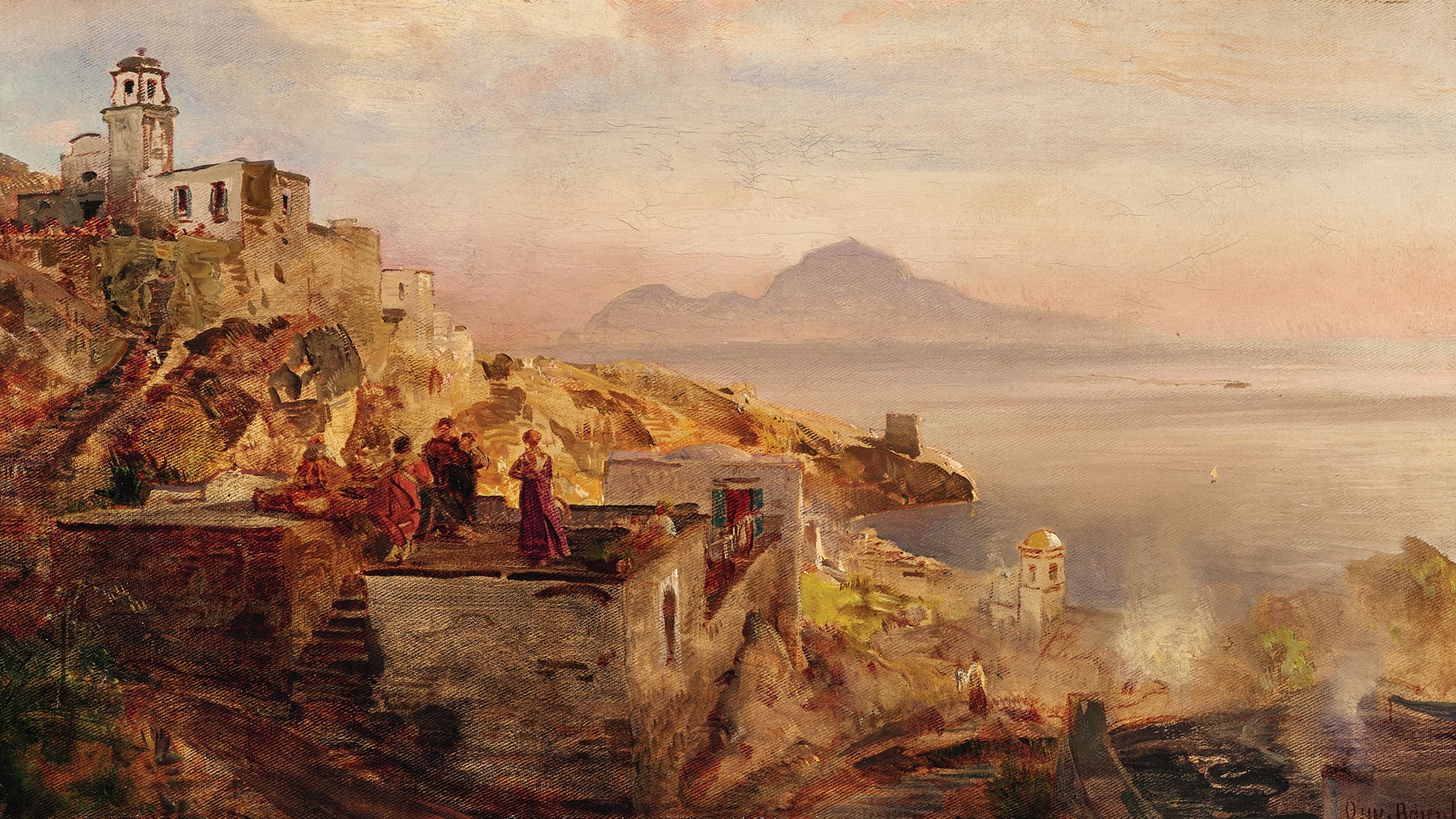
What if silence could speak through light? In Sunset In The Bay Of Naples, the golden hues of dusk whisper stories of transformation and upheaval, inviting the viewer to linger in a moment of reflection. Look to the right at the sprawling landscape, where the vibrant oranges and deep purples blend seamlessly in the sky, casting a warm glow over the bay. The brushstrokes are fluid and deliberate, guiding your gaze over the boats gently bobbing in the water, each one a testament to the passage of time.
Notice how the light falls upon the water’s surface, creating shimmering textures that evoke both tranquility and turmoil, hinting at the change brewing in this serene setting. The combinations of light and shadow serve as metaphors for the contrasts within the scene—between peaceful existence and the latent forces of revolution, echoing the historical tensions of the era. The soft outlines of the hills are juxtaposed against the vibrant sky, suggesting that beneath the calm exterior lies an undercurrent of emotional intensity.
Each detail, from the delicate ripples to the distant silhouettes, encapsulates the complex relationship between nature’s beauty and human experience. Oswald Achenbach painted this piece during a time when the art world was shifting, embracing Romanticism and its passion for natural beauty. Created in the late 19th century, amidst the backdrop of national unification movements in Italy, the work reflects a burgeoning desire for change and identity, capturing both the serenity of the moment and the revolutionary spirit of the times.