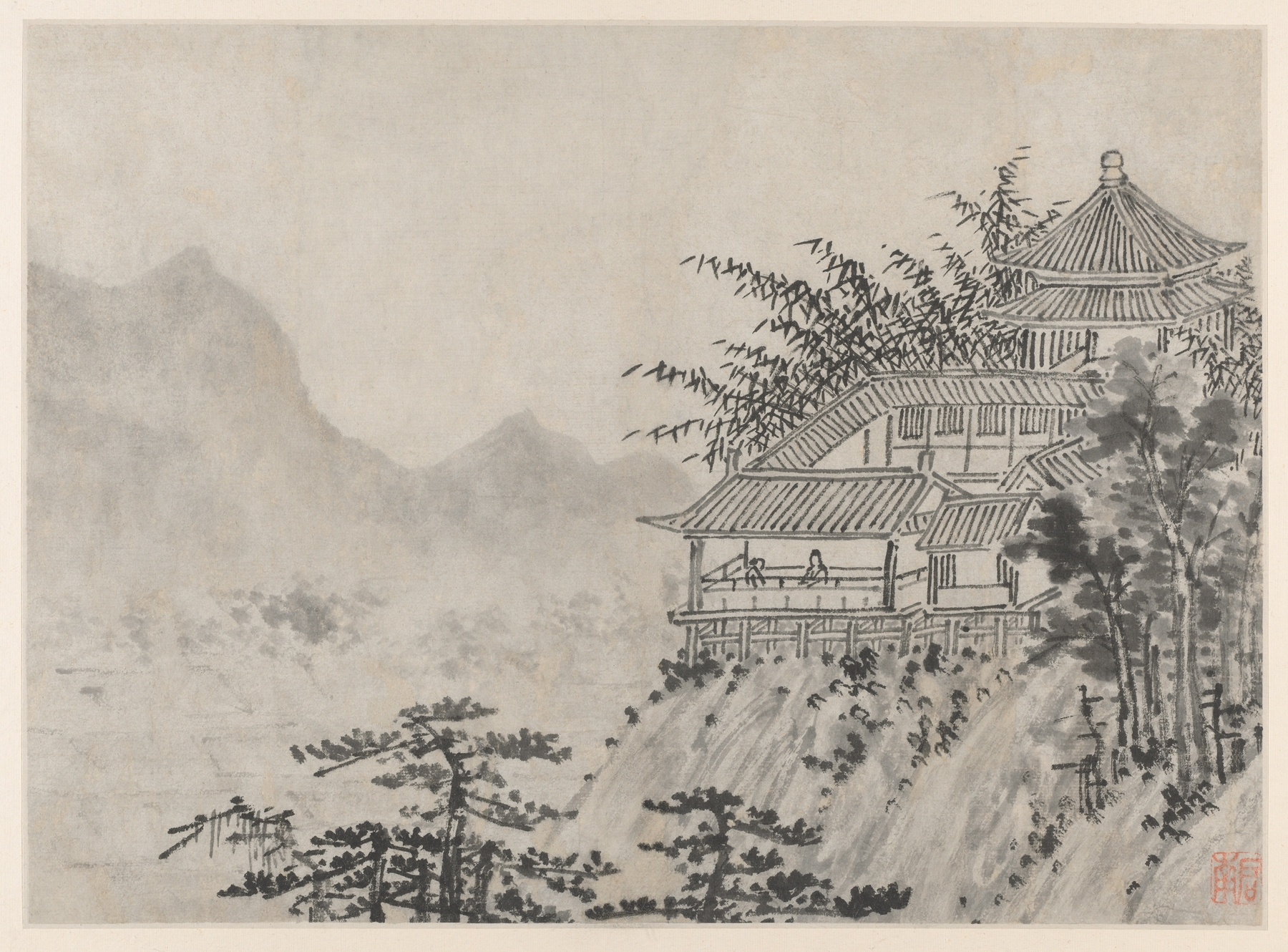
Bamboo Pavilion, Tiger Hill, from Twelve Views of Tiger Hill, Suzhou — History & Analysis
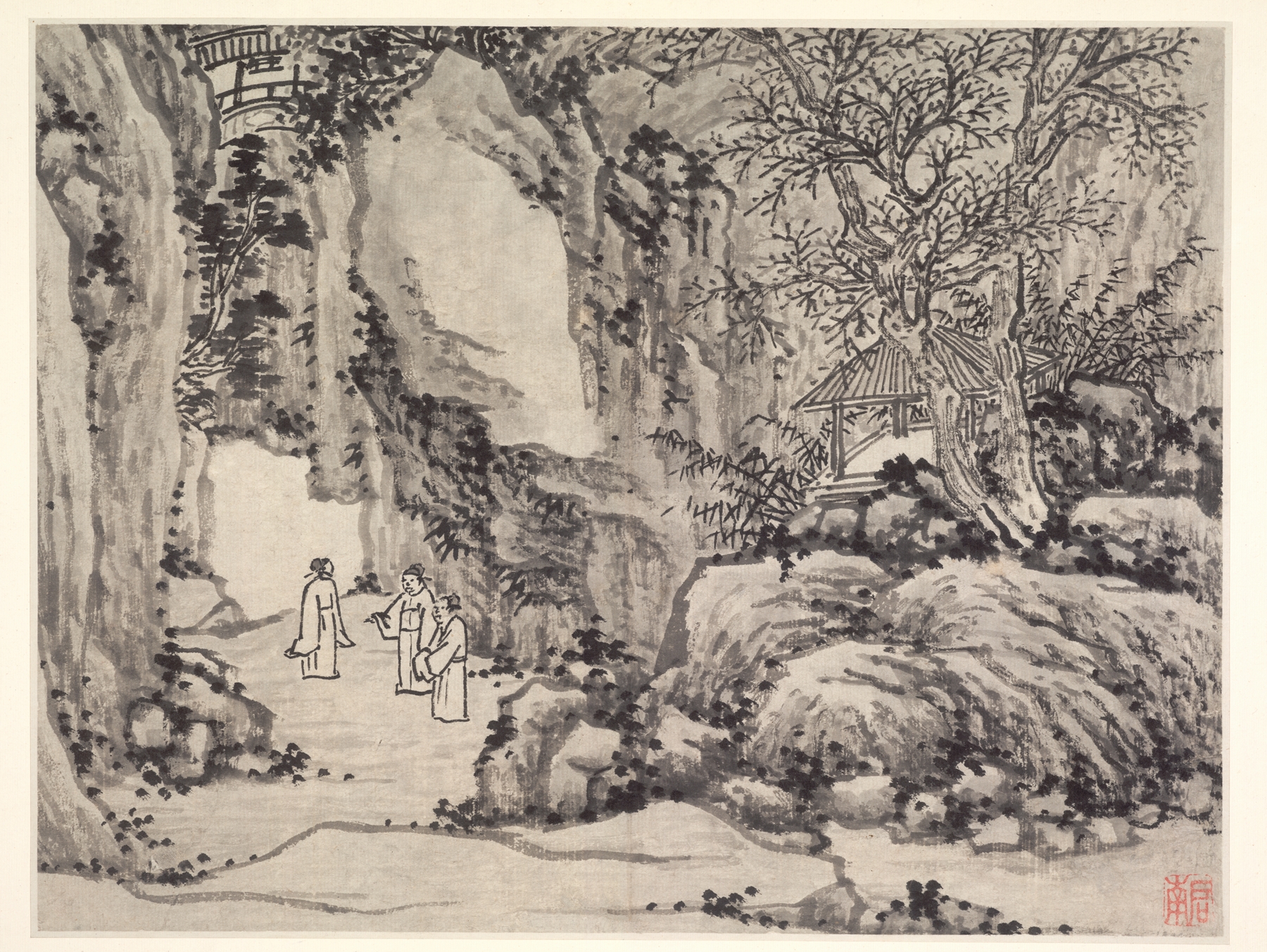
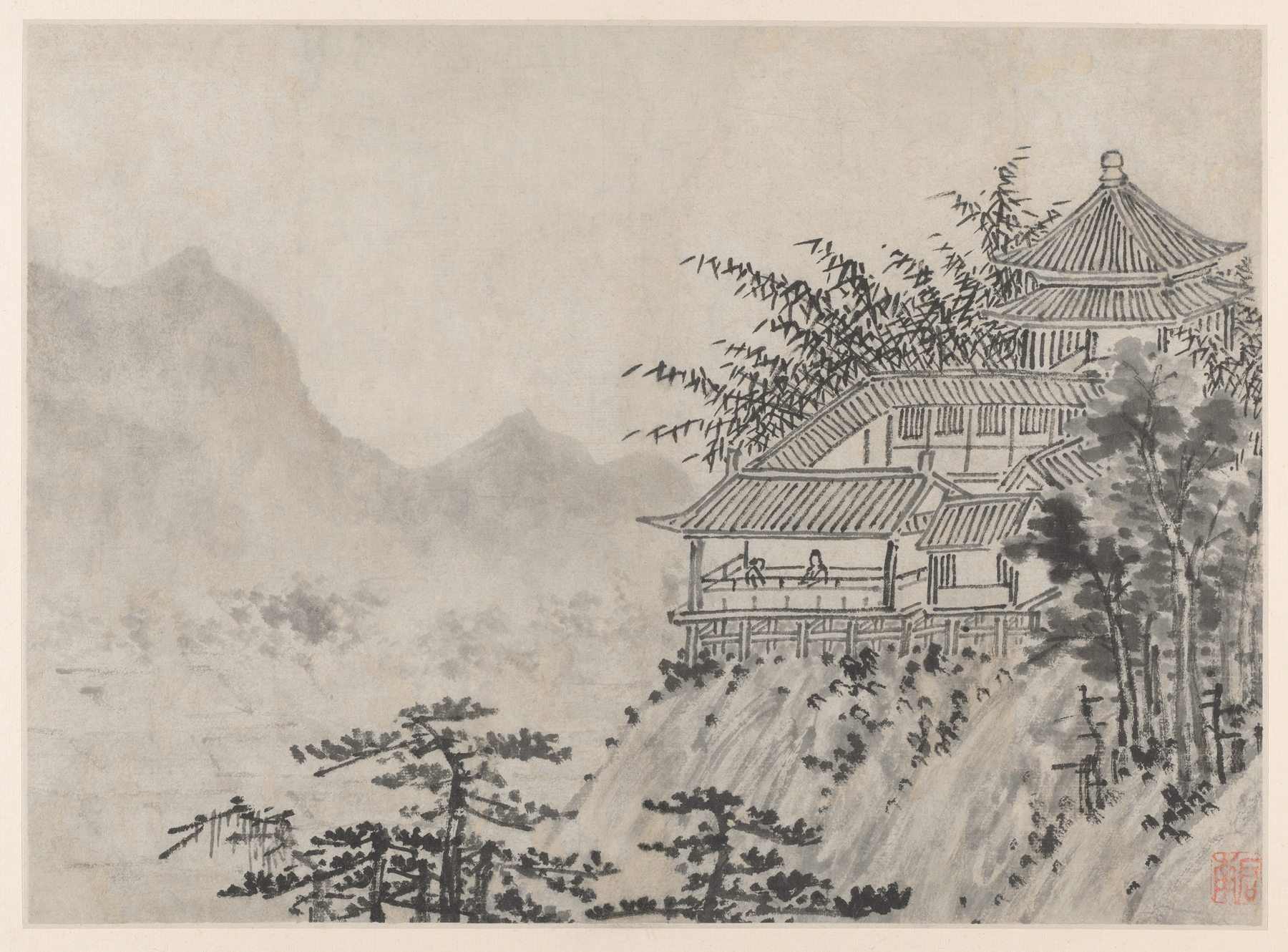
Where does light end, and longing begin? The question lingers like the whispers of the bamboo leaves in the gentle breeze, echoing through a space suspended between tranquility and the inevitable march of time. Look to the left at the delicate strokes that form the slender bamboo, their green hue a testament to a life force that seems to breathe within the painting. Notice the way the light plays across the texture of the paper, revealing a world where each brushstroke conveys both fragility and resilience.
The pavilion, nestled among the greenery, stands in serene contrast to the shadows that threaten to envelop it, drawing your eye deeper into this contemplative scene. The interplay of light and shadow creates an emotional tension, reflecting not only a moment suspended in time but also the profound sense of decay that underlies the beauty of nature. The pavilion, a symbol of human achievement, appears melancholic against the backdrop of vibrant life, suggesting that even the most enduring structures are subject to the ravages of time. Each element, from the wispy clouds to the still water, contributes to an atmosphere steeped in nostalgia, hinting at the transience of existence itself.
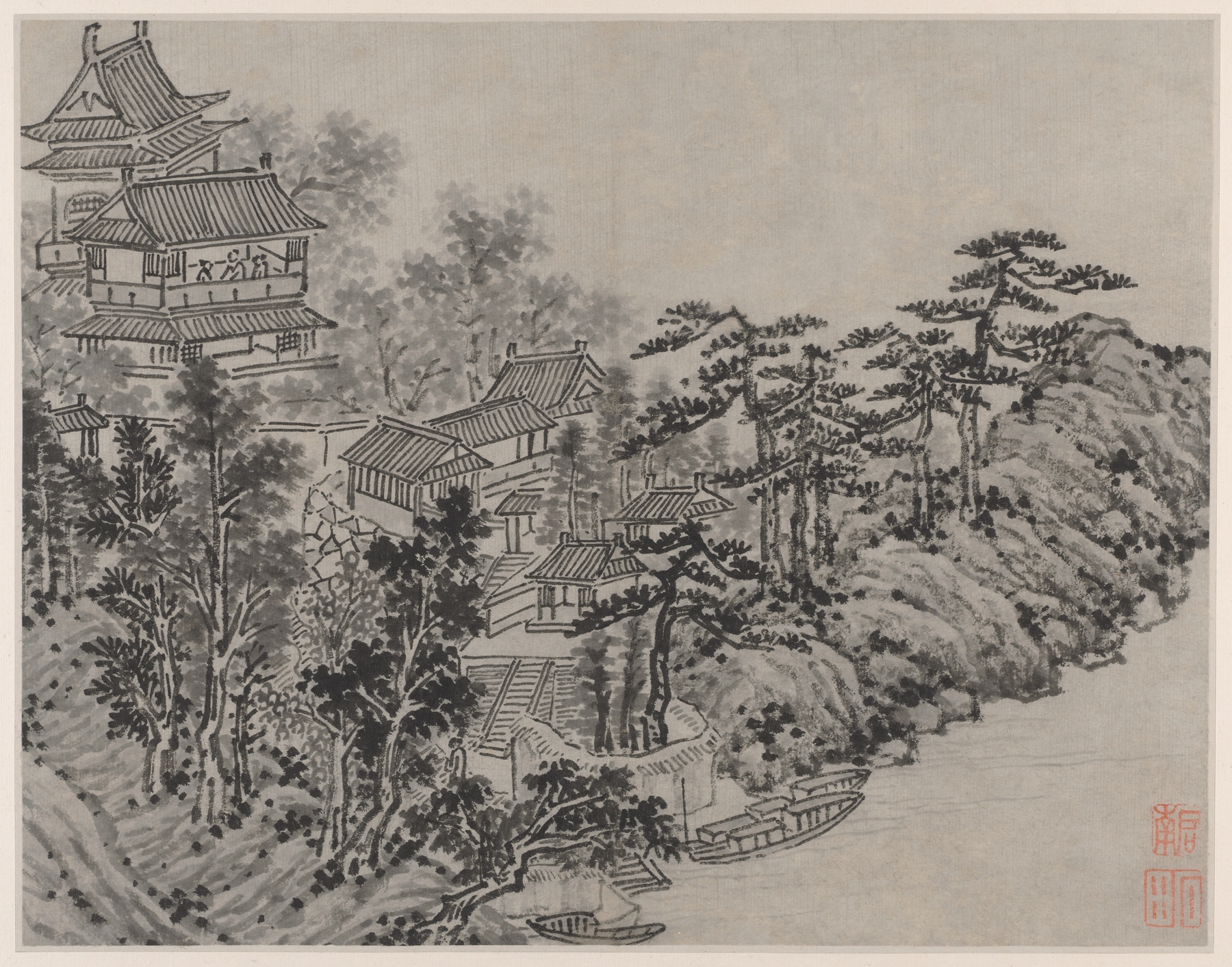
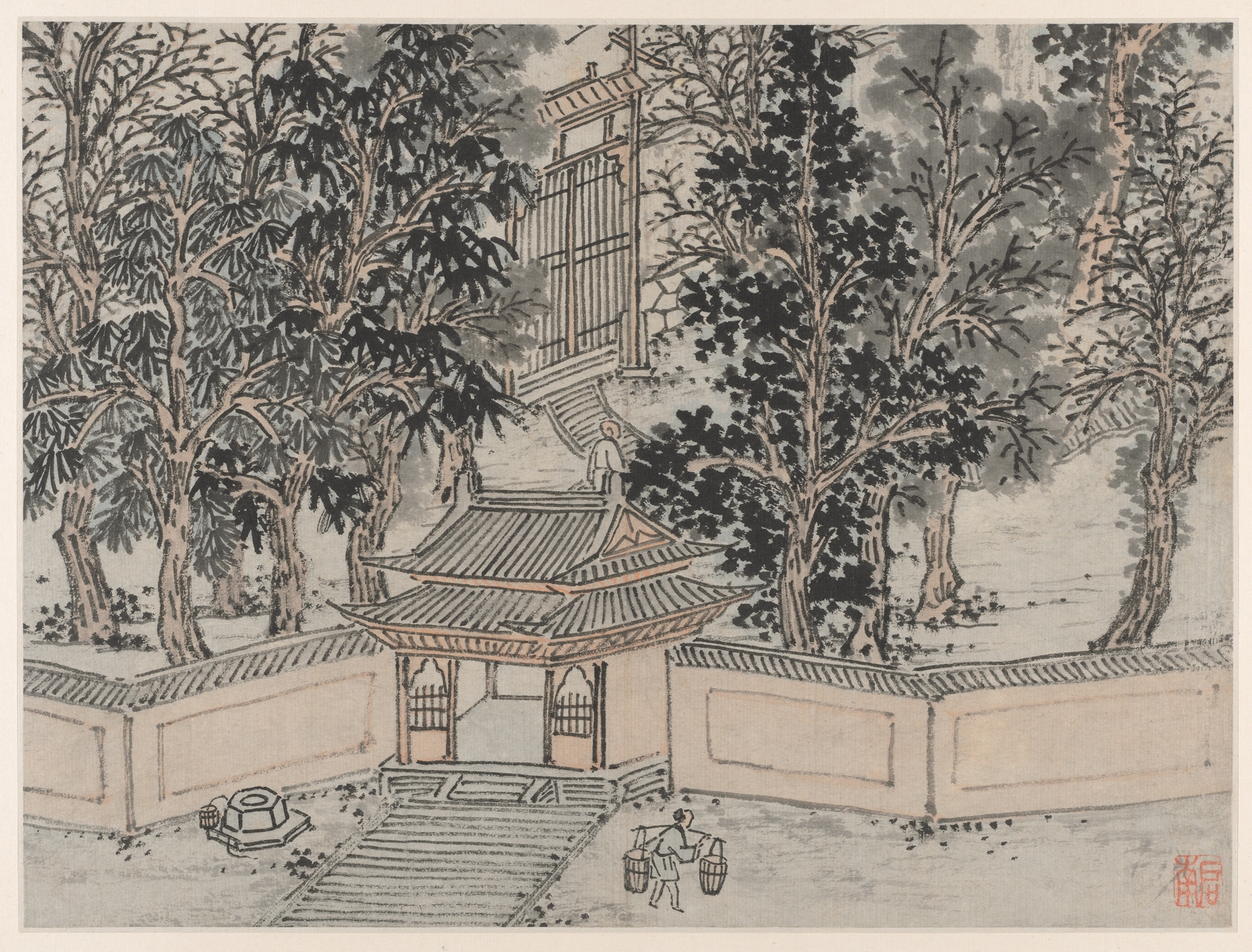
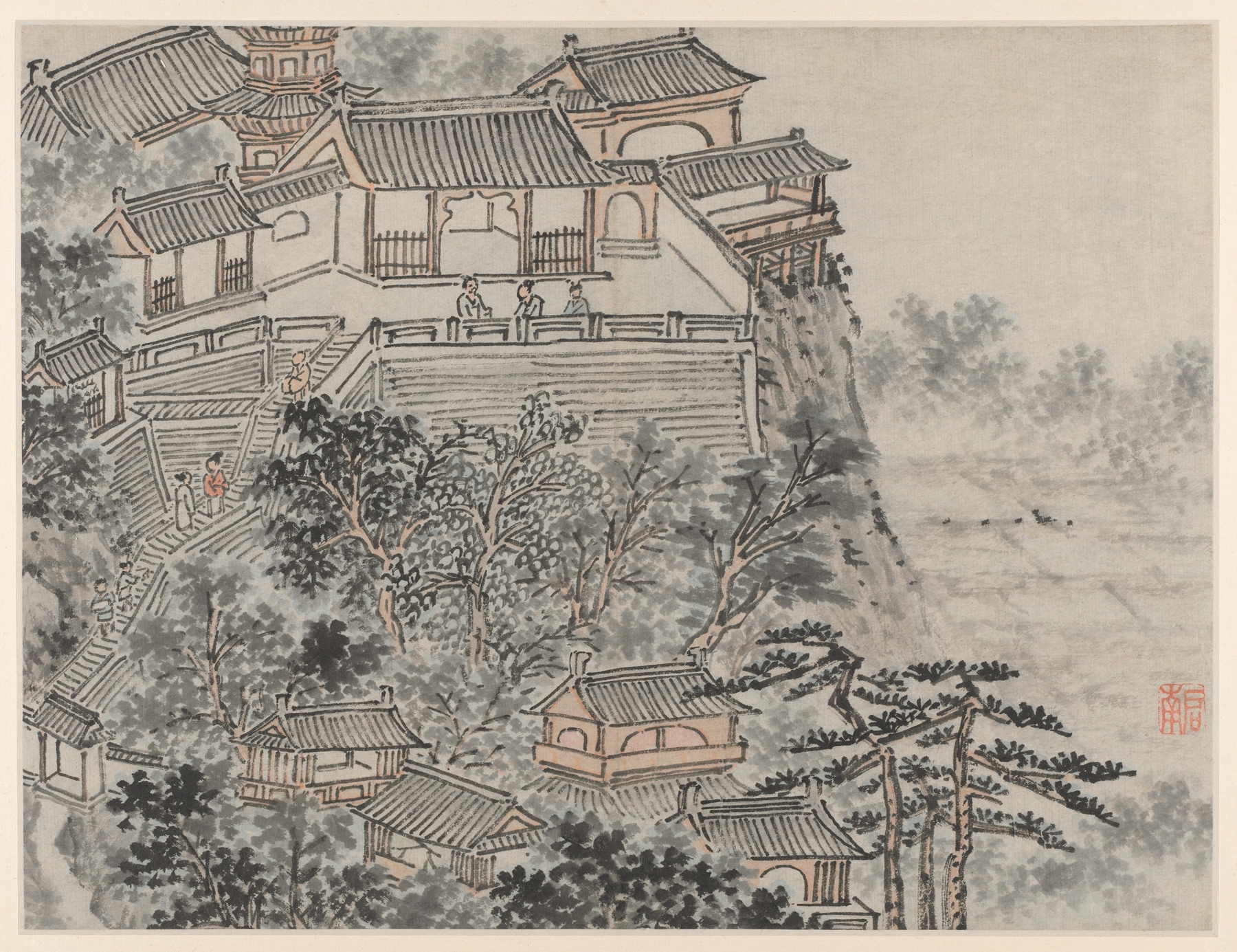
Shen Zhou created this work after 1490 during a period of political turmoil and artistic exploration in China. As a prominent figure of the Wu School, he was deeply influenced by the beauty of his homeland, seeking to capture the essence of nature while confronting his own existential reflections. This piece, nestled within the series Twelve Views of Tiger Hill, encapsulates his mastery of ink and wash, while also serving as a meditation on the passage of time and the inevitable decay that follows.