Basle — History & Analysis
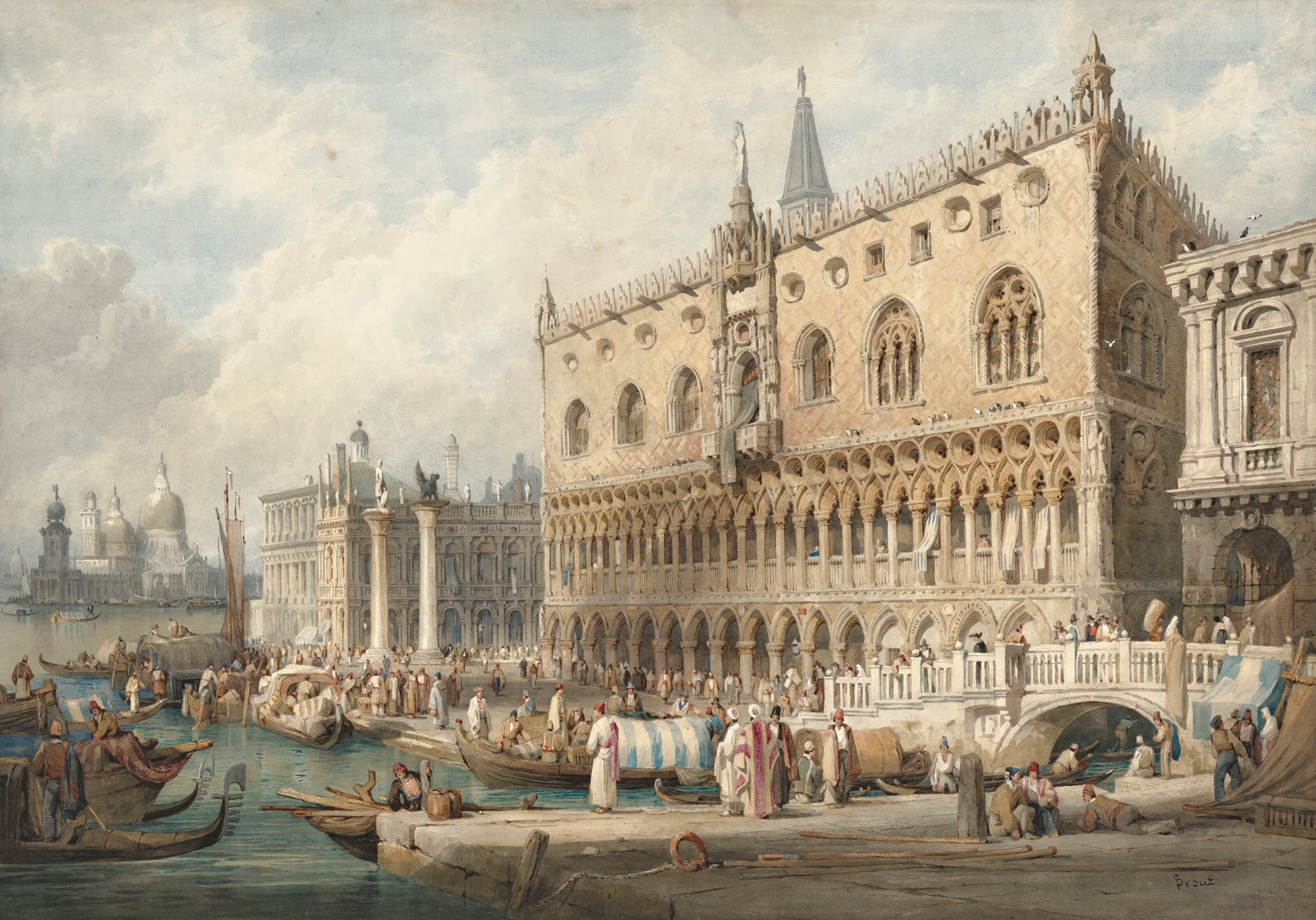
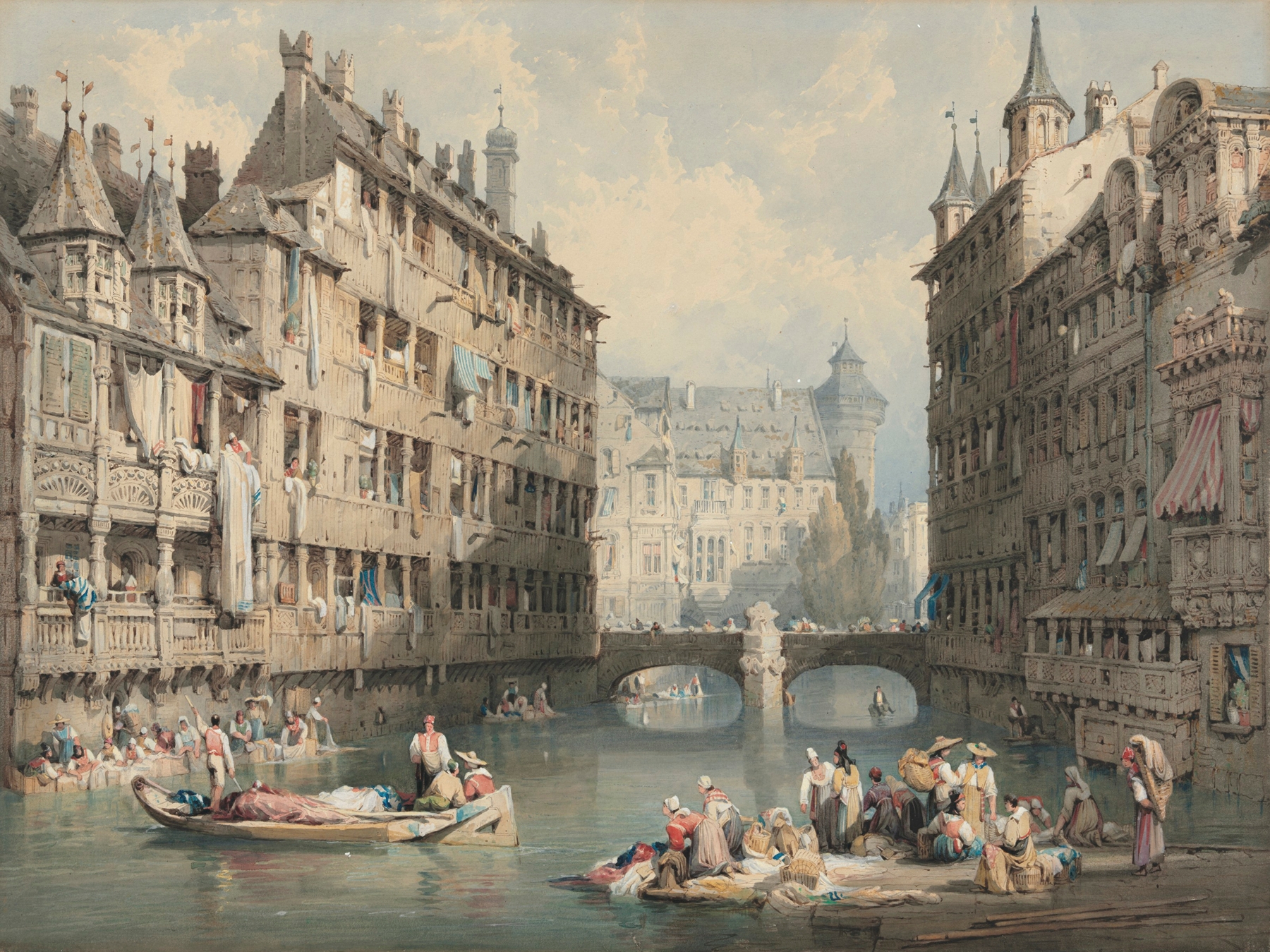
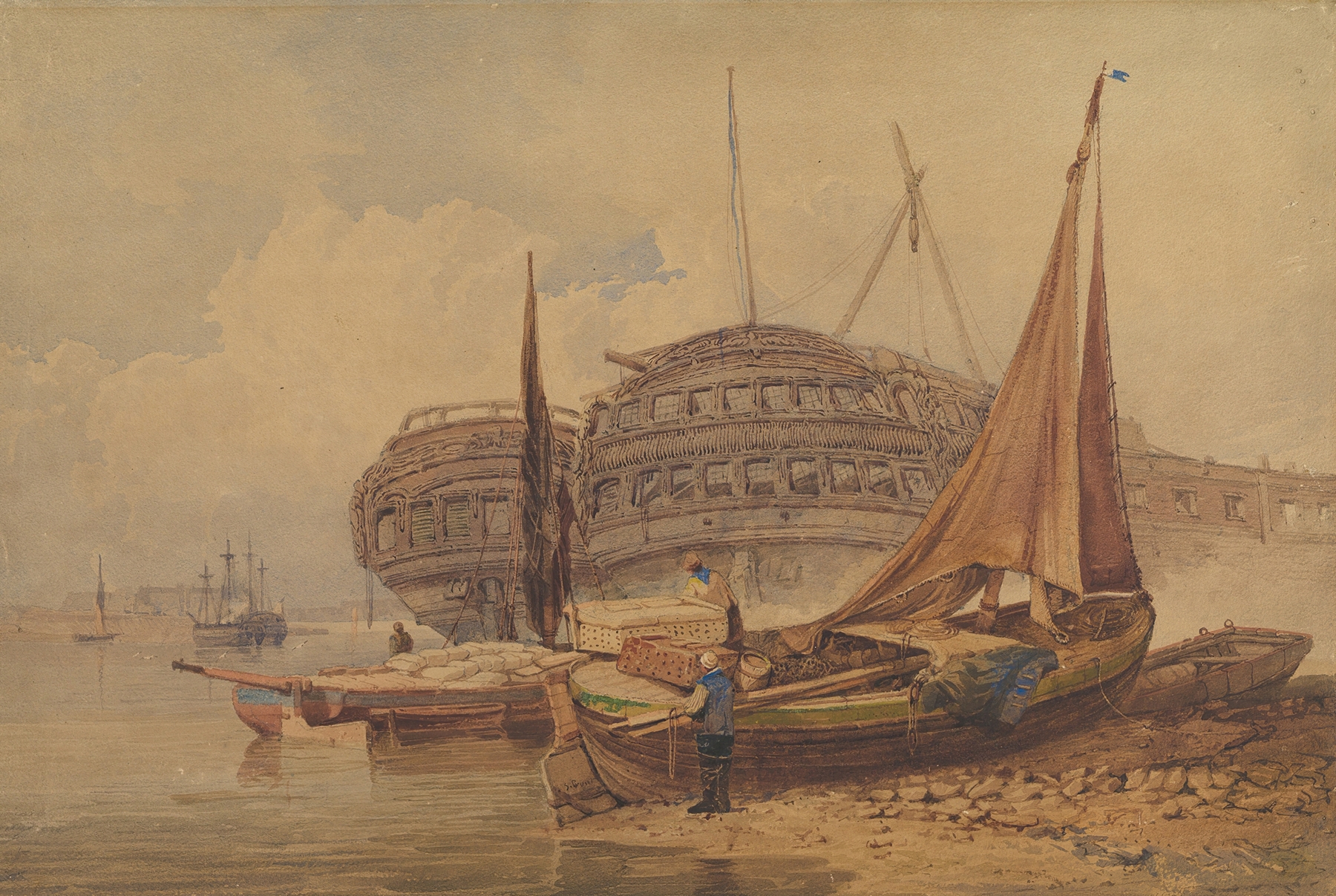
“Every silence here is a confession.” In the quietude of a bygone moment, the atmosphere cloaked in melancholy speaks volumes, revealing the weight of nostalgia that accompanies stilled waters and shadowed buildings. Look to the left at the intricate architecture of the structures dotting the riverside, their weathered facades bathed in muted shades of ochre and grey. The delicate brushstrokes create a sense of movement in the water, contrasting with the stillness of the scene. Notice how the dim light reflects off the surface, drawing your attention to the subtle ripples that echo the unseen histories contained within the river.
The careful composition frames the horizon, leading the eye towards a distant point—a promise of something beyond, yet forever out of reach. Within this canvas lies a tension between the vibrant life once lived in the streets and the heavy silence that now reigns. The scattered boats, motionless, appear like forgotten memories lingering on the edge of awareness. The interplay of light and shadow suggests the passage of time, encapsulating both the beauty and sadness of a moment suspended in eternity.
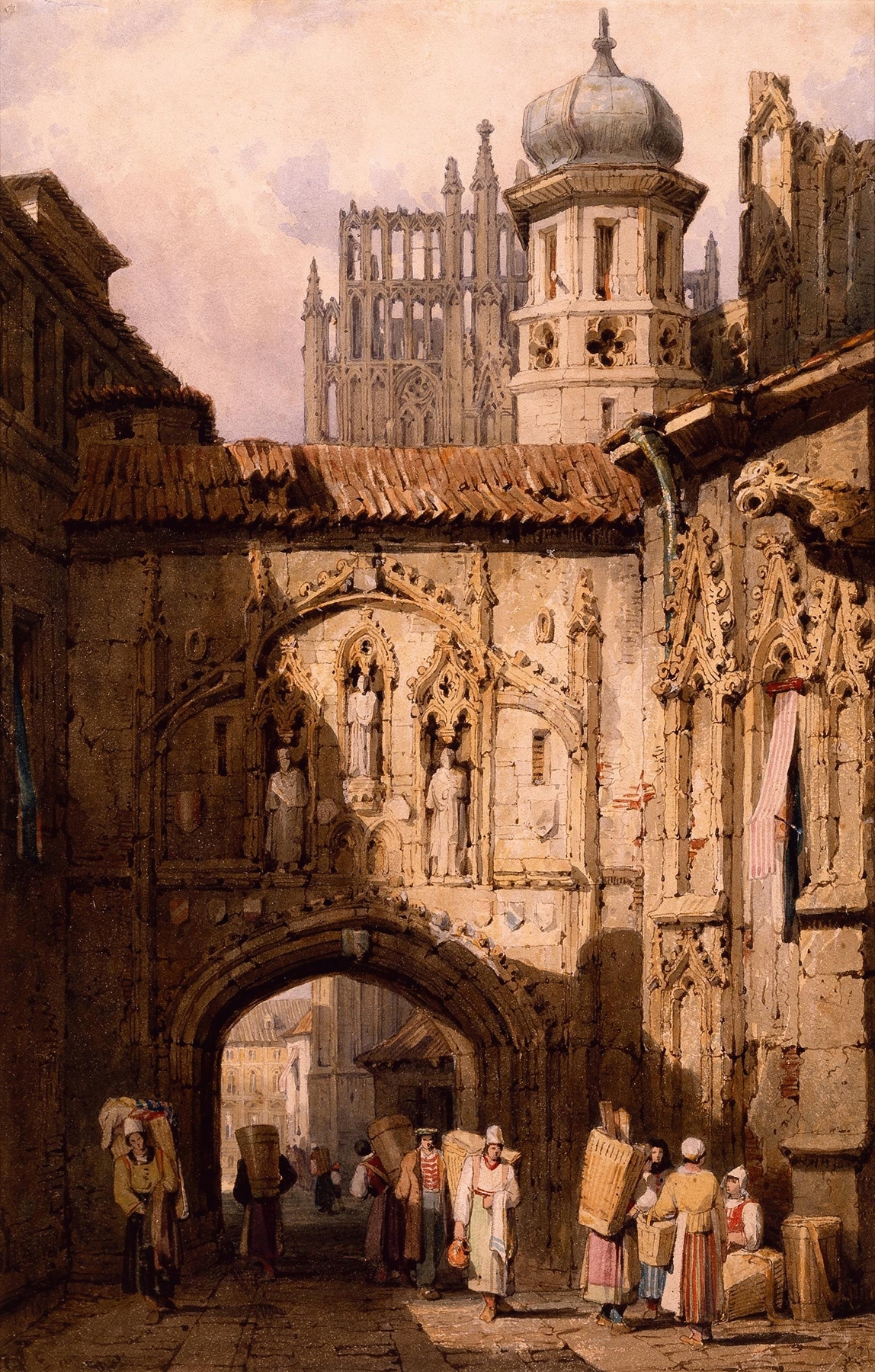
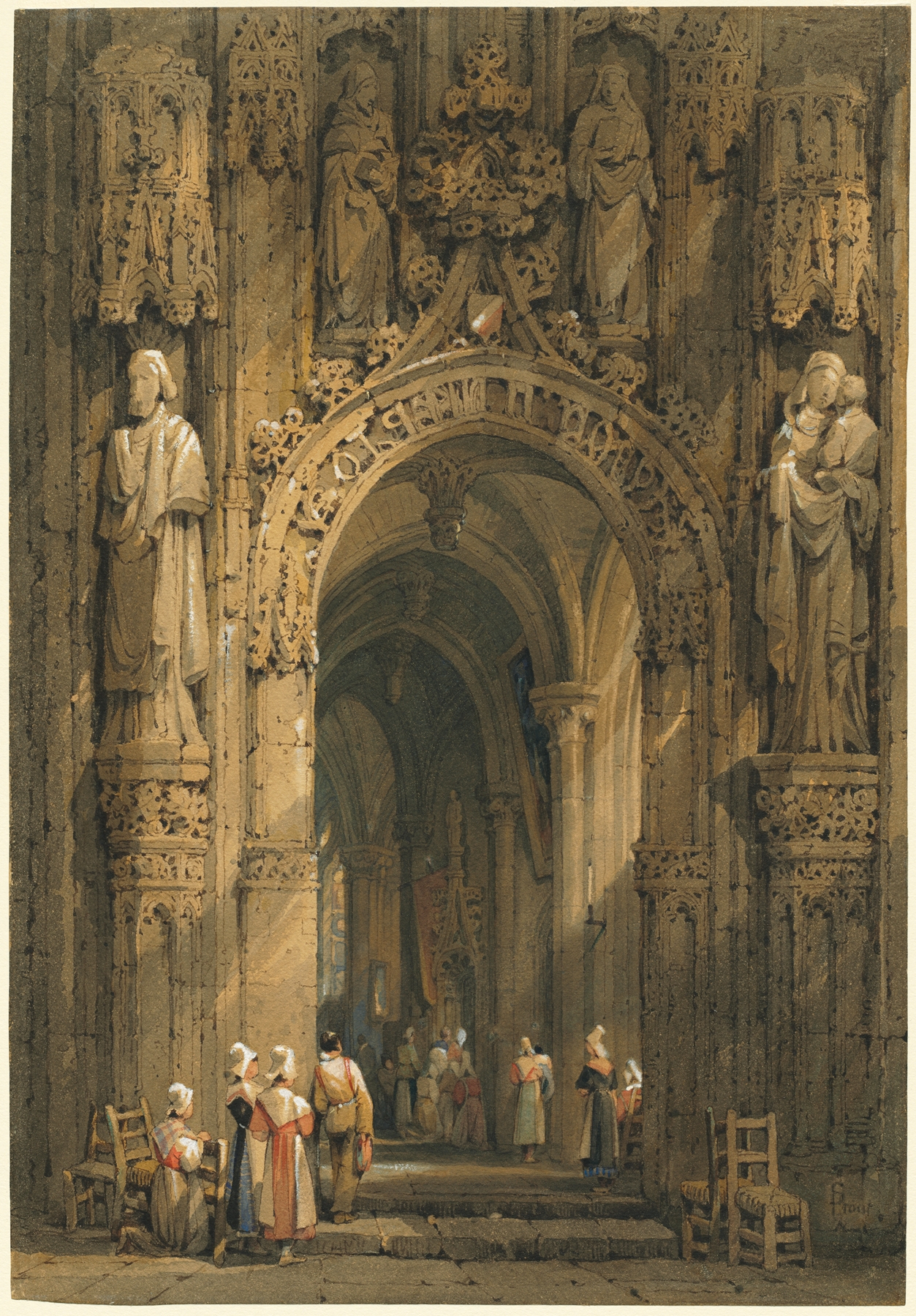
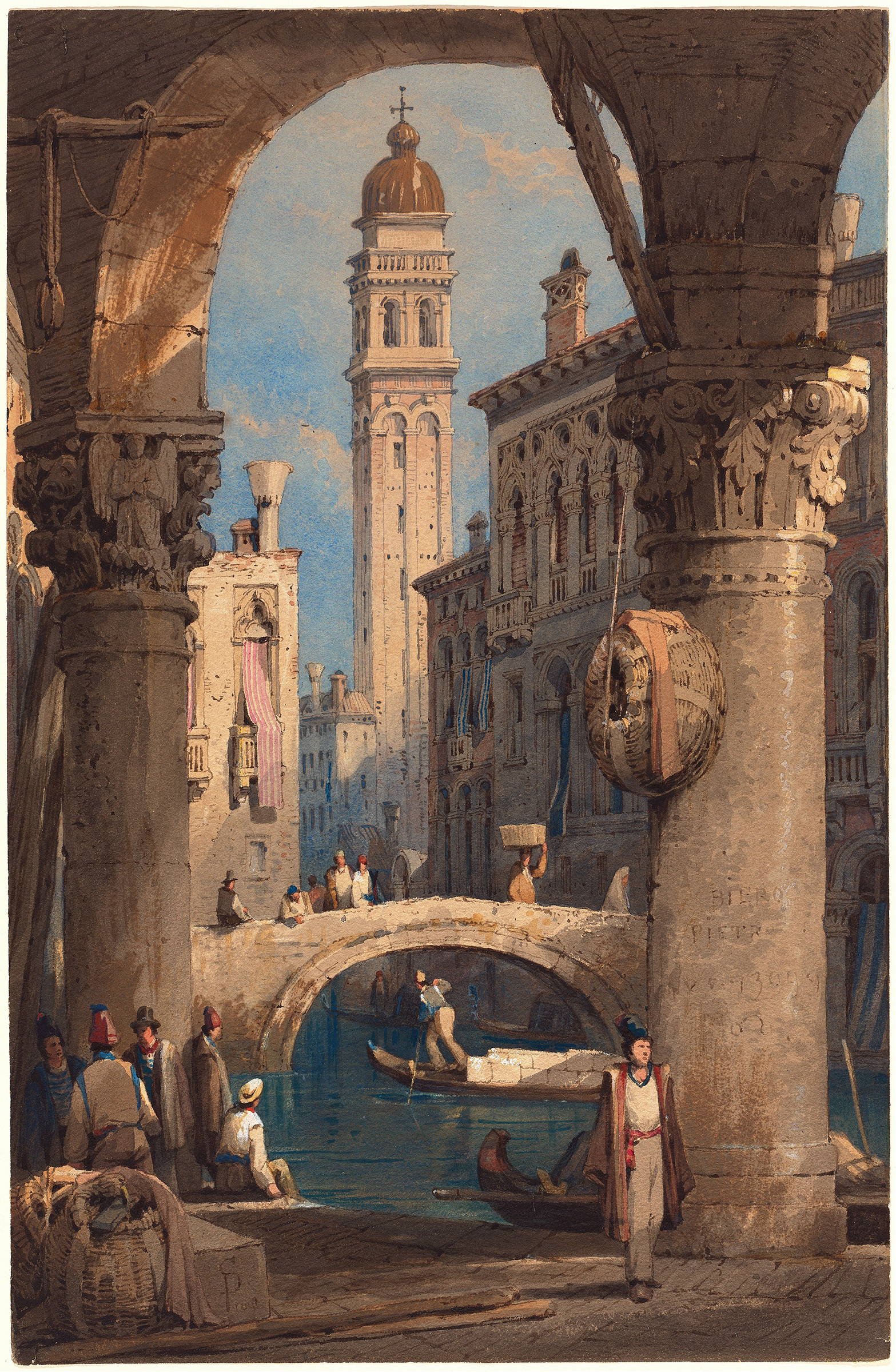
The artist paints not merely a landscape but a silent dialogue with absence, where every element speaks to what has been lost. Samuel Prout created this work during a period when he was deeply immersed in the portrayal of English landscapes and architecture. The specific date remains undetermined, yet his artistic career flourished in the early to mid-19th century, a time marked by romanticism's embrace of nature and nostalgia. As the world around him modernized, his scenes captured the fading charm of historical settings, preserving their essence in a rapidly changing society.