The Doge’s Palace and the Grand Canal, Venice, looking west — History & Analysis
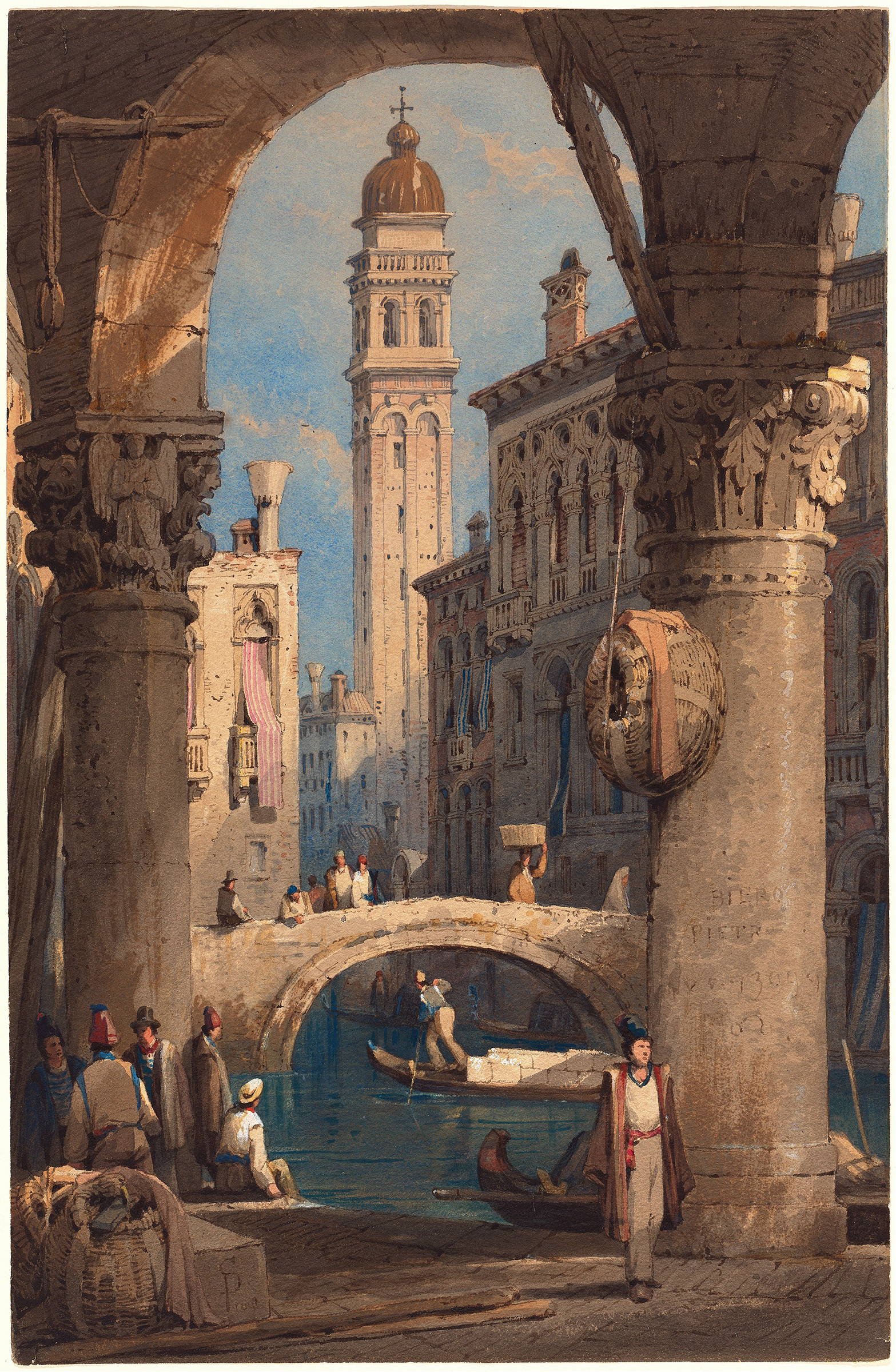
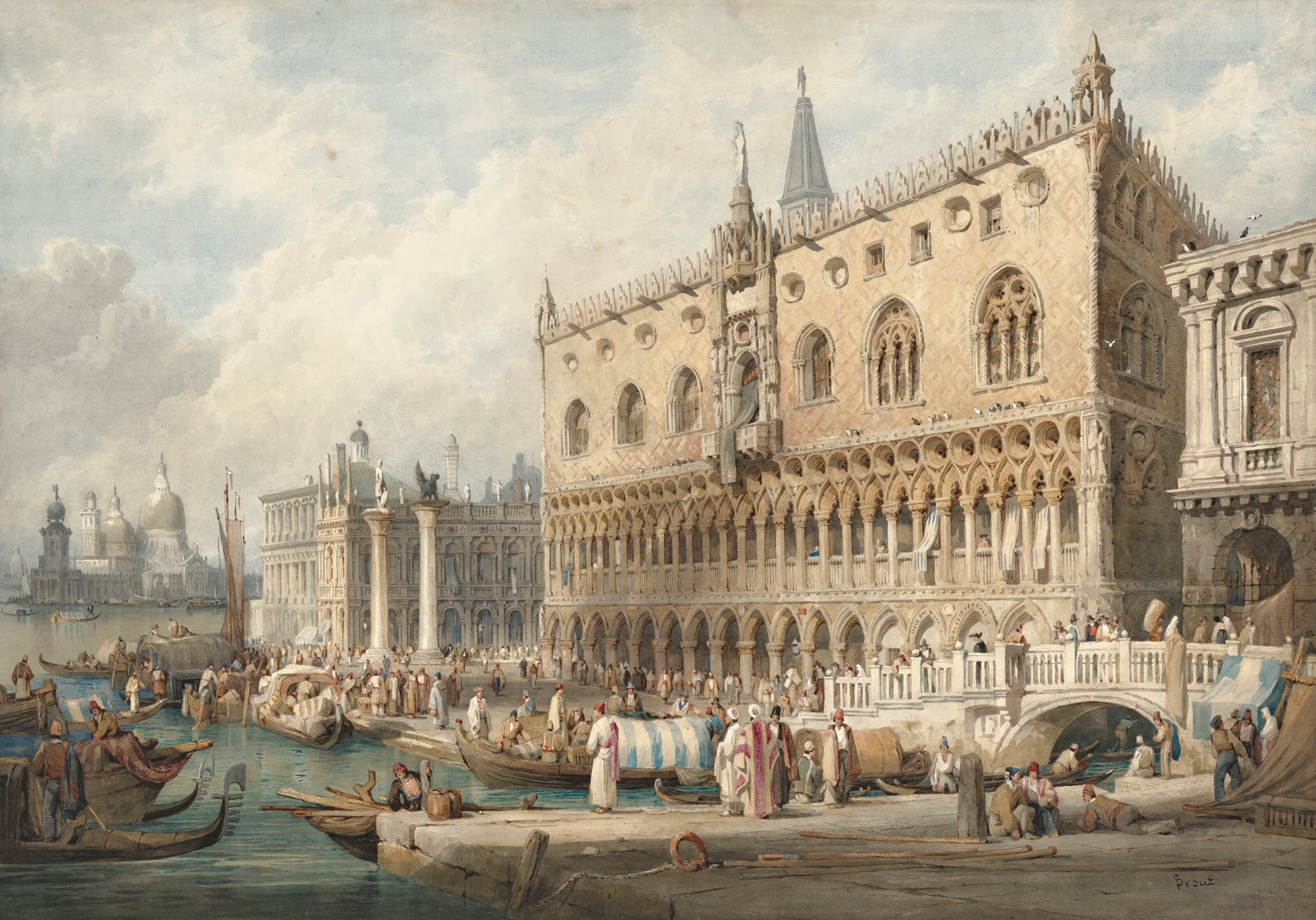
“Every silence here is a confession.” In the stillness of a moment captured, the weight of history lingers in this portrayal of grandeur and decay, inviting contemplation of legacy and time's passage. Look to the center where the Doge’s Palace stands majestically against the watery expanse of the Grand Canal. The soft, diffused light of dusk bathes the building in a golden hue, accentuating its ornate façade while casting delicate shadows that dance along the surface of the water.
Notice how the artist's deft strokes create a shimmering reflection that blurs the line between reality and dream, as if the palace itself is a lingering memory in the hearts of those who have passed through its halls. Delve deeper into the composition, and you will find contrasts that echo the duality of Venice itself: the rigid architecture of the palace juxtaposed with the fluidity of the canal, representing both the permanence of power and the transience of life. The scattered boats, mere whispers of movement, seem to hold stories untold, while the tranquil sky hints at the passage of time, reminding us that every majestic structure carries the burden of its own decay.
Each element invites viewers to ponder what endures and what fades away. Samuel Prout created this scene during a period when he was deeply engaged with capturing the essence of architectural beauty and urban life in European cities. Working in Venice, likely in the mid-19th century, he found inspiration in the rich history and captivating light of the city, a time when artists began to embrace plein air painting, forever altering the perception of landscapes and cityscapes in art.