Basle — History & Analysis
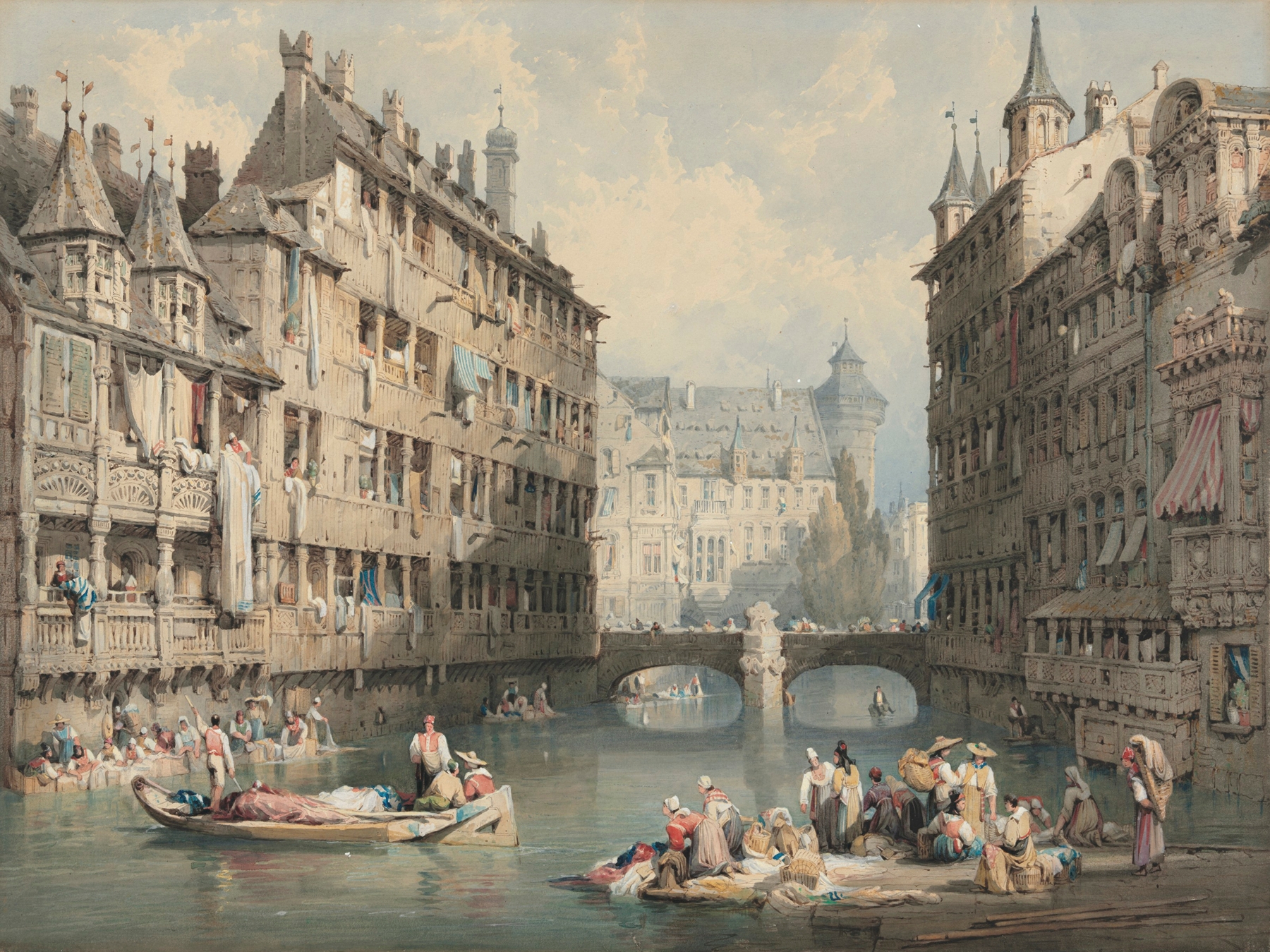
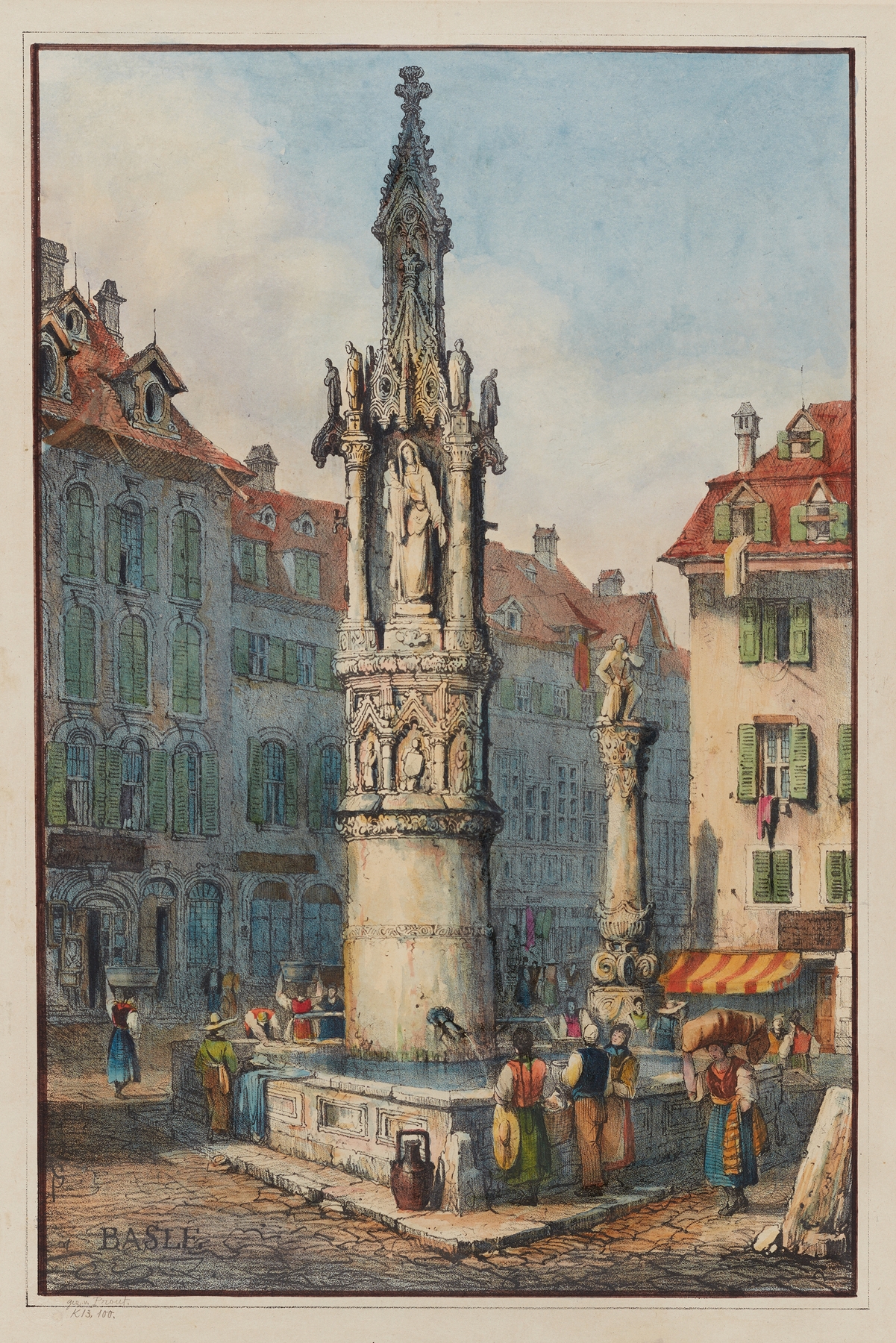
“Sometimes beauty is just pain, disguised in gold.” In the delicate hues of twilight, the serene landscape unfolds a bittersweet narrative, allowing us to glimpse the melancholy hidden within its beauty. Focus first on the shimmering waters of the Rhine, where the reflective surface captures the light in a dance of gold and deep blue. The distant silhouette of the city rises against the sky, its buildings softly outlined, while the gentle brushwork conveys a sense of tranquility. Notice how Prout’s use of light creates a transitional moment, as day slips into night, and with it, the quiet weight of nostalgia envelops the scene.
The sky, painted in fading pastels, hints at the stories that linger in the spaces between the buildings. Within this picturesque setting, contrasts abound: the lively reflections on the water juxtapose the stillness of the architecture, suggesting a tension between movement and permanence. The subtle presence of shadows seems to whisper of lost moments, evoking a sense of longing.
These nuanced details invite viewers to ponder the fleeting nature of beauty and the depth of emotions hidden beneath the surface. In 1839, at the height of the Romantic period, Samuel Prout painted Basle amidst a burgeoning fascination with landscapes that blended realism with emotional resonance. Living in London, he was influenced by the picturesque ideals popularized by his contemporaries, yet he also infused his work with a personal reflection on nostalgia and the passage of time, capturing a city that stands resilient even as it faces the inevitable march of history.