Bathing Time at Deauville — History & Analysis
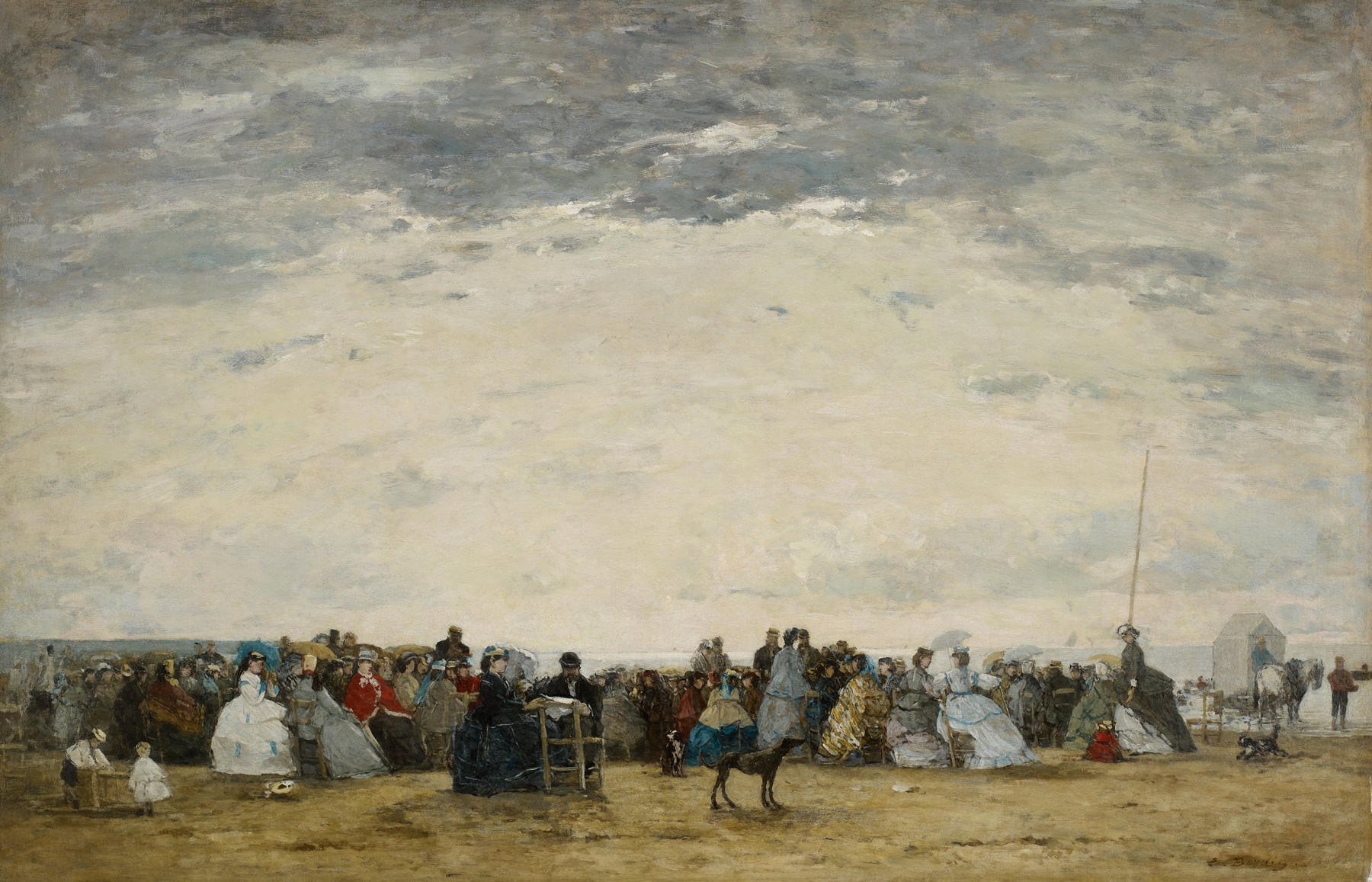
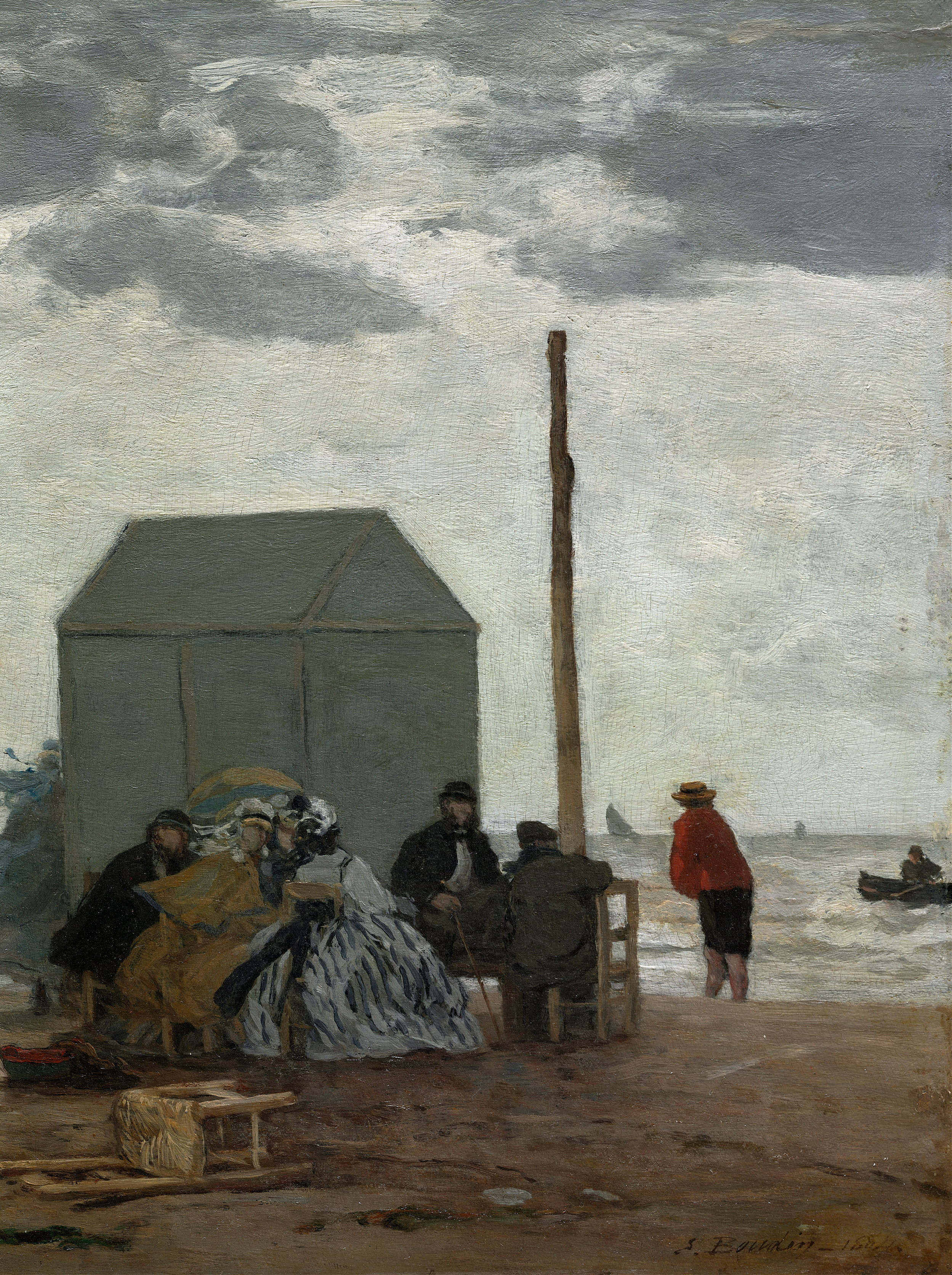
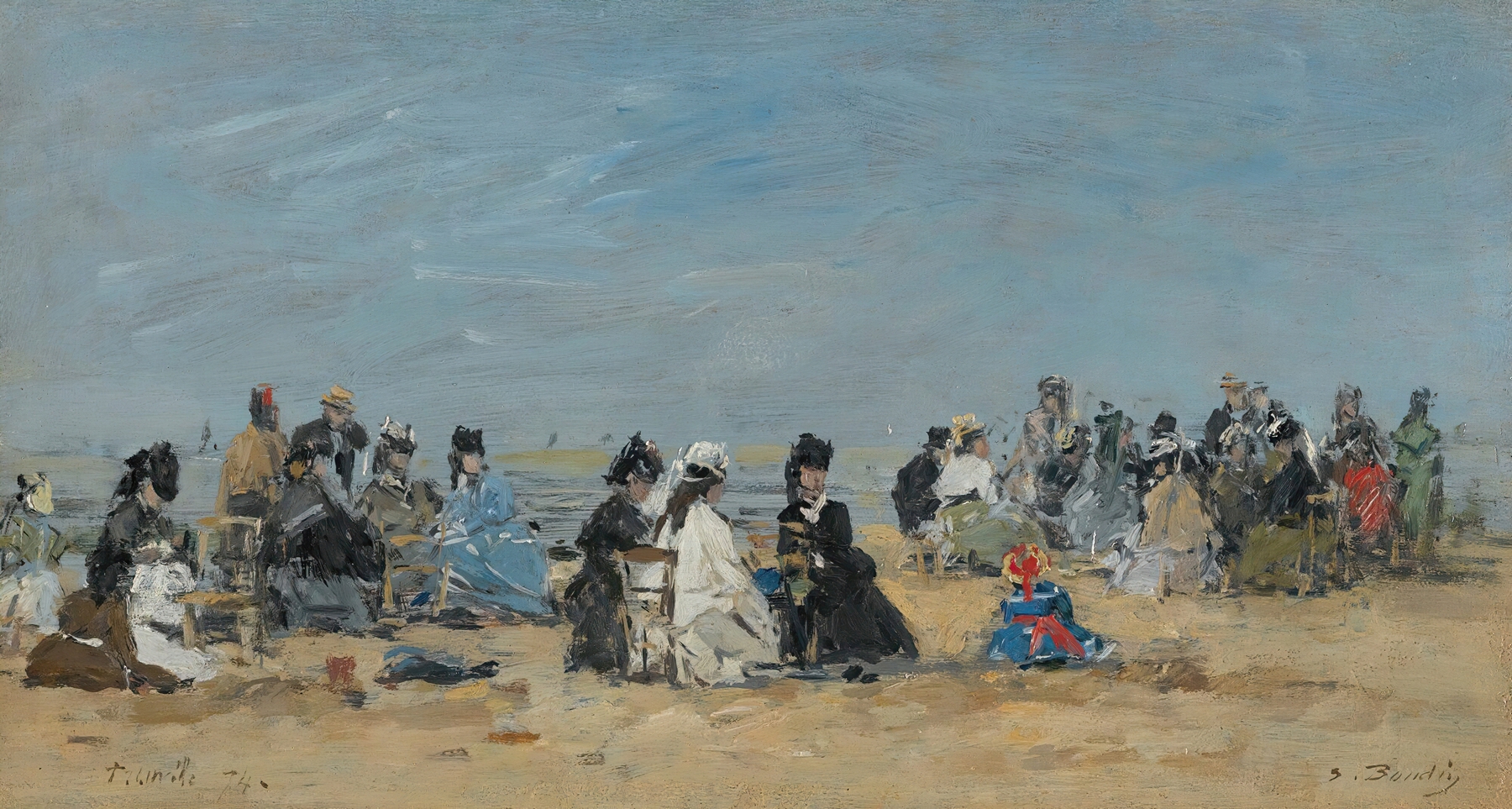
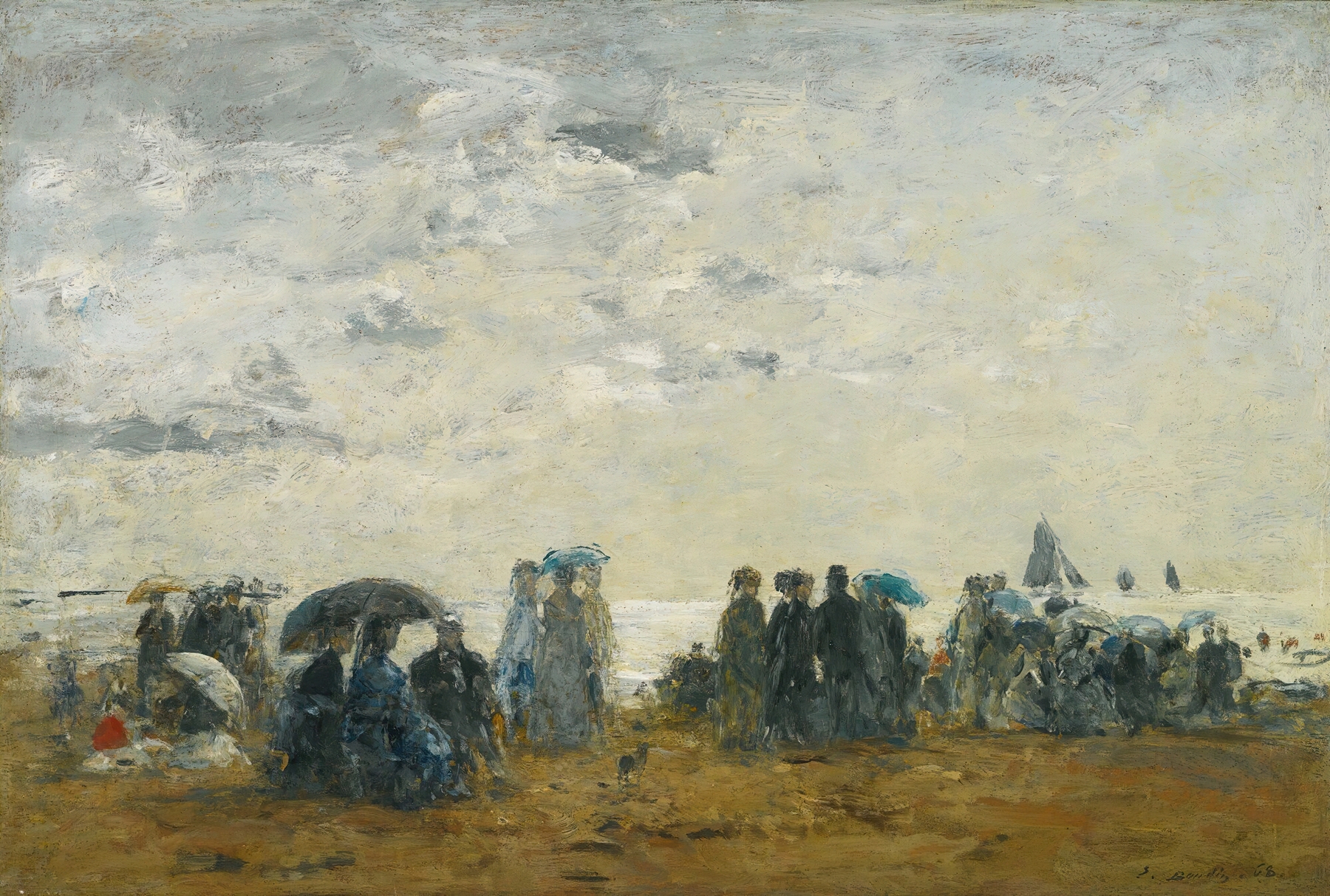
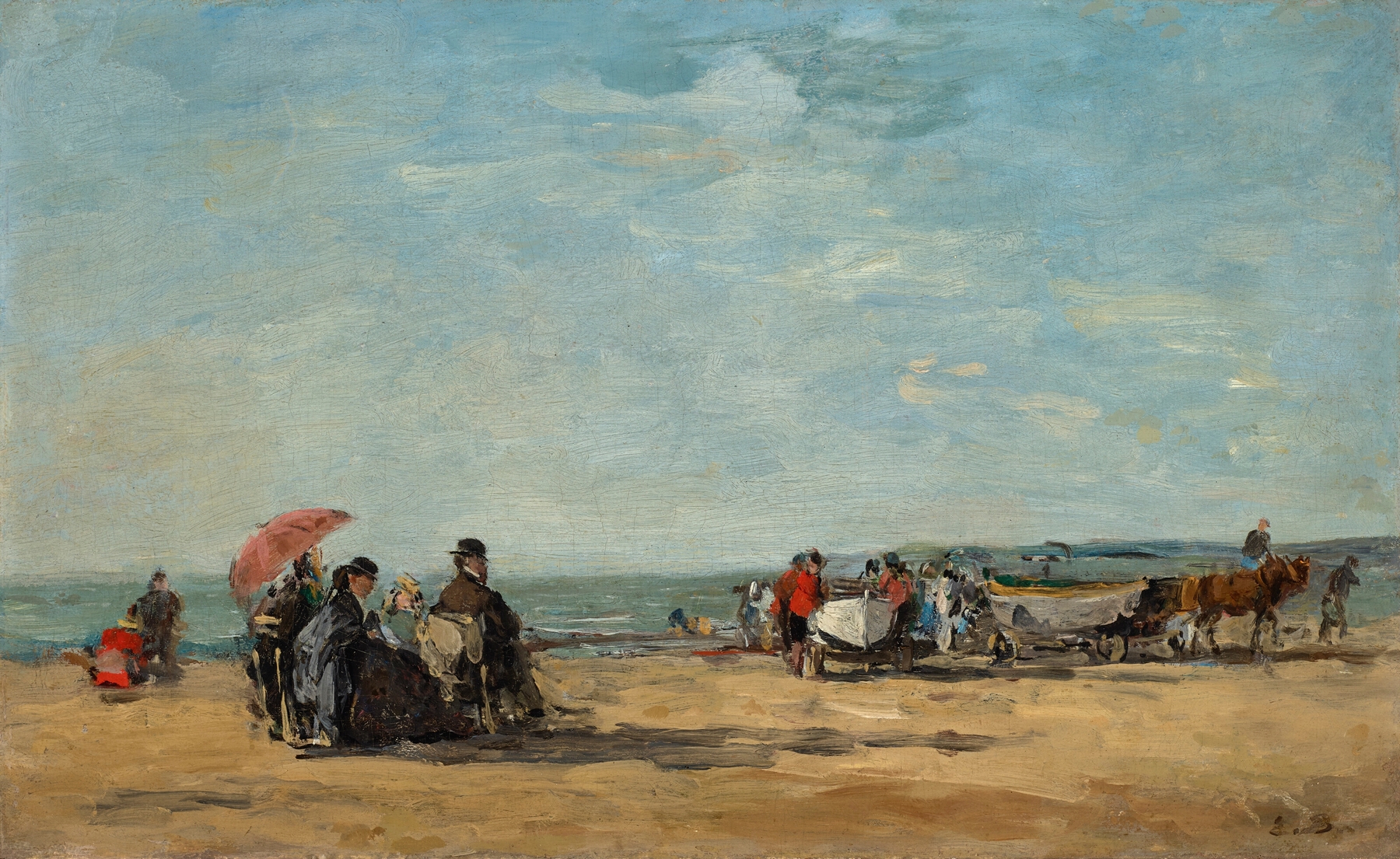
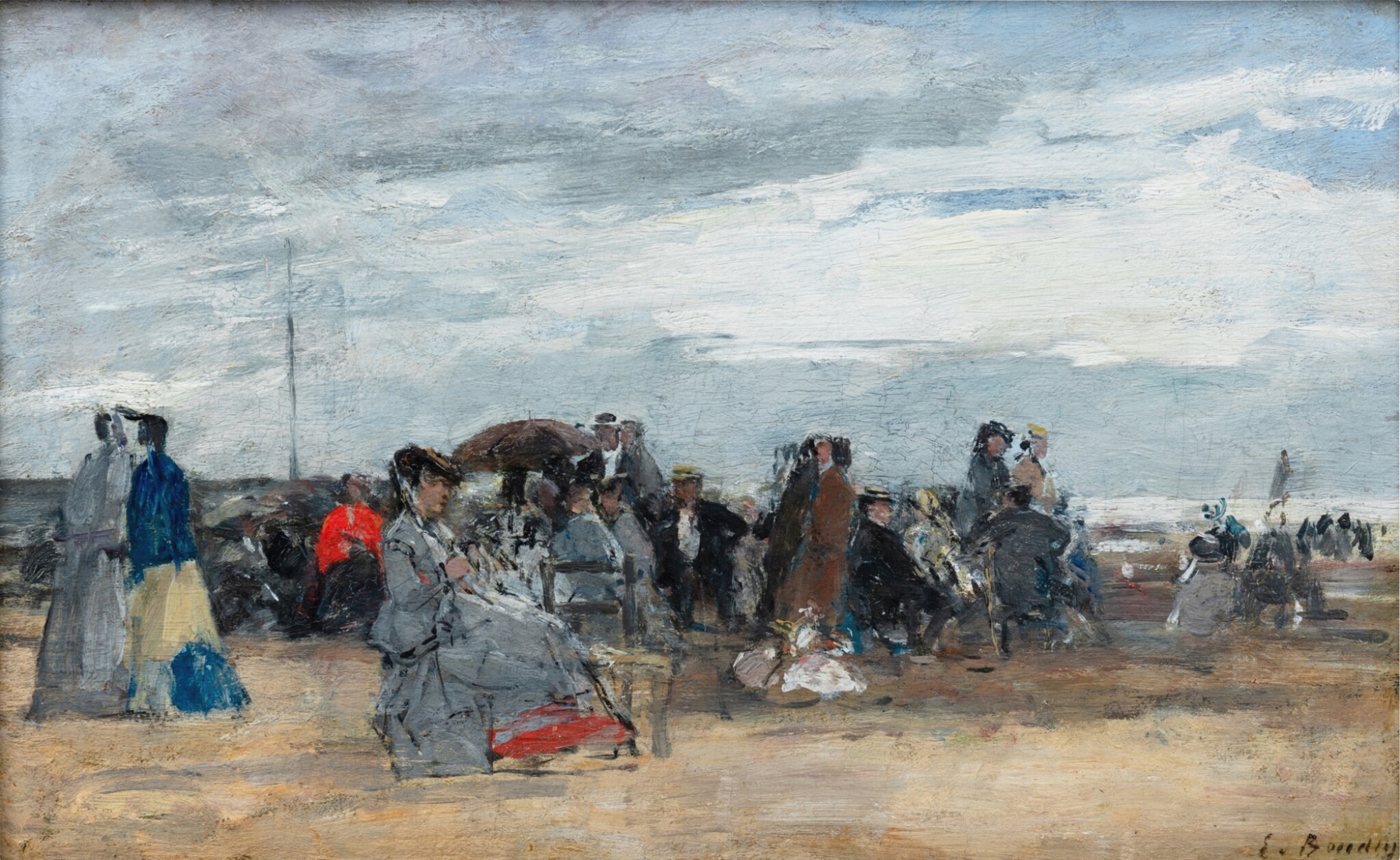
Could beauty survive in a century of chaos? In Bathing Time at Deauville, the artist invites us to ponder this question, capturing a fleeting moment of serenity amid the tumult of the 19th century's rapid changes. This painting is not merely a depiction of leisure; it is a tender whisper of longing for connection and tranquility. Look to the right at the group of elegantly dressed bathers, their figures softly outlined against the soothing blues of the sea. Note how Boudin masterfully layers the delicate brushstrokes, creating a shimmering surface that catches the light, reflecting the joy of summer.
The gentle waves and the pale sky create a harmonious backdrop, while the figures, with their playful gestures, exude a sense of carefree joy, contrasting the underlying currents of social change just beyond the horizon. Yet deeper meanings linger beneath the surface. The juxtaposition of the idyllic scene with the looming specter of modernity raises an intriguing tension. Each figure, lost in their moment of leisure, embodies a yearning for simplicity as the world races toward industrialization.
The vibrant colors suggest both vitality and transience, as if the beauty of this scene might dissolve at any moment into the chaos that surrounds it. Eugène Boudin painted this work in 1865 while living in Normandy, a period marked by his growing recognition as a pioneer of plein air painting. During this time, the Impressionist movement was beginning to flourish, challenging traditional artistic conventions. Boudin was influenced by the changing light and landscape of Deauville, reflecting a unique blend of joy and nostalgia that would resonate through his later works.