Belfield Farm — History & Analysis
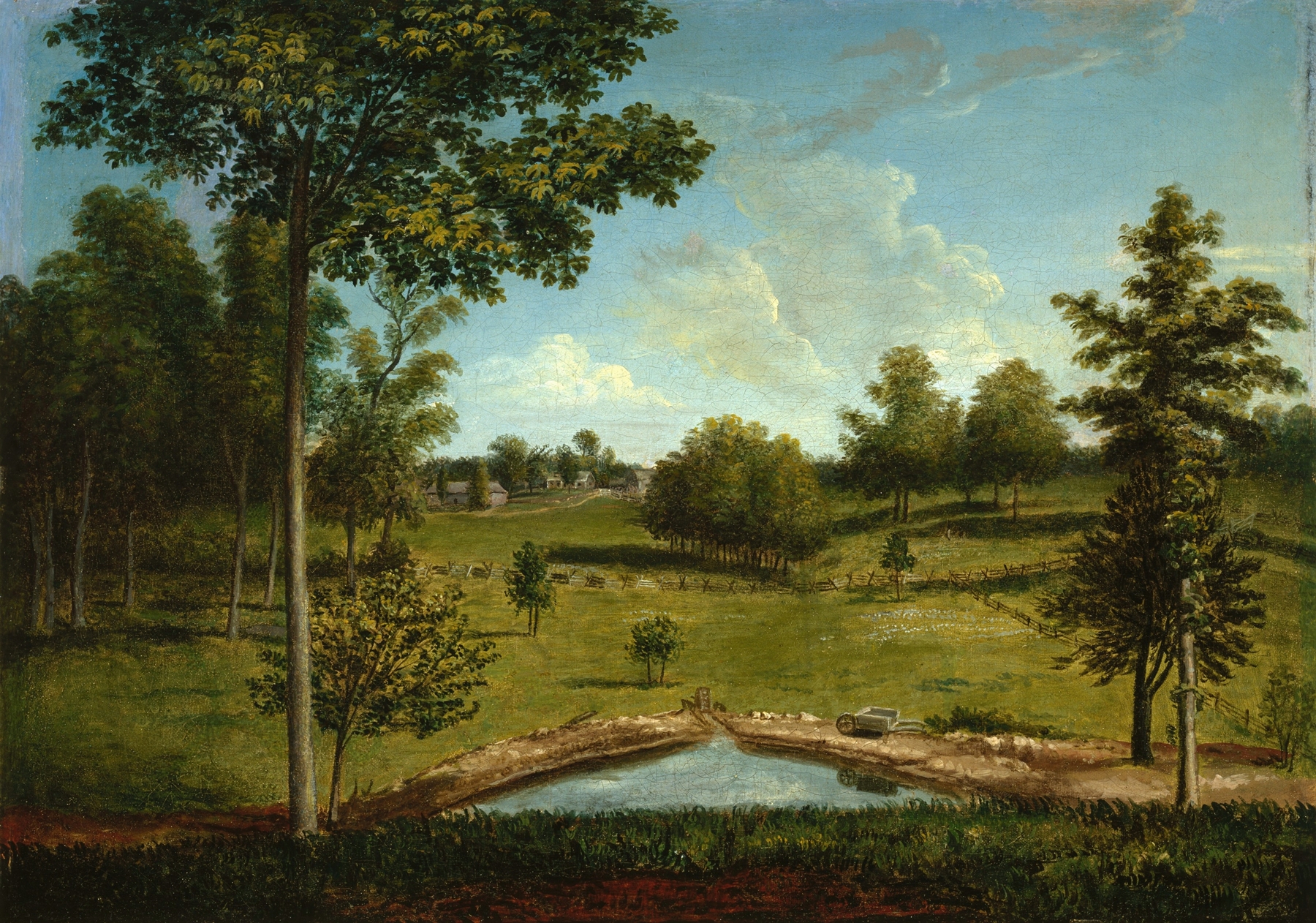
“Between color and silence, truth hides.” This delicate balance of emotion and reality often reveals what is unsaid, lurking beneath the surface in human connections. In Belfield Farm, this sense of betrayal looms quietly, inviting viewers into a world where pastoral beauty conceals intricate stories. Look closely at the foreground where lush greenery intertwines with the gentle curves of the landscape. Notice how the light dances upon the leaves, casting a soft glow that contrasts with the darker shadows lurking in the periphery. The composition, with its gentle slopes and tranquil hues of green and blue, draws us in, yet the muted tones whisper of secrets left unspoken.
Each brushstroke reveals Peale’s meticulous attention to detail, encouraging an exploration of both the scene’s vibrancy and its underlying tension. The farm, seemingly idyllic, holds layers of meaning within its serene façade. The distance between the farmhouse and the surrounding fields hints at isolation, evoking a sense of abandonment despite the beauty of nature. The stillness of the water reflects not just the landscape, but also perhaps the stillness of relationships marked by unacknowledged betrayal.
In this way, the painting embodies a tension between external beauty and internal conflict, urging introspection. In 1816, Peale painted Belfield Farm as he navigated his career amidst the evolving American art scene. This period saw a shift toward Romanticism, and Peale was deeply engaged with capturing the American landscape and its people. While he was known for his portraits, this work showcases his ability to transcend mere representation, seeking deeper emotional truths about life in early America.