Bevroren rivier met schaatsers bij een kerk — History & Analysis
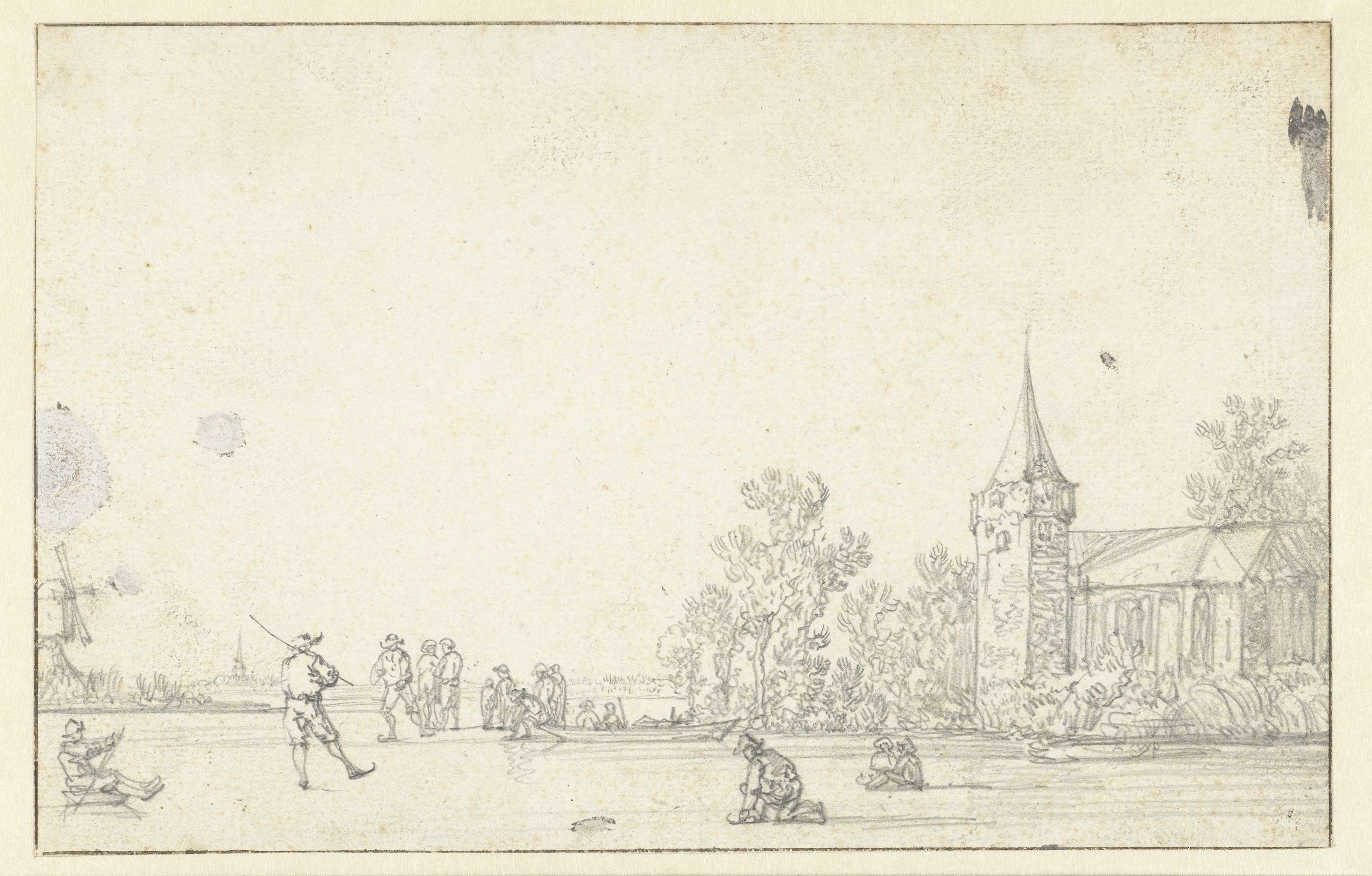
“Is there beauty in the void, or merely stillness?” Look closely at the center of the canvas, where the church stands as a solemn guardian over the frozen river. Its architectural lines are precise, contrasting sharply with the fluidity of the figures skating below. The warm tones of the sky, blending into hues of gold and amber, draw the eye upwards, suggesting a connection between the earthly and the divine. The cool blues and whites of the ice evoke a sense of serenity, inviting contemplation about the passage of time.
Hidden within the composition, the skaters embody both joy and solitude. Their graceful movements juxtapose the stillness of the landscape, hinting at the fleeting nature of happiness against the backdrop of winter's stark embrace. Notice how the figures vary in size and posture, each engaging with the scene differently—some laughing, others deep in thought. This diversity emphasizes a shared experience amidst isolation, a reminder of life's inherent contradictions.
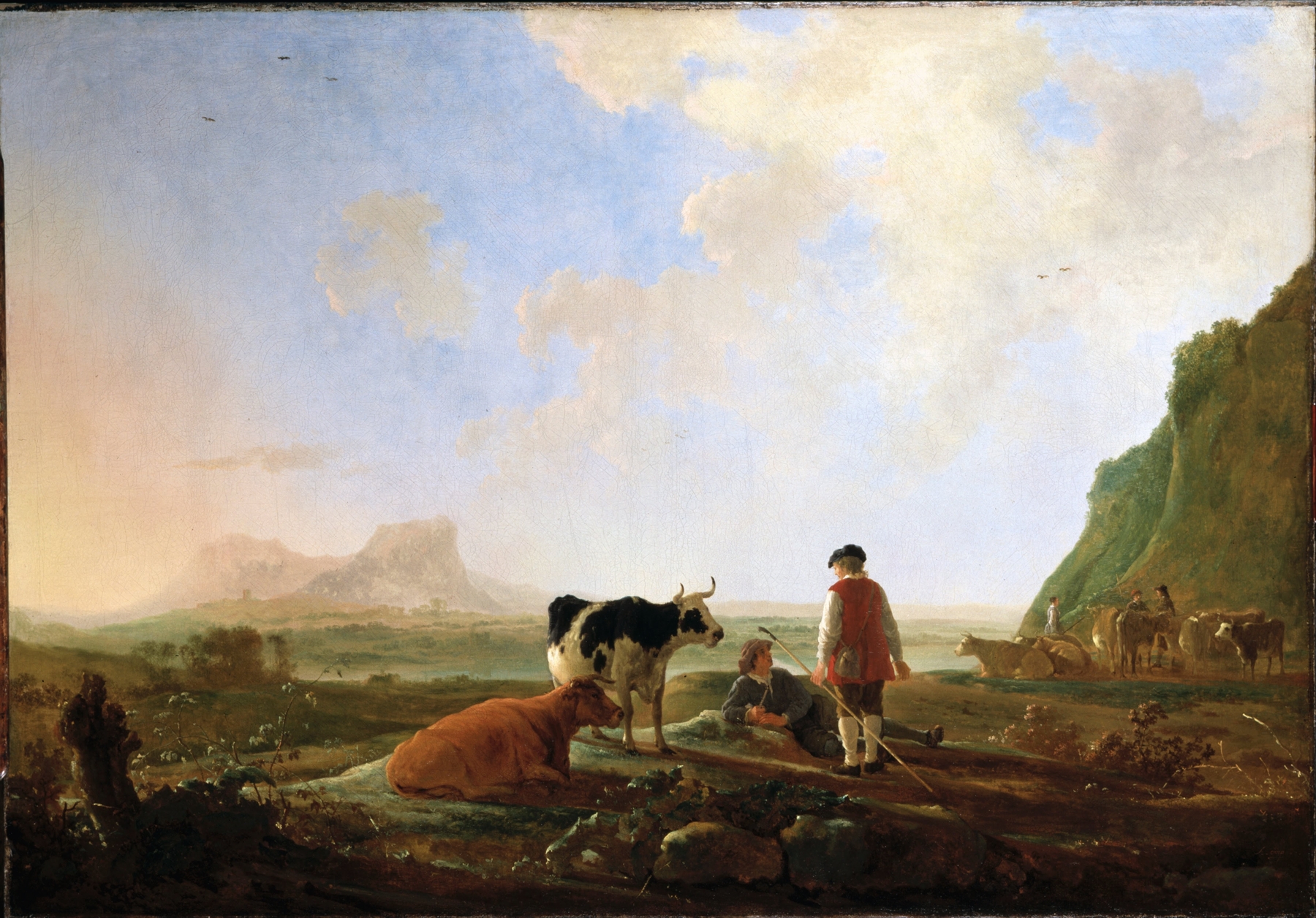
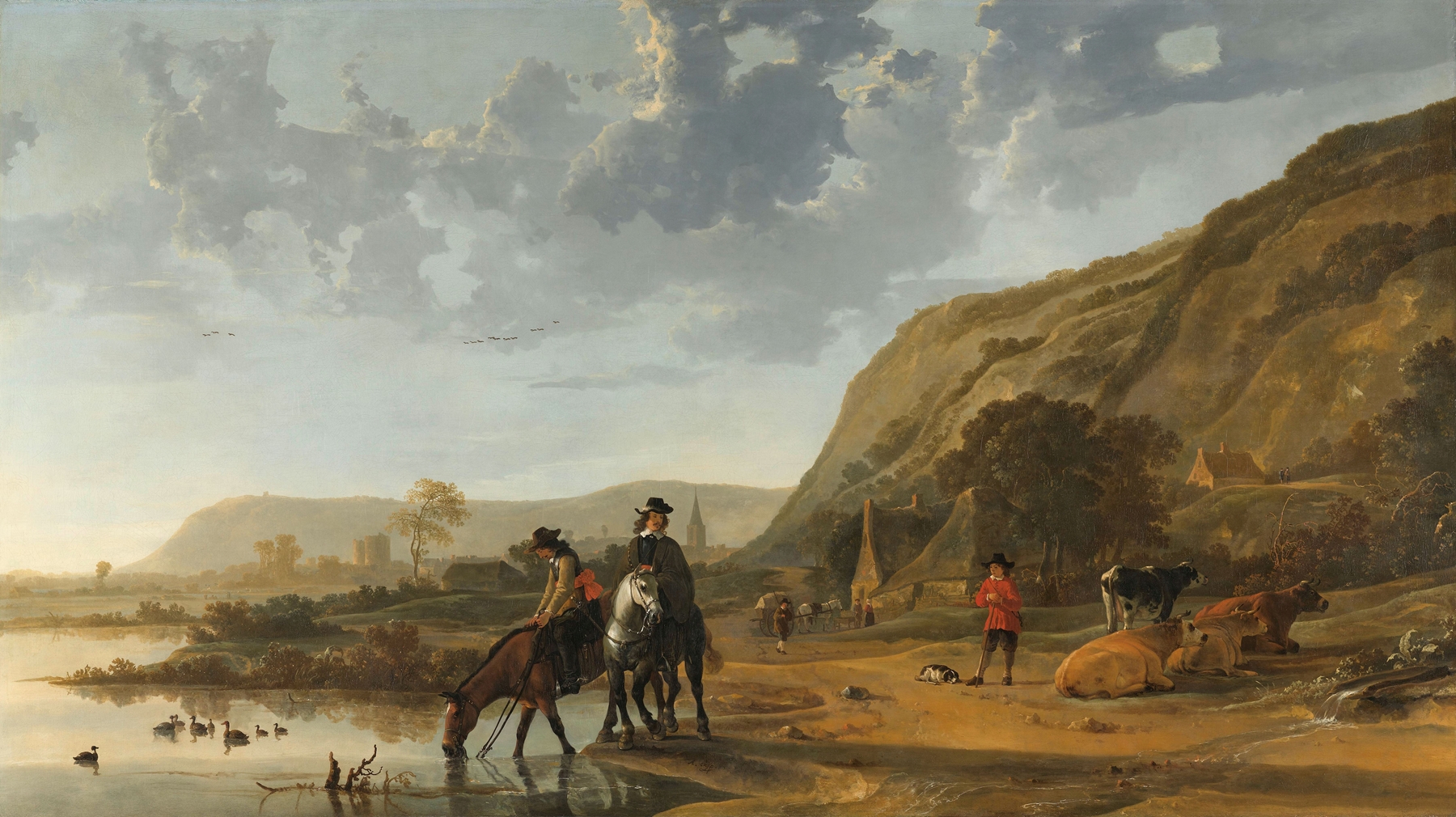
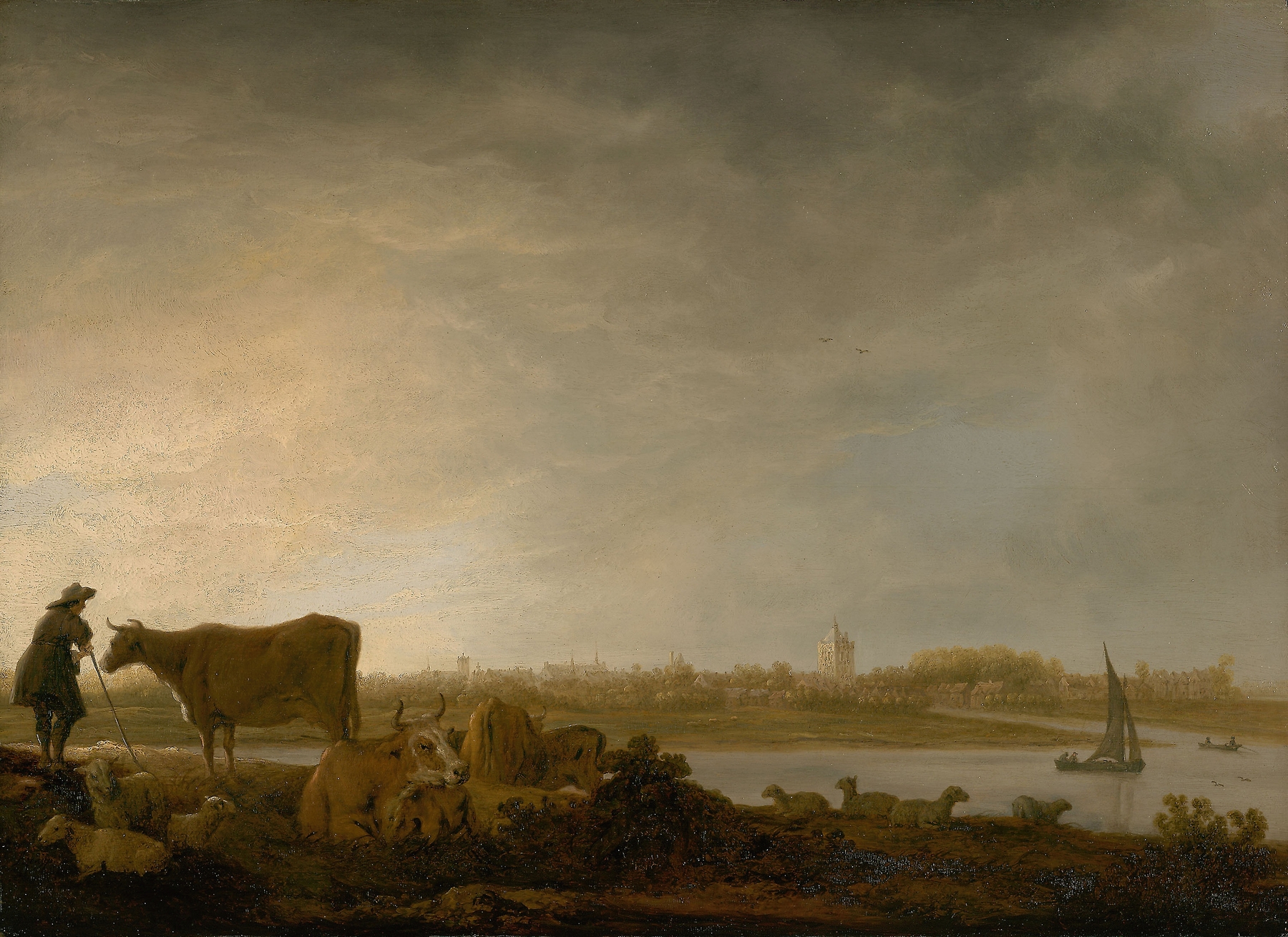
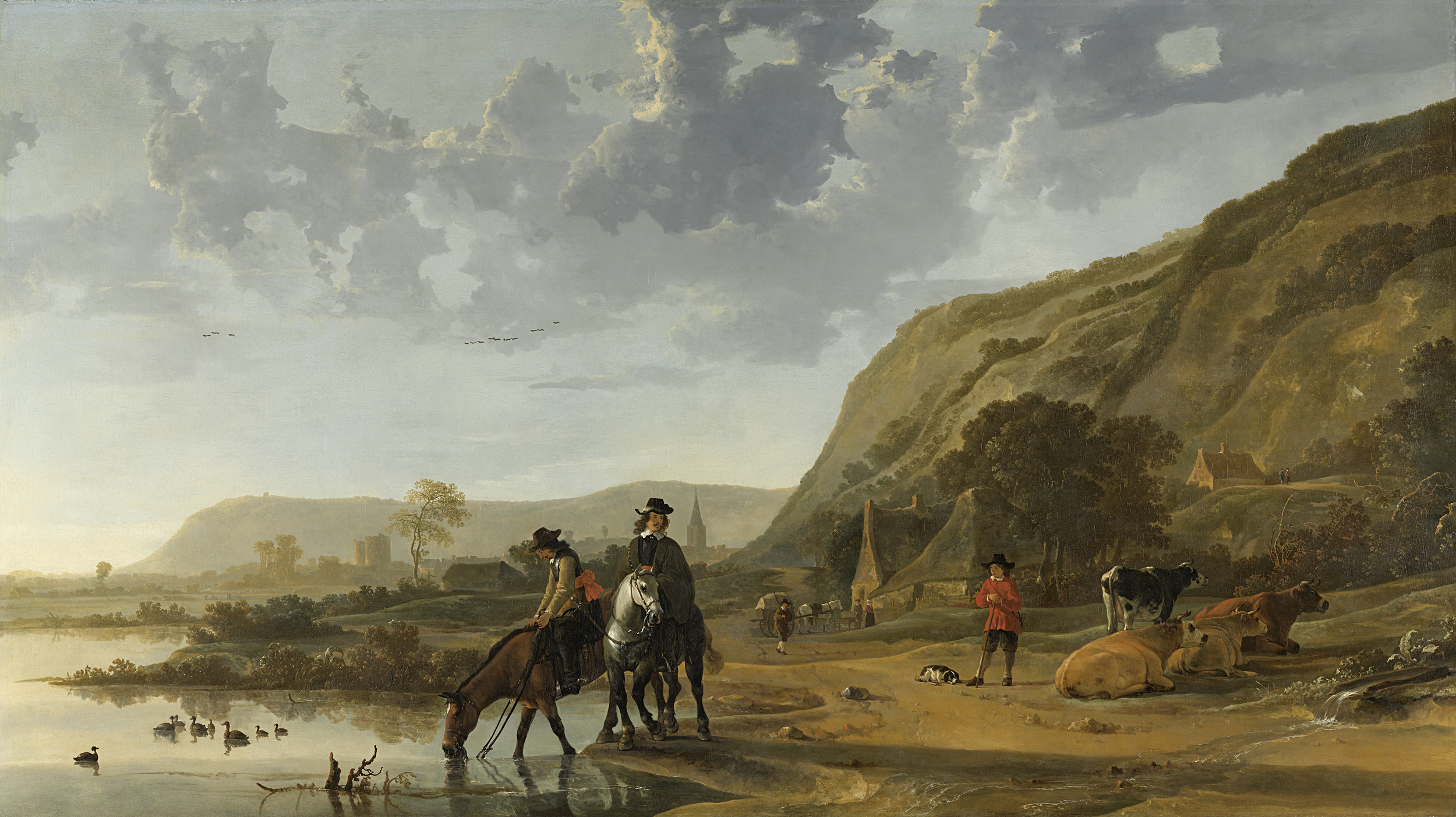
Aelbert Cuyp crafted this piece during a time when the Dutch Golden Age flourished, marked by the rise of landscape painting. Between 1630 and 1691, he found inspiration in the natural world, using light and atmosphere to evoke emotion. Living in a period of economic prosperity, he captured the essence of his environment, reflecting both the beauty and simplicity of rural life. This work encapsulates his mastery in transforming everyday scenes into timeless reflections on existence.