Blick auf das Wetterhorn — History & Analysis
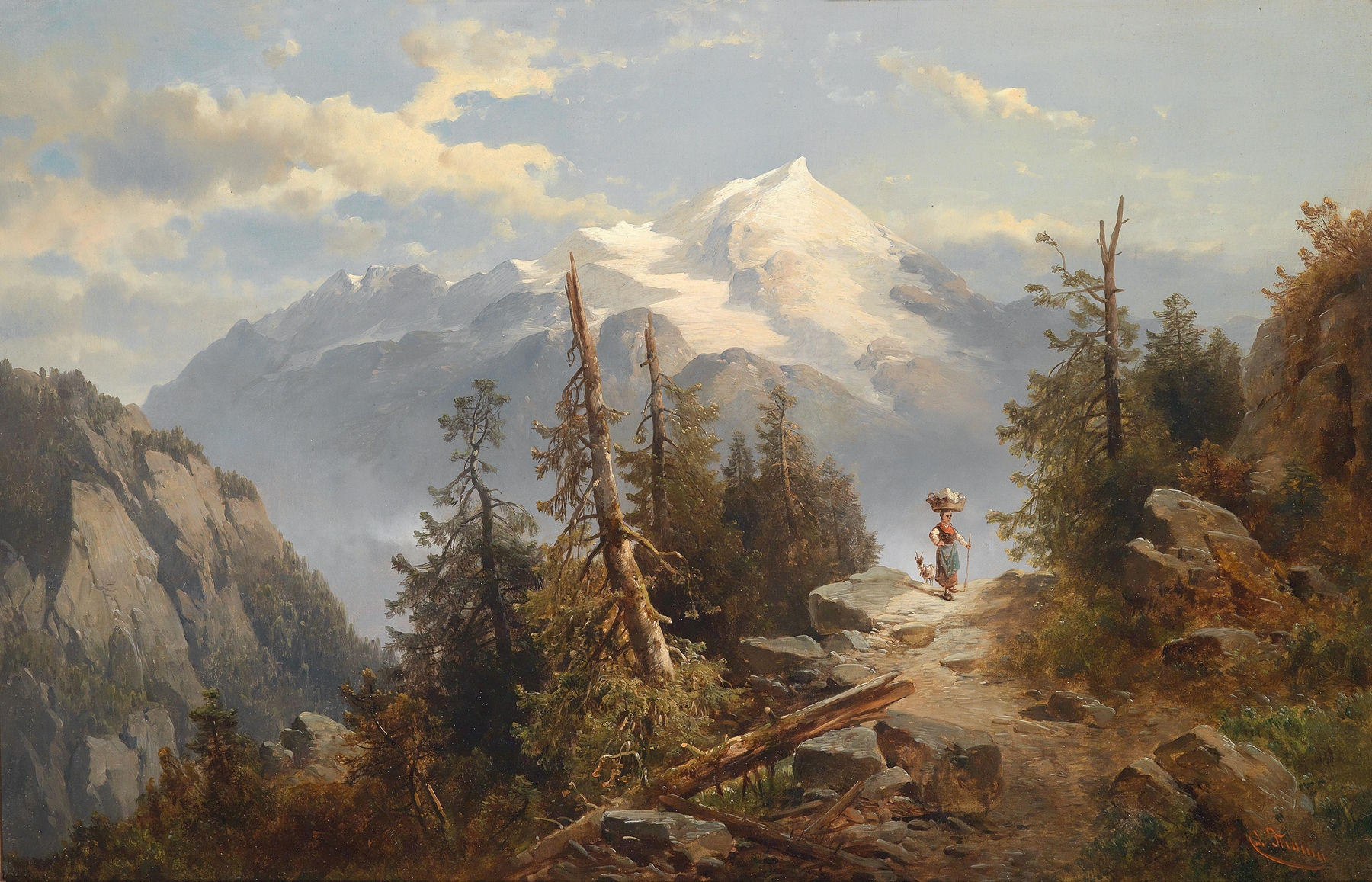
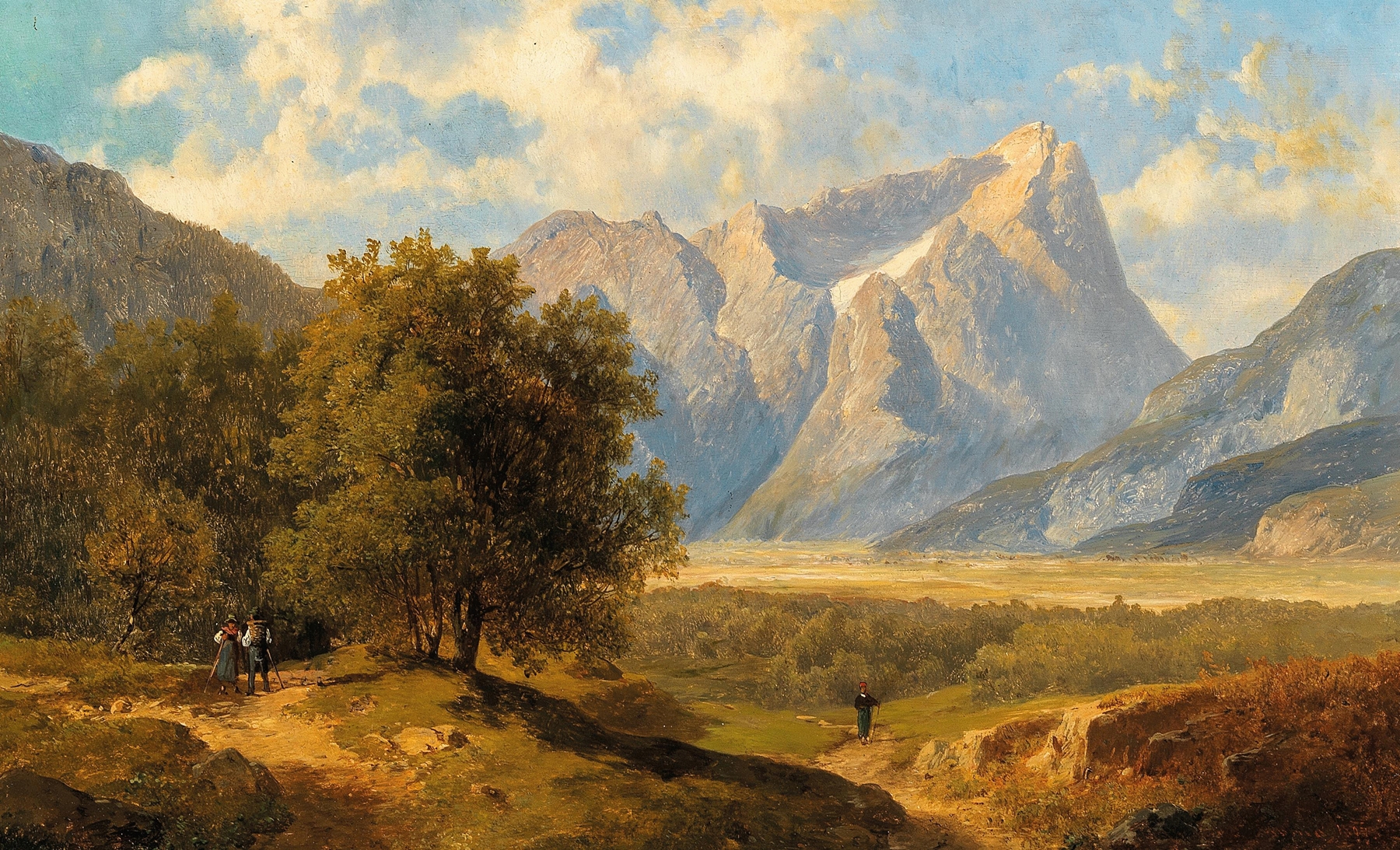
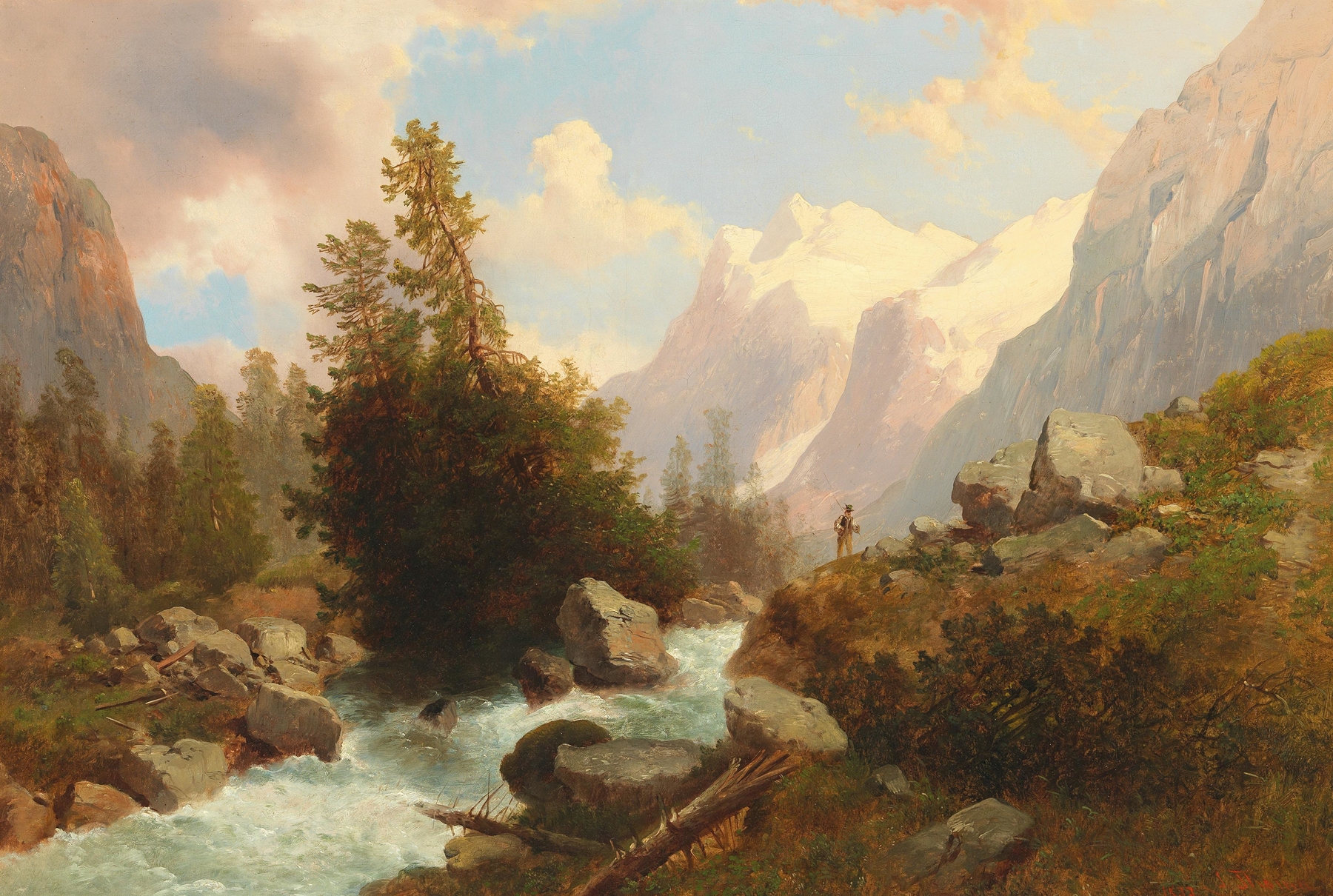
“Under the brush, chaos becomes grace.” This sentiment echoes through Blick auf das Wetterhorn, where shadows dance across the majestic peaks, whispering secrets of the natural world. Look to the left at the dark, sweeping shadows that cradle the rugged contours of the Wetterhorn. Notice how the artist employs a rich palette of greens and blues that blend seamlessly into the silvery whites of snowcapped summits. The textured brushwork draws your eye along the rocky terrain, guiding you toward the luminous sky that hints at an impending change in weather, perhaps a storm.
Each stroke of paint encapsulates a moment in time, allowing the viewer to feel the weight of the atmosphere and the majesty of the mountain. Yet, it is in the play of light and shadow where deeper meanings emerge. The soft light illuminating the foreground contrasts strikingly with the darker, foreboding shadows of the mountain, symbolizing nature’s duality — beauty and danger, tranquility and chaos. The slight turbulence in the clouds suggests an impending tempest, hinting at the unpredictable nature of both the weather and life itself.
Here, the tranquility of the scene is tinged with an underlying tension that compels a closer look. Josef Thoma painted Blick auf das Wetterhorn in 1877 while living in Switzerland, a period marked by both personal exploration and the burgeoning Romantic movement in art. This was a time when artists were increasingly drawn to the sublime aspects of nature, capturing not just landscapes but the emotional resonance they evoked. His work reflects a growing fascination with the interplay of light and atmosphere, a hallmark of the era that sought to transcend mere representation.