Blick auf den Golf von Neapel — History & Analysis
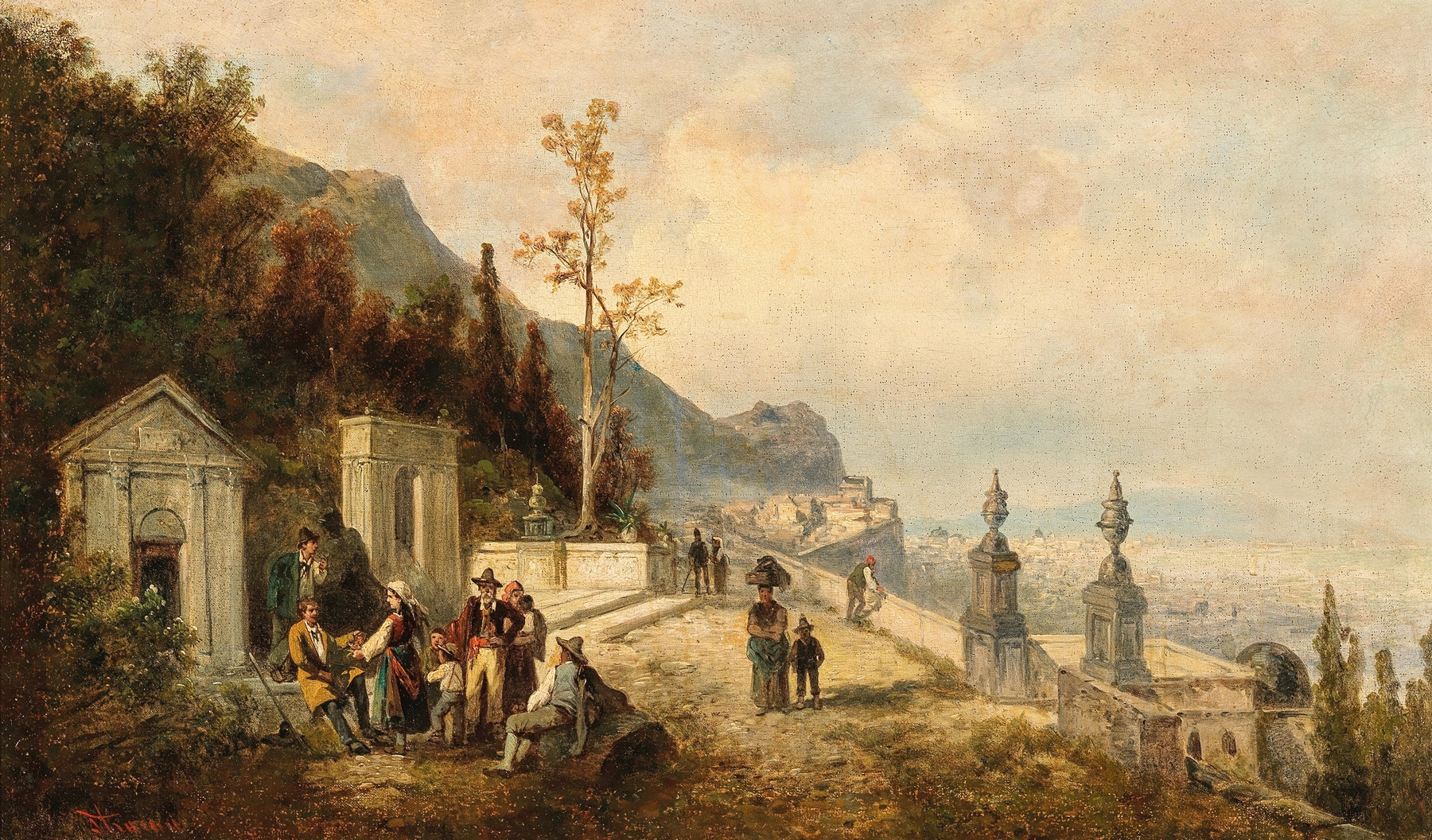
Could a single brushstroke hold eternity? In the delicate hues of Blick auf den Golf von Neapel, the weight of absence mingles with the beauty of a landscape forever altered by loss. Look to the left at the gentle undulations of the hills, their soft greens and muted browns converging to form a serene backdrop. The vibrant blues of the bay draw the eye towards the center, where the water sparkles under a shimmering light, yet the tranquility feels tinged with melancholy.
Notice how the artist employs a subtle gradient in the sky, moving from soft pastels to deeper, more somber shades, as if capturing the fleeting moments between day and night, life and loss. Hidden within this idyllic scene is a complex interplay of emotions. The tranquil bay contrasts sharply with the palpable nostalgia that lingers in the air, evoking memories of joy intertwined with grief. The distant silhouette of the Vesuvius stands as a solemn reminder of life's impermanence, almost watching over the scene, guardian and mourner alike.
Each brushstroke seems to whisper stories of those who watched the same view, a silent homage to the passage of time and the weight of memory. Josef Thoma painted this piece during a period largely unrecorded, suggesting it may have been created during a time of personal reflection. His connection to the traditions of the Romantic landscape, combined with his own experiences, allowed him to imbue the scene with quiet introspection. While specifics about his life remain elusive, this work reflects a broader art movement that grappled with the intersection of beauty and sorrow in a rapidly changing world.