Bligh Sands, Sheerness — History & Analysis
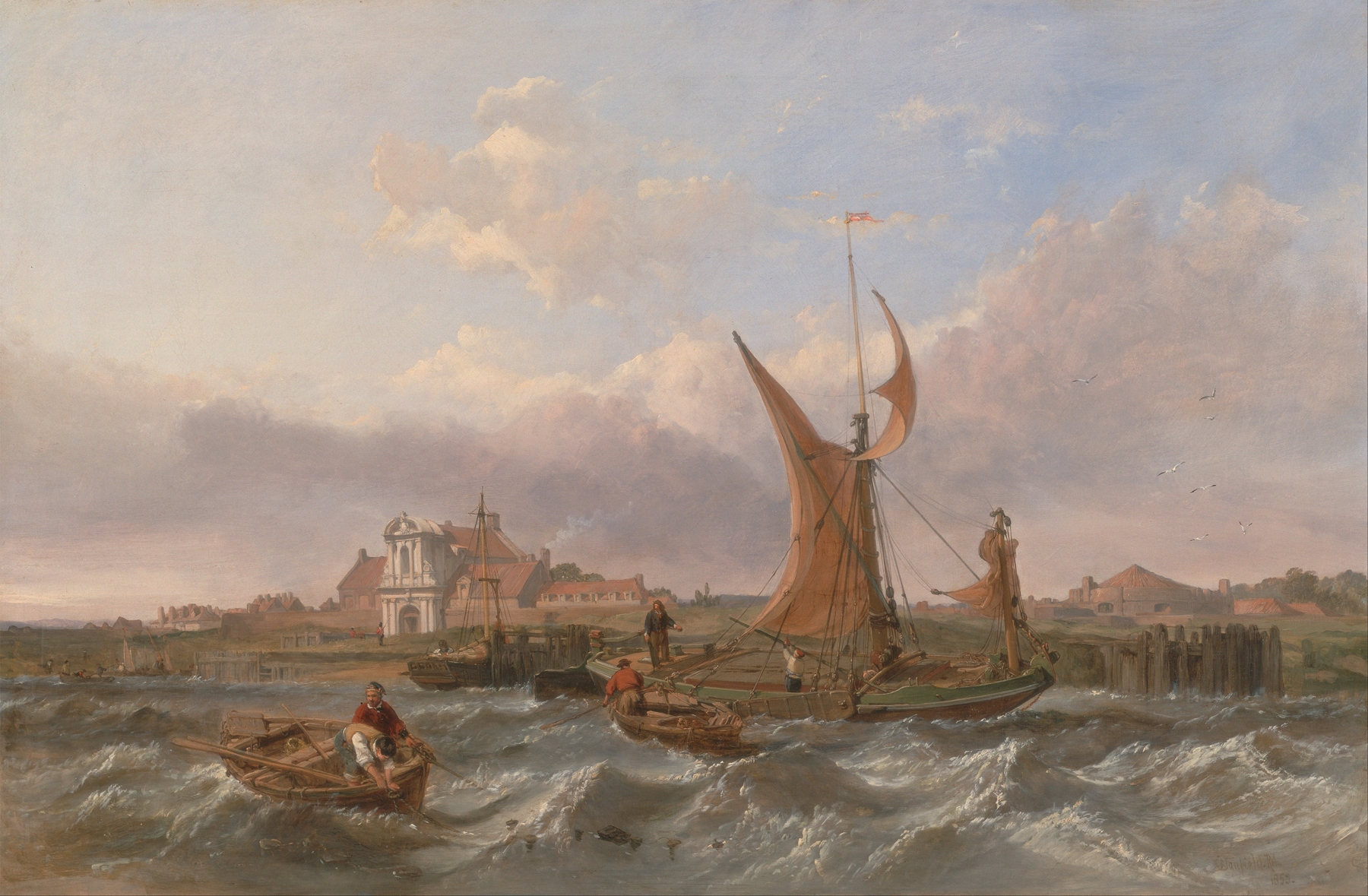
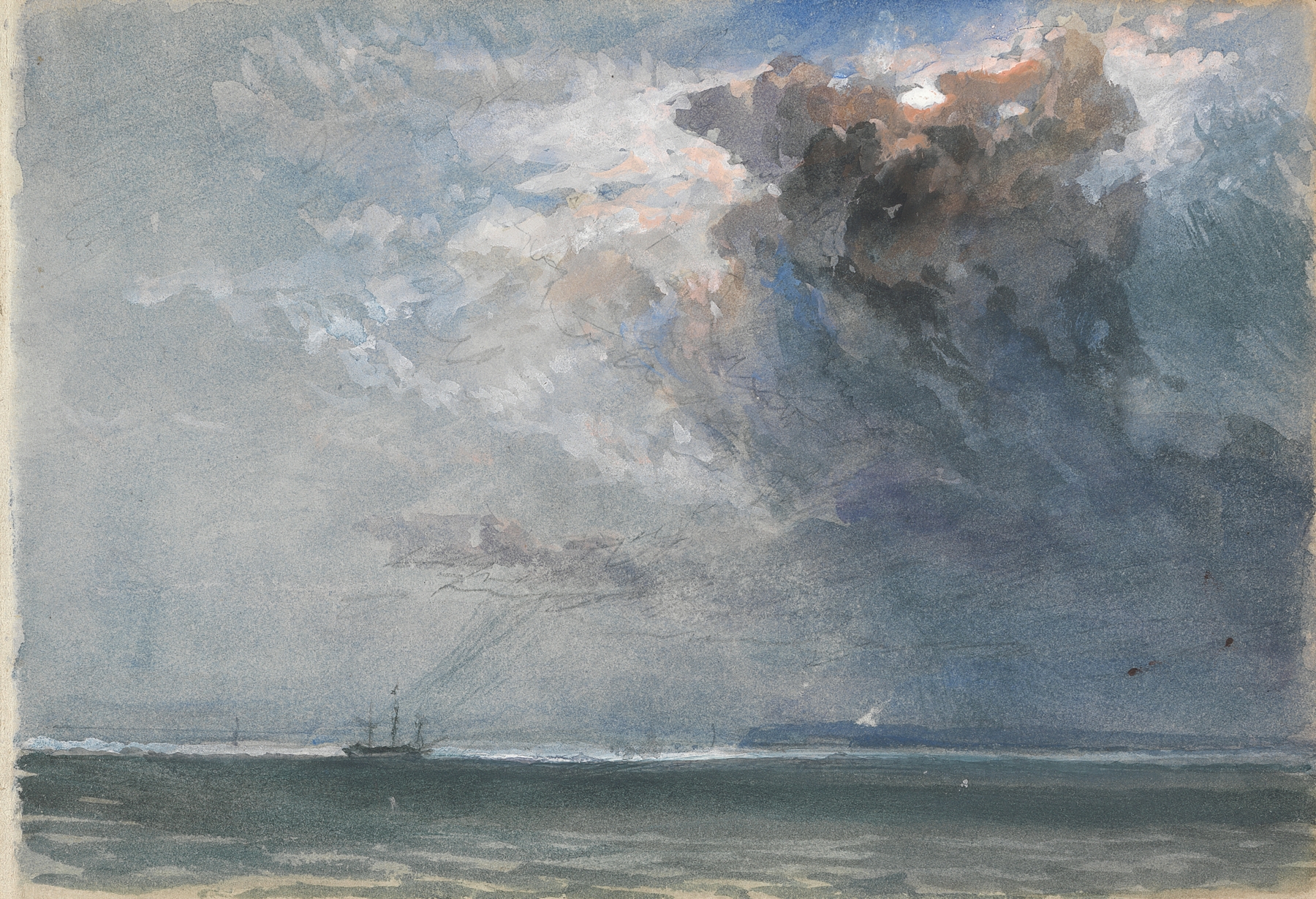
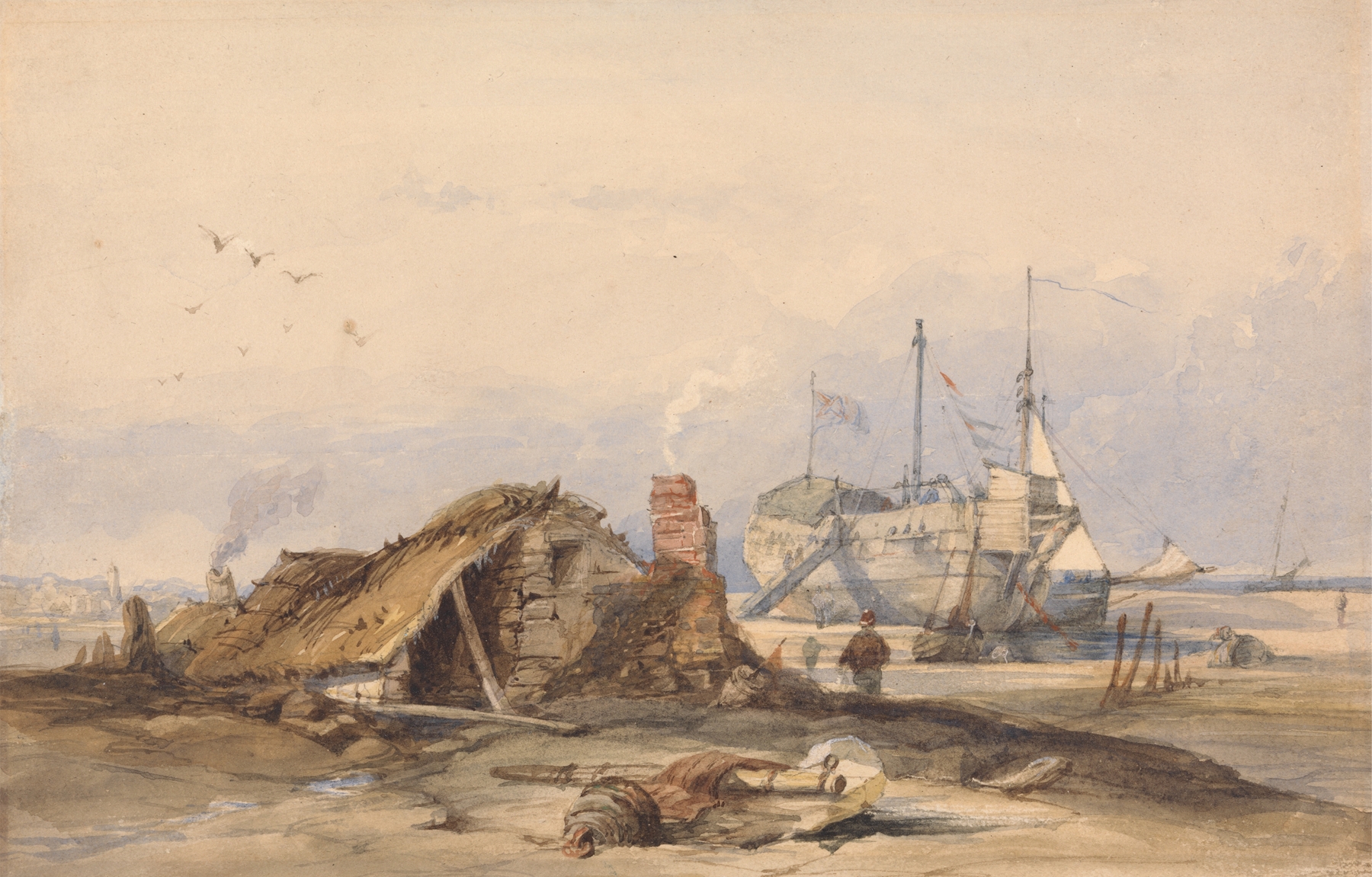
Where does light end, and longing begin? In the quiet expanse of Bligh Sands, Sheerness, the horizon blurs, inviting viewers to contemplate the silent interplay between nature and the human spirit. Look to the left at the gentle curve of the shoreline, where soft, rolling waves caress the sand, their edges kissed by a warm, golden light. Notice how the sky, a delicate gradient of azure and amber, casts a serene glow across the water, creating a reflective surface that mirrors the calm above.
Stanfield’s meticulous brushstrokes render the distant ships with precision, capturing both their majesty and their insignificance against the vastness of the sea, while the foreground whispers tales of solitude and introspection. Within the composition lies a profound tension between tranquility and yearning. The stillness of the water invites a sense of peace, yet the distant boats evoke a sense of unattainable desire, as if they are symbols of journeys not taken. This interplay between the natural beauty and the imminent distance speaks to a deeper faith in the unseen, where longing becomes a quiet companion to hopefulness, and every ripple carries a story of aspiration.
Painted during a time when Clarkson Stanfield was gaining recognition for his marine landscapes, Bligh Sands, Sheerness reflects both his acute observational skills and the broader fascination with maritime subjects in 19th-century Britain. As industrialization began to reshape society, artists like Stanfield captured the essence of the natural world, even as it stood on the brink of change. This artwork is a testament to his ability to blend the picturesque with the profound, inviting viewers to glimpse the intertwined fabric of light, faith, and longing.