Boat Careened — History & Analysis
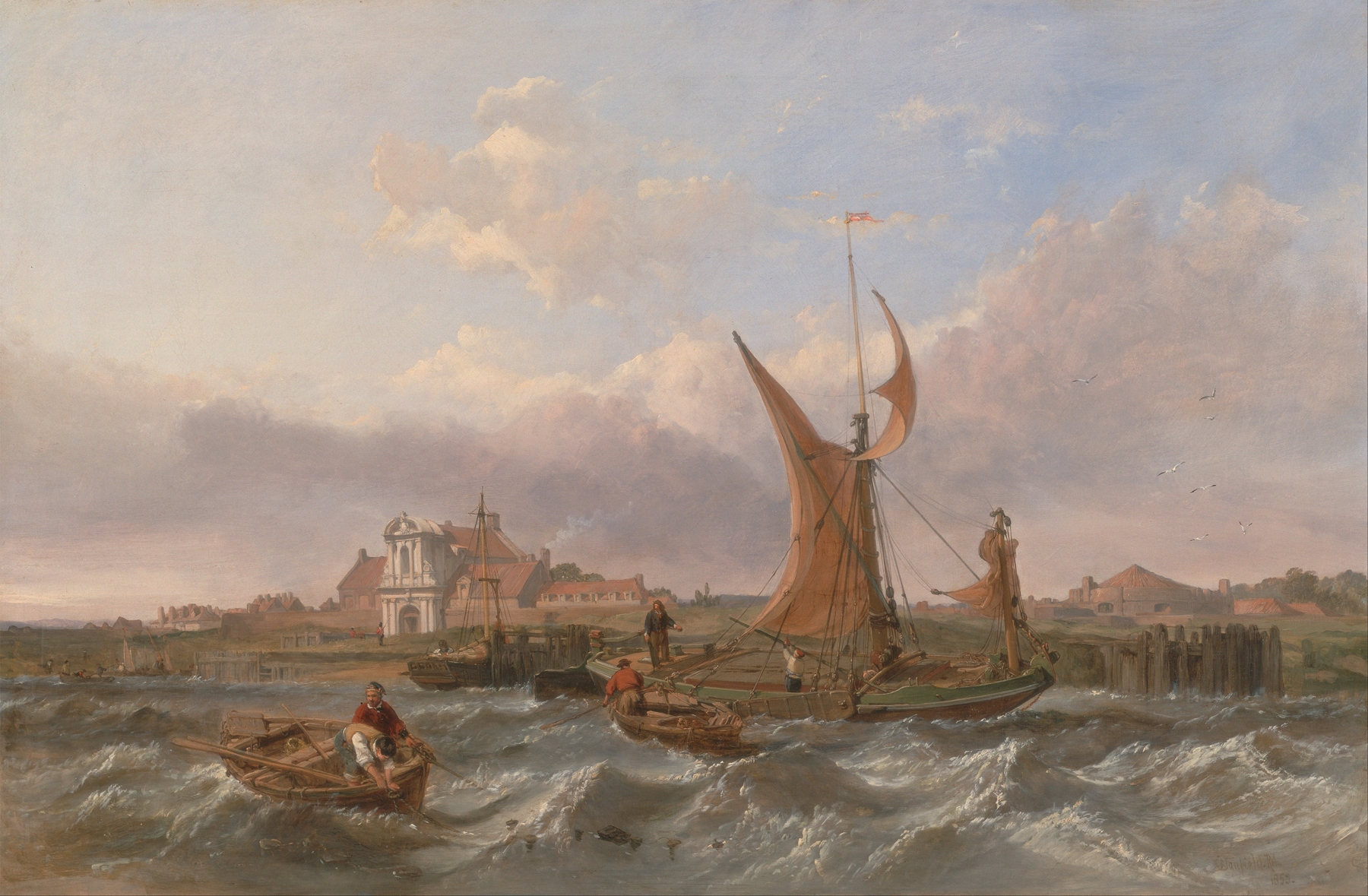
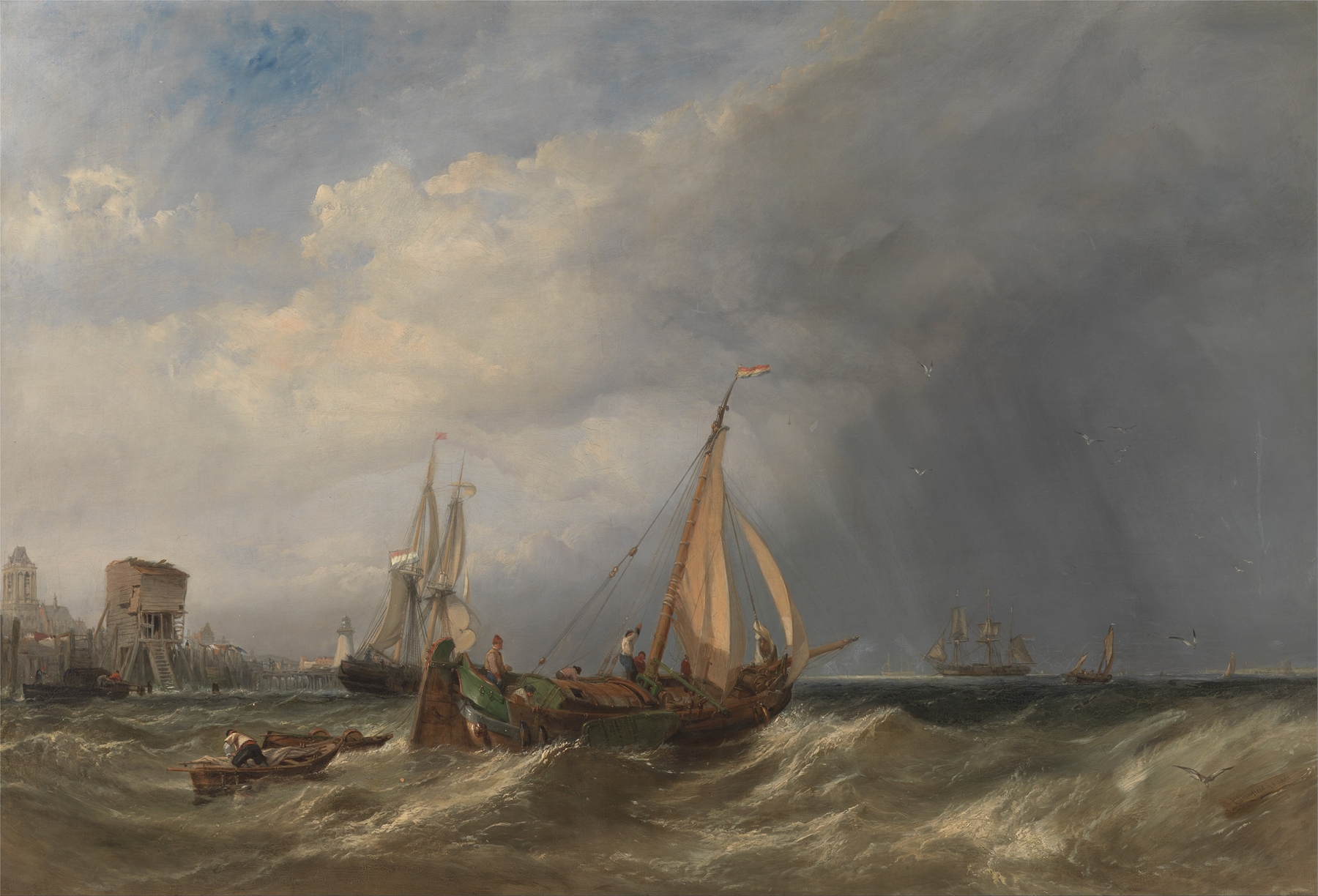
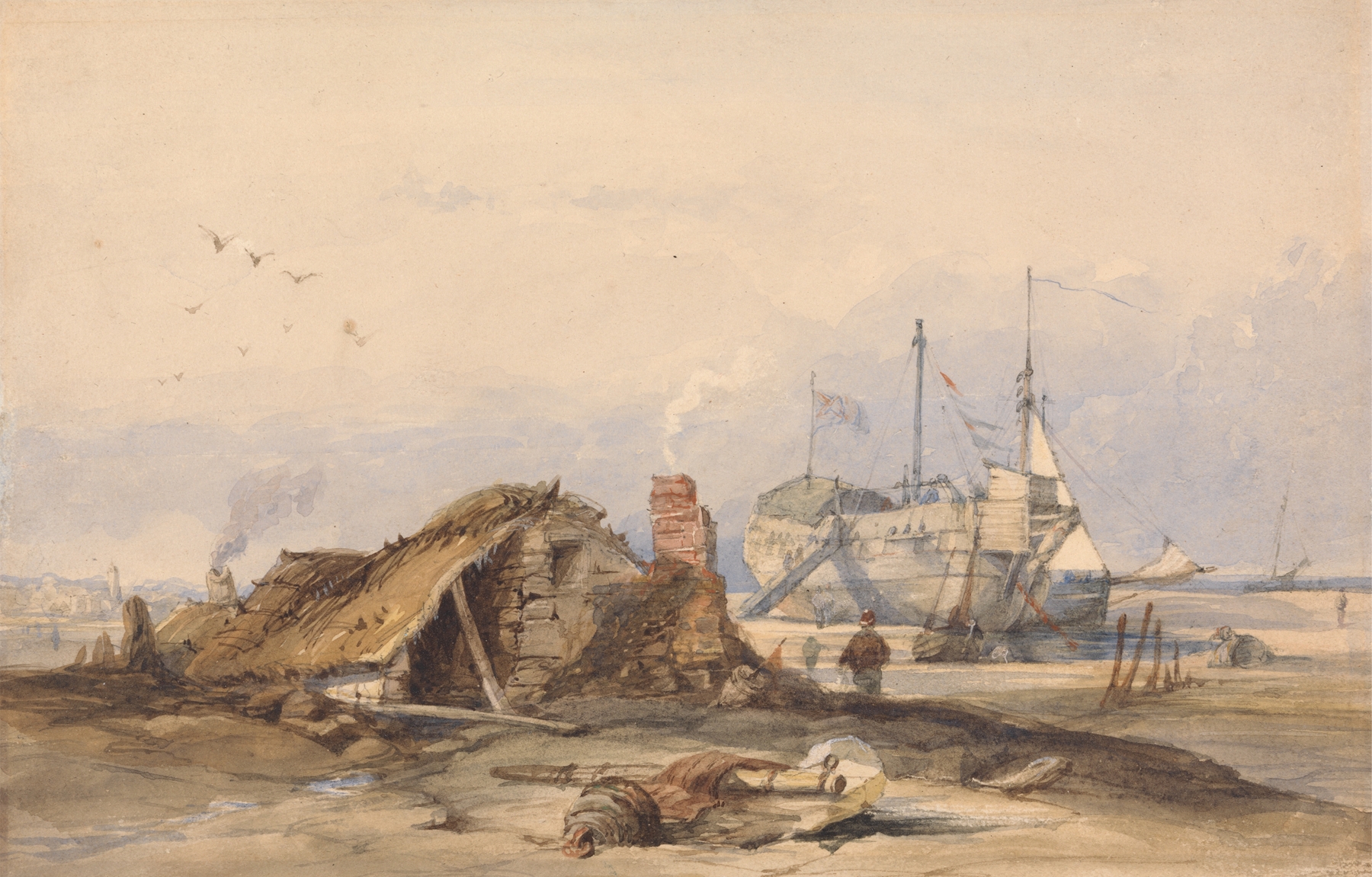
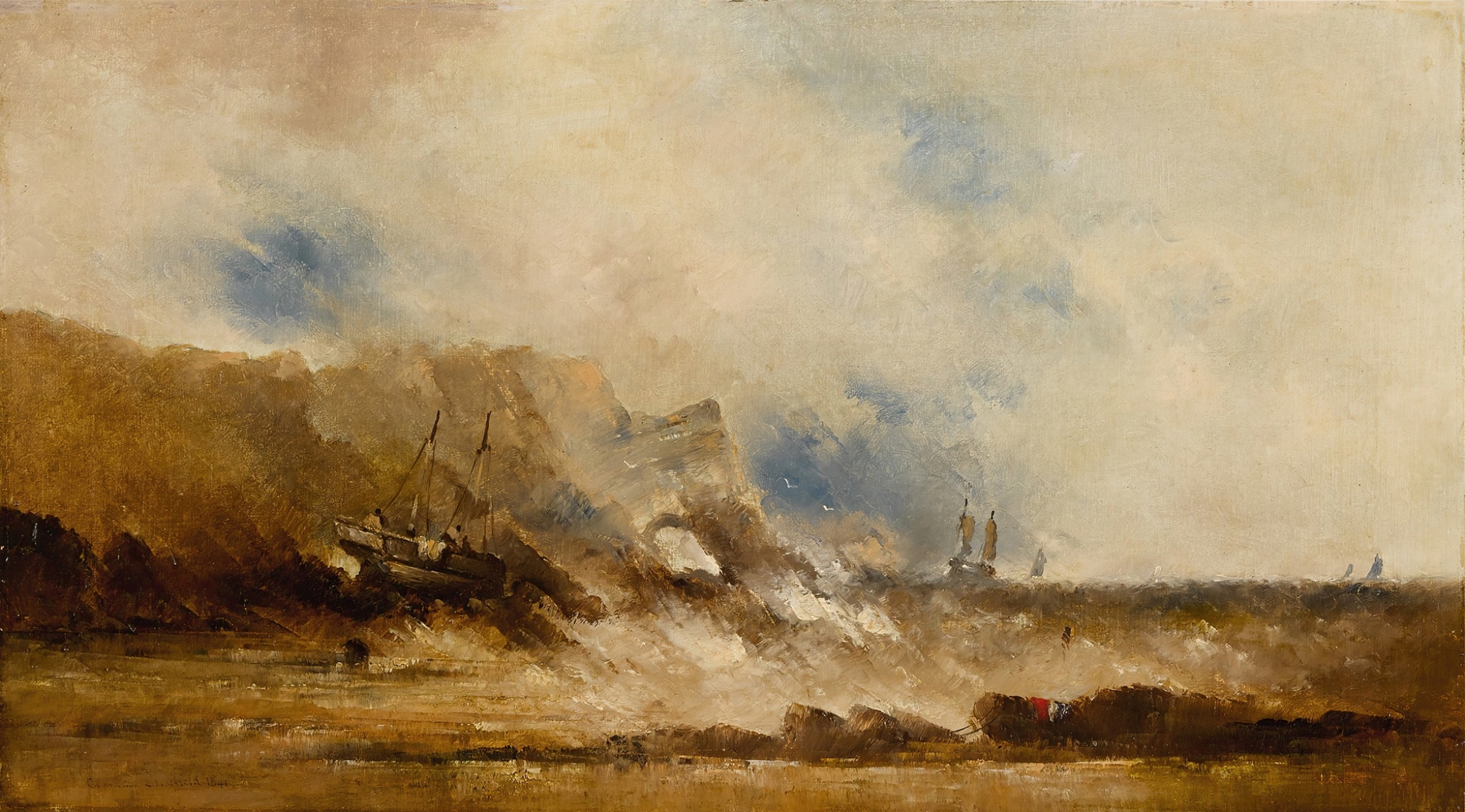
Who listens when art speaks of silence? In the stillness of a boat's precarious tilt, we confront the fragility of existence and the relentless passage of time. Look to the left at the shoreline, where shadows play against the water's edge, inviting your gaze to linger. The boat, poised as if caught in a moment of breath, draws your eye across the canvas, its hull reflecting shades of deep blue and muted grays that evoke a sense of impending doom.
Stark contrasts between light and shadow suggest both the beauty and transience of life, each brushstroke meticulously capturing the texture of the waves and the anxiety of the crew's fruitless struggle against nature. As you delve deeper, consider the figures onboard—tense and unwavering, their expressions frozen in a desperate blend of determination and dread. The atmosphere hums with an unspoken acknowledgment of mortality, a reminder that every second, like the boat, teeters on the brink.
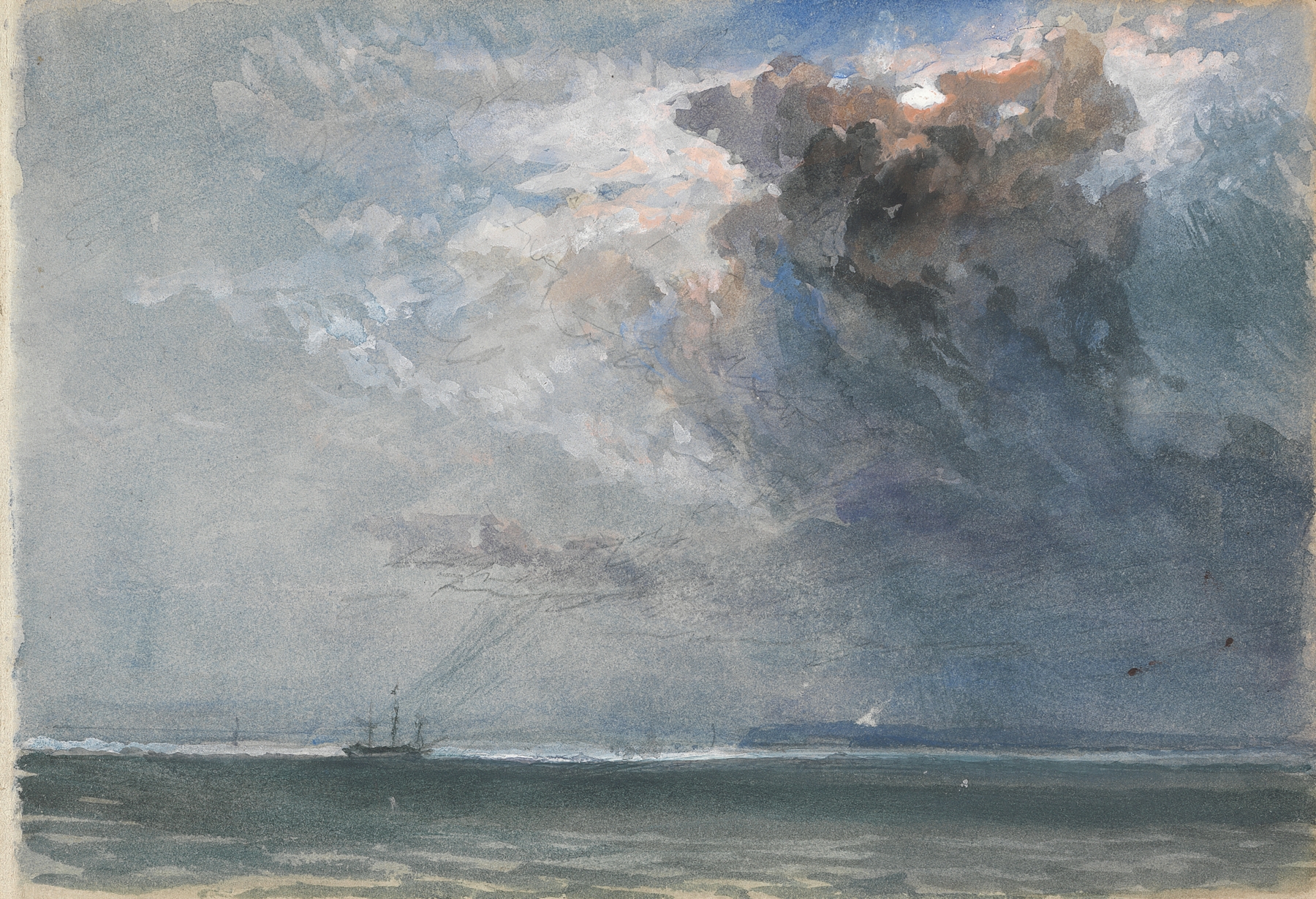
The tumultuous clouds overhead mirror their plight, emphasizing the connection between human endeavor and nature’s indifferent power, a poignant reflection on our vulnerability. Clarkson Stanfield created this work during the mid-19th century in England, a time when maritime themes were a significant focus in the art world, often reflecting societal anxieties about navigation and power. Emerging from a backdrop of industrial change and personal adversity, he channeled the tumultuous emotions of his era into a canvas that resonates with themes of fragility and endurance.