Bordeaux. Trois-Mâts dans le Port — History & Analysis
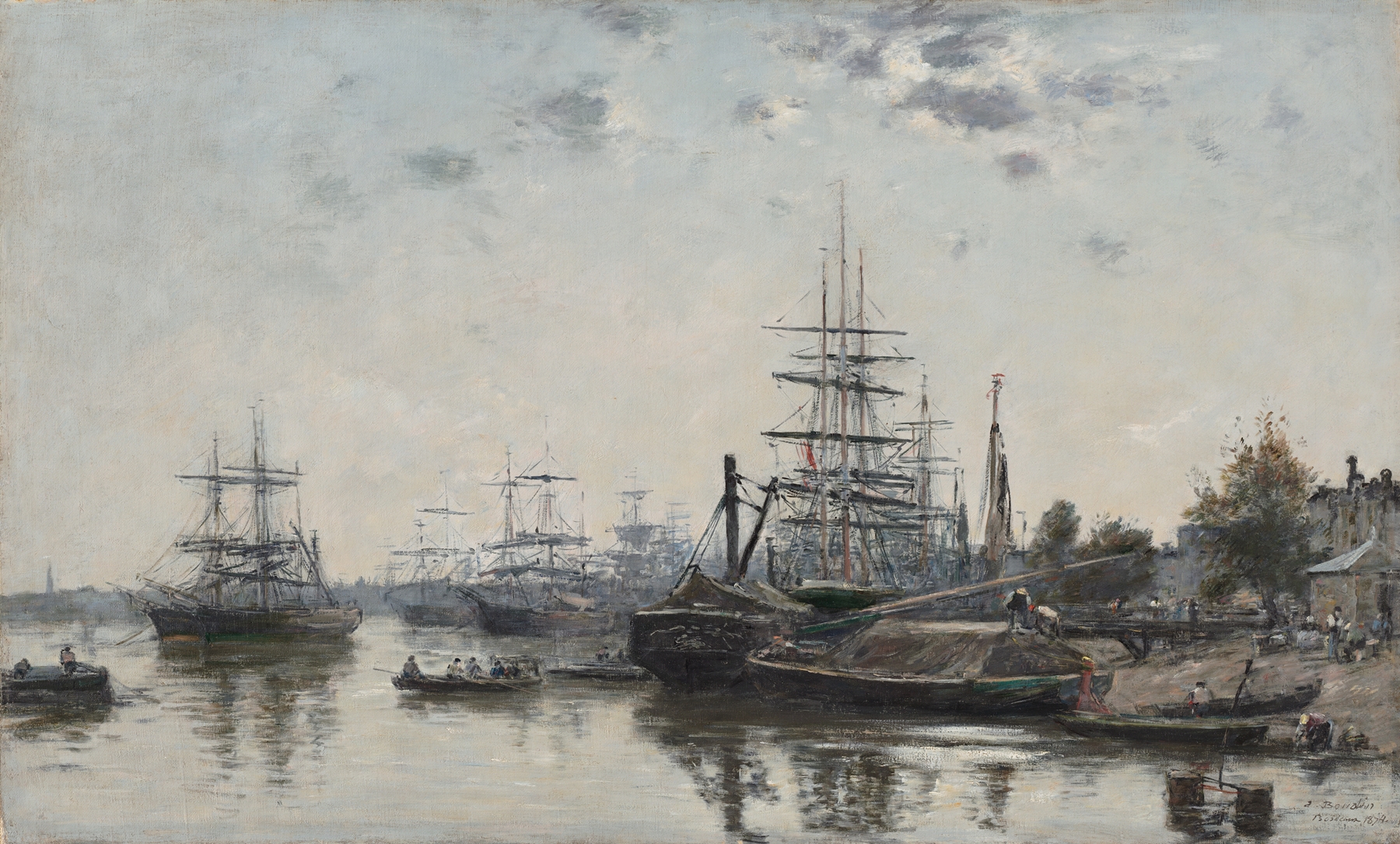
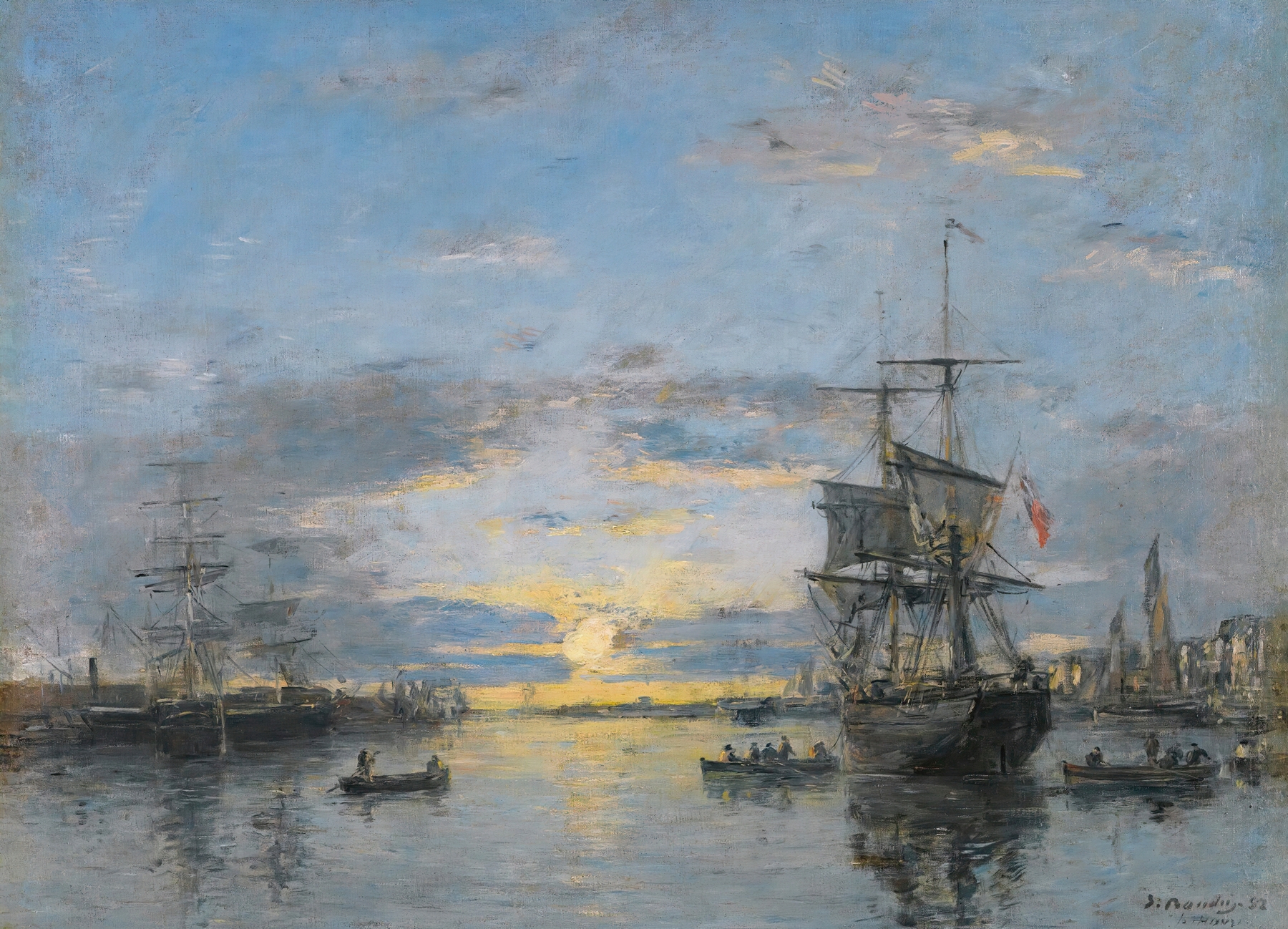
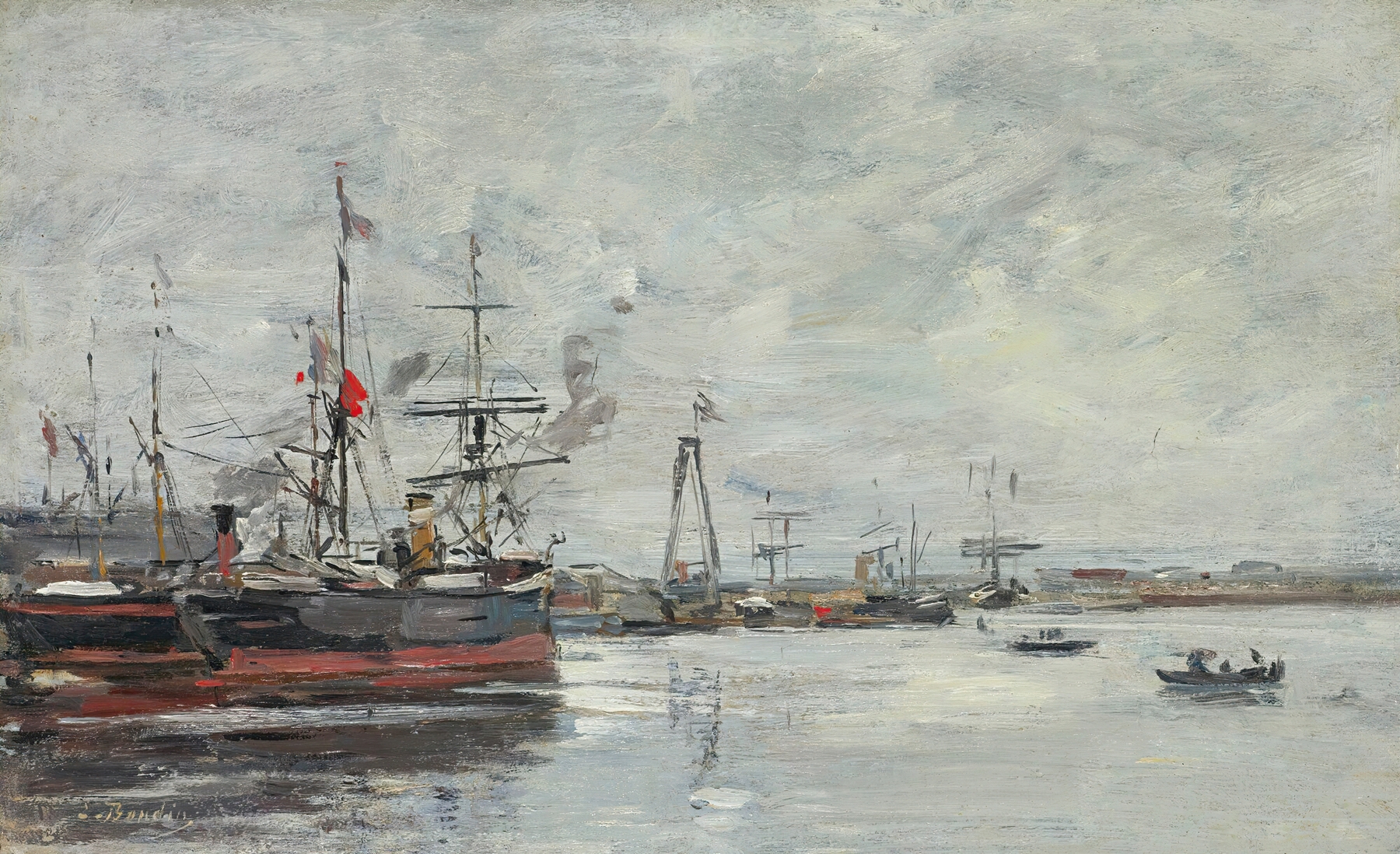
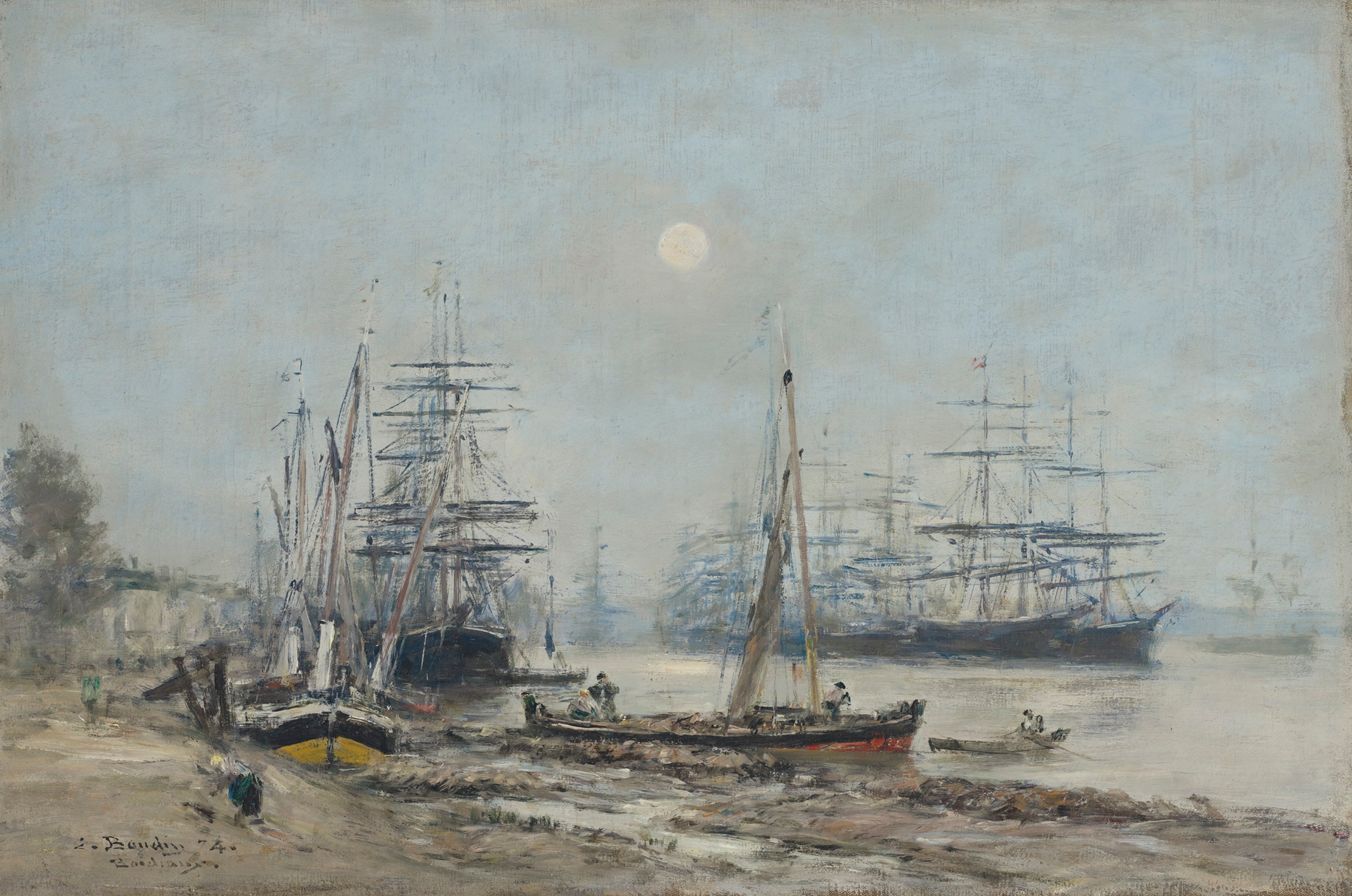
Where does light end, and longing begin? The interplay of illumination and shadow often reveals more than mere visual beauty; it unveils the human spirit's deepest yearnings. Look to the left at the three-masted vessels, their sails furled and waiting, poised against the tranquil waters of the port. The gentle strokes of Boudin’s brush create a soft haze that envelops the scene, inviting a sense of peace.
Notice how the light kisses the hull of each ship, shimmering with hints of blue and grey, while the backdrop of the harbor glows softly in muted pastels. This careful balance of color and light establishes a wistful atmosphere, suggesting both the promise of adventure and the weight of stasis. In this composition, the contrast between the stillness of the anchored ships and the vibrant sky signifies a tension between aspiration and reality. Each vessel, while beautiful, appears caught in a moment of anticipation, evoking a sense of longing for journeys yet to begin.
The faint reflections in the water echo this sentiment, as if the port itself is dreaming of stories untold, while the clouds above seem to whisper secrets of distant lands. Eugène Boudin painted this scene in 1874 in the bustling harbor of Bordeaux, a pivotal time for maritime industry and trade. During this period, he was deeply influenced by the burgeoning Impressionist movement, focusing on light and atmosphere. Boudin, often seen as a precursor to many Impressionists, sought to capture the fleeting moments of life at sea, blending natural beauty with a sense of yearning that transcends the canvas.