Buddhist Temple in Darjiling. Sikkim. — History & Analysis
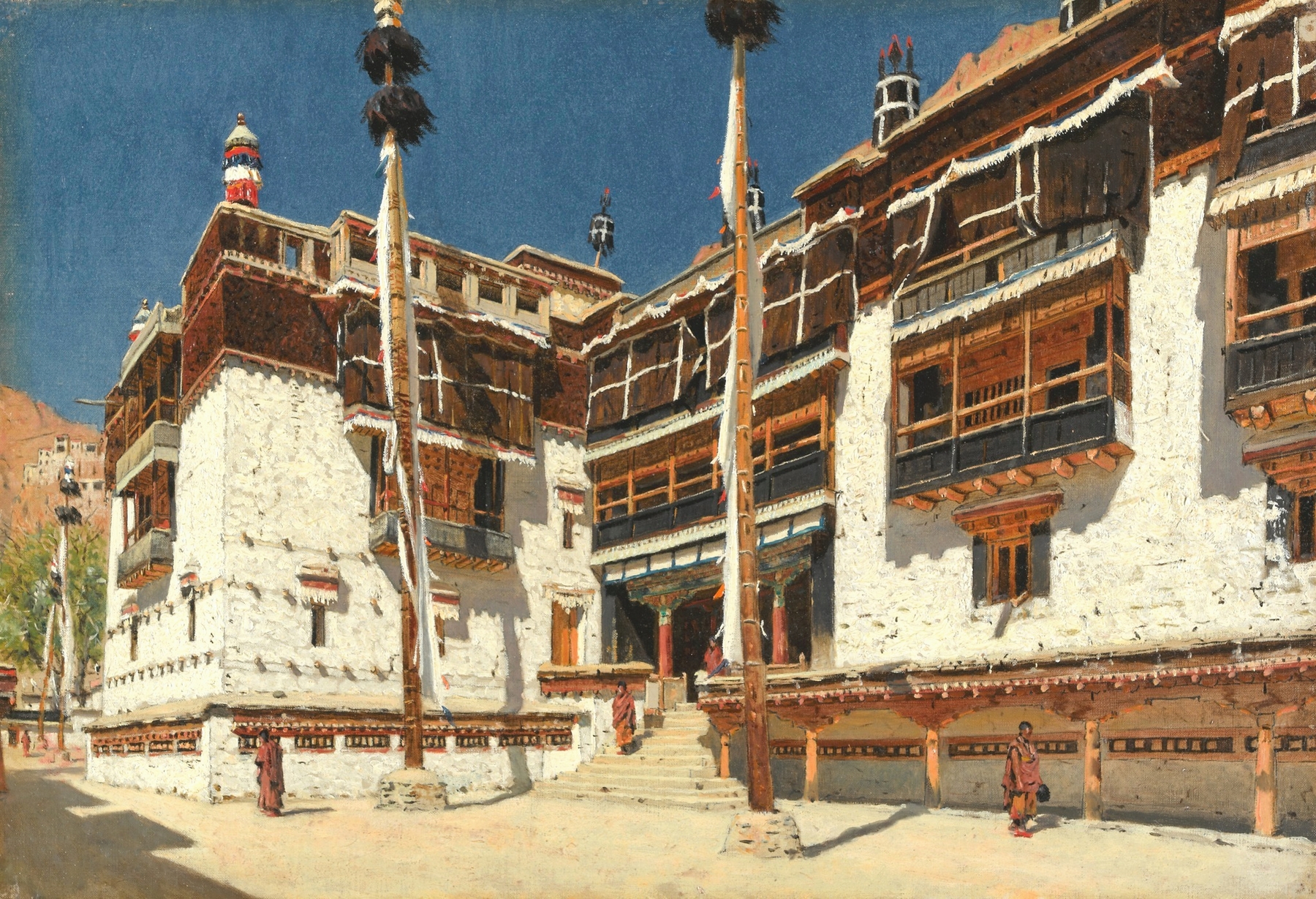
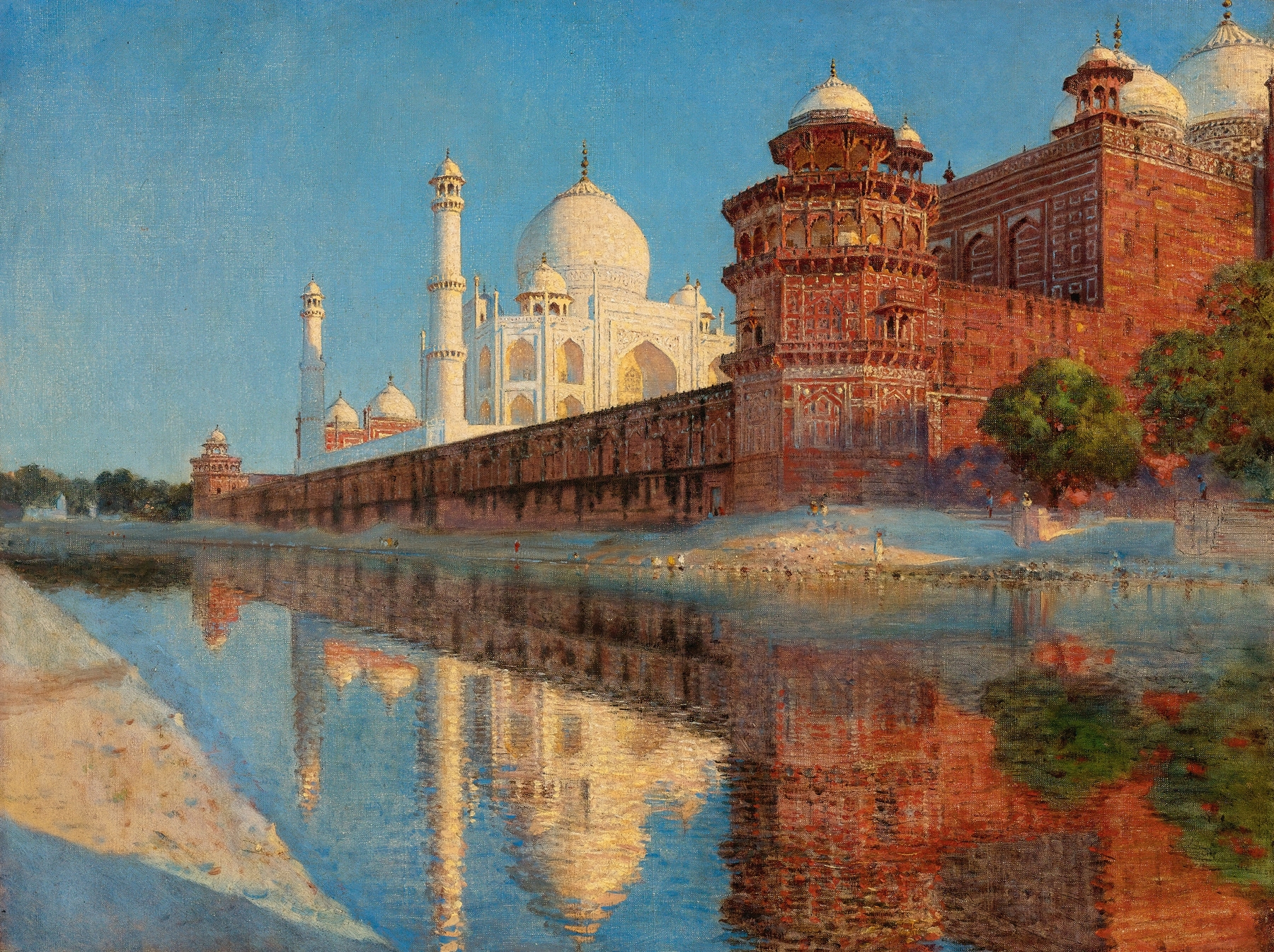
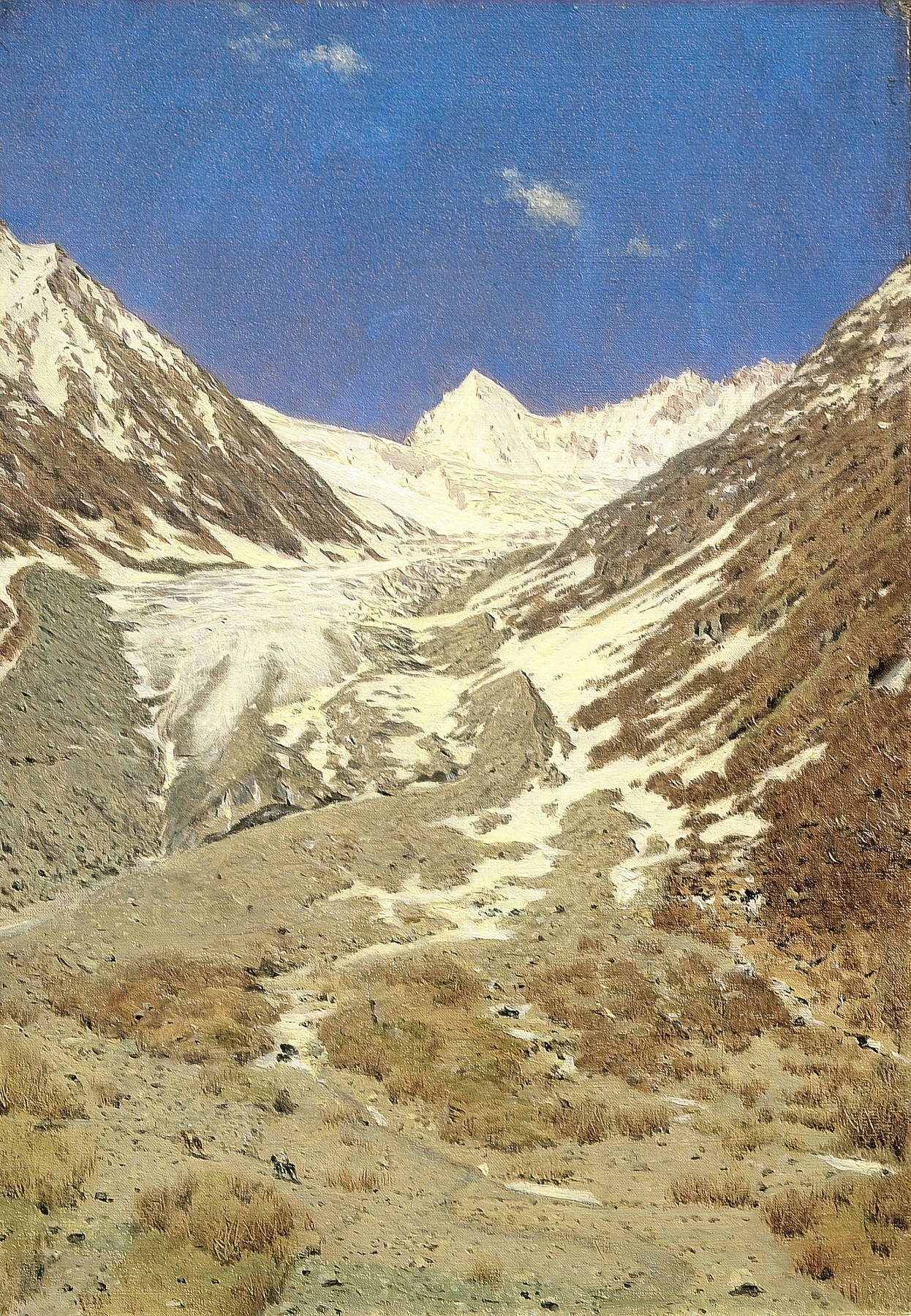
Can beauty exist without sorrow? In the shadow of monumental peaks, a temple stands resilient, whispering stories of time and faith, yet it breathes the weight of history. Gaze first at the majestic temple structure, perched precariously on a hill, its intricate architecture adorned with symbols of spirituality. The warm hues of ochre and russet invite you in, contrasting against the cool, misty blues of the distant mountains. Notice how the soft light filters through the foliage, casting delicate patterns that dance across the temple's facade, inviting contemplation.
Each brushstroke reflects a reverence for the sacred, while the surrounding landscape embraces the scene with a sense of serene isolation. Delve deeper into the canvas, and you'll find layers of meaning. The temple, though a symbol of beauty and devotion, also serves as a reminder of the impermanence of life, echoing the duality of joy and sorrow that defines existence. The artist’s attention to detail creates a dialogue between nature and architecture, suggesting a legacy that transcends time.
The tranquility evoked by the scene stands in stark contrast to the tumult of human experience, inviting viewers to reflect on the fragility of both beauty and memory. In 1874, the artist captured this moment during a time of personal and artistic exploration. The political climate in Russia was shifting, mirroring the changing world of art, which was moving away from strict realism towards impressionistic ideals. Vereshchagin, known for his historical and war-related subjects, sought to find solace in the serene landscapes of India, where he immersed himself in the culture and spirituality, revealing both the beauty and complexity of life through this work.