The Taj Mahal, Evening — History & Analysis
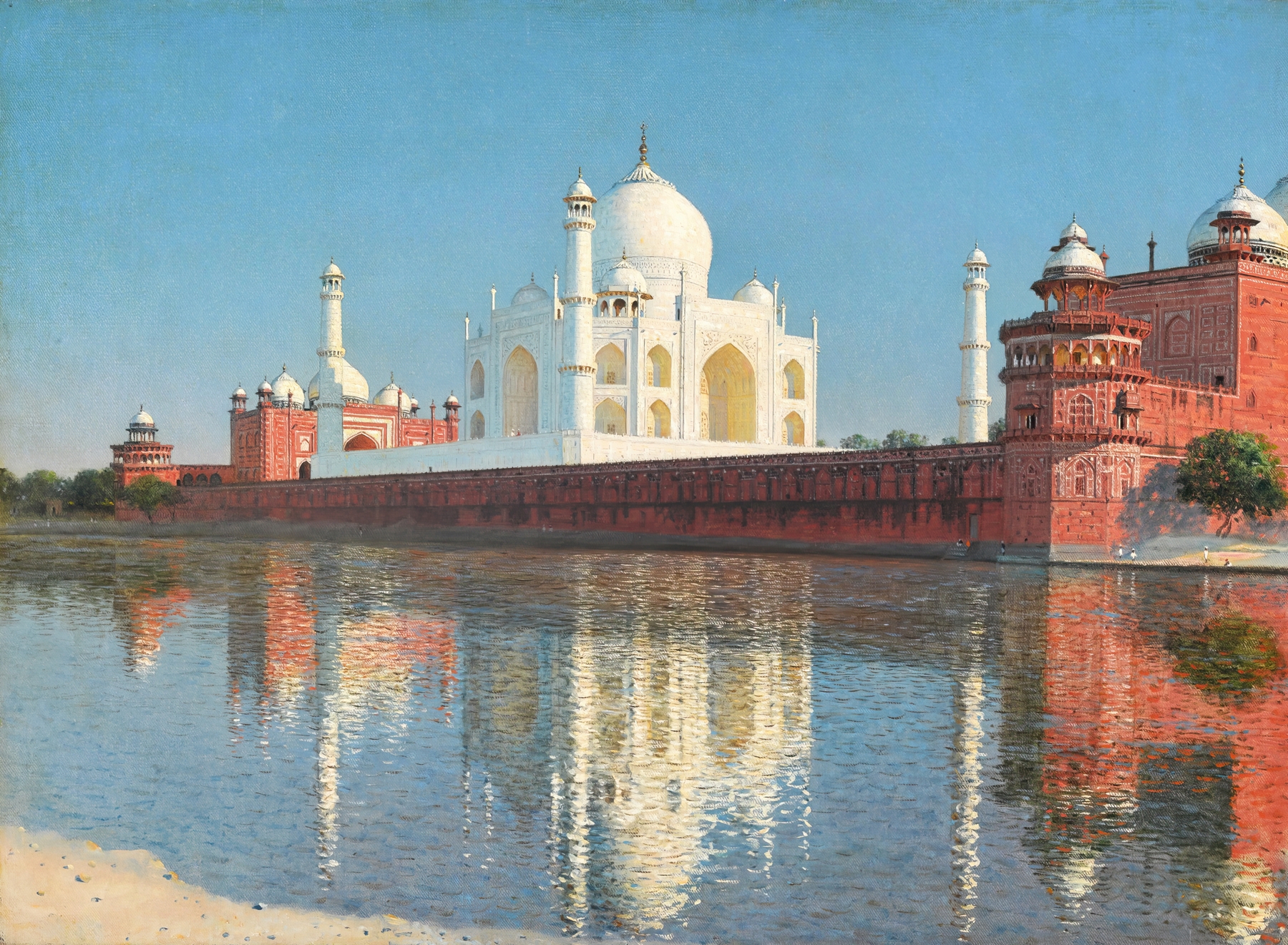
Who listens when art speaks of silence? In The Taj Mahal, Evening, light becomes the silent protagonist, enveloping the majestic monument in a tender embrace that begs for contemplation. Focus first on the way the evening light softens the sharp lines of the Taj Mahal, casting a warm glow across the dome and reflecting off the tranquil waters below. Notice how the colors shift from vibrant oranges and deep purples into softer, more muted hues as dusk descends, creating a sense of calm and reverence.
The composition skillfully captures the symmetry of the monument, drawing your eye through the arches and pathways that lead to the serene reflection in the pool, anchoring the scene in a moment of stillness. Delve deeper into the emotional undercurrents of the painting. The juxtaposition of the grandeur of the mausoleum against the enveloping quiet of the evening evokes a feeling of solitude and introspection, inviting viewers to ponder the passage of time. The subtle ripple of the water reflects not only the structure above but also hints at the ephemeral nature of beauty and existence, suggesting that even in splendor, there is an inherent sense of loss.
During the time The Taj Mahal, Evening was created, Vasily Vereshchagin was grappling with the effects of war and its aftermath. His career flourished in the late 19th century, a period marked by a growing interest in realism and the exploration of emotional depth in art. While the exact date of this work remains unknown, the contemplative quality of the piece reflects his desire to capture not just the physical beauty of his subjects, but their spiritual essence amidst a changing world.