Bäume im Frühling — History & Analysis
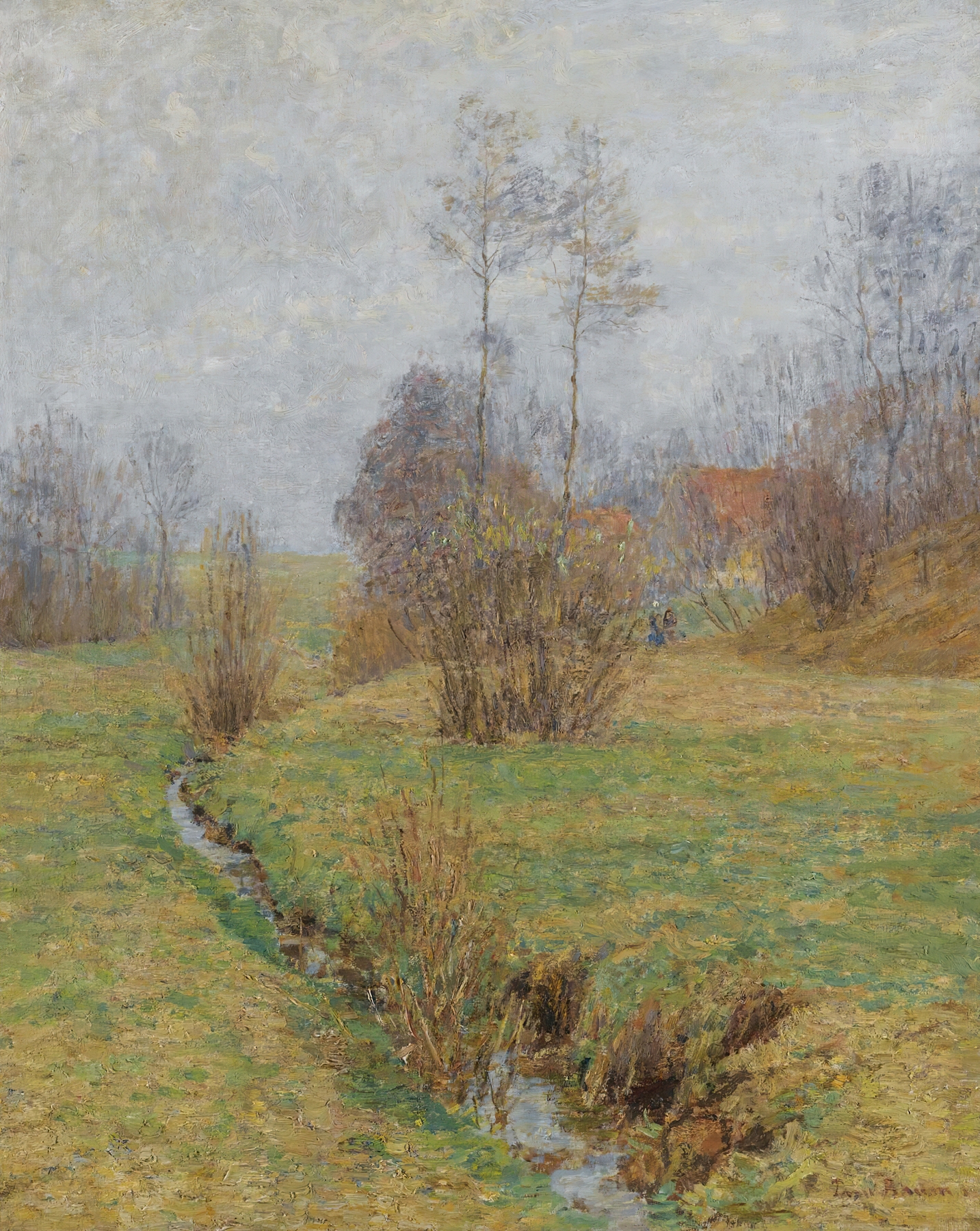
Is this a mirror — or a memory? The delicate interplay of light and shadow in Bäume im Frühling invites us to ponder the transient nature of beauty and the ache of loss entwined with the renewal of spring. Focus on the gentle gradient of greens and the soft browns that envelop the canvas, drawing your eyes toward the vivid blossoms that seem to whisper of rebirth. Notice how the trees stand tall yet solitary, their branches embracing the sky as if yearning for connection.
The textured brushstrokes evoke a sense of movement, creating a gentle breeze that breathes life into the scene, while the dappled light evokes a nostalgia, as though we are peering through a lens of recollection. The stark contrast between the budding vitality of the flowers and the underlying stillness of the bare branches speaks volumes about the duality of existence — the joy of new beginnings shadowed by the memory of what once was. Each petal hints at fragility, drawing attention to the inevitability of change and the quiet sorrow of loss. The scene encapsulates a moment suspended in time, where the promise of spring becomes a subtle reminder of the cycles of life and longing.
In the early 1930s, Paul Baum painted Bäume im Frühling amid the tumultuous backdrop of post-World War I Germany. The art world was grappling with new movements and the remnants of past conflicts, as artists sought to express the interplay of emotion and reality. During this period, Baum found solace in nature’s beauty, creating works that mirrored his own experiences with loss and renewal, channeling those sentiments through vibrant landscapes.