Cab in the Rain — History & Analysis
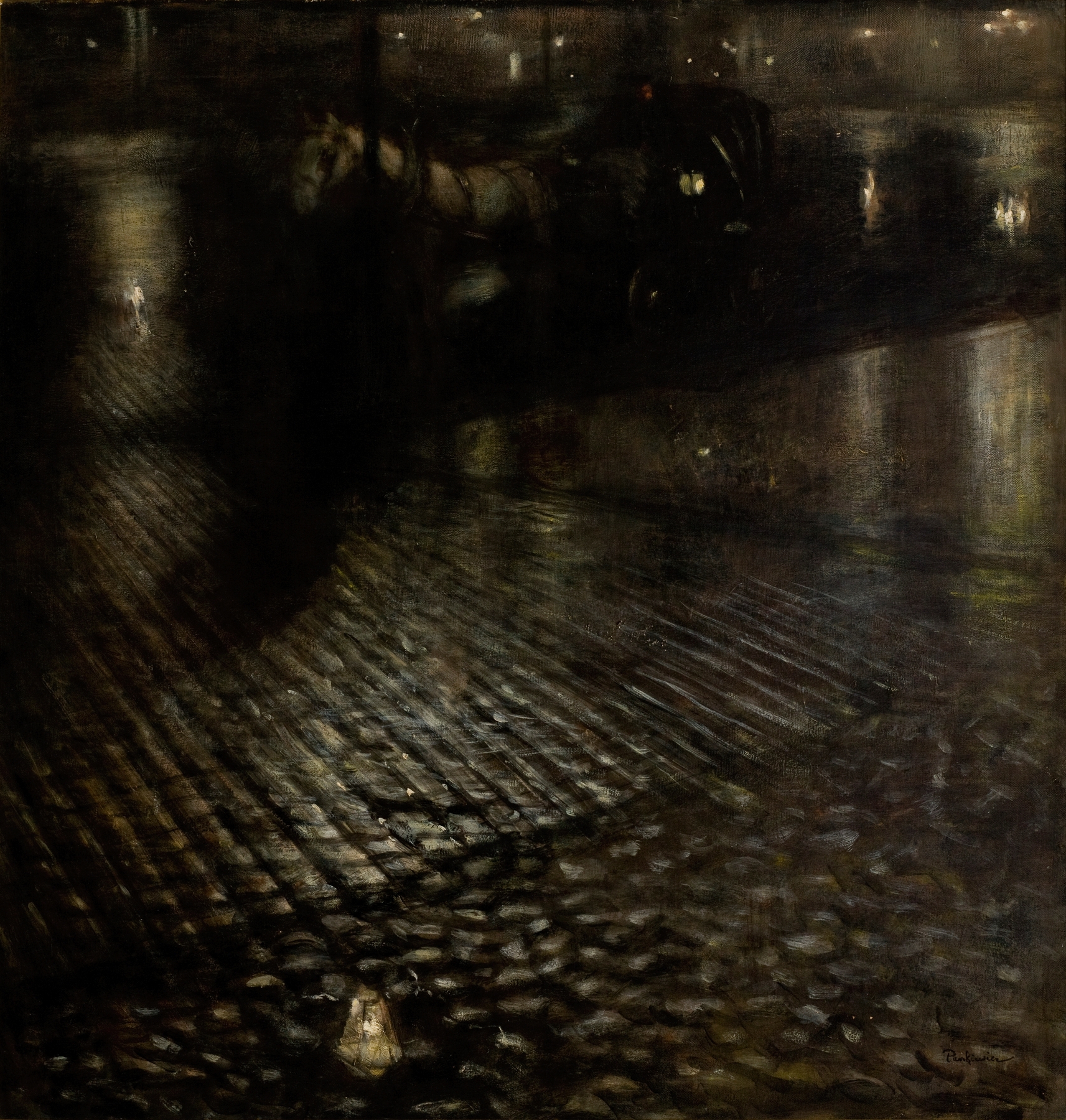
“Under the brush, chaos becomes grace.” In a world filled with fragility, how do we capture the transient moments that slip through our fingers like rain? As you approach the painting, your gaze is drawn to the shimmering reflections of wet streets. Look to the lower left, where the cab's dark silhouette contrasts sharply against the glistening cobblestones. The artist employs a muted palette of blues and grays, punctuated by dashes of ochre and white, expertly conveying the interplay of light and water.
Notice how the raindrops seem to dance, pooling in small rivulets, while the lanterns softly illuminate the scene, creating an intimate atmosphere despite the stormy backdrop. Delve deeper, and you’ll uncover the tension between movement and stillness. The cab, a symbol of urban urgency, stands in stark contrast to the tranquil rain, suggesting the fragility of human plans in the face of nature's whims. The blurred outlines of pedestrians, perhaps hurrying to escape the downpour, evoke a sense of fleeting connection, while the overall composition reflects an underlying solitude, as if the bustle of the city is momentarily hushed by the rain's gentle touch.
In 1896, during a transformative period in European art, the painter found himself deeply immersed in the exploration of Impressionism in Paris. This was a time of great personal and artistic awakening for the artist, as he navigated a vibrant city teeming with innovation and change. Surrounded by fellow visionaries, he captured moments like these, translating the chaotic beauty of the world into serene expressions of grace, forever preserving the delicate balance between existence and ephemerality.