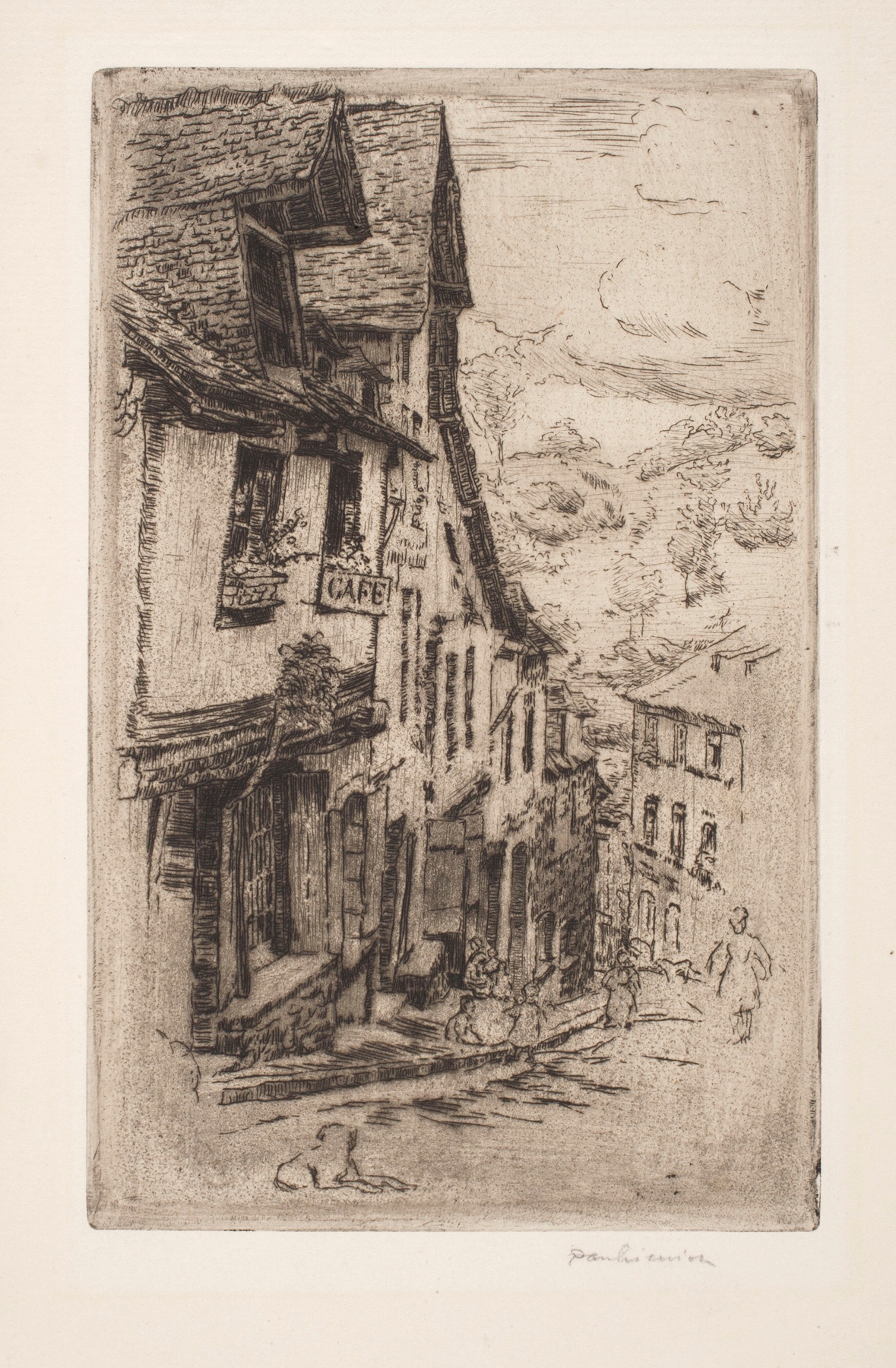
Jerzual Street in Dinan, with a dog — History & Analysis
“Every brushstroke is a heartbeat remembered.” In Jerzual Street in Dinan, with a dog, the canvas pulses with an abiding desire for connection and place, capturing a fleeting moment that lingers in the heart. Look to the center of the painting where a quaint, cobblestone street unfolds, inviting you to wander its path. Notice how the soft, muted colors blend seamlessly, with warm ochres and cool blues intertwining to evoke a sense of nostalgia. The quaint houses flanking the street appear to lean toward one another, their windows framed by delicate shadows, suggesting an intimacy that envelops the viewer.
The dog, perched casually by the street, serves as a gentle anchor, directing our gaze and breathing life into the tranquil scene. Hidden within this seemingly simple composition lies a deeper exploration of belonging and solitude. The dog, a symbol of loyalty and companionship, contrasts with the distant facades of the buildings, hinting at the human desire for connection amidst the solitude of daily life. Each brushstroke conveys a longing for warmth and familiarity, while the stillness of the scene evokes contemplation and serenity — a moment suspended in time.
Józef Pankiewicz painted this work in 1906 during his time in France, amidst a burgeoning artistic community that embraced Impressionism. At this point in his life, Pankiewicz was finding his unique voice, navigating the tension between traditional techniques and modern expression. The world around him was rapidly evolving, influenced by the socio-political changes of the early 20th century, yet he chose to encapsulate a timeless moment within the picturesque streets of Dinan, evoking the universal quest for belonging.