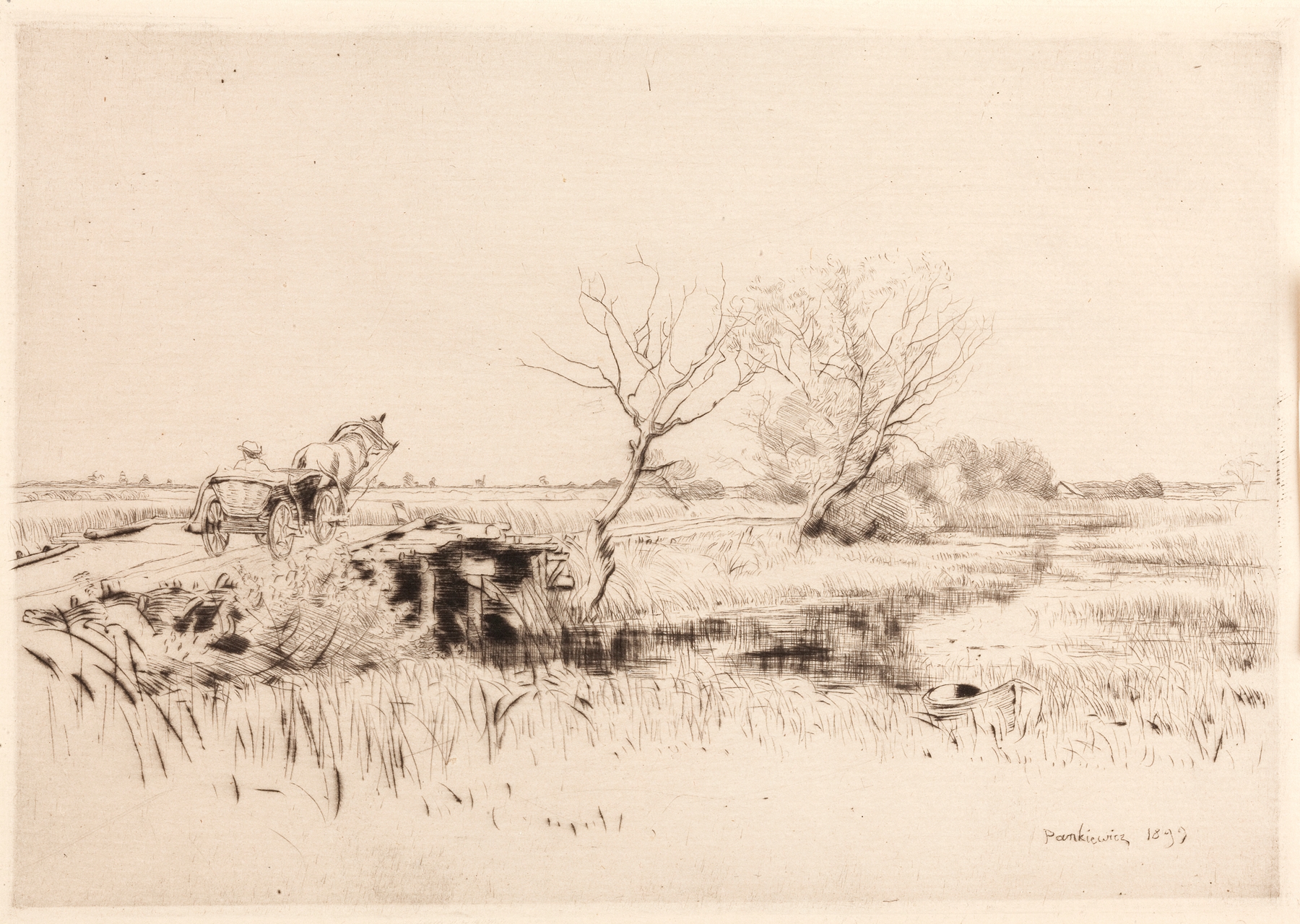
Pińsk Channel in Polesie I — History & Analysis
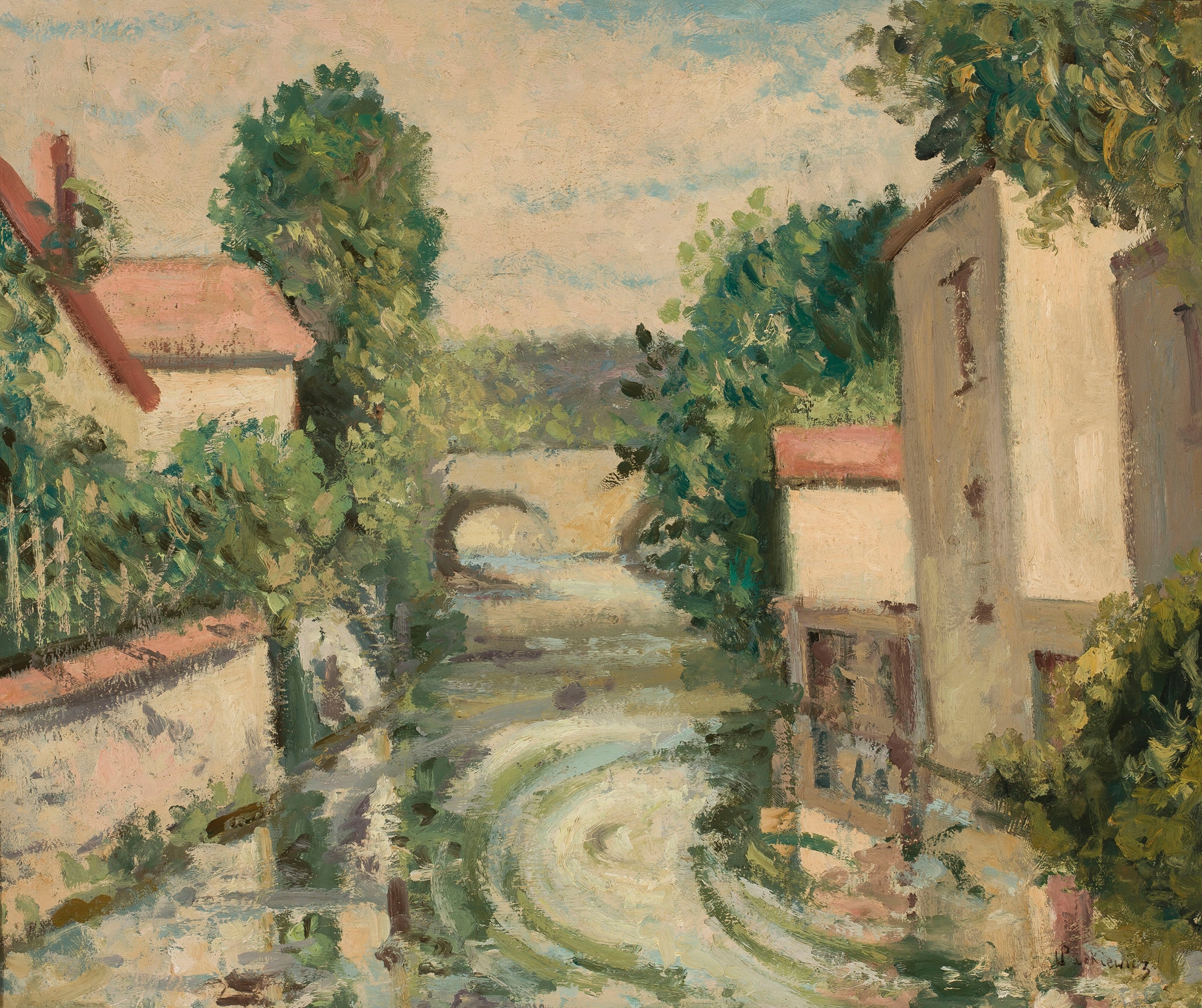
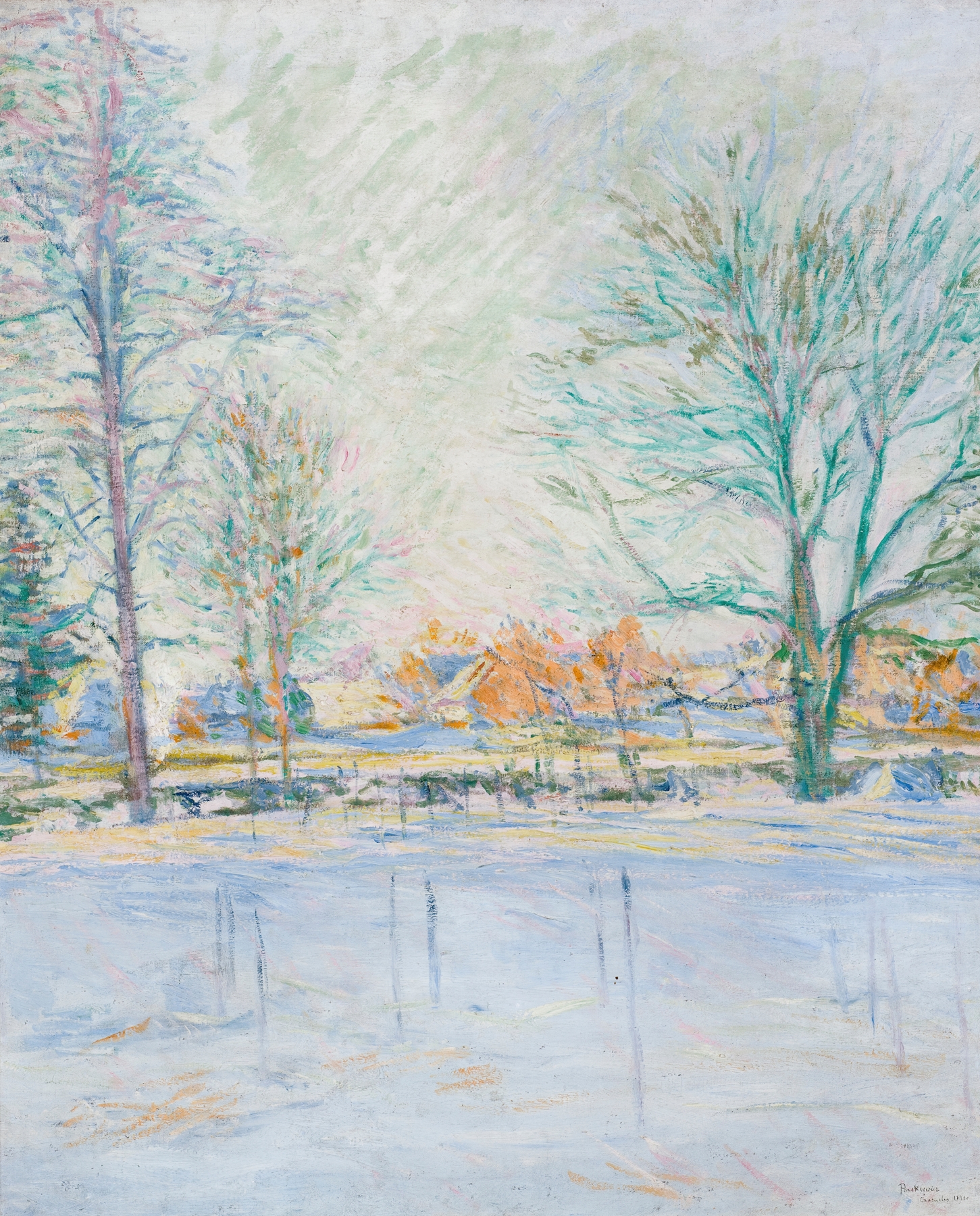
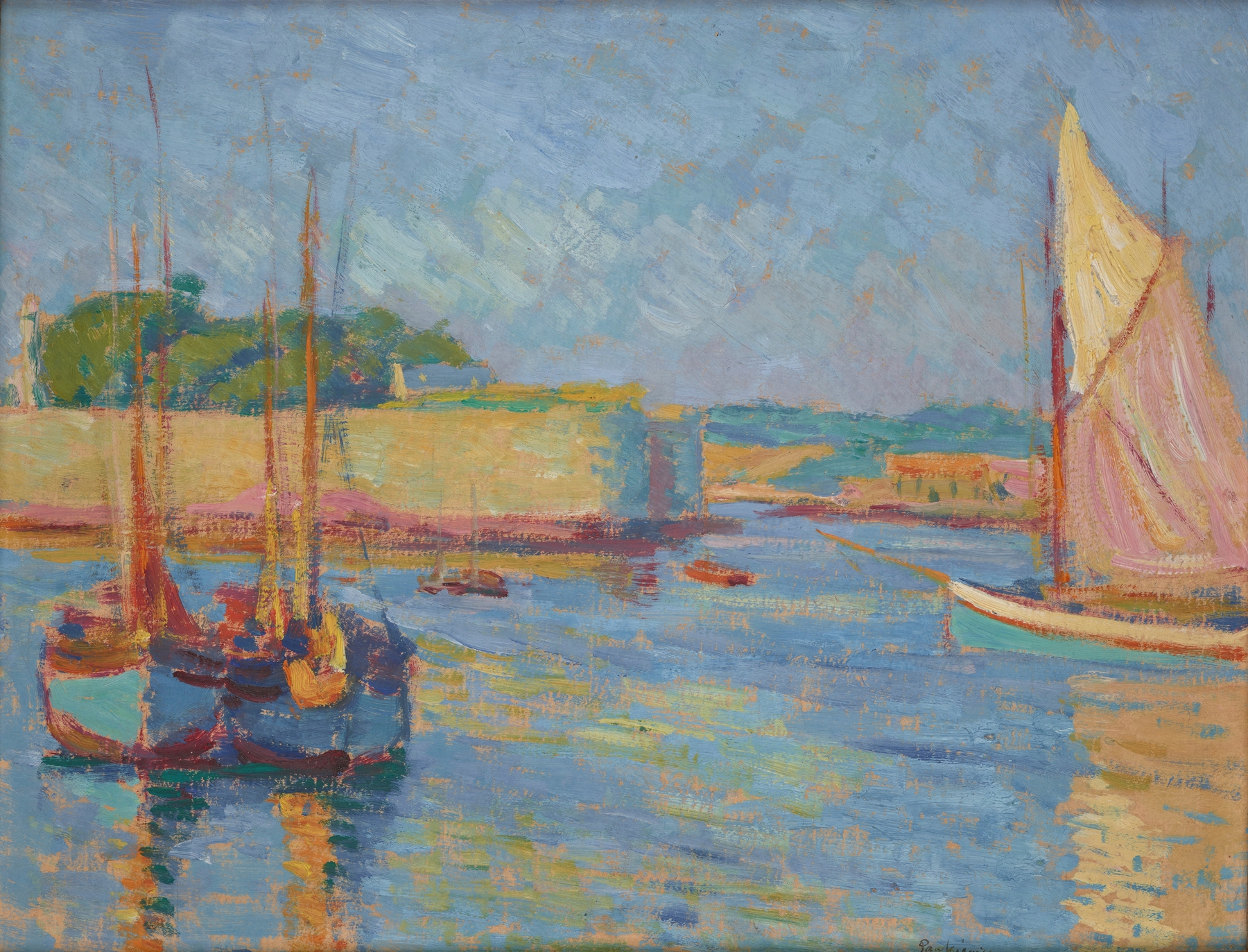
Is this a mirror — or a memory? The waters of Pińsk Channel reflect not just the sky, but the emotions of those who gaze upon them, capturing a moment suspended between reality and imagination. Look to the lower right corner, where the water ripples gently, creating delicate patterns that invite your eyes to travel across the surface. Notice how the brushstrokes blend soft blues and greens, harmonizing the natural elements with a serene tranquility. The artist’s choice of light, filtering through willow branches overhead, bathes the scene in a warm, golden hue, evoking a sense of peace and nostalgia.
This balance of composition allows the viewer to feel both the presence of nature and the artist's intimate connection to this specific place. Beneath this picturesque landscape lies a deeper narrative of impermanence and reflection. The gentle undulations of the water suggest change, while the sturdy trees along the banks symbolize permanence amid the fleeting. The interplay of light and shadow mirrors life’s duality, evoking a sense of longing for moments that slip away yet linger in memory.
Each brushstroke invites contemplation, drawing viewers into the serene heart of Polesie, where every glance reveals a new layer of meaning. Józef Pankiewicz painted Pińsk Channel in Polesie I in 1899 during a period of burgeoning Impressionism in Poland. At that time, he was exploring new artistic techniques and ideas, deeply influenced by the natural beauty surrounding him and the evolving art scene in Europe. This work reflects both his personal journey and the broader shift towards capturing fleeting moments in nature, marking a significant evolution in his oeuvre and the Polish art landscape.