
Capture of Fort Ticonderoga — History & Facts
In Capture of Fort Ticonderoga, the tumult of conflict transforms into a grand narrative that invites awe and reflection. Look to the center where the fort stands resolute, its stone walls echoing the tumult of the past. The dynamic interplay of light and shadow reveals the soldiers, their animated gestures caught amidst a frenzy of movement and emotion. The color palette shifts from deep, earthy tones at the periphery to brighter hues at the heart of the scene, guiding the viewer’s gaze towards the pivotal action unfolding—an act of bravery that feels both historical and immediate. Yet, beyond the chaos lies a poignant contrast: the serene backdrop of nature looms large against the fervor of battle, suggesting an eternal witness to human strife.
The meticulous brushwork captures fleeting expressions of determination and fear, each soldier a testament to individual stories within collective memory. This juxtaposition invites contemplation on heroism and the transient nature of glory. In 1897, Peixotto created this work while living in California, amidst a burgeoning interest in American history and its visual representation. As the nation grappled with its identity, artists sought to celebrate pivotal moments that defined the American spirit.
This context informs the artist's choice to illuminate both the bravery and chaos of a significant historical event, bridging past and present with a reverent gaze.
More Artworks by Ernest Peixotto

House Where First American Flag Was Made
Ernest Peixotto
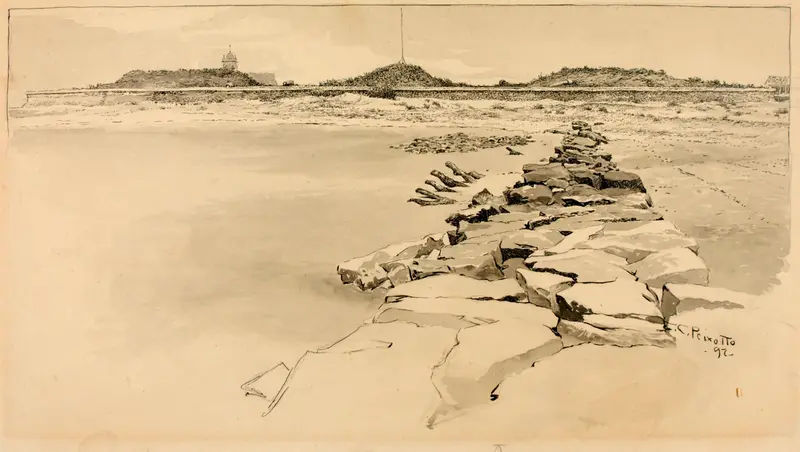
Fort Moultrie on the Site of Old Fort Sullivan
Ernest Peixotto
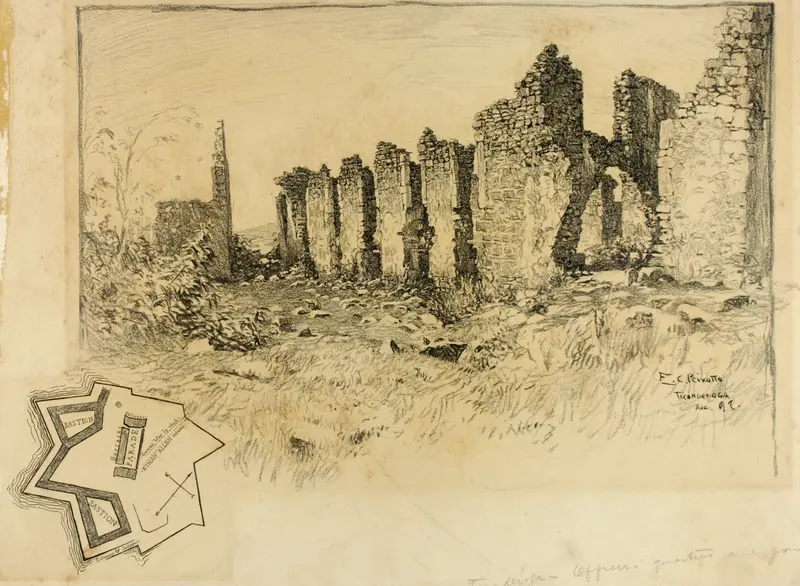
Ticonderoga
Ernest Peixotto
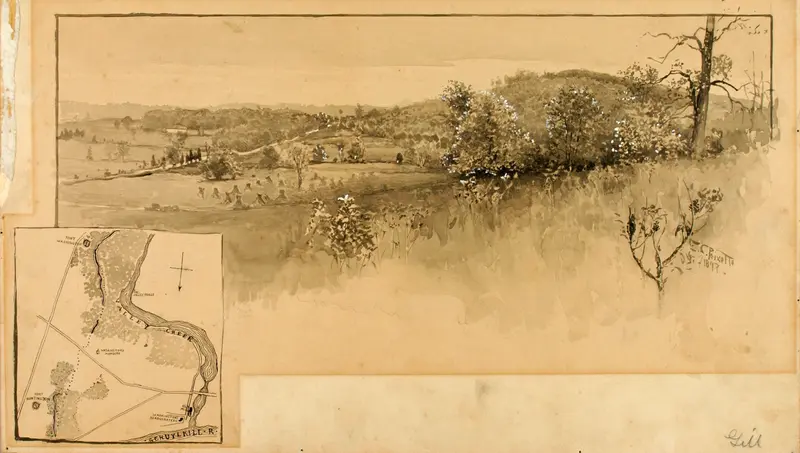
Valley Forge
Ernest Peixotto
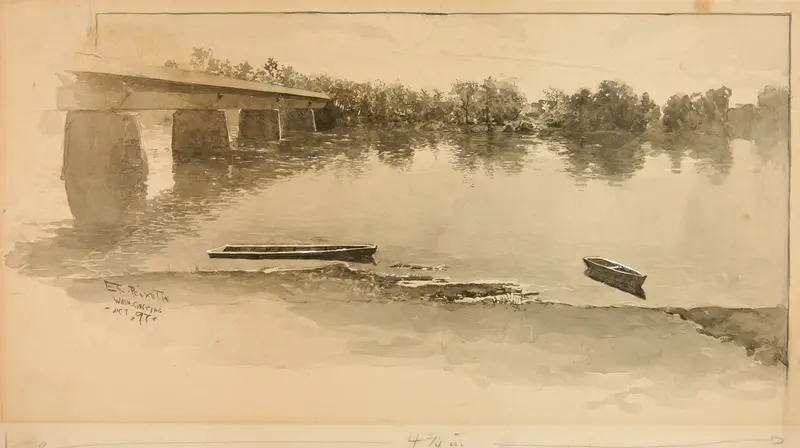
Washington Crossing
Ernest Peixotto

Saratoga. General Schuyler’s House
Ernest Peixotto
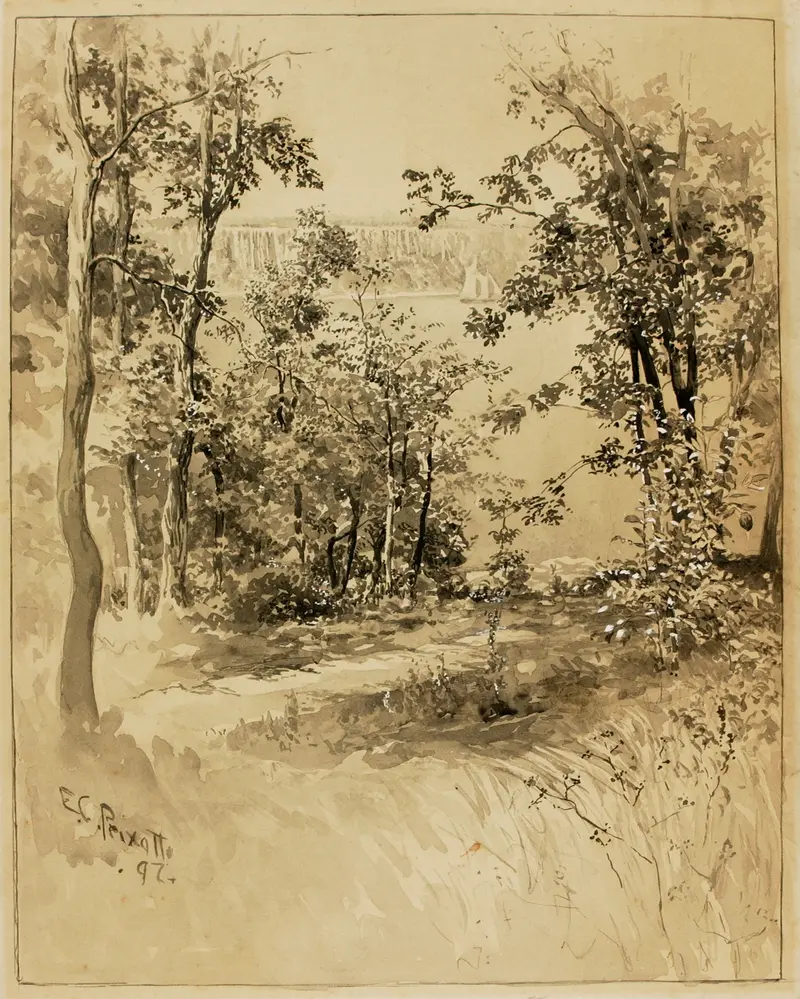
New York, Site of Fort Washington, Looking at Fort Lee
Ernest Peixotto
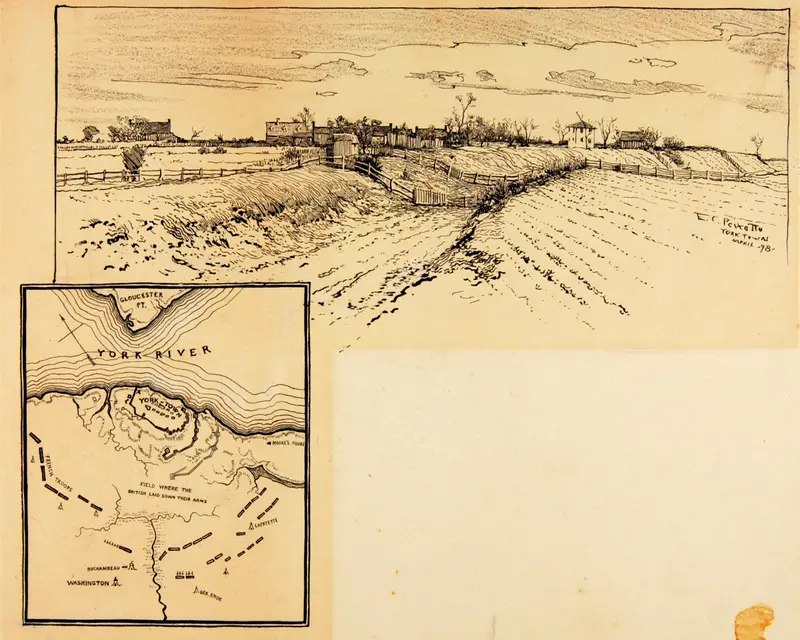
Present Appearance of British Entrenchment, Yorktown
Ernest Peixotto
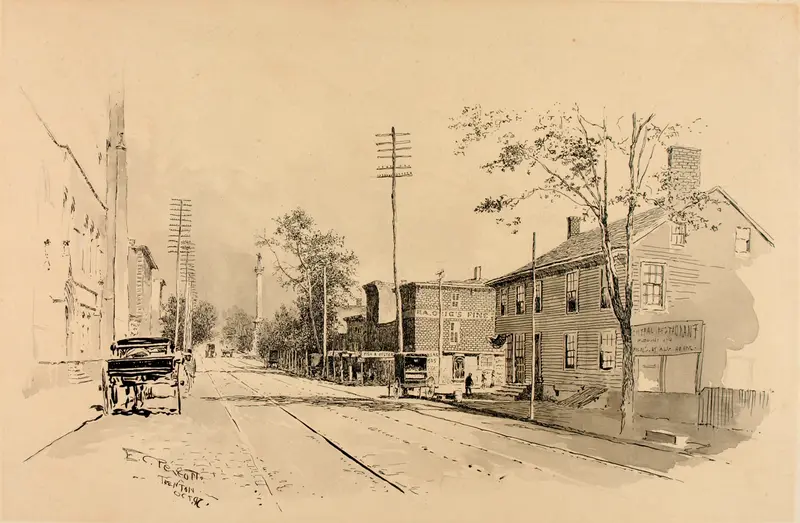
Trenton, Old King Street Looking from Hessian Headquarters
Ernest Peixotto
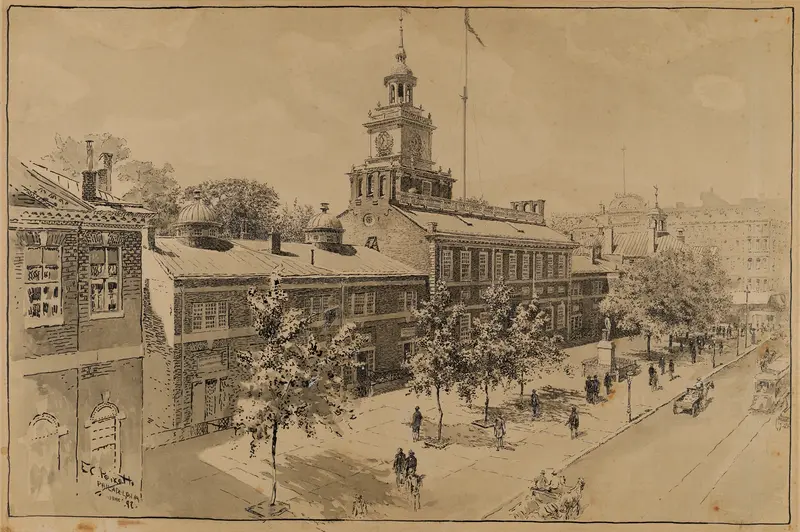
Philadelphia, Independence Hall, Chestnut Street
Ernest Peixotto





