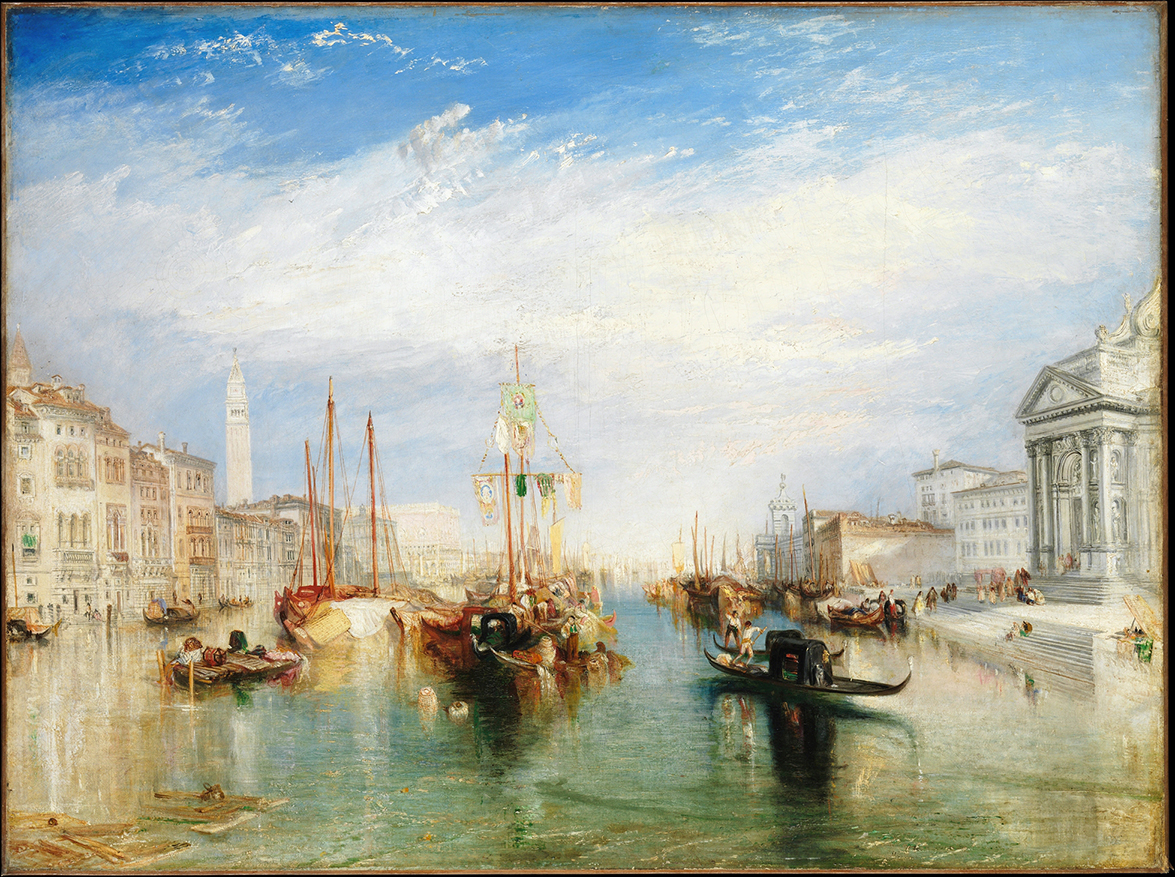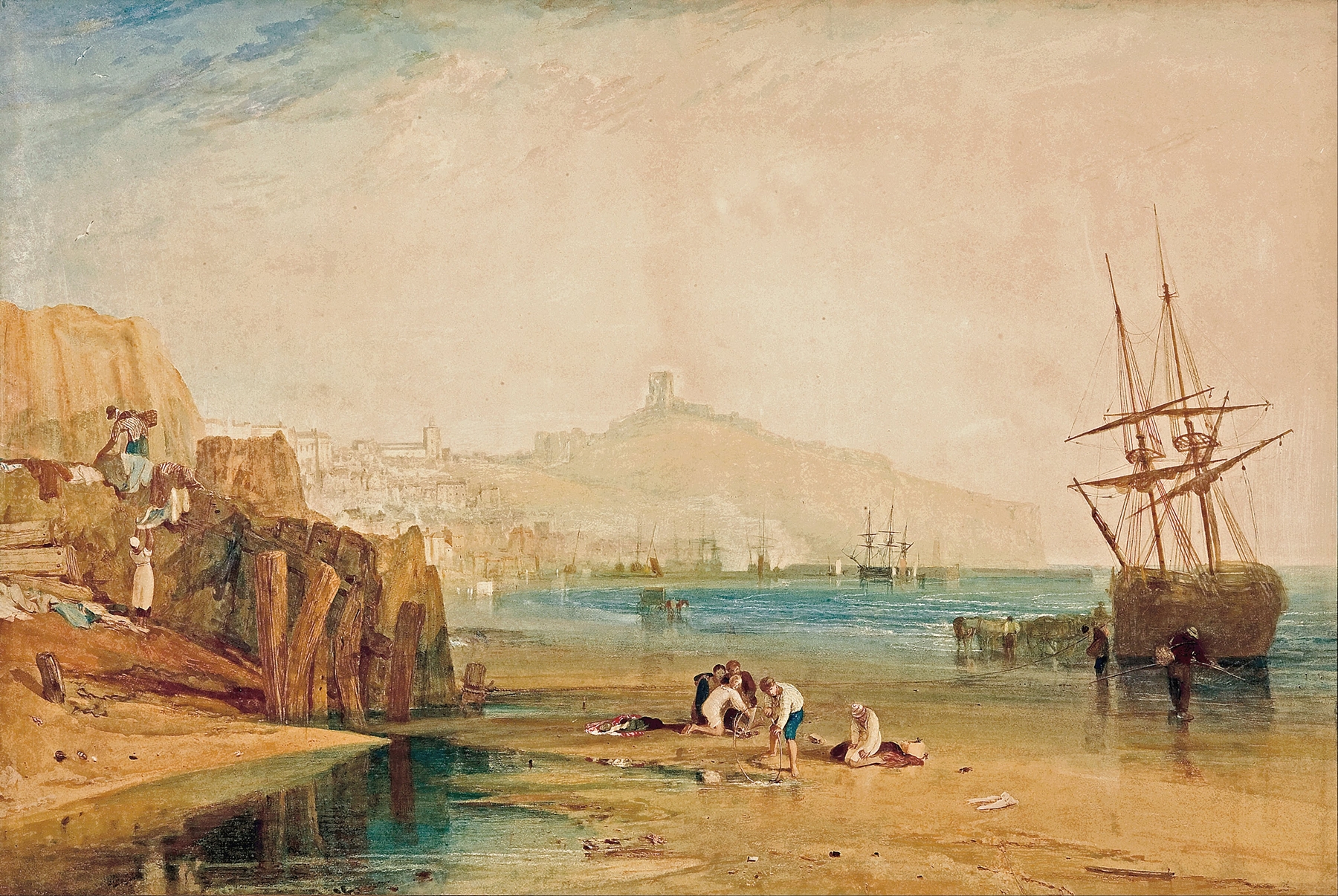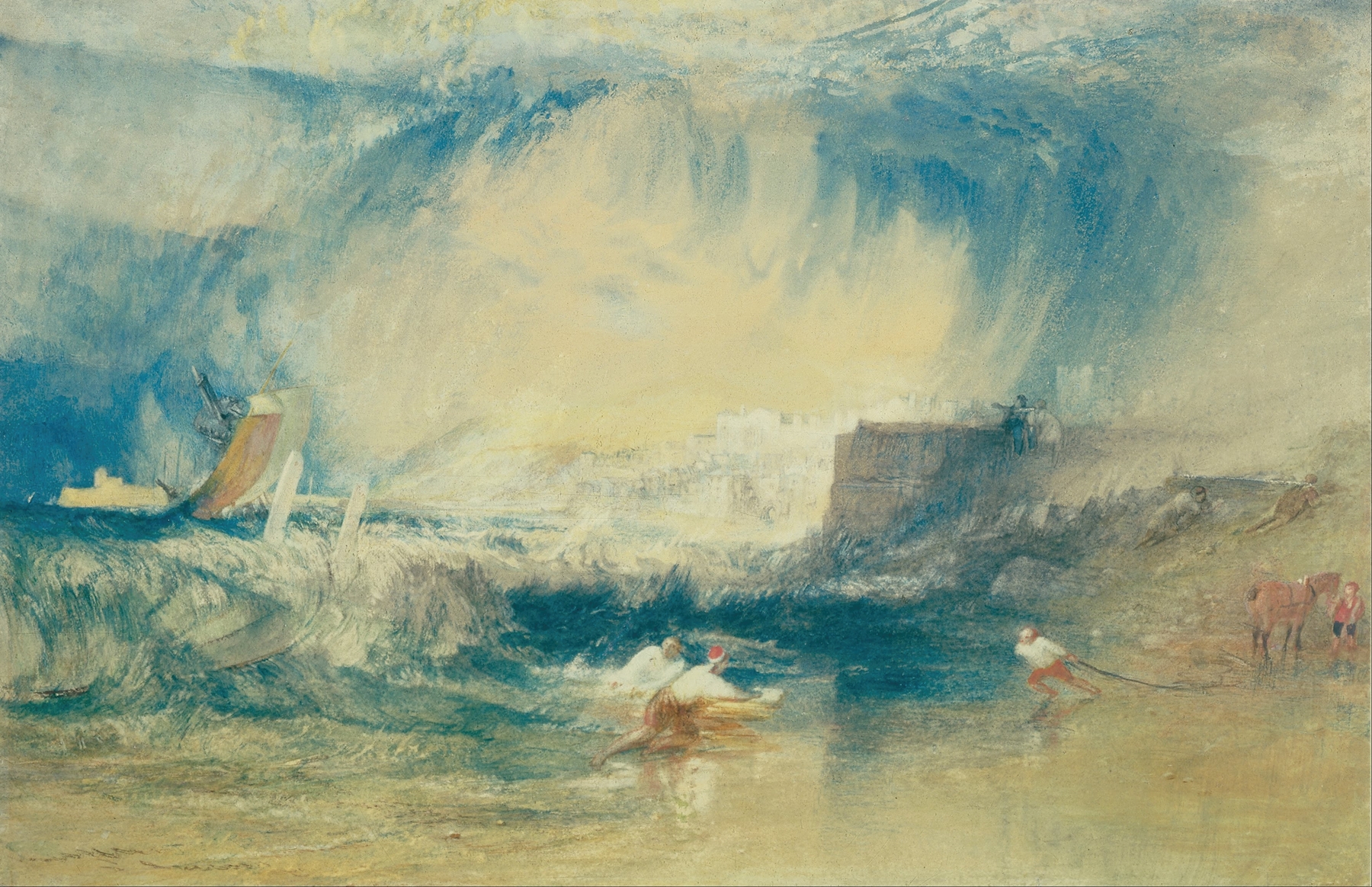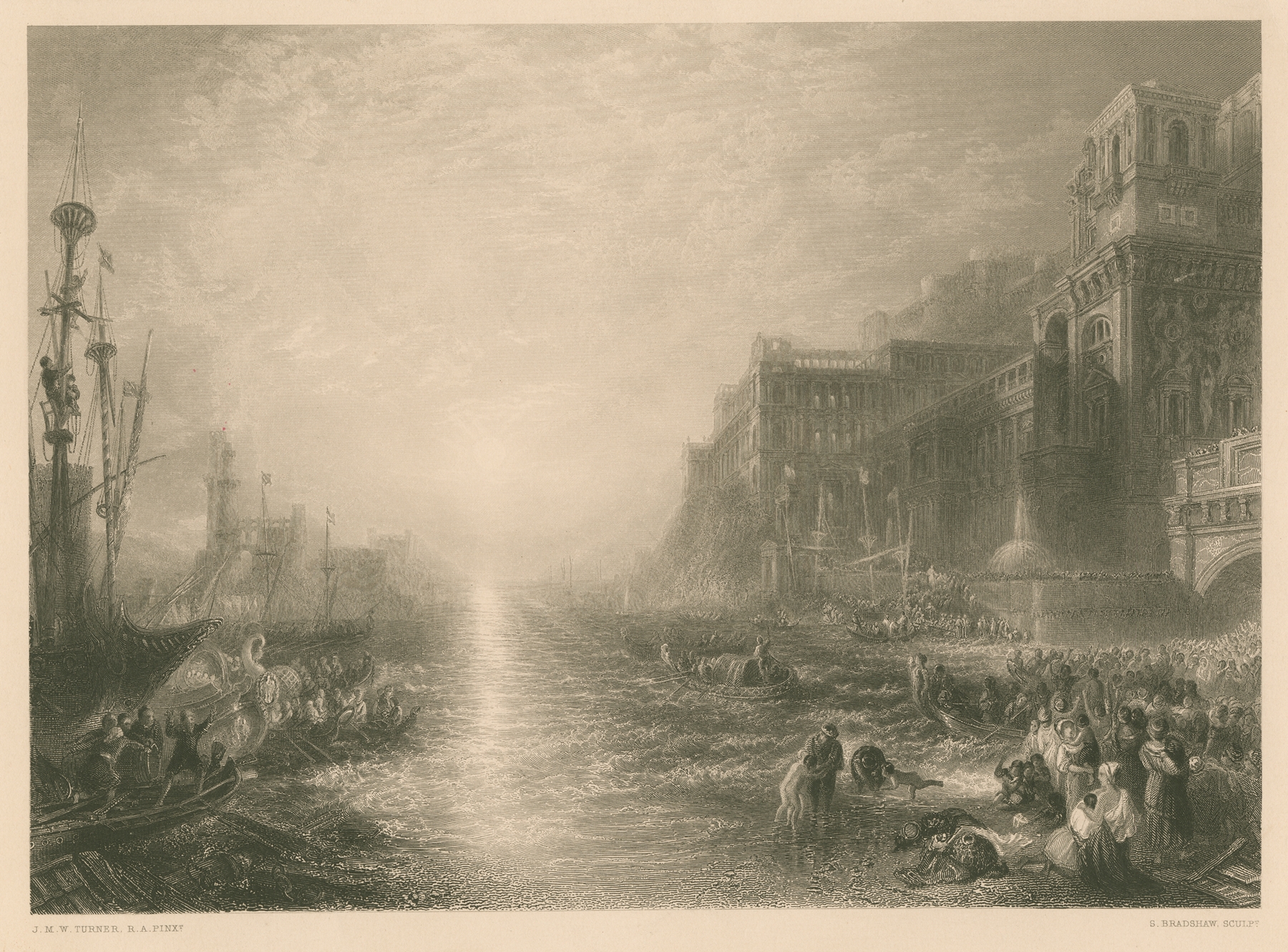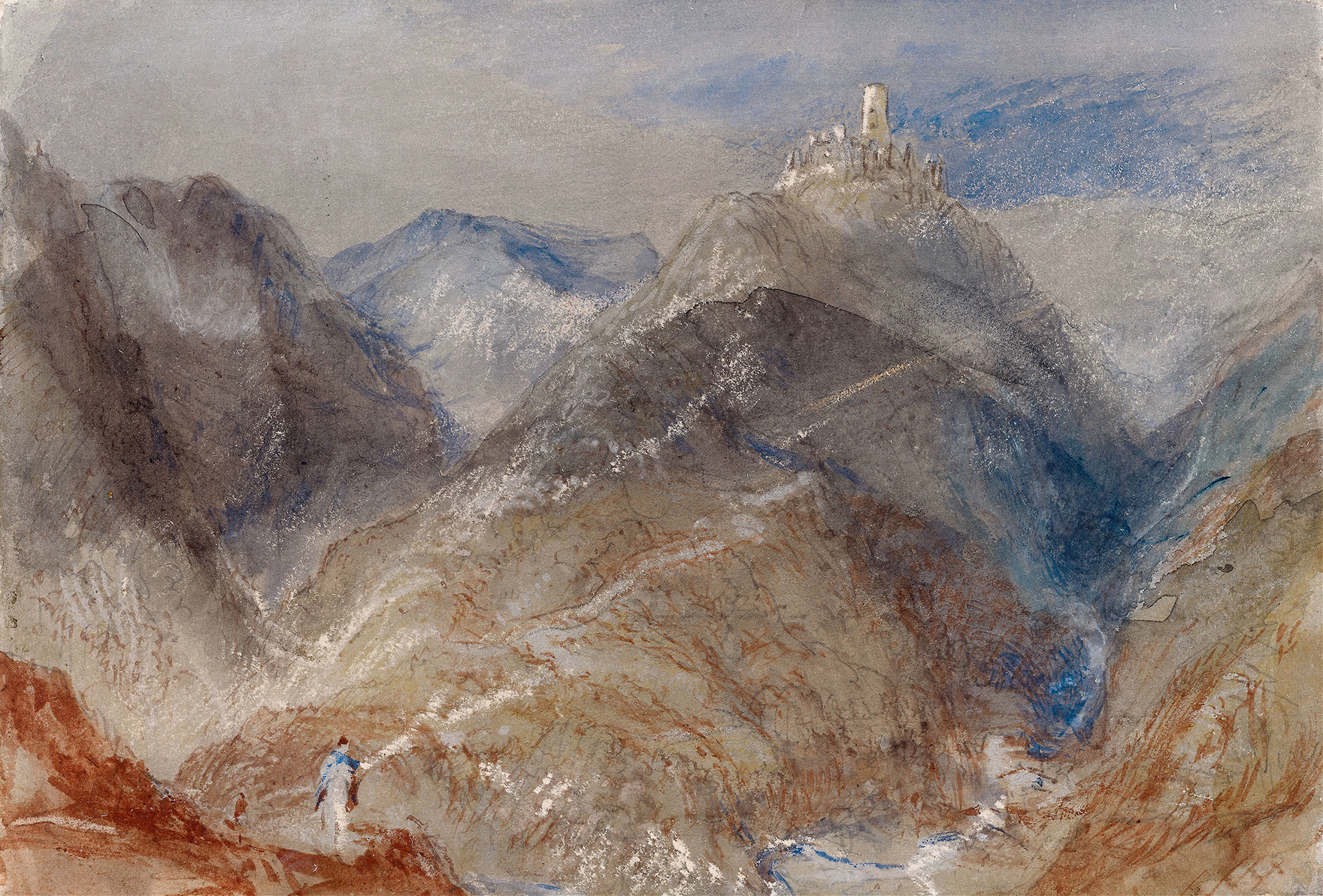
“Art reveals the soul when the world turns away.” In the quiet embrace of solitude, what stories emerge from the stillness of a landscape? Look to the left at the ethereal light filtering through the clouds, casting a serene glow over the castle perched magnificently on its rocky height. Turner’s soft brushstrokes blend blues and grays, evoking a misty atmosphere that invites contemplation. The castle stands as a steadfast guardian, its architectural details both sharp and hazy, establishing a dialogue between the tangible and the ephemeral. Notice how the contrast between the castle’s solidity and the surrounding fluidity of nature creates a tension that is both haunting and beautiful. Delve deeper into the layers of meaning defining this scene. The interplay of light and shadow symbolizes the duality of existence—between hope and despair, permanence and transience. The silent strength of the castle echoes the human spirit’s resilience amidst life’s uncertainties. A solitary figure stands at the edge, almost lost in the grandeur yet inherently connected, reminding us of our own smallness and the power of introspection. In 1836, Joseph Mallord William Turner crafted this piece amidst a tumultuous time in his personal life and the art world. He was grappling with the loss of his father and enduring shifts in artistic tastes that leaned toward realism. Capturing the sublime amidst the chaos, he painted this work in the quiet outskirts of Geneva, seeking to express the profound beauty that lies in solitude and the fleeting nature of time.