Changing Pasture — History & Analysis
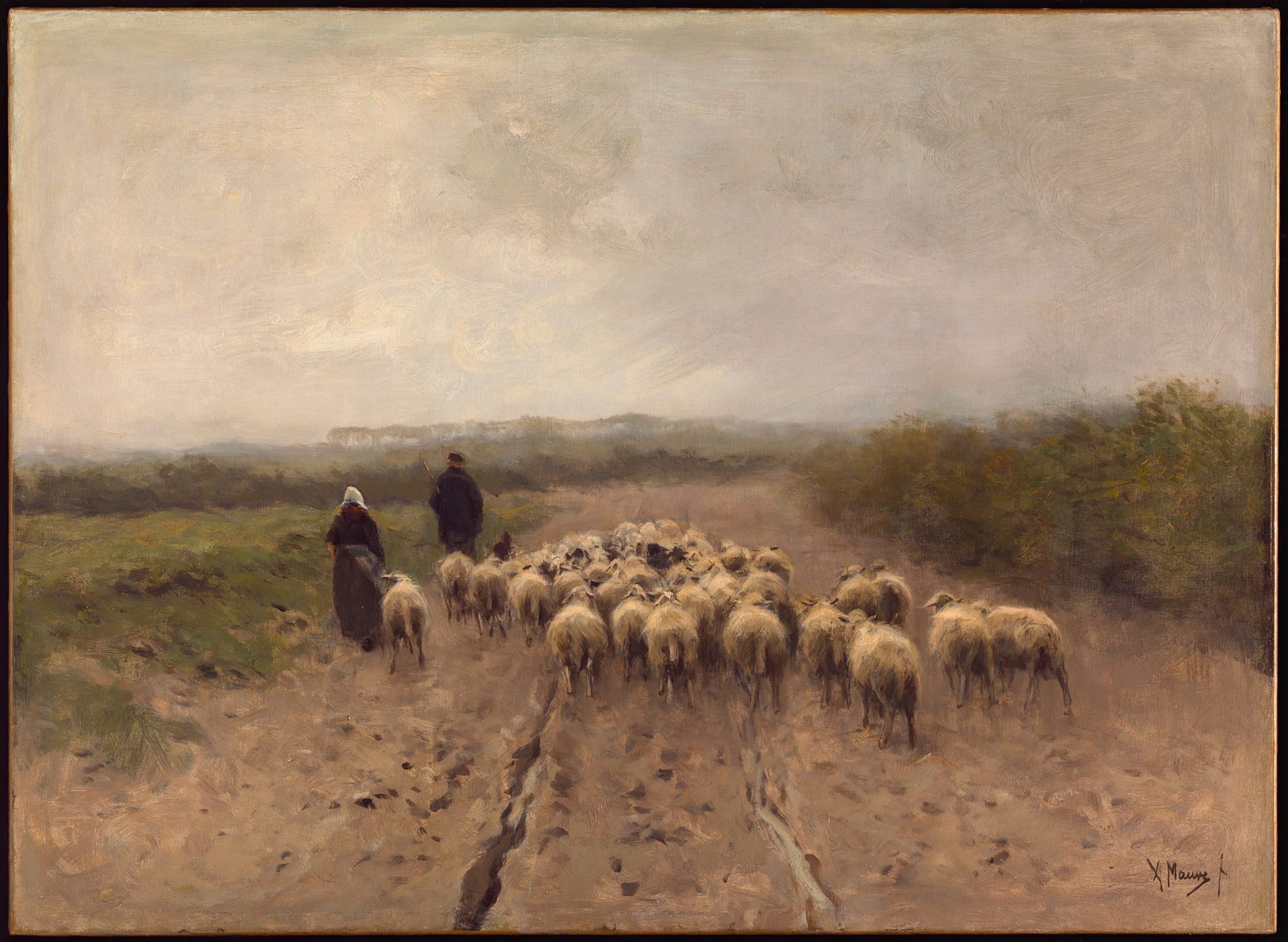
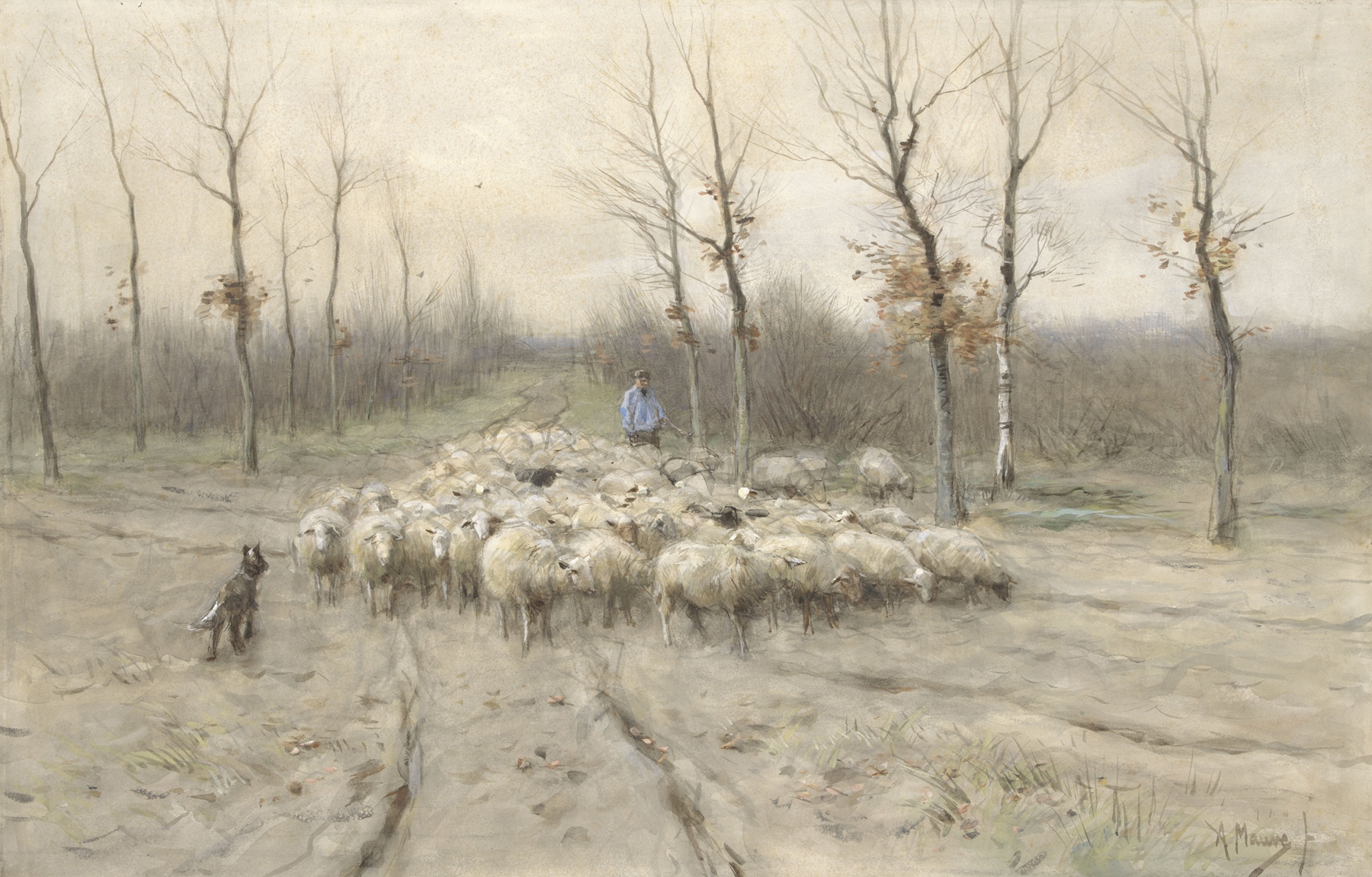
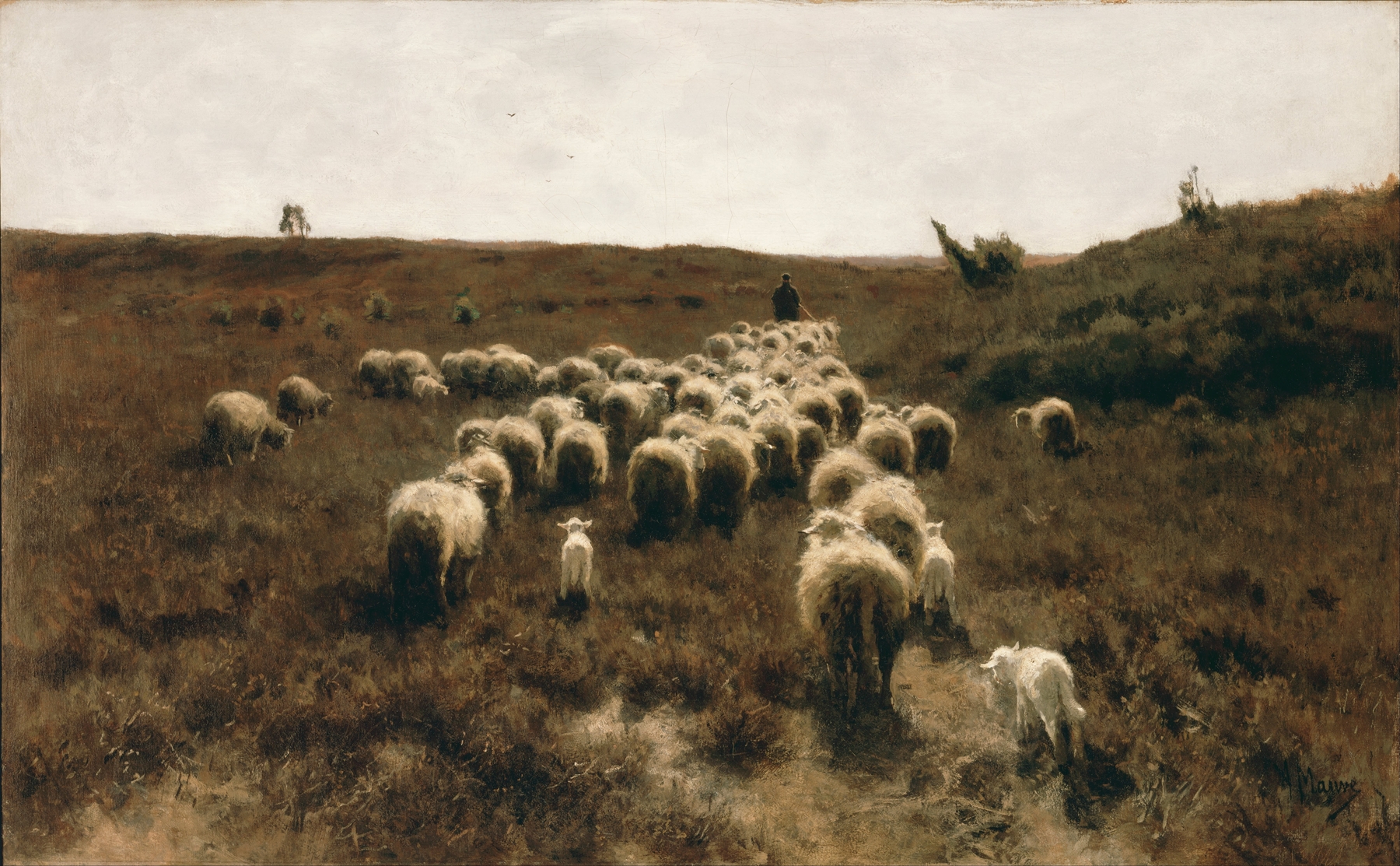
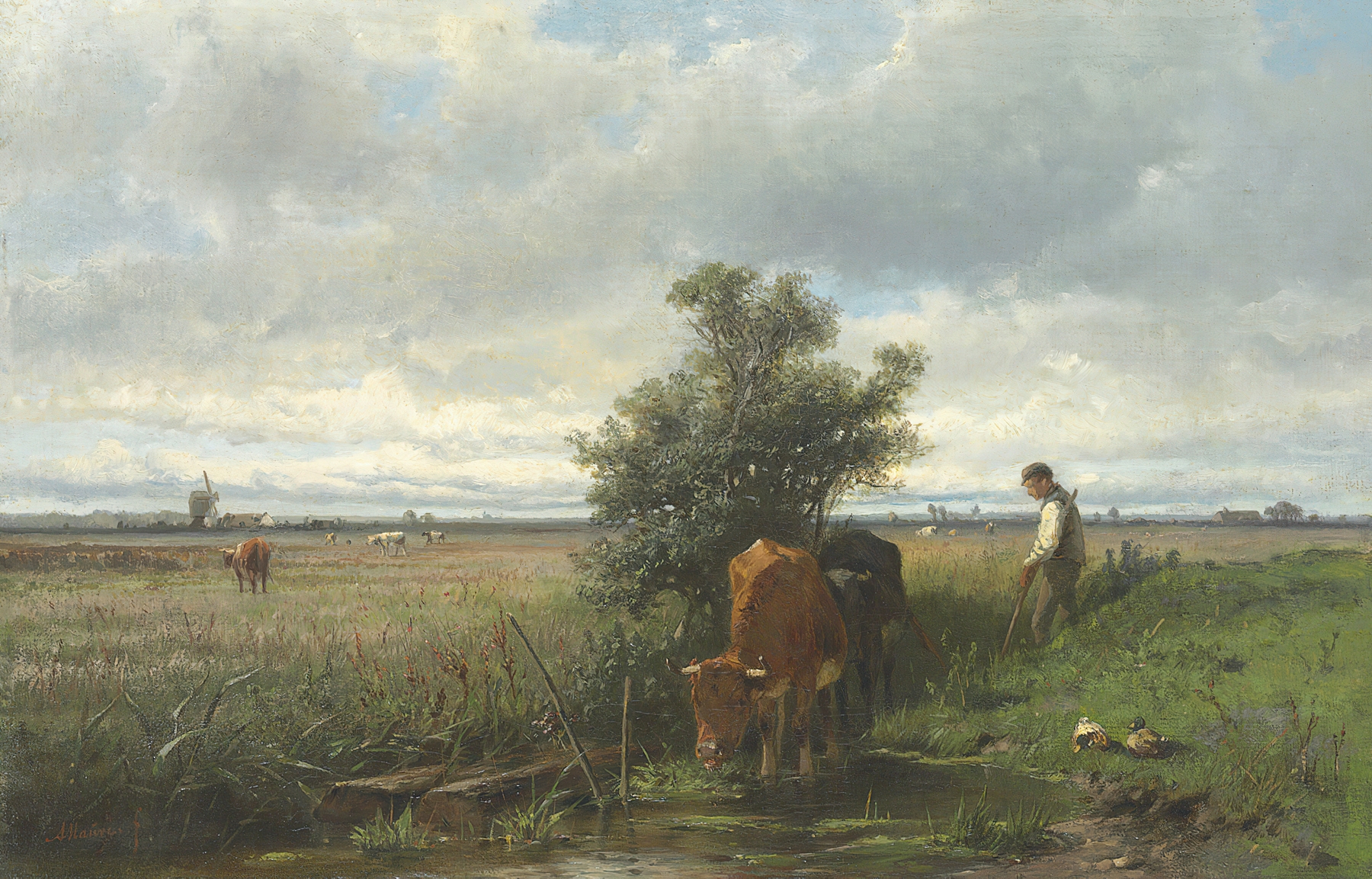
Could beauty survive in a century of chaos? In Changing Pasture, Anton Mauve captures the delicate balance between serenity and the tumultuous world beyond the canvas. Look to the left at the soft, rolling hills, their gentle contours leading the eye to a horizon kissed by a fading sun. The warm palette, dominated by earthy greens and rich browns, evokes a sense of calm, while the cool blues of the sky create a stark contrast, suggesting transition.
Notice the figures of the sheep, their woolly forms clustered together, embodying both unity and a fleeting moment—a snapshot of pastoral life destined to change. Beneath the surface lies a commentary on the inevitable passage of time. The sheep, though seemingly tranquil, symbolize the fragility of rural existence in an era marked by industrial advancement and societal upheaval. The gentle light filtering through the clouds serves not only as a source of illumination but also as a reminder of the ephemeral nature of beauty in the face of encroaching chaos.
Mauve painted this piece in the 1880s in the Netherlands, during a time when the art world was embracing realism and capturing everyday life. As a member of the Hague School, he sought to depict the simplicity of rural landscapes, contrasting with the rapidly modernizing society around him. This work reflects his dedication to portraying the sublime beauty of nature, even as change loomed on the horizon.