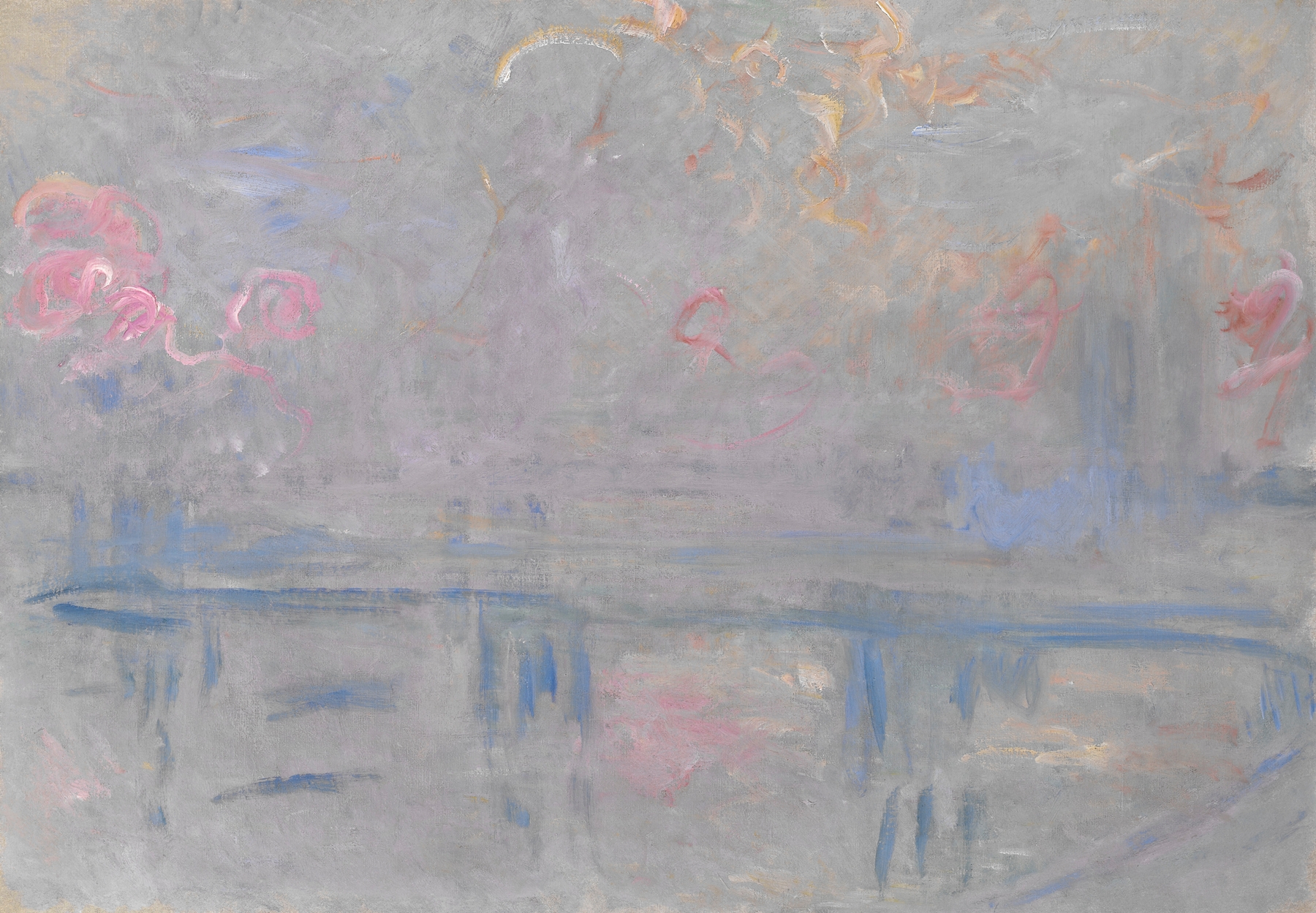
Charing Cross Bridge — History & Analysis
“Sometimes beauty is just pain, disguised in gold.” In the soft embrace of twilight, fleeting moments shimmer with fragility, revealing the transient nature of existence itself. Look to the center where the bridge stretches across the canvas, its intricate structure blending into the hazy atmosphere. Monet’s brushwork, a delicate dance of impressionistic strokes, captures the light reflecting on the water’s surface, creating a symphony of blues and warm golds. The interplay of colors draws your eye, inviting you to explore the subtle gradations of mood as day succumbs to night.
As you take in the scene, notice the ghostly figures of pedestrians crossing the bridge, ephemeral and almost imperceptible against the backdrop. They evoke feelings of solitude and connection, as if each person carries their own story, their presence solid yet fleeting against the natural ebb and flow of time. This delicate balance between movement and stillness speaks to the fragility inherent in life, a poignant reminder that beauty often emerges from impermanence.
In 1900, Monet painted this piece while living in France, amidst the Impressionist movement that he helped to forge. This period marked a time of experimentation and transition in his career, as he embraced new techniques and themes, seeking to capture the essence of modern life. The bustling world around him, coupled with his deep appreciation for nature, informed this artwork, making it a significant reflection of both personal and artistic exploration.