Christus aan het volk getoond (Ecce homo) — History & Analysis
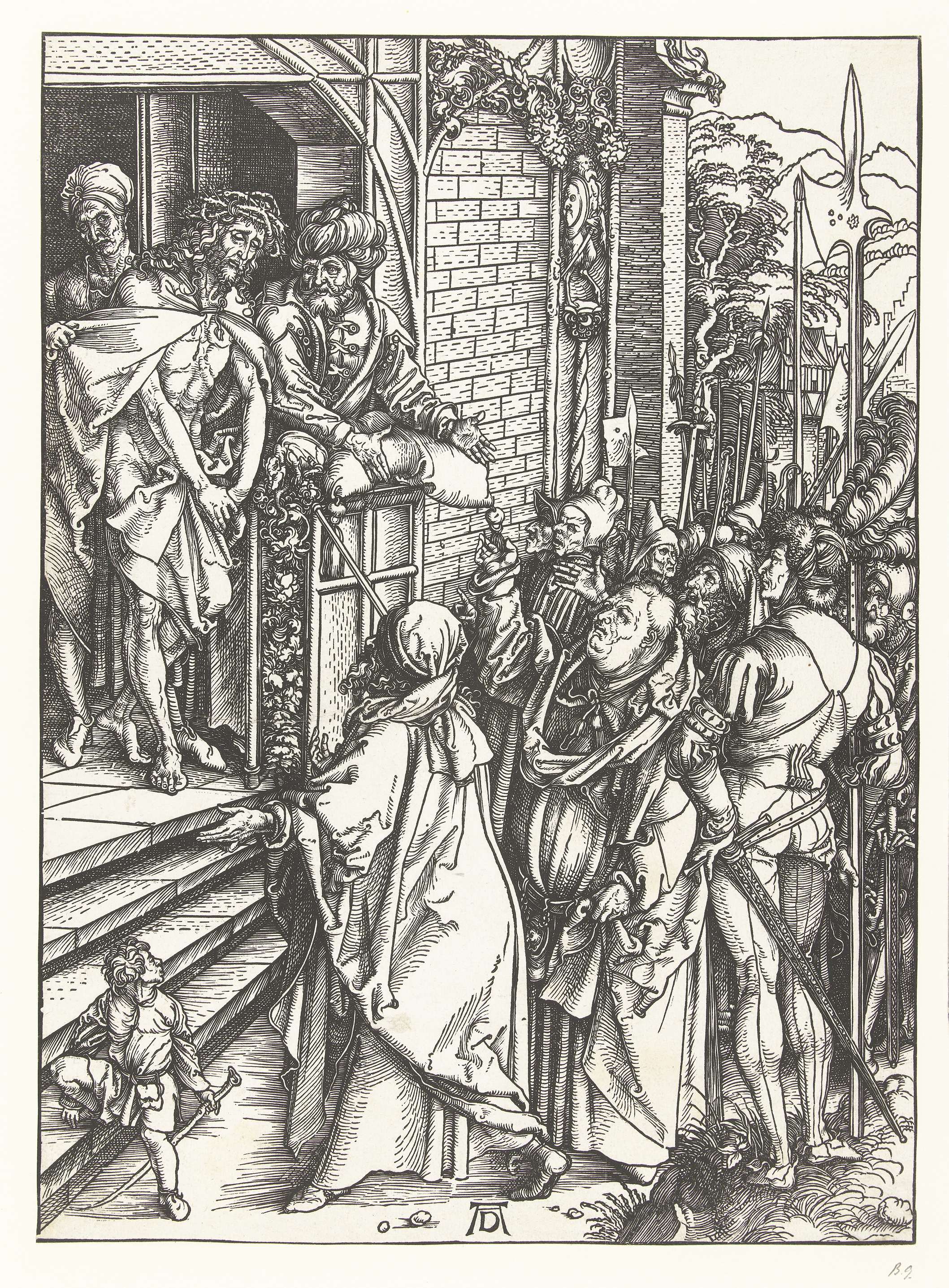
Is this a mirror — or a memory? In Albrecht Dürer's *Ecce homo*, the viewer is confronted with a striking moment that transcends the boundaries of time and space, inviting reflection on faith, suffering, and the human condition. Look to the center of the composition, where a figure of Christ stands poised, adorned in a crown of thorns. His gaze, gentle yet penetrating, draws the viewer into a profound emotional exchange. Notice how the light falls upon his face, illuminating the soft contours and creating a stark contrast against the deep shadows, emphasizing his humanity amidst divine suffering. The surrounding figures, filled with a blend of reverence and curiosity, frame him as if to elevate his presence, highlighting the tension between the sacred and the profane. The painting conveys deep emotional currents, contrasting Christ’s serene composure with the tumultuous expressions of those around him. Each face tells a story, reflecting anguish and awe, while the subtle background hints at a darker reality lurking beyond the immediate scene. Dürer's meticulous attention to detail, from the delicate textures of the garments to the intricate play of light, suggests a quest for transcendence — a profound exploration of spiritual truth amidst human turmoil. Created in Nuremberg in 1498, this work emerges during a time of significant religious upheaval and artistic innovation. Dürer, already recognized for his masterful engravings, was deeply engaged in the burgeoning Renaissance movement, where art began to reflect not only religious themes but also humanist ideals. This painting embodies that shift, capturing a moment that resonates with viewers across generations.