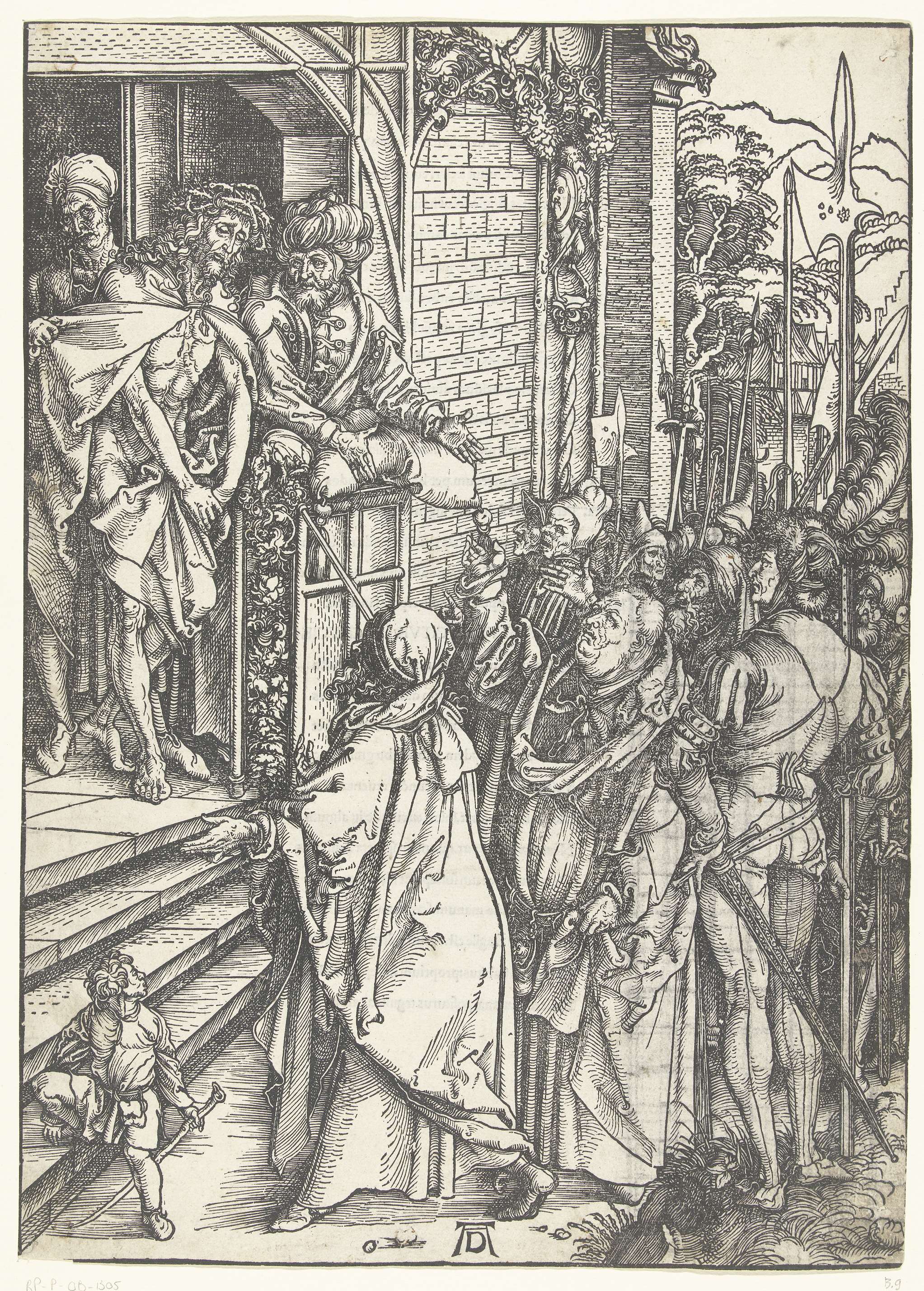
Christus aan het volk getoond (Ecce homo) — History & Analysis
“Sometimes beauty is just pain, disguised in gold.” In the heart of 16th century Europe, the loss that echoes through faith and sacrifice found a profound expression in art. The delicate interplay of light and shadow, the solemnity of the figures, and the poignant gaze of the suffering Christ speak to the depths of human emotion and the struggle inherent in devotion. Focus first on the figure of Christ at the center, surrounded by a crowd that seems caught between reverence and despair. Notice how the light illuminates his face, casting a glow that is both divine and mournful, while shadows envelop the onlookers, emphasizing their isolation in this moment of shared grief. Look at the intricate details of their expressions, masterfully rendered in a palette of muted earth tones, which evoke a sense of somber reflection and communal sorrow. Hidden within the composition are contrasts that deepen the narrative; the stillness of Christ juxtaposed with the swirling emotions of the people reveals a tension between divine tranquility and human turmoil. The careful placement of hands — some reaching out in hope, others clenched in anguish — encapsulates the struggle of belief amid despair. Each face tells its own story, collectively portraying a profound loss that transcends time, resonating with anyone who has encountered sorrow. In 1511, Albrecht Dürer created this powerful piece amidst a period of personal reflection and the shifting tides of the Renaissance. Living in Nuremberg, he experienced the complexities of faith during a time of religious upheaval; his work both questioned and celebrated the spiritual landscape of the era. This painting serves as a testament to his mastery and understanding of the human condition, capturing a moment where beauty is tempered by the weight of loss.