Christus op de Olijfberg — History & Analysis
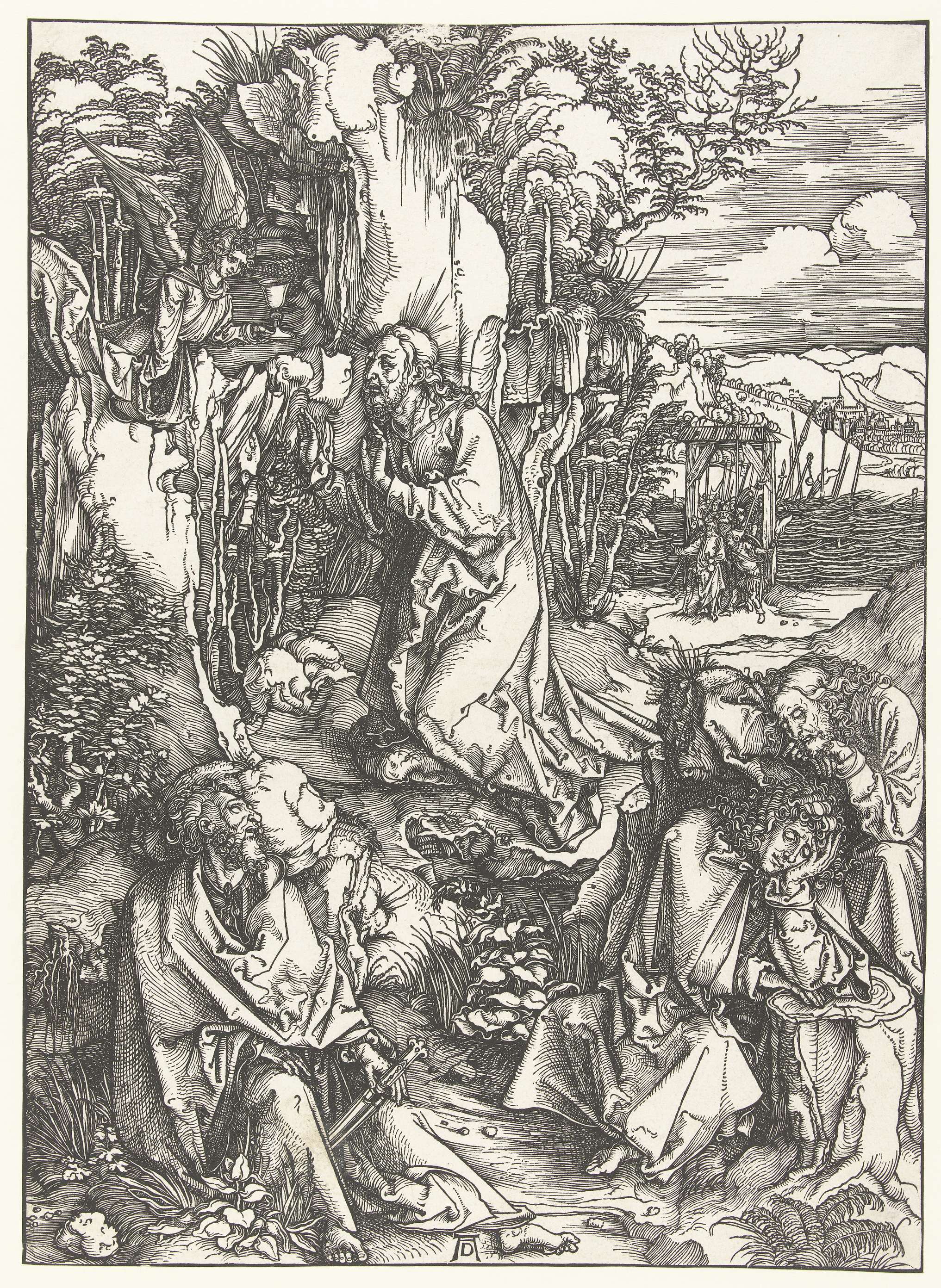
Is this a mirror — or a memory? The ethereal quality of Dürer’s work invites us to ponder the boundary between dreams and reality, suggesting a realm where the divine whispers through the veil of our subconscious. Begin by looking at the foreground, where a solitary figure kneels in prayer, hands clasped tightly, a palpable tension visible in his posture. Notice the intricate detailing of the figure’s robes, where each fold captures the light with a reverence akin to the sacred moment being depicted. The background recedes into a delicate wash of twilight hues, blending soft blues and purples, evoking a sense of both peace and foreboding.
Dürer’s masterful use of chiaroscuro plays with shadows, creating depth and a haunting atmosphere that lingers in the viewer's mind. Within this poignant composition lies the duality of despair and hope. The kneeling figure, representing Christ, embodies vulnerability in the face of impending sacrifice, while the distant trees stand silent witnesses to his struggle. The stillness of the landscape contrasts sharply with the intensity of the figure’s emotional turmoil, amplifying a shared human experience of anguish and solace.
Each brushstroke draws us deeper into a moment that transcends time, reminding us of our own battles with faith and fear. In the late 15th century, Albrecht Dürer was at the forefront of the Northern Renaissance, working in Nuremberg amidst a burgeoning interest in humanism and naturalism. As he painted Christus op de Olijfberg, he was influenced by the evolving techniques of perspective and texture, embracing the use of prints to disseminate his art. This period marked a significant shift in the representation of religious themes, blending personal narrative with traditional iconography, a reflection of Dürer's own quest for spiritual understanding.