Christus op de Olijfberg — History & Analysis
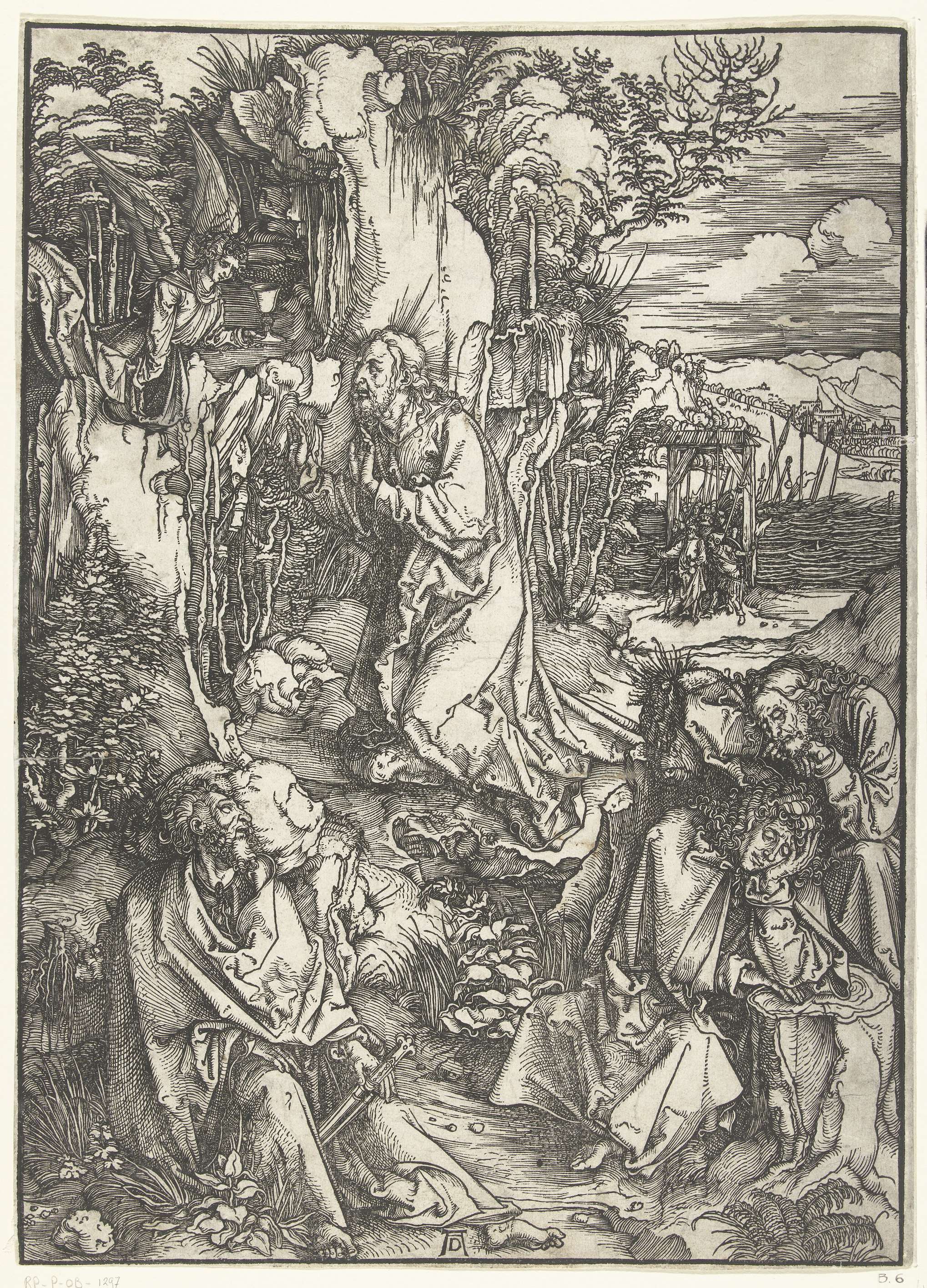
Can beauty exist without sorrow? In Albrecht Dürer’s *Christus op de Olijfberg*, the answer echoes a profound resonance, whispering of faith's burden amidst a world rife with fear. Focus first on the central figure, Christ, who kneels in somber contemplation beneath the gnarled olive trees. His posture, both humble and tense, draws the viewer’s eye, illuminated by an ethereal light that seems to emerge from the very essence of his anguish. Notice how the deep greens and browns of the landscape envelop him, contrasting with the delicate, almost ethereal quality of his figure, rendered in softer hues. The composition is masterfully balanced, inviting our gaze to traverse the tension between divinity and humanity. Delve deeper into the emotional nuances within the painting. The olive trees, ancient witnesses to the agony of the moment, symbolize both peace and turmoil—a deliberate interplay that reflects the duality of Christ’s sacrifice. The shadows cast by the trees mimic the weight of impending doom, while the horizon hints at the dawn of a new beginning. This juxtaposition of light and darkness invokes a profound sense of fear, one that intertwines hope and despair. Dürer painted this work in Nuremberg between 1496 and 1497 during a period of intense introspection and artistic experimentation. It was a time when the Northern Renaissance was flourishing, and he was exploring themes of spirituality and emotion through his art. The work reflects both personal and societal struggles, as the artist navigated his own fears and the collective anxieties of an era marked by upheaval and transition.