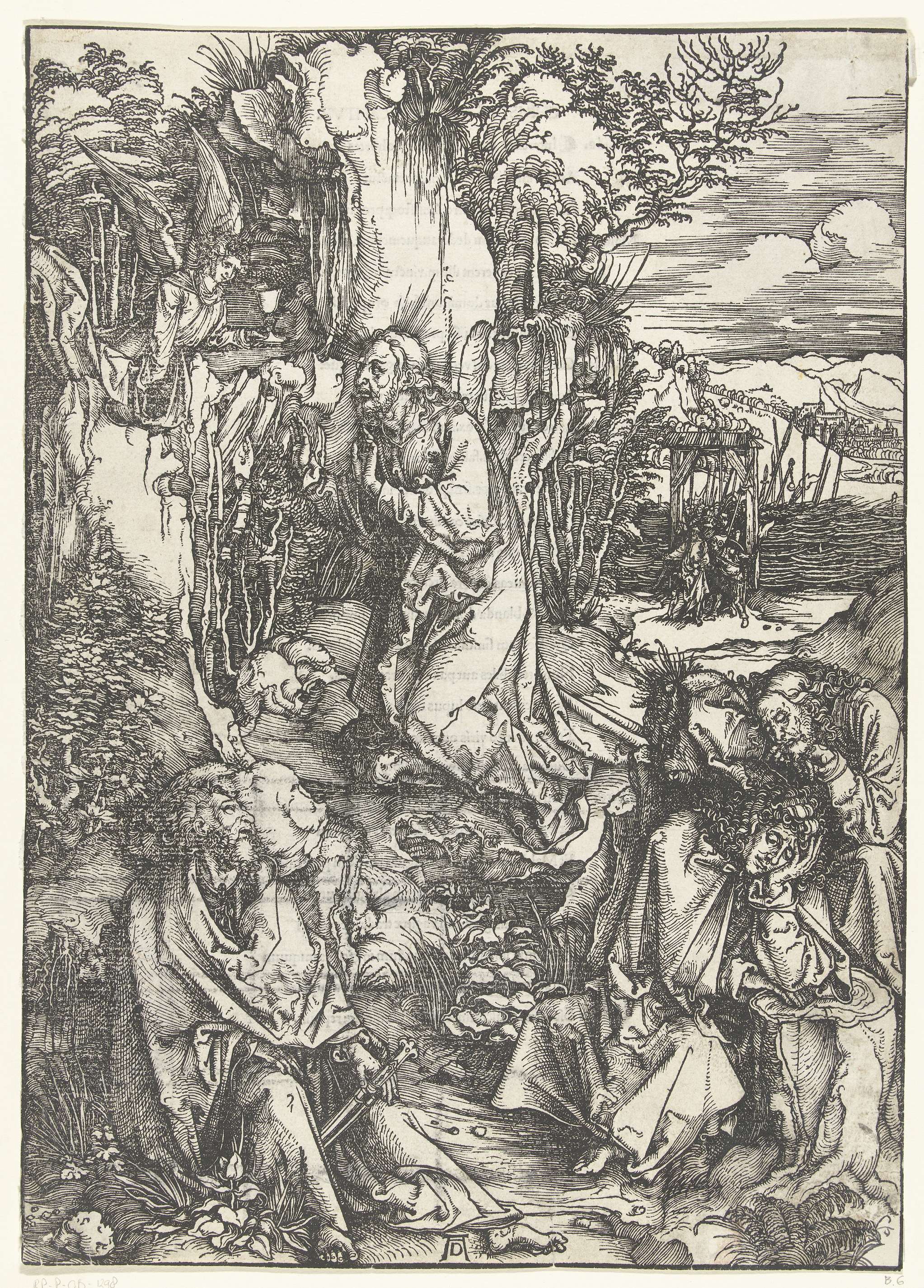
What if silence could speak through light? In *Christus op de Olijfberg*, the interplay between shadow and illumination creates a haunting dialogue, one that transcends the confines of the canvas. Focus on the figure of Christ, situated at the center, his posture embodying both resolve and vulnerability. Look closely at the way light cascades across his serene face, highlighting the delicate features while casting deep shadows that suggest the weight of impending sorrow. Notice how Dürer meticulously crafts the surrounding landscape, with trees that seem to lean in, bearing witness to the moment, their intricate details whispering of both comfort and isolation. The painting invites contemplation on the duality of human experience: the profound peace of prayer against the backdrop of looming despair. The tension between divine omniscience and human fragility is palpable. Each stroke, from the meticulously rendered foliage to the subtle expressions on Christ’s face, speaks to the illusion of solitude in the midst of turmoil, reminding viewers that even in silence, the enormity of human struggle is ever-present. Albrecht Dürer created this powerful work in 1511 during a transformative period in Northern Renaissance art. Living in Nuremberg and deeply influenced by both humanist thought and burgeoning printmaking techniques, he sought to elevate religious themes with meticulous detail and emotional depth. At this time, Dürer was also grappling with the implications of his artistic identity, balancing between traditional devotional imagery and innovative exploration, a tension that is poignantly evident in this piece.