Cimon and Pero — History & Analysis
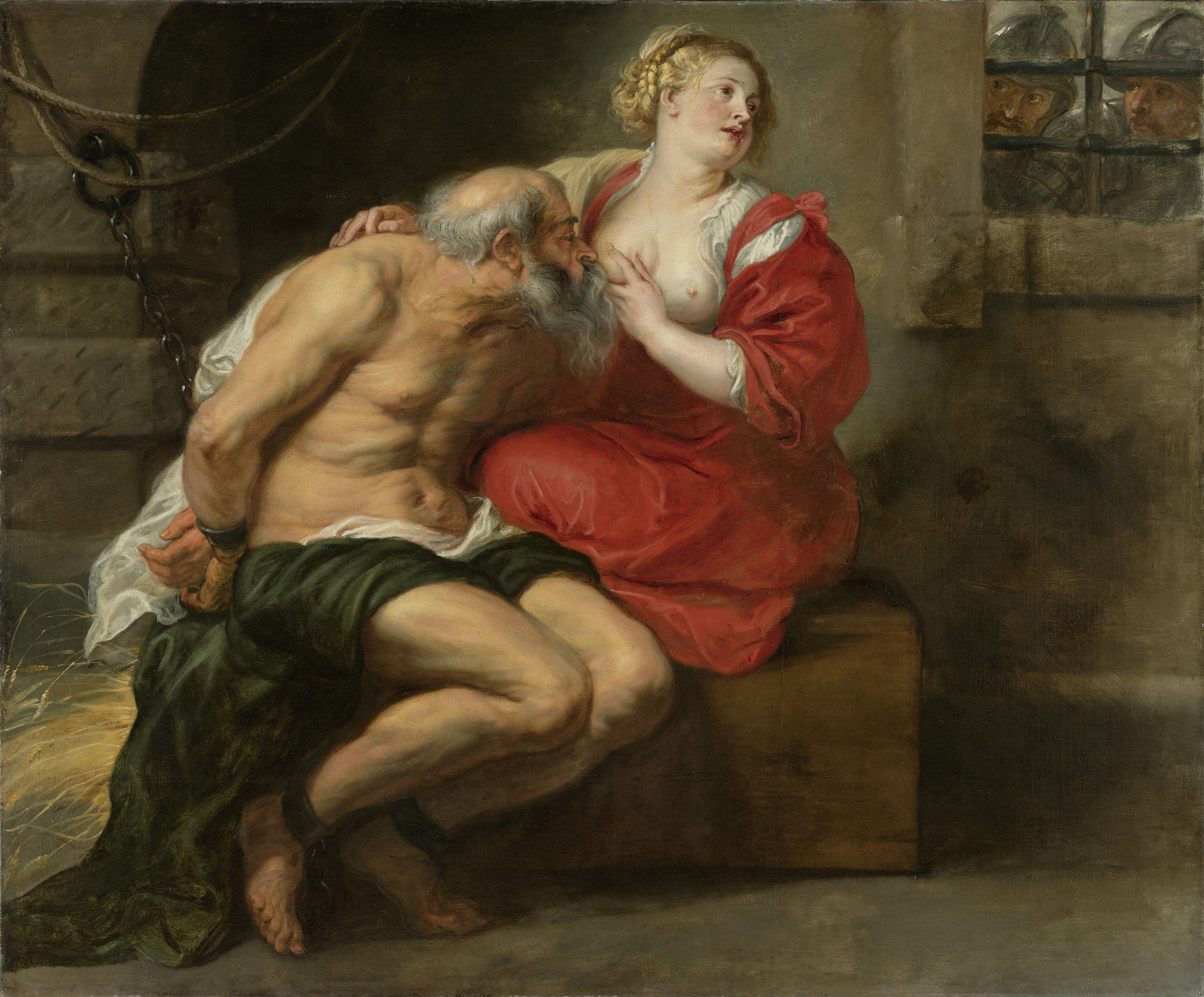
“To paint is to remember what time wants us to forget.” In this powerful sentiment lies the essence of destiny captured in Cimon and Pero. The poignant tale of loyalty and sacrifice unfolds through the brushstrokes of the artist, suggesting that some bonds are destined to transcend even the darkest of circumstances. Look to the center of the canvas, where the dramatic figures come alive. Notice the intense expressions that reveal a complex emotional exchange; Cimon, shackled yet regal, leans forward, while Pero, with her flowing garments and luminous skin, embodies both gentleness and defiance.
The interplay of light highlights the textures of their clothing and the dire setting, creating a vivid contrast between their intimacy and the harshness of captivity. Rich, warm colors invite the viewer into the depth of their shared fate, while the soft play of shadows imbues the scene with an air of tension and urgency. As your gaze shifts, consider the implications of their bond—a daughter’s love that defies the conventions of despair. The contrast between Pero’s nurturing gesture and Cimon’s grim reality evokes a narrative of hope within hardship.
The artist masterfully captures not just the moment of reunion, but the weight of societal judgment and the unwavering strength of familial loyalty, hinting at the larger themes of sacrifice and redemption that ripple through human experience. During the mid-1630s, Rubens was at the height of his career in Antwerp, immersed in the Baroque style that celebrated emotion and grandeur. This period was marked by personal turmoil, including the loss of loved ones, which infused his work with heightened emotional depth. The world of art was witnessing a flourishing of dramatic storytelling, as artists sought to depict not just the physical realm, but the profound narratives woven into the human condition.