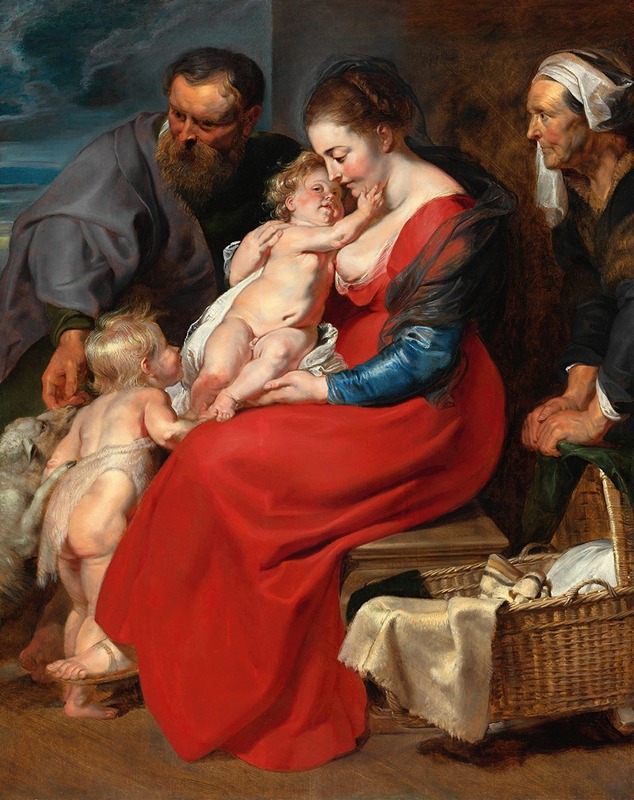
The Holy Family with Saints Elizabeth and John the Baptist — History & Analysis
Could a single brushstroke hold eternity? In The Holy Family with Saints Elizabeth and John the Baptist, the passage of time feels palpable, intertwining with the sacred and the fleeting. Look to the right at the gentle embrace of the Virgin Mary, her soft expression illuminated by the warm light cascading from an unseen source, highlighting the tender interaction with her kin. The vibrant reds and deep blues of their garments vibrate with life, contrasting against the soft, muted background that suggests a world beyond their intimate gathering.
Notice how the intricate folds of their clothing create a rhythmic flow, leading the eye through the composition, while the soft, rounded forms of the figures evoke a sense of harmony and unity. Yet, behind their serene expressions lies the tension of impermanence. The juxtaposition of the divine and the ordinary reflects the fragility of life itself, encapsulated in the youthful innocence of John the Baptist and the weight of responsibility resting on Mary's shoulders. The delicate play of light and shadow evokes a sacred moment, simultaneously celebrating existence while hinting at the decay that shadows every human life.
Each gesture, each gaze exchanged, speaks of joy mingled with the inevitable loss that defines our mortal experience. Around 1615, Rubens worked on this piece during a period of both personal turmoil and blossoming artistic success. At the time, he was balancing his roles as a painter, diplomat, and family man in Antwerp, where a flourishing Baroque style emphasized emotion and movement. This masterpiece resonates with the ambitions of the era, encapsulating the artist's mastery in creating works that transcended mere representation, inviting viewers to reflect on the deeper truths of existence.