The Wedding of Peleus and Thetis — History & Analysis
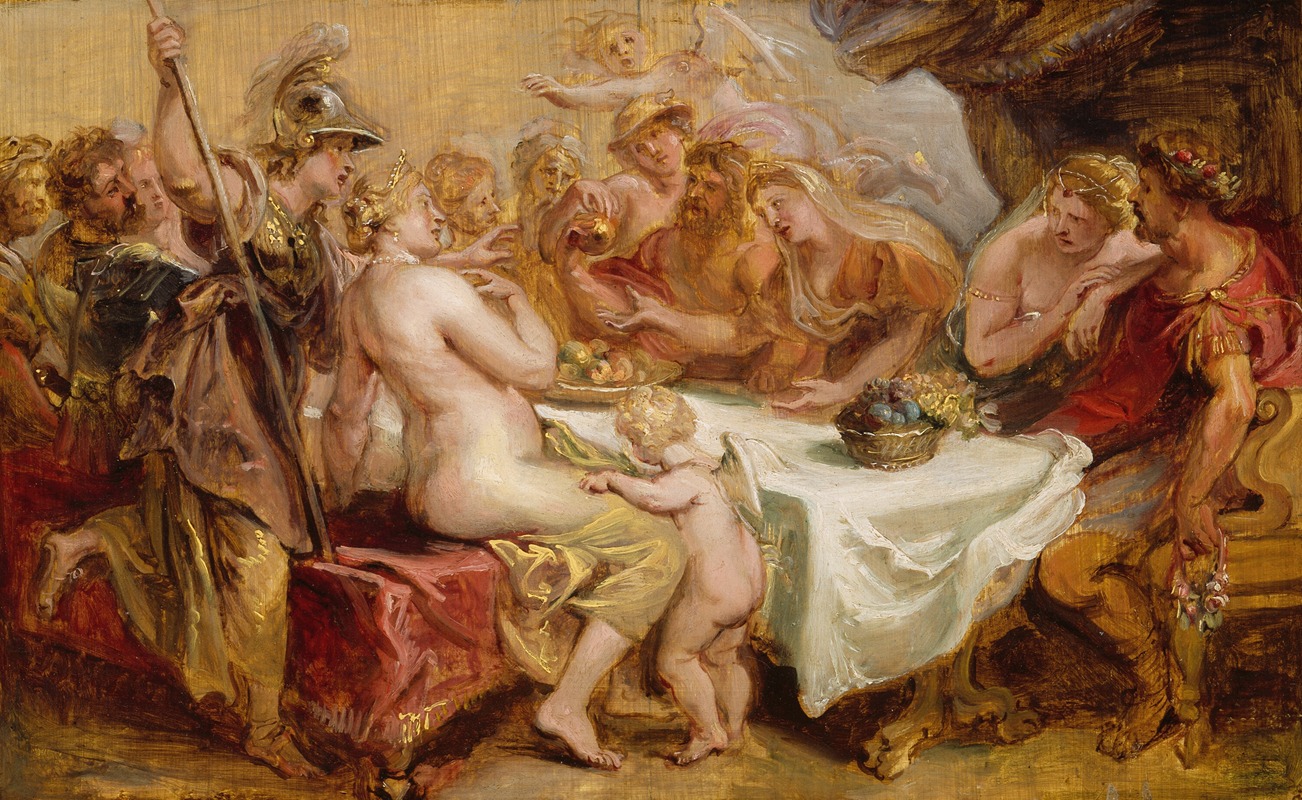
The air is charged with anticipation as gods and mortals converge in a resplendent hall, shadows dancing beneath a cascade of velvet drapery. Laughter mingles with whispers of fate as the radiant figures of Peleus and Thetis stand at the center, encircled by a vibrant assembly of deities. The golden light spills from above, illuminating the intricate details of their garments, while an exquisite tension hangs in the air, hinting at the divine conflict that will ripple through their union. Look to the left at the vibrant figures, adorned in sumptuous fabrics, their expressions a blend of joy and intrigue. The masterful brushwork highlights the interplay of light and shadow, bringing forth an ethereal glow that bathes the scene in warmth.
Notice how the artist employs a rich palette of reds and golds, drawing the eye toward the central couple while allowing the surrounding characters to shimmer in a muted contrast. Each expression is a testament to the emotional gravity of their gathering, where myth intertwines with humanity. Beneath the opulence lies a profound narrative of duality. The tension between love and rivalry flickers in the gazes exchanged among the assembled gods, each with their unspoken intentions. The looming figure of Eris, the goddess of discord, stands in stark contrast to the joyous celebration, a reminder that beauty often comes hand in hand with turmoil.
This duality serves as a poignant reflection on the nature of divinity and the inevitability of conflict in the pursuit of happiness. Created during a vibrant period of Baroque art in Antwerp, this work reflects Rubens' engagement with mythological themes and his mastery of dramatic composition. In 1636, he was deeply immersed in the celebration of life and the tumult of political events in Europe, particularly the Thirty Years' War. This complex backdrop influenced his artistic vision, infusing the scene with an understanding of human emotion, divine purpose, and the inevitable intersections of joy and strife.