The Capture of Samson — History & Analysis
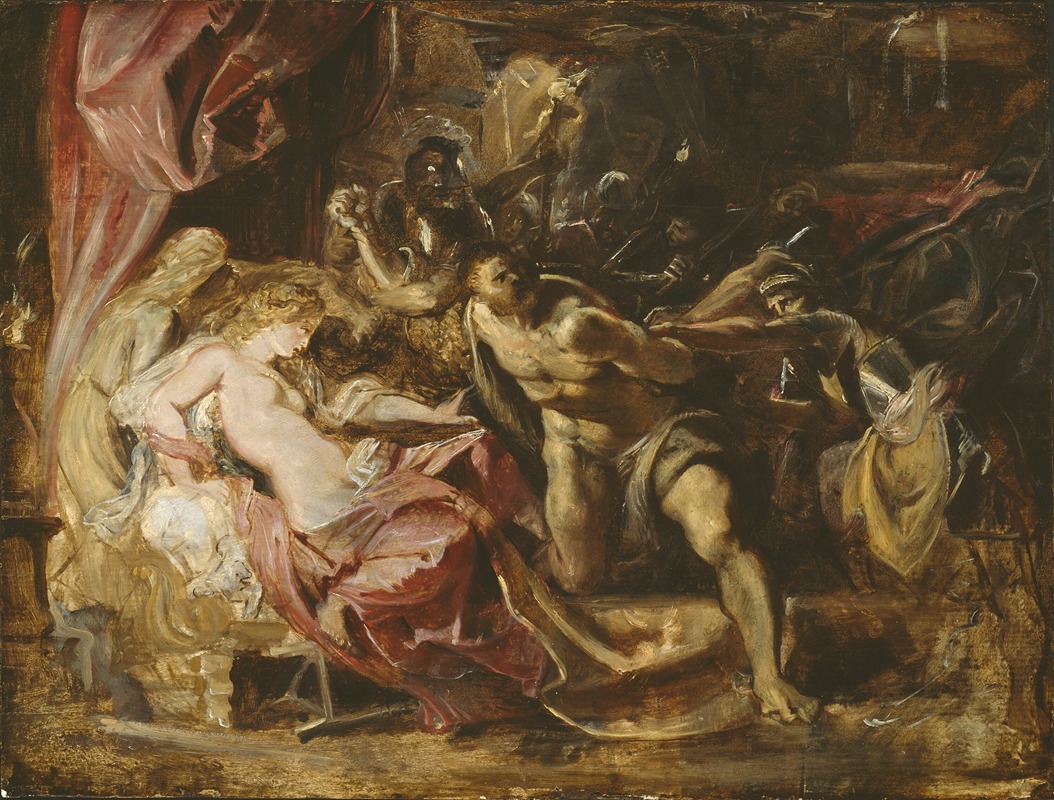
“Every brushstroke is a heartbeat remembered.” In The Capture of Samson, grief intertwines with strength, echoing through the very fibers of the canvas. The turbulent emotions of betrayal and loss are palpable, inviting viewers to explore the depths of human frailty against the backdrop of divine retribution. Focus first on the powerful figure of Samson in the center, his muscular frame straining against the ropes that bind him. The vivid play of light accentuates the contours of his anguish, illuminating the sorrow etched across his face. Notice how the surrounding figures—Philistines and Delilah—are rendered with a juxtaposition of crude triumph and subtle despair, highlighting the cacophony of conflicting emotions.
The deep reds and muted earth tones create a dramatic tension, drawing the eye toward Samson’s pained expression, where vulnerability meets an indomitable spirit. Hidden within the vibrant chaos is a poignant exploration of betrayal. Delilah, with her deceptively tender gaze, embodies the heart-wrenching conflict of love and treachery, revealing how intimacy can mask the deepest hurts. The coarse hands of the captors juxtapose the divine strength of Samson—a symbol of human resilience trapped in the throes of grief.
Each figure pulsates with a narrative, urging one to confront the cost of loyalty and the shadows that linger in the wake of loss. Painted between 1609 and 1610, this work emerged during Rubens' prolific period in Antwerp, a time when he was establishing his reputation as a master of Baroque art. His life was filled with both personal and professional triumphs, yet the era was also marked by political strife and religious turmoil. This blend of fervor in his life undoubtedly influenced the emotional depth captured in this powerful scene, as he sought to depict the complexities of human emotion through his art.