The Adoration of the Eucharist — History & Analysis
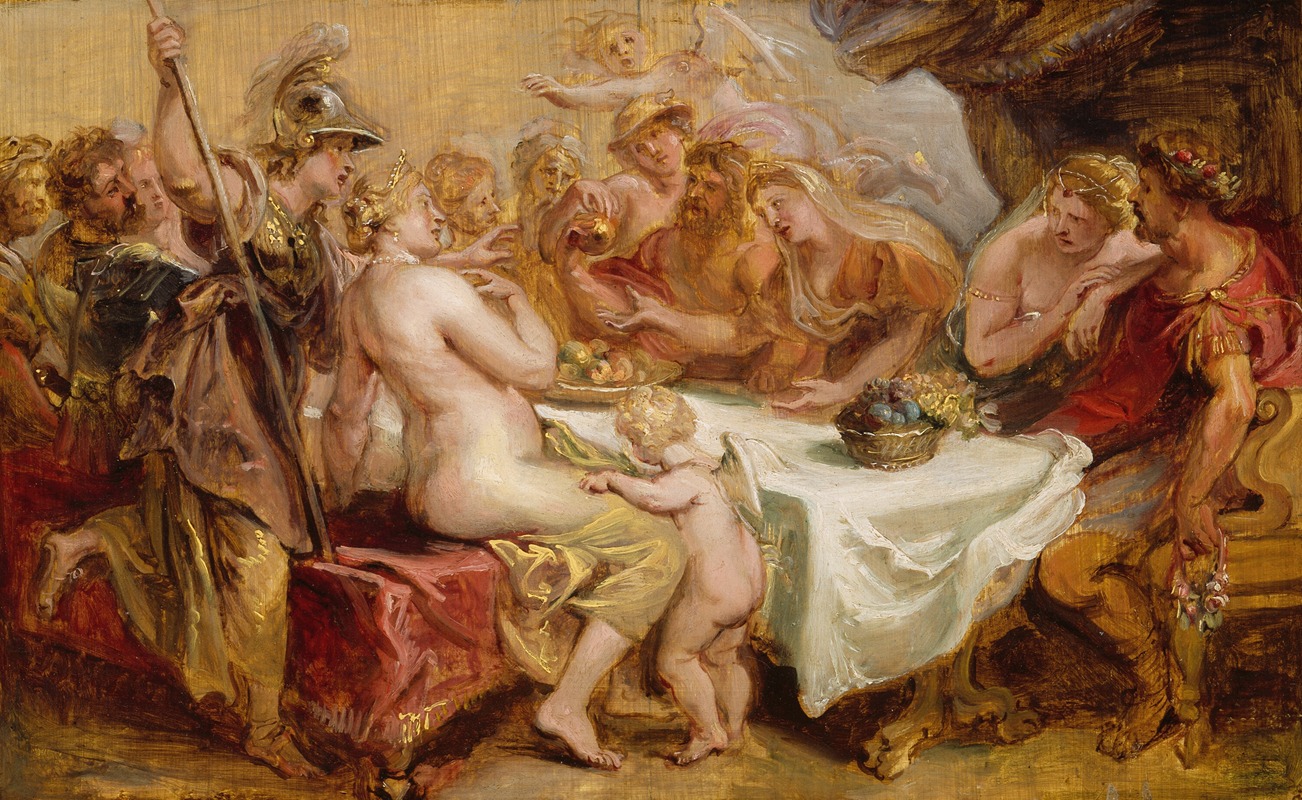
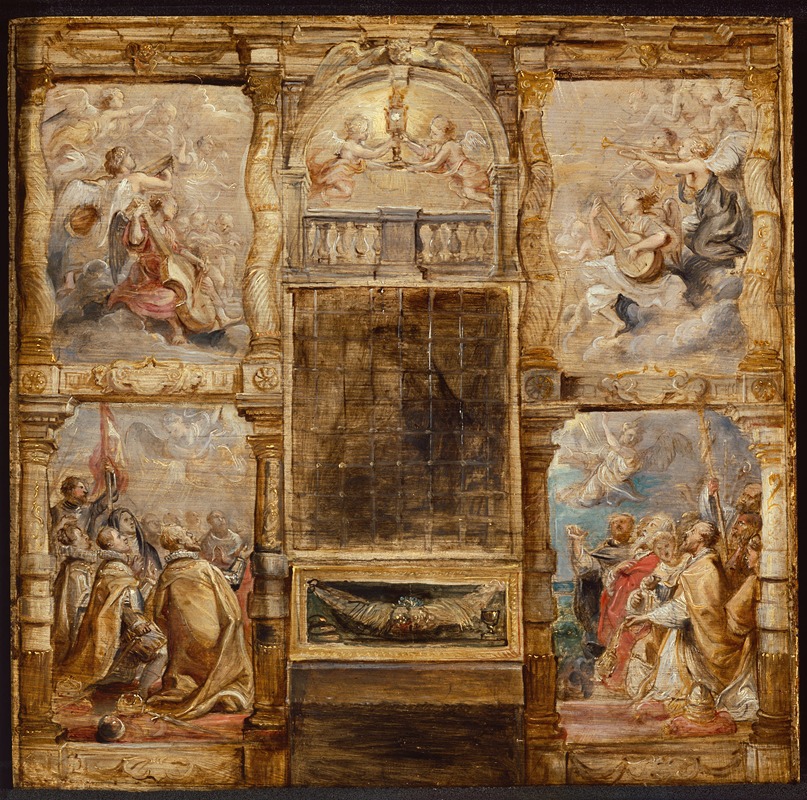
A soft glow envelops the central altar, illuminating figures clad in rich fabrics, their faces turned upward in reverence. The air hangs heavy with a sense of solemnity, as a lone candle flickers against the encroaching darkness. Shadows dance around the worshippers, creating an intimate yet expansive space that invites both contemplation and yearning. Look to the left at the delicate interplay of light and shadow on the faces of the faithful, their expressions a tapestry of devotion and melancholy.
Notice how the rich reds and golds of their garments contrast with the ethereal luminescence of the Eucharist, drawing your gaze to the center. Rubens’ masterful brushwork captures the texture of each fabric, while the swirling composition directs the eye toward the divine, evoking a heartfelt connection between the earthly and the sacred. In the heart of the scene lies an emotional tension: the joy of communion juxtaposed with the inevitable sorrow of separation. The worshippers’ gestures—hands clasped in prayer, eyes glistening with unspoken longing—speak to a deeper human experience of faith and loss.
The artist subtly infuses the Eucharist with a sense of longing, portraying it not just as a symbol of hope, but also of the fleeting nature of spiritual connection. Peter Paul Rubens painted The Adoration of the Eucharist around 1626, during a period marked by religious upheaval and personal trials. At this time, Rubens was deeply engaged in his role as a diplomat and painter in Antwerp, navigating both the art world and the political landscape of the Southern Netherlands. This work reflects his mastery of Baroque form and emotional depth, encapsulating the spiritual fervor of his era.