Conway Pond — History & Analysis
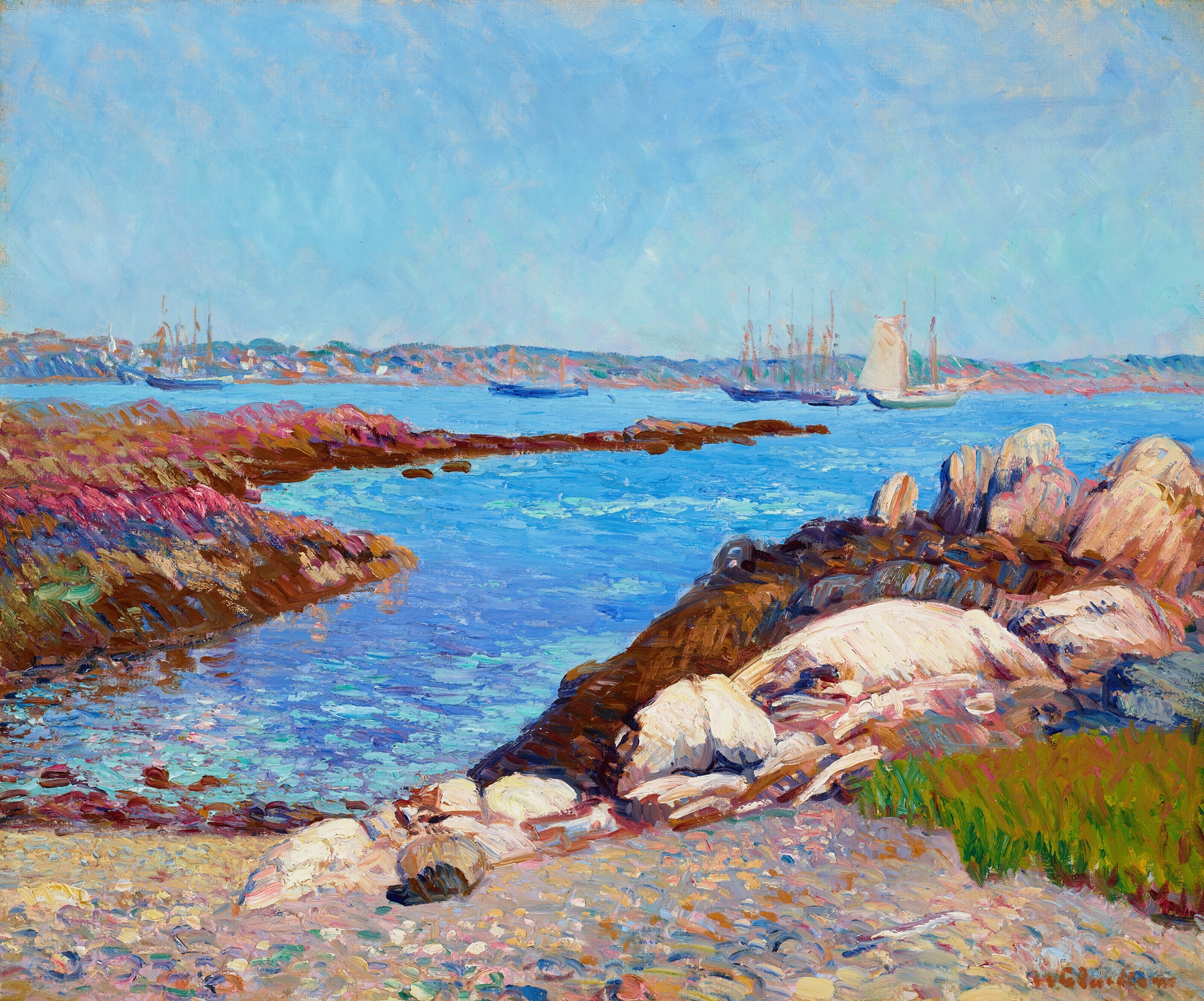
Could beauty survive in a century of chaos? In Conway Pond, the essence of tranquility stands resilient against the turbulent backdrop of the early 20th century, inviting contemplation amidst uncertainty. Look to the center of the canvas where the pond reflects the serene sky, its surface a mirror of soft blues and gentle greens. The surrounding trees, painted with vibrant strokes, frame this idyllic scene, guiding your gaze toward the distant horizon. Notice how the dappled light filters through the leaves, casting playful shadows on the water, embodying the fleeting nature of peace.
The brushwork is both bold and delicate, capturing the essence of a moment suspended in time. Yet beneath this picturesque façade lies an undercurrent of tension. The vibrant colors evoke joy, yet the emptiness of the surrounding landscape whispers of isolation. Each stroke hints at the artist's anxiety about the state of the world — a desire to capture fleeting beauty before it succumbs to the chaos of contemporary life.
The serene setting contrasts with a pervasive fear of loss, reminding us that tranquility is often temporary, and beauty must be cherished. William James Glackens painted Conway Pond between 1920 and 1924, during a transformative period in American art. The post-World War I era saw artists grappling with the weight of modernity while trying to find solace in nature. As a leading figure of the Ashcan School, Glackens sought to portray everyday life with authenticity, reflecting both the optimism and underlying trepidation of a society healing from conflict.